ROKA Canary Wharf
Our verdict
ROKA Canary Wharf brings the group's robatayaki format to London's financial district, positioning Japanese charcoal-grill dining at the centre of one of the city's most corporate dining postcodes. The Canada Square address places it among the area's most considered restaurant options, where business-lunch expectations meet a menu built around live-fire cooking rather than the European formats that dominate the neighbourhood.

Pearl is the En Primeur Club membership app, where members save venues, book tables and use the concierge.

The menu
What to order
- Miso black cod
- Spicy tuna tartare
- Robata grilled lamb chops
- Dessert platter
Canary Wharf's Dining Map and Where Japanese Robatayaki Fits
Canary Wharf has spent the better part of three decades being defined by what it is not: not the West End, not the City proper, not a neighbourhood with an organic restaurant scene. What emerged instead is a curated, landlord-managed estate where restaurants open to serve a dense weekday professional population and, increasingly, a residential base that has grown around the towers. The food offer reflects that dynamic: reliable mid-to-upper-market formats, international brands with operational credibility, and a near-total absence of the independent risk-taking that characterises Soho or Hackney. Within that context, Japanese robatayaki dining occupies a specific niche. It is not the default corporate lunch format, which leans European and brasserie-coded, and it requires a production investment, specifically live-fire charcoal infrastructure, that filters out casual entrants.
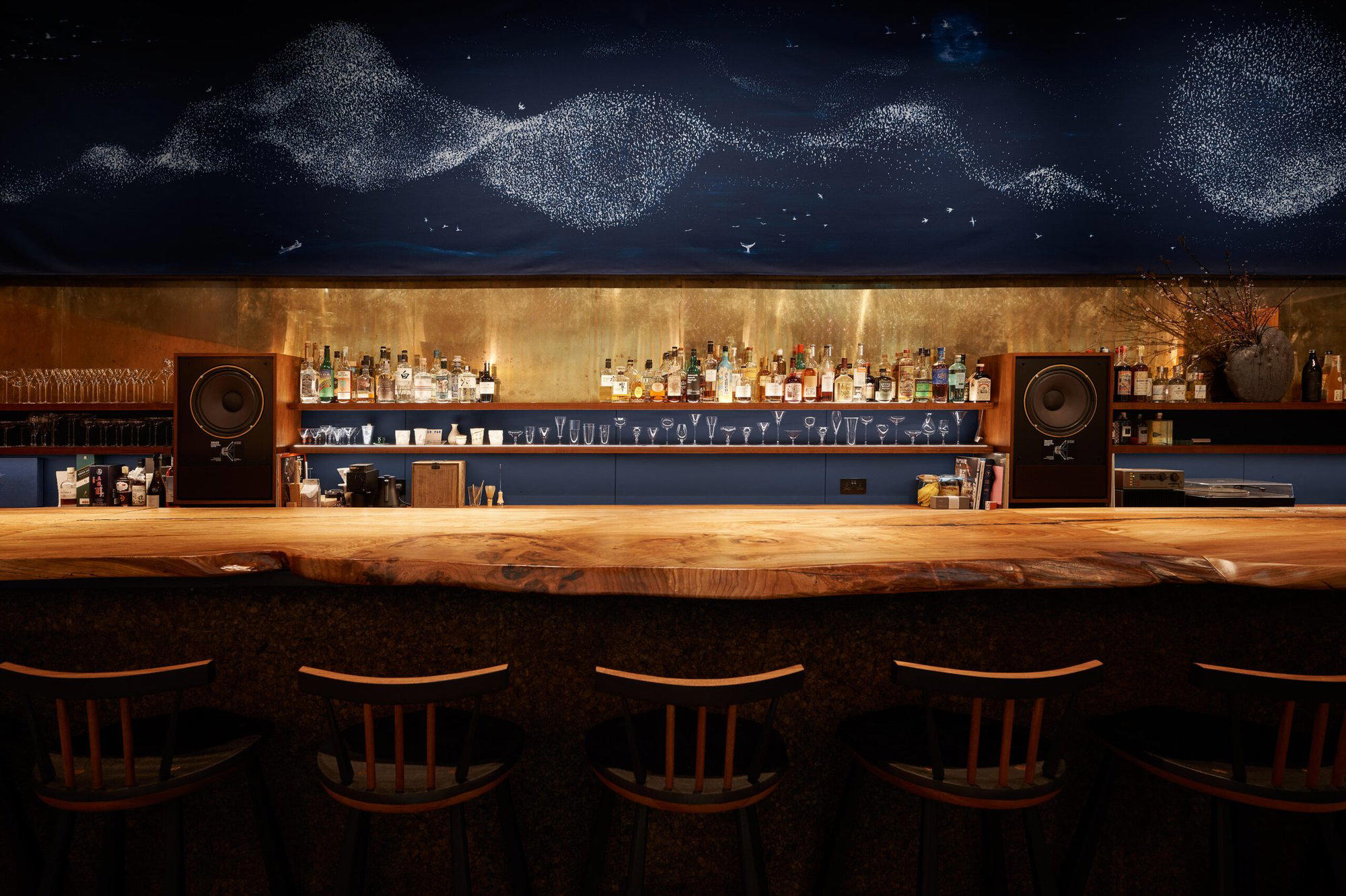
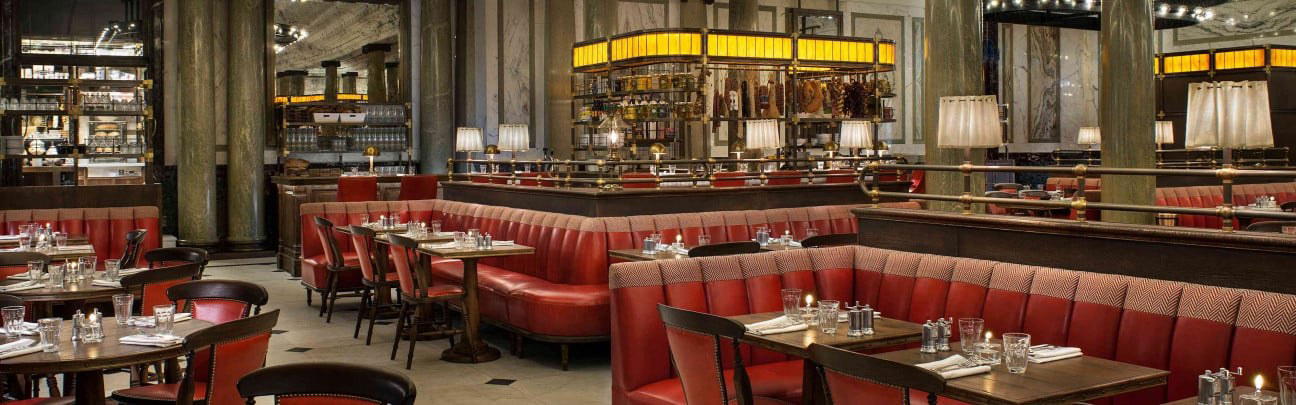
ROKA Canary Wharf, located at 4 Park Pavilion on Canada Square, sits inside that gap. The ROKA group introduced the robatayaki counter format to London in 2004 with its Charlotte Street opening, building a model around the Japanese tradition of grilling over bincho-tan charcoal at a central hearth where diners can watch the process. The Canary Wharf location extends that format into a district where it has few direct competitors in the same cooking tradition. For the estate's working population and its hotel guests, that represents a meaningful alternative to the European-leaning options that fill the surrounding blocks.
The Robatayaki Tradition and What It Means at the Table
Robatayaki as a dining format has Japanese coastal roots, originally a communal style of cooking where fishermen grilled catches over open charcoal. Its modern restaurant iteration preserves the theatre of the hearth, with skewered proteins, vegetables, and fish presented and cooked in view of diners. The bincho-tan charcoal used in serious robatayaki operations burns at high, consistent heat with minimal smoke and no petrochemical taint, which means it transfers flavour through direct radiant heat rather than through combustion byproducts. That distinction matters when you are cooking fish or premium cuts where the ingredient itself should dominate.
London's Japanese restaurant tier has expanded significantly since the early 2000s, when the ROKA group and its sister brand Zuma were among the first to introduce a contemporary, design-led Japanese dining format to the market. The category now spans everything from fast-casual sushi chains through to omakase counters charging well above £200 per head. ROKA's positioning sits in the mid-to-upper segment: a full-service restaurant with a structured menu, a bar programme that incorporates Japanese spirits alongside wine, and a format accessible enough to work for both expense-account entertaining and group dining. Comparable high-end Japanese formats in London, such as the tightly-held omakase counters in Mayfair, operate on far more restrictive booking models and at considerably higher price points. ROKA reads as the more flexible, group-compatible end of serious Japanese dining in the capital.
The broader London fine dining scene is anchored in the West End and, to a lesser degree, in the City. Establishments like CORE by Clare Smyth, Restaurant Gordon Ramsay, Sketch, The Lecture Room and Library, The Ledbury, and Dinner by Heston Blumenthal operate in a Michelin-flagged tier with tasting menu formats built around European culinary traditions. ROKA is not competing in that bracket; it is offering something structurally different: a sharing-format, live-fire menu where the experience is distributed across multiple dishes rather than sequenced through a fixed progression. That makes it more legible to mixed groups, corporate tables, and diners who prefer to control the pace of a meal. Across the UK, destination dining of the highest order extends to venues like Waterside Inn in Bray, Le Manoir aux Quat'Saisons in Oxford, L'Enclume in Cartmel, Moor Hall in Aughton, Gidleigh Park in Chagford, Hand and Flowers in Marlow, hide and fox in Saltwood, Midsummer House in Cambridge, Opheem in Birmingham, and Restaurant Andrew Fairlie in Auchterarder. Internationally, high-level Japanese and seafood-forward menus at venues like Le Bernardin in New York City and contemporary Korean tasting formats at Atomix in New York City illustrate how seriously the global dining market has moved toward Asian-rooted precision cooking. ROKA's contribution to that conversation is format accessibility at a comparable quality level.
The Canada Square Address: What the Location Delivers
Park Pavilion is a glass-fronted commercial building on Canada Square, a few minutes' walk from Canary Wharf station's multiple exits. The estate's managed character means that access, signage, and the surrounding environment are predictable in a way that central London addresses often are not. There is no difficult navigation through unmarked streets or contested parking arrangements. For a business dinner, that operational clarity has value. The immediate surroundings are corporate, but the interior format, with a robatayaki hearth as the visual anchor, provides a separation from the office-cafeteria associations that can undermine other Canary Wharf dining experiences.
The location is well-served by Canary Wharf station on the Jubilee line and, since the Elizabeth line's opening, by Canary Wharf's Crossrail access, which connects the estate directly to Paddington, Bond Street, and Liverpool Street within minutes. For diners arriving from West London, the Elizabeth line has substantially reduced the psychological distance between Canary Wharf and the rest of the city's dining infrastructure. For our complete survey of London's restaurant offer, see our full London restaurants guide.
Planning Your Visit
Canary Wharf dining operates on a distinct rhythm from the rest of London: weekday lunch and early dinner trade is heavy with the professional population, while weekends are quieter, driven by the residential catchment and visitors to the estate. Booking ahead for weekday dinner is advisable, particularly for larger groups. The robatayaki format is well-suited to business entertaining where shared ordering removes the awkwardness of divergent dietary preferences across a table. The Canada Square address is most easily reached via Canary Wharf station (Jubilee and Elizabeth lines), with the Park Pavilion entrance a short walk from the main station exits.
Quick reference: ROKA Canary Wharf, 4 Park Pavilion, 40 Canada Square, Canary Wharf Estate, London E14 5FW. Nearest station: Canary Wharf (Jubilee/Elizabeth lines).
Frequently asked questions
Where is ROKA Canary Wharf located?
ROKA Canary Wharf is located at 4, Park Pavillion, 40 Canada Square, Canary Wharf Estate, London E14 5FW, United Kingdom, London.
Is ROKA Canary Wharf suitable for a business dinner in the Canary Wharf estate?
The Park Pavilion address at 40 Canada Square places ROKA within easy walking distance of the estate's main office towers, making it a practical choice for post-market or client dinners in E14. The robatayaki format, shared plates, a communal grill as the focal point, suits groups of three or more better than a bilateral meeting. Booking in advance is advisable for Thursday and Friday evenings when the professional dinner trade peaks.
What do people recommend at ROKA Canary Wharf?
ROKA's format centres on the robatayaki grill, so dishes prepared over the open charcoal counter are the core draw. The Canada Square location follows the same kitchen philosophy as the broader ROKA group, meaning grilled proteins and sharing plates built around live-fire technique. Go with a group and order across the menu rather than treating it as a linear tasting format.
How hard is it to get a table at ROKA Canary Wharf?
Weekday evenings at 40 Canada Square run busy with the Canary Wharf professional crowd, particularly Thursday and Friday. Weekend trade is lighter given the estate's reduced footfall when offices close. Booking a few days ahead for weekday dinner is advisable; same-week availability is more realistic on Saturdays.
What is ROKA Canary Wharf known for?
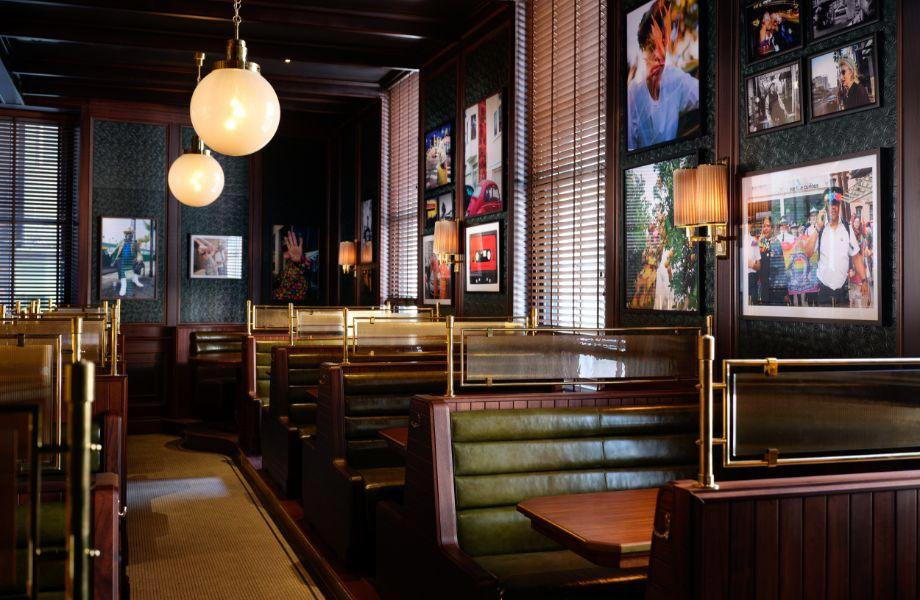
ROKA is associated with the robatayaki tradition, a Japanese coastal communal grilling style adapted for a contemporary restaurant counter. At the Canary Wharf site on Canada Square, that translates to charcoal-grilled dishes served in a glass-fronted Park Pavilion space, positioning it as one of the more considered Japanese dining options in E14.
What if I have allergies at ROKA Canary Wharf?
A live-fire Japanese kitchen typically works with soy, sesame, shellfish, and gluten across much of the menu, so allergy communication at the point of booking is the practical approach. Contact the Canada Square restaurant directly before your visit to discuss specific requirements, this is standard practice for robatayaki menus where marinades and sauces are central to most dishes.
Should I splurge on ROKA Canary Wharf?
ROKA sits in the mid-to-upper tier of London's Japanese restaurant market, and the Canary Wharf address reflects that positioning. For a working lunch or client dinner in E14 it competes on format in a neighbourhood where the dining offer is thinner than the West End. If charcoal-grilled Japanese cuisine is your reference point, the group sharing format here justifies the spend more readily than solo dining would.
Cuisine and Awards Snapshot
Comparable venues nearby, for context on price, style, and recognition.
| Venue | Cuisine | Price | Awards | Notes |
|---|---|---|---|---|
| ROKA Canary WharfThis venue (the venue you are viewing) | Contemporary Japanese Robatayaki | $50–100 | Not listed | Not listed |
| ROKA Aldwych | Contemporary Japanese Robatayaki | $50–100 | Not listed | Clare Market |
| Engawa | Modern Japanese Omakase with Wagyu | $50–100 | Not listed | Piccadilly Circus |
| Akatuki Covent Garden | Premium Omakase & Japanese Kaiseki | $50–100 | Not listed | Holborn |
| Sake No Hana | Japanese | Not listed | Wine Spectator Award of Excellence | St. James's |
| Aki London | Modern Kyoto-Inspired Japanese | Not listed | Michelin Plate | Marylebone |