ROKA Aldwych
ROKA Aldwych brings the robatayaki tradition to the heart of London's theatre district, anchoring a style of Japanese communal dining that sits apart from the city's tasting-menu mainstream. The format revolves around the open charcoal grill, where sharing dishes arrive in sequence and pace is negotiated at the table rather than imposed by the kitchen. It occupies a specific tier in London's Japanese dining scene: accessible enough for regular attendance, serious enough to draw comparison with the capital's more formal Japanese rooms.
Pearl is the En Primeur Club membership app — saves, bookings, and concierge access live there. Same editors, same standards.
- Address
- 71 Aldwych, London WC2B 4HN, United Kingdom
- Phone
- +442072947636
- Website
- rokarestaurant.com
- Directions
- Get directions
 Saves & bookings on Pearl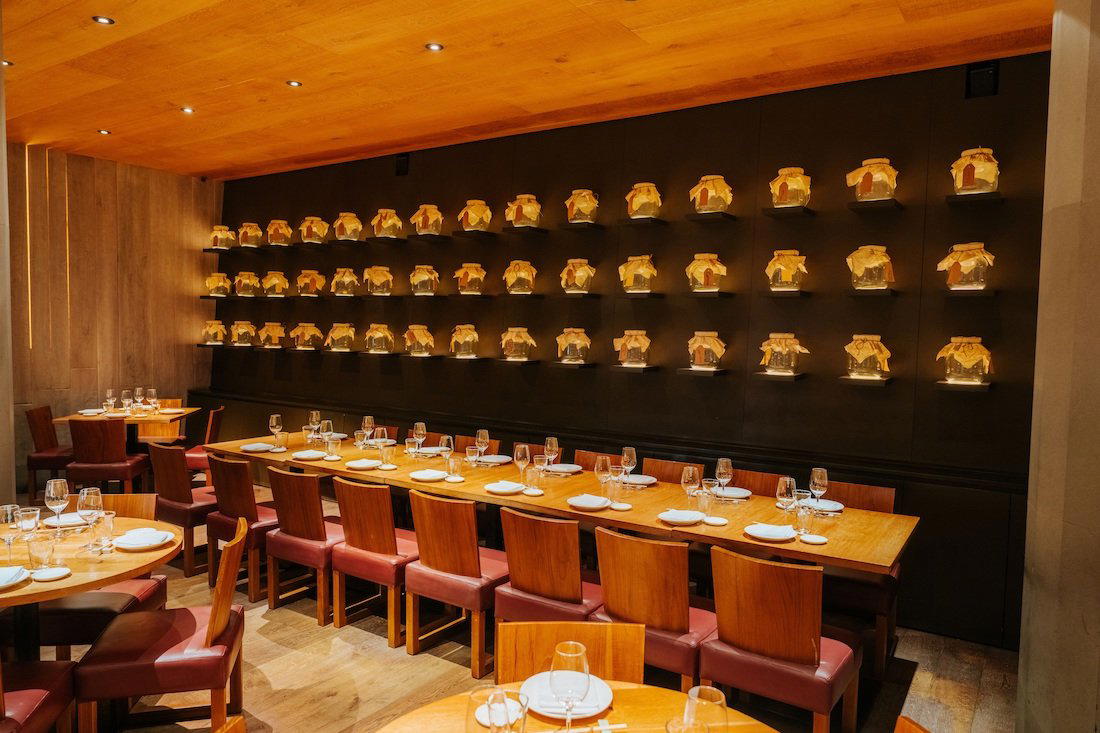
The Robata Counter and What It Asks of You
ROKA Aldwych is a contemporary Japanese robatayaki restaurant in London, at 71 Aldwych, WC2B 4HN. At one end sit the omakase-format counters, where the kitchen controls every variable, from sequence to portion to tempo. At the other end, casual ramen and izakaya formats serve volume. Between these poles, a smaller category of robatayaki restaurants operates on a different logic entirely: the meal is collaborative, the grill is visible, and the rhythm of eating is something you negotiate rather than receive. ROKA Aldwych operates in this middle register, and understanding that frame is the prerequisite for getting anything useful out of the experience.
Robatayaki as a dining custom originates in the communal hearth traditions of northern Japan, where fishermen cooked around an open fire and passed food across the embers. The contemporary restaurant version preserves the structural logic of that ritual even if the setting is now an Aldwych dining room: dishes arrive from a central charcoal grill, portions are designed for sharing, and the table accumulates plates in waves rather than in the prescribed sequence of a tasting menu. For diners accustomed to the conventions of London's French-influenced fine dining rooms, from Restaurant Gordon Ramsay to Sketch, The Lecture Room and Library, this represents a fundamentally different set of expectations about how a meal should be structured.
Aldwych as a Setting for This Format
The WC2B postcode places the restaurant in a specific slice of central London: close enough to the Strand to catch pre-theatre traffic, proximate to Covent Garden's restaurant density, and within easy range of the legal and media offices that populate the surrounding streets. This geography shapes the crowd in ways that matter. The dining room draws a mix of after-work groups, pre-show diners working to a clock, and regulars who treat the format as a reliable midweek option rather than a special occasion. That mix produces a particular energy in the room, one that leans social rather than ceremonial.
London's theatre-district dining has historically defaulted to brasserie formats built for quick covers and set menus timed to curtains. ROKA's format sits somewhat against that grain: sharing dishes and a grill-driven kitchen don't naturally accommodate the two-courses-in-ninety-minutes logic of pre-theatre dining. That tension is worth acknowledging if you're planning around a show. Without a curtain to catch, the format rewards exactly the kind of open-ended table time that robatayaki is designed for.
How the Meal Actually Moves
The dining ritual at a robatayaki table differs from most European fine dining formats in one specific way: there is no fixed sequence that the kitchen enforces. Dishes are ordered across categories, grilled items arrive when they're ready from the charcoal, and cold preparations may land before or between hot ones. The experienced approach is to order in stages, letting a first wave of dishes settle before adding more from the grill. Attempting to order the full meal upfront, as you might at a contemporary European tasting menu restaurant like The Ledbury or CORE by Clare Smyth, produces a cluttered table and a rushed experience.
The charcoal grill is the centre of gravity for any serious visit. Items cooked over binchotan charcoal, the dense white oak charcoal standard in quality Japanese grilling, carry a particular quality of heat: high surface temperature with minimal flare, which produces clean caramelisation without the acrid edge of lower-grade fuel. That technical detail matters because it explains why robatayaki at this level produces results that are difficult to replicate at home or in kitchens using conventional equipment.
Alongside the robata, the broader menu incorporates sushi, sashimi, and cooked preparations that extend the table's range. The structure rewards a group of three or four who can spread across categories without duplicating orders. Pairs dining here benefit from being more selective; the format is proportionally richer when there are more people to distribute across the menu's width.
Where ROKA Sits in London's Japanese Dining Tier
London's Japanese restaurant market has become considerably more stratified in recent years. The group now operates multiple London sites, which places it in a different competitive position from single-location Japanese fine dining. It is not competing in the same tier as the city's omakase counters, which operate on scarcity and chef-driven sequencing. It is competing instead with a category of quality-consistent Japanese restaurants that can be relied upon across visits, handle larger group configurations, and don't require the kind of advance planning that characterises bookings at the more restricted formats.
That category also includes comparison points outside Japan-specific cooking. Diners who frequent Dinner by Heston Blumenthal for its combination of culinary rigour and group-friendly format will recognise the logic. The comparable set for ROKA Aldwych is not necessarily defined by cuisine type but by the question of which London restaurants deliver a high-quality experience without demanding omakase-level commitment from the diner.
For readers planning UK trips beyond London, the contrast is instructive. The sharing-plate, grill-centred format here differs sharply from the tasting-menu discipline at L'Enclume in Cartmel or Moor Hall in Aughton, where kitchen sequencing is total and collaborative ordering is not a feature. Within London, our full London restaurants guide maps the wider field across formats and price points.
Internationally, the robatayaki format ROKA employs shares a structural logic with certain Korean tasting formats, though the technical execution differs considerably. Diners familiar with the precision counter work at Atomix in New York City will note how different the Korean fine dining register is from Japanese communal grilling, even where both draw on shared East Asian culinary traditions.
Planning the Visit
The Aldwych location draws consistent demand from the surrounding office and theatre audiences, and weekend evenings in particular book well in advance. Midweek lunch and early dinner slots tend to be more accessible, and the format suits both without significant difference in experience. Groups of four occupy the sweet spot for the sharing format; the menu's range becomes harder to explore with two diners and harder to coordinate with more than six.
The robatayaki format works well when the table commits to the pace of the grill rather than treating the meal as a quick stop. Allow at least ninety minutes; two hours is a more comfortable window for a full exploration of the menu across its categories. Those with theatre commitments should factor in that dish timing from a live charcoal grill is less precise than a set-menu kitchen operating to a fixed clock.
Further afield, readers interested in the broader UK fine dining context should consider the range covered in our guides to Waterside Inn in Bray, Le Manoir aux Quat'Saisons in Oxford, Gidleigh Park in Chagford, Hand and Flowers in Marlow, hide and fox in Saltwood, Midsummer House in Cambridge, Opheem in Birmingham, and Restaurant Andrew Fairlie in Auchterarder for a fuller picture of what serious dining looks like across the country's regions.
ROKA Aldwych, 71 Aldwych, London WC2B 4HN. Robatayaki sharing format; well suited to groups of three to four. Advance booking is recommended.
Pricing, Compared
Comparable venues nearby, for context on price, style, and recognition.
| Venue | Cuisine | Price | Notes |
|---|---|---|---|
| ROKA AldwychThis venue — the venue you are viewing | Not listed | $$$$ | Not listed |
| The Araki | Mayfair, Japanese Omakase | $$$$ | Not listed |
| Engawa | Not listed | $$$$ | Piccadilly Circus, Modern Japanese Omakase with Wagyu |
| Luna Omakase | Not listed | $$$$ | Broadgate, Modern Sosaku-style Edomae Omakase |
| Aki London | Not listed | $$$$ | Marylebone, Modern Kyoto-Inspired Japanese |
| Ikeda | Mayfair, Traditional Japanese | $$$$ | Not listed |
Continue exploring
More in London
Restaurants in London
Browse all →
Bars in London
Browse all →
Hotels in London
Browse all →



At a Glance
- Sophisticated
- Elegant
- Modern
- Date Night
- Business Dinner
- Group Dining
- Special Occasion
- Open Kitchen
- Sake Program
Current opening hours
- Monday
- Closed
- Tuesday
- 12–3:30 PM, 5–10:30 PM
- Wednesday
- 12–3:30 PM, 5–10:30 PM
- Thursday
- 12–3:30 PM, 5–10:30 PM
- Friday
- 12–3:30 PM, 5–10:30 PM
- Saturday
- 11:30 AM–4 PM, 5:30–11 PM
- Sunday
- 11:30 AM–5:30 PM
Hours can change for holidays and private events. Last verified .
Sleek and sophisticated with granite, tanned leather, dark timber, and a central roaring robata grill providing mesmerizing open kitchen views.