Ristorante Il Castello occupies a residential address in Charlottenburg, placing Italian fine dining within one of Berlin's quieter, more established western neighbourhoods. The restaurant operates in a city where the premium Italian category remains thinner than its French or modern-German counterparts, giving it a particular position among diners seeking a structured, course-driven format outside the Mitte corridor.
Pearl is the En Primeur Club membership app — saves, bookings, and concierge access live there. Same editors, same standards.
- Address
- Joachim-Friedrich-Straße 25, 10711 Berlin, Germany
- Phone
- +493076218346
- Website
- ilcastello-berlin.de
- Directions
- Get directions
 Saves & bookings on Pearl
A Quiet Address in Charlottenburg's Dining Fabric
Joachim-Friedrich-Straße sits in Charlottenburg, a residential corner of western Berlin with a quieter dining rhythm than Mitte or Prenzlauer Berg. Charlottenburg has historically housed some of Berlin's more formal dining rooms, a legacy of the neighbourhood's pre-reunification status as the city's commercial and cultural centre. Arriving here for dinner still carries a different register than crossing into the eastern districts: the pace is slower, the streets more residential, and the expectation of a long, unhurried evening more naturally built into the rhythm of the block.
Within that context, Ristorante Il Castello operates on Joachim-Friedrich-Straße 25, a location that places it among apartment buildings rather than on a high-traffic restaurant row. That positioning tends to filter the clientele toward regulars, neighbourhood loyalists, and deliberate visitors rather than walk-in foot traffic, which has consequences for how the kitchen can programme a meal. Restaurants in this kind of setting often commit more fully to a fixed or semi-fixed format because the guest has already made a decision by the time they arrive.
Italian Fine Dining in a City That Favours Its Own Traditions
Berlin's fine dining scene has consolidated around a recognisable set of approaches: the modern German discipline of Nobelhart & Schmutzig, the contemporary European frameworks at FACIL and Rutz, and the more genre-defying dessert-led format of CODA Dessert Dining. The city's Michelin-recognised tier skews toward contemporary interpretation and local sourcing narratives. Italian cooking in its more classical, course-structured form occupies a narrower band within that landscape. Premium Italian restaurants in German cities tend to compete less on novelty and more on execution depth: the quality of a pasta in its third reductive sauce, the sourcing provenance behind a secondi, the way an amaro selection anchors the close of a long dinner.
That emphasis on progression and craft sequencing is where the multi-course format of Italian fine dining makes its argument against newer tasting-menu formats. Where a contemporary German kitchen might compress several ideas into a single plate, a classical Italian progression gives each course enough space to function as its own statement. Antipasto establishes the register. A pasta course tests the kitchen's fundamentals. A meat or fish secondi extends the narrative. Dolce brings resolution. The logic is architectural rather than experimental, and in cities where the dominant fine dining conversation has moved toward abstraction, that architecture can feel like a counter-position.
For readers tracking Germany's broader fine dining circuit, notable rooms are distributed well outside Berlin: Aqua in Wolfsburg, Schwarzwaldstube in Baiersbronn, Vendôme in Bergisch Gladbach, and Victor's Fine Dining by Christian Bau in Perl represent the country's highest Michelin tier. Berlin's contribution to that roster, while growing, still positions the city as a creative laboratory rather than a classical fine dining anchor. An Italian restaurant working in a structured, course-driven mode sits somewhat apart from that laboratory identity.
The Arc of the Meal
The tasting progression format, when executed with discipline, does something a single plate cannot: it constructs an argument over time. A well-paced Italian menu uses the antipasto round to set expectation, then either confirms or quietly subverts that expectation through the pasta course. The pasta course, in any Italian kitchen with serious intent, functions as the kitchen's credibility test. Unlike a protein course where sourcing can carry a mediocre preparation, pasta depends on technique at every stage: the dough, the cut, the cooking time, the sauce ratio. Diners who have worked through a number of Italian tasting menus in Italy and abroad develop a sensitivity to where in that sequence the kitchen's confidence actually sits.
The secondi course extends whatever momentum the pasta established. In classical Italian fine dining, it tends to be one expensive ingredient on the table, which creates pressure to let it speak without excessive intervention. The close of the meal, dessert and digestivo, functions as a kind of editorial: how a kitchen chooses to end an evening reveals its sense of hospitality as much as its technique. The Italian tradition of offering amaro, grappa, or a considered dolce course rather than a quick dessert-and-bill model aligns with the Charlottenburg pace of unhurried evenings described above.
Readers planning a full week of structured dining in Germany will find useful comparison points at JAN in Munich, Restaurant Haerlin in Hamburg, Schanz in Piesport, ES:SENZ in Grassau, and Bagatelle in Trier. For international reference against which to calibrate expectations, the tasting-menu disciplines at Le Bernardin in New York City and Atomix in New York City represent two ends of the course-progression spectrum: classical French seafood rigour and Korean fine dining as structured narrative, respectively. The Berlin context sits at a different price point and cultural register than either, but the structural question each kitchen answers, what does a complete meal argue, course by course, is the same.
Waldhotel Sonnora in Dreis rounds out the German fine dining circuit for visitors travelling more widely through the country.
A Pricing-First Comparison
Comparable venues nearby, for context on price, style, and recognition.
| Venue | Cuisine | Price | Notes |
|---|---|---|---|
| Ristorante Il CastelloThis venue — the venue you are viewing | Not listed | $$ | Not listed |
| Vino & Basilico | Mitte, Modern Italian | $$ | Not listed |
| Lovebirds | Not listed | $$ | Scheunenviertel, Contemporary Neapolitan Pizza |
| Bäckspace Pizza | Weissensee, Sourdough Pizza | $$ | Not listed |
| 12 Apostel Berlin | Not listed | $$ | Charlottenburg, Traditional Italian Pizzeria |
| Weltwirtschaft | Not listed | $$ | Moabit, Italian-Inspired Global with Pizza |
Continue exploring
More in Berlin
Restaurants in Berlin
Browse all →
Bars in Berlin
Browse all →
Hotels in Berlin
Browse all →

At a Glance
- Cozy
- Classic
- Family
- Date Night
- Casual Hangout
- Standalone
- Extensive Wine List
Current opening hours
- Monday
- 5 PM–12 AM
- Tuesday
- 5 PM–12 AM
- Wednesday
- 5 PM–12 AM
- Thursday
- 5 PM–12 AM
- Friday
- 5 PM–12 AM
- Saturday
- Closed
- Sunday
- Closed
Hours can change for holidays and private events. Last verified .
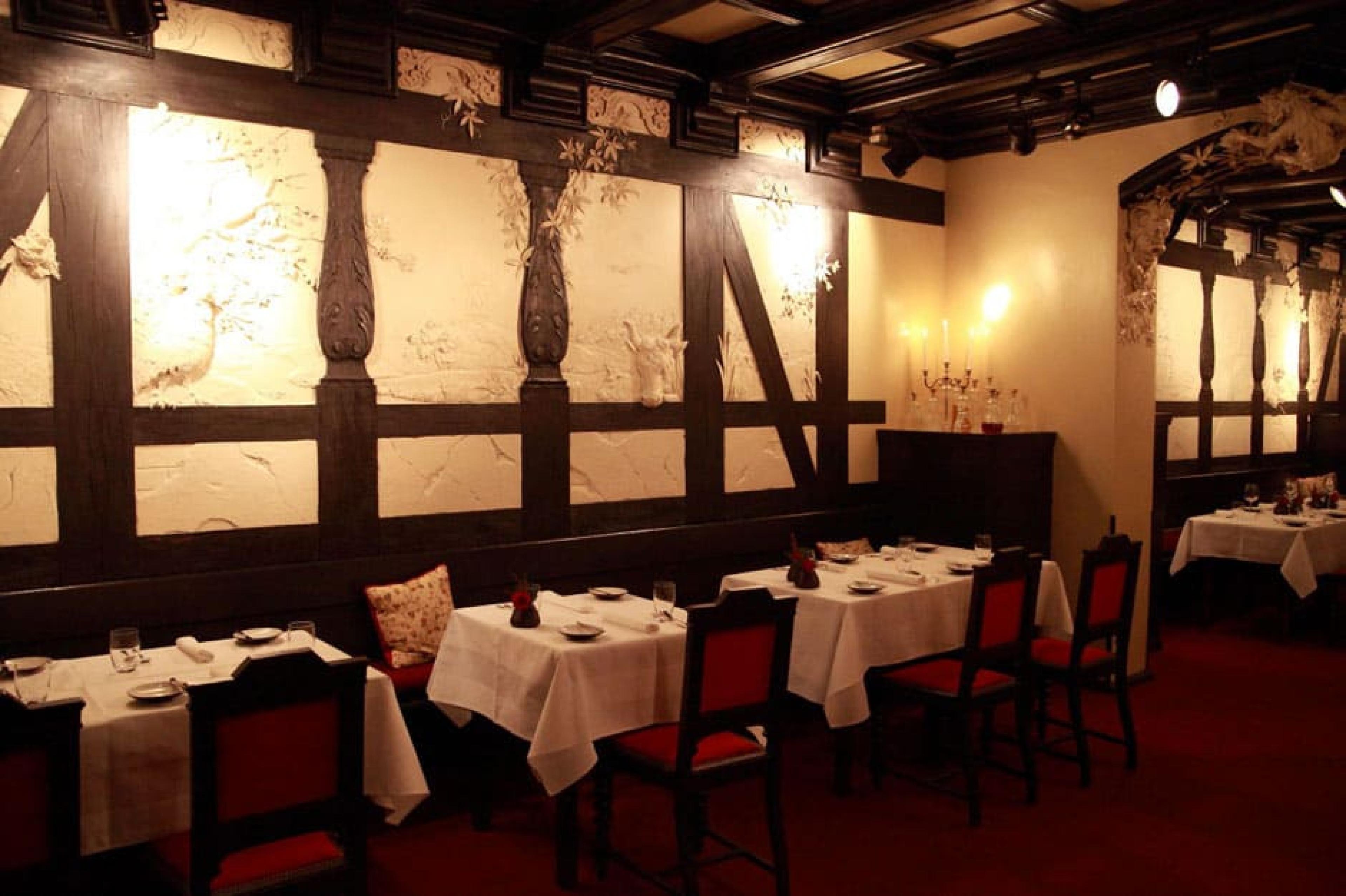
Warm family atmosphere with white tablecloths and moderate noise levels.