
Restaurant Masahiro Nishimura places French technique in Azumino’s mountain-agricultural context rather than a big-city dining frame. Its Tabelog French EAST 100 selection in 2025, 10-seat format, reservation-only service and wine focus make it a small-capacity counterpoint to the region’s casual farm and soba culture.
Pearl is the En Primeur Club membership app — saves, bookings, and concierge access live there. Same editors, same standards.
- Address
- 3499-18 Hotakaariake, Azumino, Nagano 399-8301, Japan
- Phone
- +81 263-81-5275
- Website
- art-saveur.com
- Directions
- Get directions
 Saves & bookings on Pearl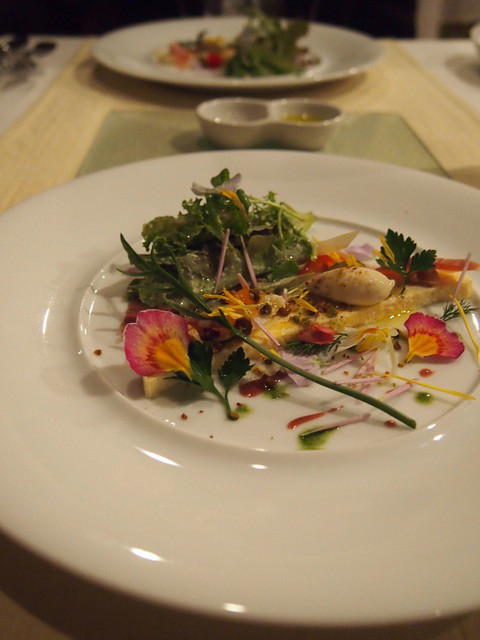
Approaching French cooking in Azumino means reading the room before the menu. The city sits under the Northern Alps, where wasabi fields, dairy farms, orchards and soba traditions shape expectations before a plate arrives. Here, a house restaurant serving French cuisine shifts the hierarchy: produce and place matter as much as imported technique.
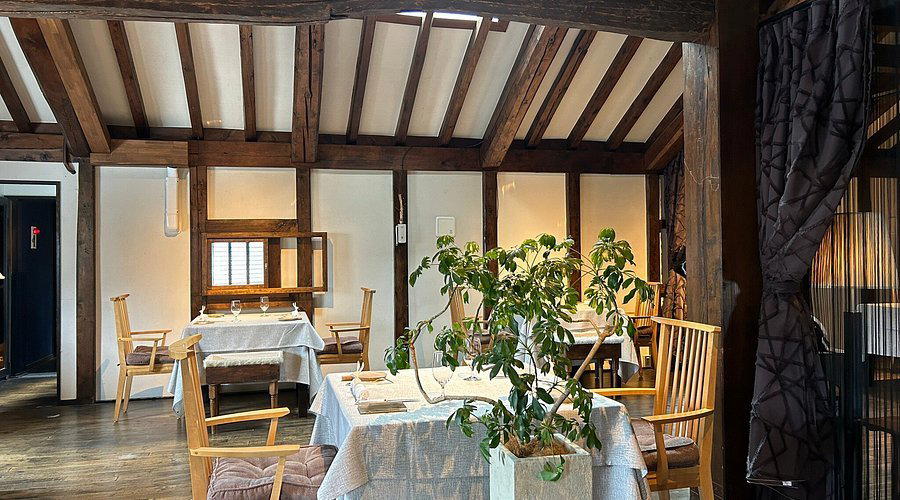
Restaurant Masahiro Nishimura belongs to a quieter, rural branch of Japanese French dining, promising not metropolitan spectacle but a controlled encounter between European structure and Shinshu ingredients. Its selection for Tabelog French EAST 100 in 2025 places it in a regional French conversation beyond Tokyo, while its small dining room feels closer to a private table than a city restaurant.
French technique through an Azumino lens
Nagano’s appeal to cooks is practical before romantic: altitude, cold winters, clean water and farming breadth create a pantry sharply different from coastal Japan. French restaurants here work best when sauces, pacing and wine frame local vegetables, dairy, meat and mountain-season ingredients, rather than reproduce Parisian dining at a distance.
That is the useful way to read this restaurant. The category is French, but the setting argues for a lighter, ingredient-led form. Azumino is not a late-night restaurant city; it rewards daytime travel, deliberate reservations and meals tied to the land around Hotaka. Visitors building a food day might contrast it with the dairy-and-pasture simplicity of Kita Alps Bokujou, or with the higher-priced local dining bracket represented by Shogetsu. The comparison shows how broad Azumino’s table has become: farm snacks, traditional Japanese formats and small-scale French cooking now share the same travel radius.
The Tabelog French EAST 100 selection matters because rural French restaurants are harder for visitors to calibrate than urban addresses with Michelin shorthand. A Tabelog score of 3.63 and inclusion in the 2025 French EAST list provide an external signal without overstating the case. It is not competing on spectacle, chef celebrity or room size, but on whether a compact meal can make Azumino’s agricultural identity legible through French grammar.
A small house-restaurant format, not a city production
The format is central. Ten seats and two seatings across lunch and dinner put the restaurant where pacing, table rhythm and advance planning matter. This is neither a flexible station-area bistro nor the anonymous polish of a hotel dining room. The house-restaurant setting makes the meal domestic in scale, suiting Azumino better than formality for its own sake.
That scale also shapes value. In Japan’s French category, especially outside major cities, the middle price band can be interesting because rent, sourcing and staffing pressures differ from Tokyo or Osaka. The listed lunch and dinner budgets sit below several luxury-counter meals in Nagano Prefecture and far below destination sushi pricing in larger markets, while still demanding the discipline of a planned meal. For travelers, it is a serious dining anchor, not a spontaneous stop.
Wine and cocktails are listed, with a stated emphasis on wine, another cue to the format. French dining in rural Japan can become overly ceremonial when beverage service imitates city luxury. A compact wine-minded room in Azumino has a more grounded role: connecting the meal to structure, acidity and pacing, especially when local produce and dairy are part of the regional expectation. The appeal is not excess, but seeing how French service codes adapt to an agricultural, seasonal and restrained food culture.
For broader planning, the restaurant sits in a destination that rewards more than one meal. The wider editorial map helps: Our full Azumino restaurants guide gives the dining frame, while Our full Azumino hotels guide, Our full Azumino bars guide, Our full Azumino wineries guide and Our full Azumino experiences guide help turn the meal into a coherent stay rather than an isolated booking.
Where it fits in a Japan dining itinerary
For travelers moving through Japan, Azumino corrects the restaurant logic of Tokyo and Kyoto. The national dining map can feel dominated by counter sushi, wagyu, ramen, curry and urban cafés, yet more revealing meals often happen where a cuisine is transplanted into a specific local economy. French in Azumino is not merely foreign; it organizes mountain produce, dairy, wine service and rural hospitality into a slower meal.
That contrast is clear beside other Japanese dining genres. A sukiyaki specialist such as -Grilled beef Sukiyaki- KAMAKURA TANUKIAN 鎌倉 たぬき庵 in Kamakura centers beef and hot-pan ritual. A Tokyo charcoal-and-tuna address like . 鮪と炭火焼き うお炭 秋葉原店 in Tokyo belongs to denser urban drinking-food culture..cafe in Osaka.know in Kumamoto and (Shoku) Vietnam in Kawasaki show the breadth of everyday restaurants across cities. Azumino’s French thread is quieter, more planned and more dependent on surrounding farms and mountain tourism.
Other categories sharpen the point. [Curry Senmon Ten] Maruyama Kyoju. in Sapporo, [ki:] in Kyoto, #肉といえば松田 奈良本店 in Kashihara and 1/3 HAMBURGER FACTORY in Kanazawa each answer a different travel question: speed, craft, meat, comfort. Restaurant Masahiro Nishimura answers a narrower one: where can French technique make sense in a rural Japanese setting without losing the place around it?
International Japanese-adjacent dining offers another contrast. Jōdo Saké Bar in Los Angeles and Onigiri Time in Pasadena translate Japanese formats outward for a California audience. Azumino’s French dining works in the opposite direction, bringing a European format into a Japanese mountain town and letting local sourcing expectations set the tone. That inversion makes the restaurant worth seeking out for travelers who know the major-city circuit and want a meal that explains Nagano rather than simply adding another formal dinner to the itinerary.
Comparison Snapshot
Comparable venues by cuisine and price in the same metro.
| Venue | Cuisine | Price | Notes |
|---|---|---|---|
| Restaurant Masahiro Nishimura | French with Shinshu local ingredients | $$$ | Hotaka Ariake |
| Kita Alps Bokujou | Farm dairy shop & soft-serve ice cream | $ | Hotaka Ariake, Azumino |
| Shogetsu | Seasonal Japanese Kaiseki | $$$ | Azumi Oiwake / Ariake, Azumino |
| The French Kitchen (フレンチ キッチン) | Classic French Bistro | $$$ | Roppongi |
| Anis | Modern French Bistro | $$$ | Hatsudai |
| ビストロ高柳 | French Bistro | $$$ | Kanazawa |
Recognition history
Dated appearances from independent guides and award organizations, with the underlying list record or original source where available.
Tabelog 100 #54 · No. 54
Tabelog · Tabelog 100 - French - EAST - 2025
Continue exploring
More in Azumino
Restaurants in Azumino
Browse all →
Bars in Azumino
Browse all →
Hotels in Azumino
Browse all →
Wineries in Azumino
Browse all →

At a Glance
- Cozy
- Elegant
- Intimate
- Date Night
- Special Occasion
- Celebration
- Business Dinner
- Solo
- Standalone
- Extensive Wine List
- Local Sourcing
Current opening hours
- Monday
- 12–2:30 PM, 6–9:30 PM
- Tuesday
- 12–2:30 PM, 6–9:30 PM
- Wednesday
- 12–2:30 PM, 6–9:30 PM
- Thursday
- Closed
- Friday
- 12–2:30 PM, 6–9:30 PM
- Saturday
- 12–2:30 PM, 6–9:30 PM
- Sunday
- 12–2:30 PM, 6–9:30 PM
Hours can change for holidays and private events. Last verified .
Warm and understated, with a relaxed, non-formal atmosphere that feels like a personal hidden favorite, focusing attention on carefully plated French cuisine using local Shinshu produce.