
Tabelog 100 #88
Our verdict
Shogetsu sits in Azumino’s quieter Japanese-cuisine tier, where mountain produce, tatami-room pacing, and destination dining matter more than urban theatre. Its Tabelog Japanese Cuisine EAST 100 selections in 2021, 2023, and 2025 place it among serious regional tables, with a format better suited to planned meals than casual drop-ins.

Pearl is the En Primeur Club membership app, where members save venues, book tables and use the concierge.
The menu
What to order
- Sesame tofu starter
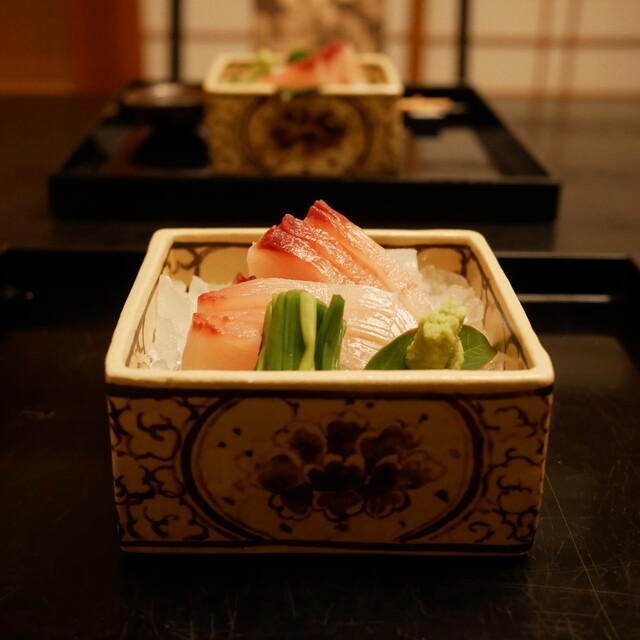
- Seasonal kaiseki course menu with local Azumino vegetables
- Appetizer with umeshu
Azumino dining begins before the meal: irrigation channels, fields, orchards, farms, and the long wall of the Northern Alps set a different rhythm from Nagano’s station-front restaurants. In that setting, Japanese cuisine reads less as ceremony for its own sake and more as a way of sorting what the basin produces. Shogetsu belongs to that camp: an Azumino Japanese-cuisine restaurant whose appeal is tied to place rather than metropolitan spectacle.
The point is not rural nostalgia. Nagano’s better Japanese restaurants compete on precision because the ingredients invite it: clean mountain water, mushrooms, soba country, alpine vegetables, preserved foods, and fruit that changes the register of a meal through the year. Azumino’s dining scene is thinner than Tokyo’s, but the serious tables here carry a sharper sense of place. Shogetsu’s 2025 Tabelog Hyakumeiten recognition gives that local argument a measurable signal, especially for travellers trying to identify Japanese cuisine with a domestic reputation.
Mountain-basin Japanese cooking, not city kaiseki cosplay
Regional Japanese cuisine outside the large cities often gets misread as a softer version of kaiseki. In Azumino, the stronger comparison is with kitchens that use classical structure to frame local product rather than reproduce Kyoto codes. That distinction matters for travellers. A meal here makes sense as part of a Nagano itinerary built around water, farms, craft, and onsen routes, not as a substitute for Ginza formality.
Within Azumino itself, the spread is wide. Kita Alps Bokujou points toward the area’s dairy and everyday pastoral economy, while Restaurant Masahiro Nishimura gives the city another route into destination dining. Shogetsu occupies the Japanese-cuisine lane, with listed lunch and dinner budgets of JPY 15,000 - JPY 19,999 and enough recognition to merit planning rather than an improvised stop between museums.
The ingredient-sourcing angle is the reason to care. Azumino’s identity is inseparable from the Northern Alps watershed, and Japanese cuisine is the format that can make those local differences legible without turning them into a lecture. A good regional meal in Nagano does not need novelty; it needs restraint, seasonality, and enough confidence to let mountain vegetables, rice, miso, pickles, and sake sit in their proper proportions. Shogetsu’s recognition places it inside that serious regional conversation.
The meal favors planning, families, and slower pacing
The planning format matters because travellers need to know how to use the restaurant. Rather than assuming a quick stop, it is safer to treat Shogetsu as a planned Azumino meal, suited to people who want time for the cooking and the setting to register. This is useful intelligence for travel in Japan, where the difference between a beautiful meal and a strained one often comes down to expectations, pacing, and advance confirmation.
That more considered signal should not be confused with casual pricing or walk-in flexibility. The category is formal in planning terms even when the experience may read as regional rather than grand. Travellers who treat Azumino as a countryside add-on to Tokyo or Kyoto should plan payment, timing, and reservations carefully, as rural premium dining often follows local habits rather than big-city assumptions.
Recognition also has to be read correctly. Tabelog’s Hyakumeiten lists are not Michelin stars, and they do not turn a restaurant into an international luxury brand. They are, however, strong domestic signals in Japan, especially for visitors trying to separate serious regional addresses from merely picturesque ones. In that sense, Shogetsu’s 2025 recognition carries practical value: it places the restaurant within a selected Japanese-cuisine context while keeping it rooted in Azumino rather than a capital-city dining circuit.
How to place it in an Azumino itinerary
Azumino rewards travellers who slow the day down. The smarter plan is to connect lunch or dinner with the area’s art, farms, cycling routes, or an overnight stay rather than force the meal into a same-day dash from elsewhere. The location should be understood simply as Azumino, and the useful planning note is broader than any single route: leave enough time for rural transfers so the meal does not become a logistics problem.
For a broader food map, start with Our full Azumino restaurants guide, then build the rest of the trip through Our full Azumino hotels guide, Our full Azumino bars guide, Our full Azumino wineries guide, and Our full Azumino experiences guide. The useful comparison is not with Tokyo density but with how much of Nagano’s food culture can be read in a compact valley: dairy, soba, sake, wasabi, fruit, and Japanese cooking with enough structure to hold them together.
Readers continuing through Japan can compare Shogetsu with other dining formats across the country, or keep the focus closer to Azumino by looking at other local rooms generically alongside the area’s restaurants, farms, and drinking culture. The point is not to turn every meal into a ranking exercise, but to understand how different the same Japanese references become once they are removed from their regional source.
Shogetsu is strongest for travellers who want Azumino to taste like Azumino, not like a transplanted capital-city dining room. The appeal lies in the convergence of mountain produce, Japanese cuisine, 2025 domestic recognition, and the kind of logistics that reward planning. In a city where the food story is written as much by water and farms as by chefs, that is the right measure of seriousness.
Frequently asked questions
Is Shogetsu child-friendly?
Shogetsu is in Azumino, and travellers planning a family meal should confirm suitability, seating, and any reservation details directly with the restaurant in advance.
Is Shogetsu formal or casual?
It is best treated as a planned Japanese-cuisine meal rather than a casual drop-in. The JPY 15,000 - JPY 19,999 lunch and dinner budget and 2025 Tabelog Hyakumeiten recognition suggest a composed experience.
What's the price range at Shogetsu?
Pricing at Shogetsu is listed as JPY 15,000 - JPY 19,999 JPY 15,000 - JPY 19,999 View spending breakdown.
What is Shogetsu known for?
Shogetsu is known as a Japanese-cuisine restaurant in Azumino with 2025 Tabelog Hyakumeiten recognition and a listed score of 3.70.
Fast Comparison
Comparable venues by cuisine and price in the same metro.
| Venue | Cuisine | Price | Awards | Notes |
|---|---|---|---|---|
| ShogetsuThis venue (the venue you are viewing) | Seasonal Japanese Kaiseki | $100–150 | Tabelog 100 #88 | Not listed |
| Restaurant Masahiro Nishimura | French with Shinshu local ingredients | $50–100 | Tabelog 100 #54 | Hotaka Ariake |
| Kita Alps Bokujou | Farm dairy shop & soft-serve ice cream | $1–10 | Tabelog 100 #70 | Hotaka Ariake, Azumino |
| Meiji no Yakata | Yoshoku (Japanese-Western Fusion) | Not listed | Not listed | Nikko Fudoson Park |
| 割鮮 のむら | Kappo Japanese with Fresh Seafood | $50–100 | Not listed | 泉野出町 |
| Unitora (うに虎) | Uni Specialty Sushi | $50–100 | Not listed | Tsukiji |
Recognition history
Dated appearances from independent guides and award organizations, with the underlying list record or original source where available.
Tabelog 100 #88 · No. 88
Tabelog · Tabelog 100 - Japanese cuisine - EAST - 2025
Continue exploring
More in Azumino
Restaurants in Azumino
All restaurants in Azumino →
Hotels in Azumino
Browse all →
Wineries in Azumino
Browse all →
Details
- Cozy
- Rustic
- Elegant
- Intimate
- Special Occasion
- Date Night
- Family
- Group Dining
- Celebration
- Private Dining
- Standalone
- Garden
- Sake Program
- Local Sourcing
- Mountain
- Garden
- Tasting Menu
- Set Menu
- Sake
- Shochu
- Wine
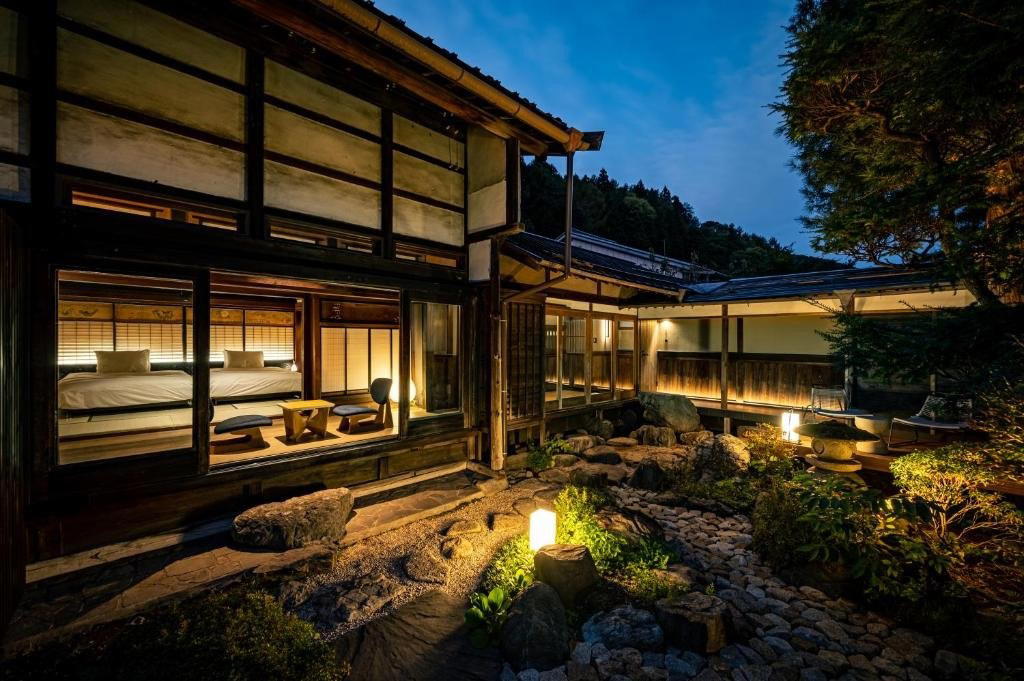
A quiet, house-like hideaway with tatami rooms and a stylish yet relaxing Japanese interior, creating an intimate, low-lit atmosphere that feels like a private retreat in the Azumino mountains.