

Relais Chateaux Award · Tabelog Bronze #112
Our verdict
Hikariya-Nishi places Matsumoto’s mountain-city dining in a serious, multi-course register: Japanese kaiseki with French and organic classifications, with Tabelog Award 2026 Bronze recognition and Relais & Châteaux inclusion. The appeal is not spectacle but discipline: a historic Ote setting, garden context, wine service, and a format suited to diners treating Nagano as more than a castle stop.

Pearl is the En Primeur Club membership app — saves, bookings, and concierge access live there. Same editors, same standards.
- Address
- 4 Chome-7-14 Ote, Matsumoto, Nagano 390-0874, Japan
- Phone
- +81 50-3196-9444
- Hours
- Mon–Tue 6–10 PMWed ClosedThu 6–10 PMFri–Sun 11:30 AM–3 PM, 6–10 PM
- Website
- hitosara.com
- Directions
- Get directions
- Booking
- Book on TableCheck
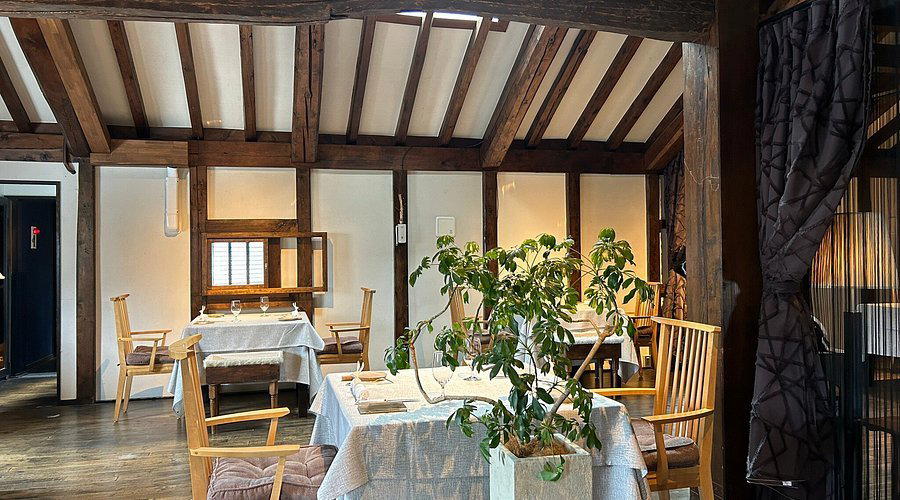
Approaching Ote, Matsumoto’s old merchant quarter makes the meal’s first argument. Low roofs, preserved houses, measured streets and garden space make slower dining feel less staged than in larger cities. Hikariya-Nishi belongs to the destination-restaurant tradition where room, course sequence and the city’s restraint form one proposition.
Matsumoto is often reduced to castle-and-alps shorthand, but its dining culture is sharper. Nagano’s highland produce, long winters, soba culture, miso, mushrooms and mountain vegetables give chefs a regional vocabulary distinct from Kyoto’s courtly refinement or Tokyo’s luxury-counter compression. Here, multi-course dining is less theatrical excess than calibration: temperature, pacing, seasonality and portion size carry the evening.
Kaiseki discipline in a mountain city, not a Tokyo performance
Serious kaiseki is built on progression, not abundance. The sequence should move through season, texture and weight without forcing one “main event” to do all the work. Matsumoto suits the format: the city encourages attention to small transitions, from the approach near Matsumoto Castle to the changed pace once dinner begins.
The restaurant’s recognition places it in a competitive band. It holds The Tabelog Award 2026 Bronze and has appeared in Tabelog’s French EAST 100 selections in 2021, 2023 and 2025; it also appears within the Relais & Châteaux restaurant universe. Those signals matter because regional fine dining in Japan is easily underestimated from abroad. A Bronze-level Tabelog marker does not make the meal comparable to every kaiseki counter in Kyoto or Tokyo, but it does place the restaurant inside a national conversation, not only a local one.
Hikariya-Nishi is a Japanese kaiseki restaurant with French and organic classifications. That hybrid positioning is common in regional Japan, where chefs may borrow Western structure or wine logic while keeping seasonal progression and local ingredients central. Read it less as fusion than as a Nagano answer to formal dining: composed, course-led and attuned to Matsumoto’s produce and climate.
Comparison clarifies the choice. Kyoto’s Aca 1°, Japanese Kaiseki in Kyoto and Tokyo’s Aoyagi - 青柳, Japanese Kaiseki in Tokyo occupy different city ecosystems, where national and international diners often arrive with fixed expectations of formality. Matsumoto’s appeal is quieter: the meal sits closer to a regional cultural itinerary, with castle, craft, mountain air and historic architecture helping frame it.
The room matters because Matsumoto dining is architectural
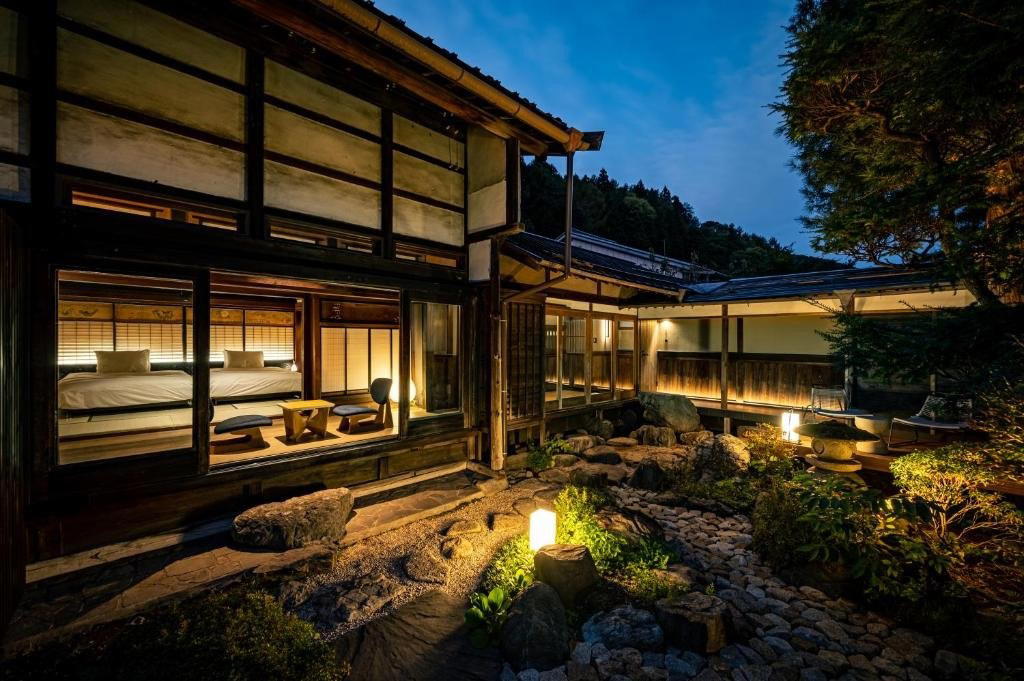
In large cities, ambitious restaurants often disappear into towers, basements or anonymous backstreets. Matsumoto’s stronger dining rooms use older buildings and residential scale as part of the grammar. Hikariya-Nishi’s historic merchant-house setting, with a Japanese garden noted among its highlights, fits that pattern. The point is proportion, not nostalgia: kaiseki benefits when the room slows the diner before the first course.
That architectural thread runs through the city. Hikariya Higashi offers a useful counterpoint within the same Matsumoto orbit, while Coffee Marumo shows how older buildings also shape the city’s café culture.
The wine emphasis is another clue to its place in the city. Kaiseki in Japan is often discussed through sake, but wine service can sharpen the French-organic side and signal a different rhythm: acidity, mineral structure and lighter extraction can work with mountain vegetables and seasonal courses without overwhelming them. Sommelier service and wine-focused drinking put the meal closer to a composed dining evening than a purely traditional ryotei-style experience.
Matsumoto’s size also helps. A meal here can anchor a day rather than compete with a dozen reservations. The wiser itinerary gives the city breathing room: castle precincts, craft streets, coffee, then dinner. Travellers building a fuller stay should leave time for the city rather than treating it as a single-night stopover.
Where it sits among Matsumoto's serious tables
Matsumoto’s better dining is not one-note. Alpenrose speaks to the alpine and European thread in Nagano tourism, while French Natural Restaurant SAI points to the region’s interest in produce-led French cooking. Furin Kazan gives another register, useful for understanding how local dining moves between polished meals and more direct regional cooking.
The better choice depends on the trip’s centre of gravity. Diners chasing the compact intensity of Tokyo counters may find Matsumoto’s rhythm understated. Diners who care about place, pacing and how a course sequence translates season into structure will understand why this restaurant has national award traction. Its measured setting, wine orientation and kaiseki framework make it a strong candidate for the primary dinner of a Matsumoto stay.
The editorial verdict is simple: Hikariya-Nishi is for travellers who want Matsumoto to register through dinner, not just sightseeing. Its awards, setting and course-led format give the city a more serious culinary punctuation mark than many first-time visitors expect.
Frequently asked questions
Does Hikariya-Nishi work for a family meal?
Yes, especially if the group wants a private room. Hikariya-Nishi offers private rooms for 2 to 8 people, and children of elementary school age or younger are asked to use one, with a 5,000 yen room fee. That setup suits a family meal in its 52-seat house on Ote in Matsumoto.
What is the atmosphere like at Hikariya-Nishi?
It is a house restaurant in a 140-year-old building, with private rooms, an open terrace, and a relaxed, spacious layout. The mood is shaped by the building as much as the Japanese kaiseki menu, and the restaurant's 2026 Tabelog Bronze award gives it added weight in Matsumoto.
How would you describe the cuisine at Hikariya-Nishi?
Hikariya-Nishi is a Japanese kaiseki restaurant.
When is Hikariya-Nishi open?
Hours at Hikariya-Nishi: Mon: 6–10 PM; Tue: 6–10 PM; Wed: Closed; Thu: 6–10 PM; Fri: 11:30 AM–3 PM, 6–10 PM; Sat: 11:30 AM–3 PM, 6–10 PM; Sun: 11:30 AM–3 PM, 6–10 PM.
Where is Hikariya-Nishi located?
Hikariya-Nishi is located in Matsumoto.
Comparable venues nearby, for context on price, style, and recognition.
| Venue | Cuisine | Price | Awards | Notes |
|---|---|---|---|---|
| Hikariya-NishiThis venue — the venue you are viewing | Nature French Gastronomy | $100–150 | Relais Chateaux Award · Tabelog Bronze #112 | Not listed |
| Sushi Inukai | Edomae Omakase Sushi | $150–200 | Tabelog 100 #90 | / Shimauchi |
| エスパース・ソシアル・ル・サロン | French Bistro with Wine Pairing | $50–100 | Not listed | Matsumoto City Center |
| Nature French SAI / ナチュレフレンチ「菜」 Restaurant | Organic French fine dining with Japanese ingredients | Not listed | Not listed | / Iriyamabe (Tobira Onsen area) |
| Coffee Marumo | Classic Japanese kissaten cafe | $10–20 | Tabelog 100 | Nakamachi district |
| Tobira Onsen Myojinkan | French-inspired Kaiseki | Not listed | We're Smart World 3 Radishes · Relais Chateaux Award | Iriyamabe |
Recognition history
Dated appearances from independent guides and award organizations, with the underlying list record or original source where available.
Relais Chateaux Award
Relais Chateaux
Tabelog Bronze #112
Tabelog
Full recognition history (5 entries)
Relais Chateaux Award
Relais Chateaux
Tabelog 100 #44 · No. 44
Tabelog · Tabelog 100 - French - EAST - 2025
Tabelog 100 #67 · No. 67
Tabelog · Tabelog 100 - Japanese cuisine - EAST - 2025
Continue exploring
More in Matsumoto
Restaurants in Matsumoto
Browse all →
Bars in Matsumoto
Browse all →
Hotels in Matsumoto
Browse all →

Details
- Quiet
- Elegant
- Cozy
- Intimate
- Historic
- Date Night
- Special Occasion
- Celebration
- Historic Building
- Sake Program
- Extensive Wine List
- Local Sourcing
- Garden
- Prix Fixe
- Tasting Menu
- Vegetarian Friendly
- Vegan Options
Current opening hours
- Monday
- 6–10 PM
- Tuesday
- 6–10 PM
- Wednesday
- Closed
- Thursday
- 6–10 PM
- Friday
- 11:30 AM–3 PM, 6–10 PM
- Saturday
- 11:30 AM–3 PM, 6–10 PM
- Sunday
- 11:30 AM–3 PM, 6–10 PM
Hours can change for holidays and private events. Last verified .
Warm modern interior in historic kura with candlelit, peaceful atmosphere and lamplight guiding to tables.