
We're Smart World 1 Radish
Our verdict
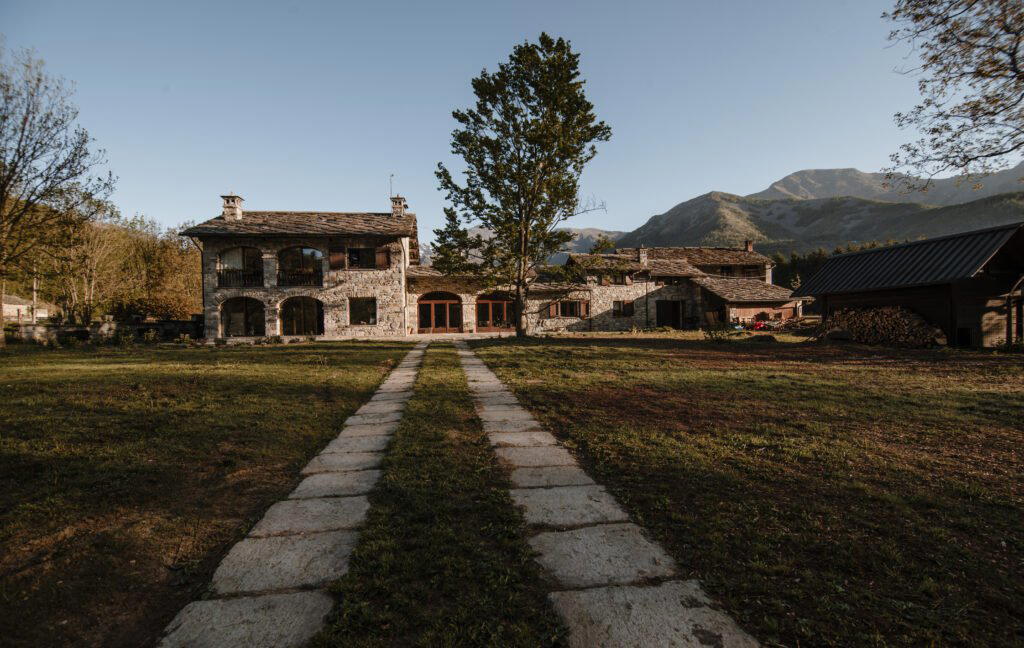
Rantan, run by owner-chefs Carol Choi and Francesco Scarrone in the Canavese hills of Piedmont, operates as a farmer-and-cook experience where the growing and cooking are handled by the same hands. Recognised by We're Smart for its organic philosophy and deep engagement with the land, the property offers overnight stays for those who want the full immersion. The menu leans heavily on what the land produces, with the sourcing and the cooking inseparable.

Pearl is the En Primeur Club membership app, where members save venues, book tables and use the concierge.
The menu
What to order
- House-made bread with mountain butter
- Potatoes with bear garlic pesto and trout roe
- Fermented vegetables
Where the Farm and the Kitchen Are the Same Room
In the Canavese valley east of Turin, the road to Trausella climbs through chestnut forest and terraced pasture before the houses thin out entirely. This is the Valchiusa, a stretch of the Piedmontese Alps that produces no famous wine, carries no Michelin constellation, and draws no weekend crowds from Milan. What it does have, at Via Rueglio 39, is Rantan, a property where the distance between soil and plate has been reduced to almost nothing. For context on how this fits into the broader Valchiusa restaurant scene, the answer is simple: it doesn't fit neatly anywhere, which is precisely the point.
The Farmer-Cook Model and Why It Changes Everything
Across Italian fine dining, sourcing credentials have become a standard part of the pitch. At Osteria Francescana in Modena or Piazza Duomo in Alba, the supply chain is but ultimately external: the chef selects, the producer grows, the two roles remain distinct. The farmer-cook model collapses that separation. When the people cooking your meal are also the people who planted, tended, and harvested what's on your plate, the relationship between kitchen decision and field decision becomes circular. A bad growing season isn't something to route around with a different supplier; it's something to cook through, honestly, with whatever the land gave you that year.
Owner-chefs Carol Choi and Francesco Scarrone have built Rantan around exactly this circularity. We're Smart, the plant-forward food guide, has recognised the project for the integrity of its philosophy, noting the emphasis on organic practice and the respect extended to growers, nature, and the cooking process as a unified whole. That recognition places Rantan in a niche that sits well outside the four-star Piedmontese circuit, closer in spirit to the agrarian fine dining emerging in pockets of northern Italy and the Alpine south than to the technically ambitious tasting menus at Le Calandre in Rubano or Enrico Bartolini in Milan.
Organic as a Foundation, Not a Marketing Position
The Italian food world has a complicated relationship with the word organic. In the north especially, it can function as premium branding layered on top of conventional restaurant logic: the menu changes seasonally, there's a favoured biodynamic producer in the Langhe, and the communication emphasises terroir. What distinguishes operations like Rantan from that model is that organic practice isn't a sourcing filter applied at the procurement stage; it's the governing logic of the entire property. The soil management, the crop selection, the timing of the harvest, the decisions about what gets cooked and what doesn't make the cut, all of these flow from the same underlying commitment rather than being assembled afterward into a coherent story.
This has direct consequences for what arrives at the table. The menu at Rantan is determined by the farm's output, not the other way around. That constraint, which would look like a limitation in a city restaurant context, is in practice an editorial discipline: it forces genuine seasonal cooking rather than seasonal decoration. It also means the kitchen develops real fluency with a narrow set of ingredients grown to their own standard, which tends to produce cooking of a different quality than broad sourcing from multiple suppliers. Italy has a handful of operations working at this level of integration, and most of them, like Rantan, operate outside the major gastronomic circuits. For reference, you can explore more on the Valchiusa experiences guide and the Valchiusa wineries guide for the fuller picture of what this valley offers.
The Plant Question
We're Smart's recognition of Rantan comes with a pointed observation: the philosophy, strong as it is, does not extend fully to plant-only dining. The guide's editors note their enthusiasm for the farmer-cook concept while flagging that a guest seeking a purely plant-based experience cannot currently be accommodated. In the context of a property with such clear commitments to organic practice and land-first thinking, that gap is worth naming. The broader movement toward plant-forward cooking at the serious end of Italian dining, visible at operations like Atelier Moessmer Norbert Niederkofler in Brunico, treats the exclusion of animal products not as a restriction but as an extension of the same ecological reasoning that drives organic agriculture. Rantan's philosophy is clearly aligned with that reasoning; the menu construction hasn't yet followed it all the way through.
Staying Over: Why the Overnight Option Matters
Rantan offers the option to stay overnight, and this is not incidental. The farmer-cook experience, as Choi and Scarrone frame it, is premised on immersion in a particular place and its rhythms. Arriving for dinner and leaving the same evening is a workable itinerary, but it reduces the experience to its most legible element. Staying means waking up in the Canavese landscape, understanding the morning character of a working farm, and situating the meal you ate the night before in its actual context. The Valchiusa hotels guide covers the broader accommodation picture in the valley, but for Rantan specifically, overnight is the format the property is designed around.
This overnight format also places Rantan in a small but coherent category of Italian destinations where the stay and the table are conceived together rather than separately. Reale in Castel di Sangro offers a comparable integration of hospitality and serious kitchen work in a rural setting, though its scale and Michelin context are quite different. The underlying logic, that understanding a kitchen's cooking requires spending time in its physical and agricultural world, connects both.
Getting There and Planning Your Visit
Trausella sits in the Canavese foothills roughly an hour northeast of Turin by car. Public transport to the village is limited, and the mountain road approach makes a car the practical requirement for almost all visitors. Given that, and given the immersive format the property is designed around, planning an overnight stay rather than a day trip is both logistically sensible and experientially coherent. Contact details are not currently listed publicly; reaching out through the address at Via Rueglio 39, Trausella TO is the documented point of contact. For bars and other stops in the surrounding area, the Valchiusa bars guide is worth consulting before you make the drive.
For comparison with the broader range of serious Italian cooking worth building a trip around, the EP Club has detailed coverage of Dal Pescatore in Runate, Enoteca Pinchiorri in Florence, Uliassi in Senigallia, Quattro Passi in Marina del Cantone, and Casa Perbellini 12 Apostoli in Verona. If you're building an itinerary that extends beyond Italy, Le Bernardin in New York City and Emeril's in New Orleans represent the EP Club's broader editorial reach.
Questions About Rantan
- Does Rantan work for a family meal?
- It depends on the family: the farm-immersion format and remote mountain location suit those already oriented toward food provenance and outdoor settings, but it is not designed as casual family dining.
- How would you describe the vibe at Rantan?
- If you come expecting a conventional restaurant experience, the format will feel unfamiliar. If you come expecting a working farm where the people growing your food are also cooking it, in an organic mountain property recognised by We're Smart for its philosophy, the atmosphere is grounded, purposeful, and without performance. The Valchiusa setting reinforces that: there is nothing urban or theatrical about this corner of Piedmont.
- What should I order at Rantan?
- Follow what the farm is producing at the time of your visit. The farmer-cook model means the menu reflects current harvest rather than fixed dishes, so the right approach is to let Choi and Scarrone direct the meal. We're Smart's recognition is tied specifically to the organic, land-driven philosophy, and that philosophy is most legible when you eat what the land is offering that season rather than selecting around it.
Frequently asked questions
Does Rantan work for a family meal?
Rantan is a farm-rooted operation run by owner-chefs Carol Choi and Francesco Scarrone in Trausella, a remote Canavese hillside village roughly an hour northeast of Turin. The format is immersive rather than conventional restaurant dining, with the farm itself forming the backdrop. Families with children curious about food provenance and outdoor settings may find it engaging, but the experience is better suited to those who want depth of participation than a straightforward meal out.
How would you describe the vibe at Rantan?
We're Smart, which has recognised Rantan, describes it as a farmer and cook experience situated in nature itself, that framing is accurate. There is no front-of-house in the traditional sense; Choi and Scarrone are both growers and cooks, and the setting in the Canavese foothills outside Trausella means the farm environment is constant context. The tone is closer to a working agricultural stay than a country restaurant.
Has Rantan won any awards?
Rantan has received recognition including: This is a unique concept right in the heart of nature itself. Owner-chefs Carol Choi and Francesco Scarrone call it a farmer & cook experience! Respect between the grower, nature, and the chef is essential, with a focus on organic as the fo….
What should I order at Rantan?
That direct farm-to-kitchen model means the menu follows seasonal and harvest logic rather than a fixed card. We're Smart's one pointed criticism is that the concept stops short of fully plant-based options, so diners seeking a meat-free menu should confirm the current offering directly before visiting.
How It Stacks Up
Comparable venues nearby, for context on price, style, and recognition.
| Venue | Cuisine | Price | Awards | Notes |
|---|---|---|---|---|
| RantanThis venue (the venue you are viewing) | Micro-Seasonal Farmhouse Italian | $50–100 | We're Smart World 1 Radish | Not listed |
| Trattoria Bologna | italian | Not listed | Not listed | Turin |
| Signorvino Torino | Italian Wine Bar | $30–50 | Star Wine List | Centro |
| Fuori Tempo | Modern Neapolitan Pizza | $20–30 | 50 Top Pizza Italia #61 | Canale |
| Gelateria La Romana | Artisanal Italian Gelato | Not listed | Not listed | Sallustiano |
| Gelatoteca Suso | Artisanal Gelato | $1–10 | Not listed | San Marco |
Recognition history
Dated appearances from independent guides and award organizations, with the underlying list record or original source where available.
We're Smart World 1 Radish
We're Smart World
Continue exploring
More in Valchiusa
Restaurants in Valchiusa
All restaurants in Valchiusa →
Bars in Valchiusa
Browse all →

Details
- Cozy
- Rustic
- Intimate
- Scenic
- Special Occasion
- Open Kitchen
- Farm To Table
- Local Sourcing
- Organic
- Mountain
- Set Menu
- Vegetarian Friendly
Current opening hours
- Monday
- Closed
- Tuesday
- Closed
- Wednesday
- Closed
- Thursday
- Closed
- Friday
- Closed
- Saturday
- 12–2 PM, 7–10 PM
- Sunday
- 12–2 PM
Hours can change for holidays and private events. Hours as of .
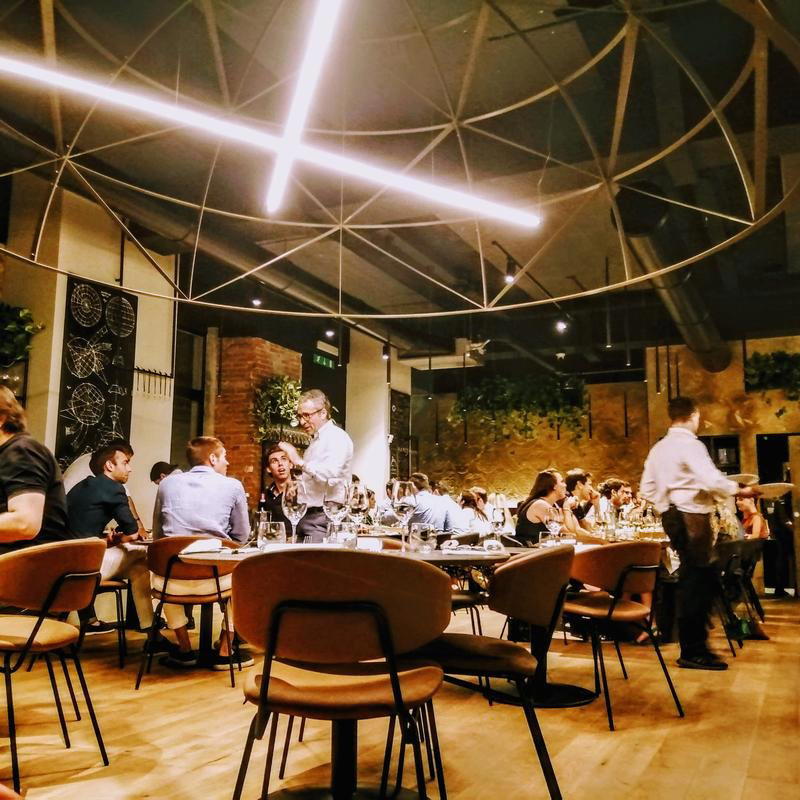
Soft lighting, Danish-style minimalist decor with light wood, Swedish ceramics, and a welcoming shared wooden table in a warm, hygge-inspired farmhouse atmosphere.