Ramen Goku Chelsea
Ramen Goku Chelsea occupies a corner of 8th Avenue where New York's appetite for serious Japanese comfort food runs deep. The bowl is the argument here: a format that rewards kitchens built around broth discipline, sourcing consistency, and front-of-house timing. For the Chelsea neighbourhood, where casual and ambitious share the same block, that combination carries weight.
- Address
- 150 8th Ave, New York, NY 10011
- Phone
- +12126750080
- Directions
- Get directions
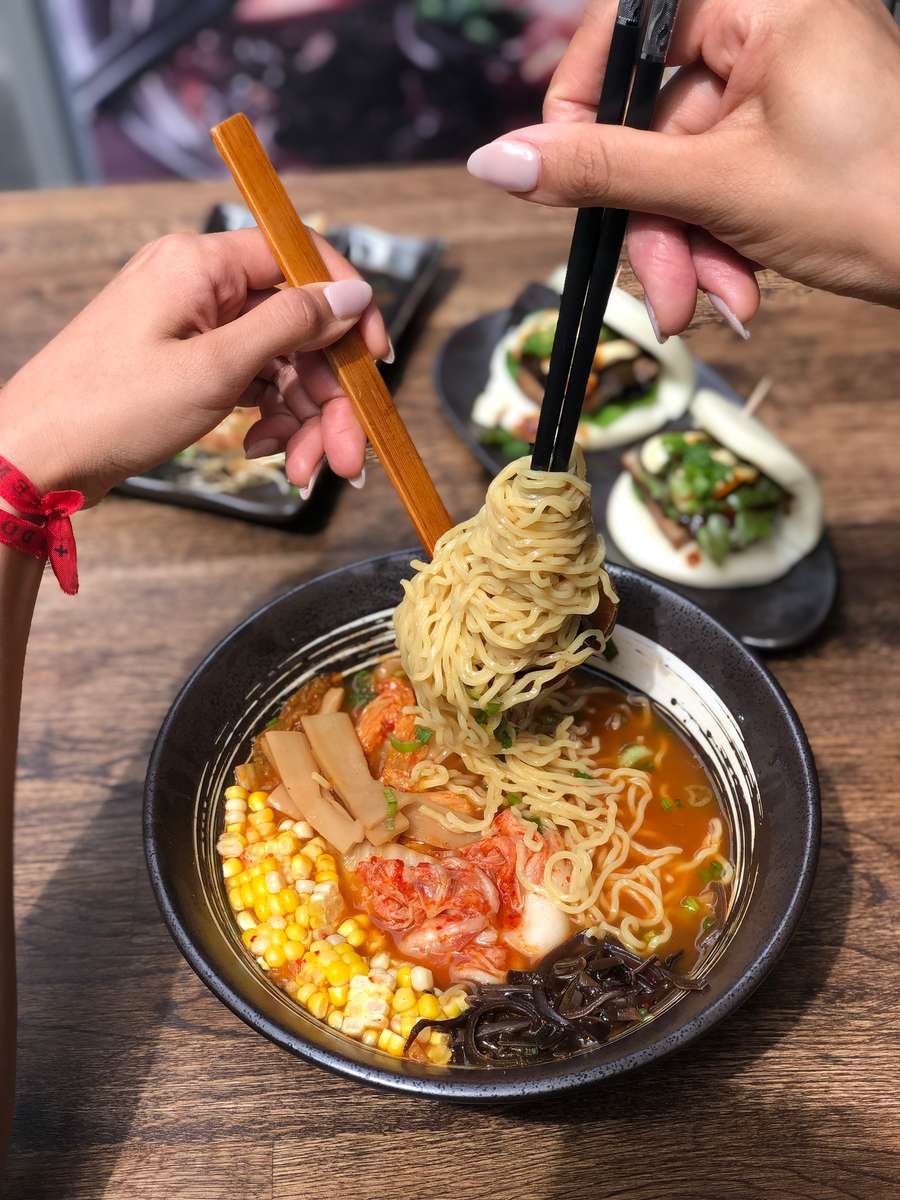
Where Chelsea's Appetite for Japanese Comfort Food Gets Serious
New York's ramen scene has split into two distinct camps over the past decade. On one side sit the fast-casual chains, optimised for throughput and tourist recognition. On the other, a smaller cohort of independent shops that treat tonkotsu reduction times and tare calibration with the same attention that kitchens like Le Bernardin or Per Se give to classical French technique. Ramen Goku Chelsea, at 150 8th Avenue, serves Japanese Curry Ramen at a price tier around $22 per person, a Chelsea address that already hosts a sophisticated dining public conditioned by proximity to some of the city's more demanding restaurants.
Chelsea as a dining neighbourhood rewards specificity. The blocks around 8th Avenue carry a regular clientele that eats widely and returns on merit rather than novelty. A ramen counter here competes not just against other noodle shops but against the full depth of what the West Side offers, from the Korean tasting-menu ambition of venues like Atomix and Jungsik New York to the casual end of the market. Survival in that context requires a bowl that earns repeat visits, and Ramen Goku's positioning on 8th Avenue suggests it understands the neighbourhood's expectation.
The Bowl as the Brief
What separates serious ramen kitchens from competent ones is almost never visible to the diner at the point of ordering. It lives in the hours of simmering behind the pass, in the tare, the seasoning base that determines whether a bowl reads as flat or dimensional, and in the timing between kitchen and table. Broth served thirty seconds past its optimal temperature loses cohesion at the surface; noodles left standing lose their bite within a minute. These are the operational pressures that define ramen as a format, and they are what make the collaboration between kitchen and front-of-house so consequential in this cuisine.
At the counter level, that dynamic is more exposed than in conventional restaurant dining. The distance between kitchen and guest shrinks, and the margin for error narrows. Some of the country's most demanding dining experiences, including counter formats at venues like Masa, have built their reputations precisely on this compression of space and timing. Ramen counters operate on the same principle, even at a different price point: the bowl is assembled and delivered inside a window that requires the kitchen and front-of-house to move as a single unit.
Team Timing and the Counter Dynamic
The editorial angle most relevant to any serious ramen operation is not the chef's biography, it is the system. The collaboration between the cook managing the broth, the person building the bowl, and the front-of-house controlling pacing determines whether a guest receives the dish as intended or as an approximation of it. In this regard, the ramen counter is a useful lens for understanding how restaurant teams actually function under pressure.
Across the American dining spectrum, from the farm-driven tasting rooms of Blue Hill at Stone Barns in Tarrytown to the precise orchestration at Alinea in Chicago, the front-of-house and kitchen relationship has become as discussed as the food itself. A ramen shop concentrates that dynamic into a much smaller physical space. There is nowhere for the coordination to hide. A bowl that arrives with the chashu placed correctly and the egg cut at the right yolk texture tells you everything about how a team communicates behind the pass. One that arrives with a cooling rim of broth tells you the opposite.
Ramen Goku Chelsea's location on 8th Avenue puts it in a part of the city where that level of attentiveness is noticed. The neighbourhood's regulars know the difference between a bowl built for speed and one built for consistency.
Where Ramen Sits in New York's Broader Japanese Dining Register
New York's Japanese dining culture spans an enormous range, from the allocation-only omakase tier that includes venues like Masa, operating at a price point few other American cities sustain, down through the mid-market of izakayas, soba specialists, and ramen shops that together constitute the city's most dependable category of Japanese casual dining. Ramen occupies a specific register within that range: it is accessible in price but demanding in execution, which makes it one of the more honest formats in the city. A bowl either works or it does not, and no amount of room design or narrative substitutes for broth that has not been managed correctly.
That honesty is what makes ramen a useful reference point for understanding broader trends in how New York eats. The city's appetite for serious Japanese comfort food has grown alongside the recognition of precision cooking at the formal end, the two are connected. Diners who eat at omakase counters also eat ramen, and their expectations travel with them. Chelsea's location, close to the High Line corridor that has brought sustained foot traffic and a maturing dining public to the neighbourhood, means Ramen Goku sits at an address where that crossover audience is present.
Planning a Visit
Ramen Goku Chelsea is located at 150 8th Avenue in Manhattan's Chelsea neighbourhood. Chelsea is accessible via the A, C, and E subway lines at 14th Street, placing the restaurant within a short walk of the station. For diners exploring the neighbourhood across a longer evening, the blocks around 8th Avenue support a range of options before or after, and the area's gallery district makes an afternoon visit worth considering alongside dinner.
Single Thread Farm in Healdsburg, Providence in Los Angeles, The French Laundry in Napa, Addison in San Diego, Lazy Bear in San Francisco, Emeril's in New Orleans, Bacchanalia in Atlanta, The Inn at Little Washington, and internationally, 8 1/2 Otto e Mezzo Bombana in Hong Kong and Alain Ducasse at Louis XV in Monte Carlo.
Comparable Venues
Comparable venues nearby, for context on price, style, and recognition.
| Venue | Cuisine | Price | Notes |
|---|---|---|---|
| Ramen Goku ChelseaThis venue — the venue you are viewing | Japanese Curry Ramen | $$ | Not listed |
| Ippudo | Hakata-Style Tonkotsu Ramen | $$ | East Village |
| Tenjou | Modern Japanese Comfort Food | $$ | Midtown South-Flatiron-Union Square |
| Uminoie | Homestyle Japanese Izakaya | $$ | East Village |
| Takahachi | Japanese Sushi | $$ | East Village |
| Davelle | Japanese Kissaten Cafe | $$ | Lower East Side |
Continue exploring
More in New York City
Restaurants in New York City
Browse all →
Bars in New York City
Browse all →
Hotels in New York City
Browse all →






At a Glance
- Casual
- Trendy
- Casual Hangout
- Standalone
Casual neighborhood ramen spot with a relaxed, unpretentious atmosphere