PPQ Dungeness Island
PPQ Dungeness Island on Geary Boulevard sits within San Francisco's Richmond District seafood corridor, where Dungeness crab has anchored Vietnamese-inflected cooking for decades. The kitchen draws from the Pacific's most distinctive seasonal shellfish, placing it in a category that few American cities can replicate. For crab cooked with genuine technical intent, this address competes on ingredient provenance rather than dining-room theatre.
Pearl is the En Primeur Club membership app — saves, bookings, and concierge access live there. Same editors, same standards.
- Address
- 5821 Geary Blvd, San Francisco, CA 94121
- Phone
- (415) 386-8266
- Website
- ppqcrabsf.com
- Directions
- Get directions
 Saves & bookings on Pearl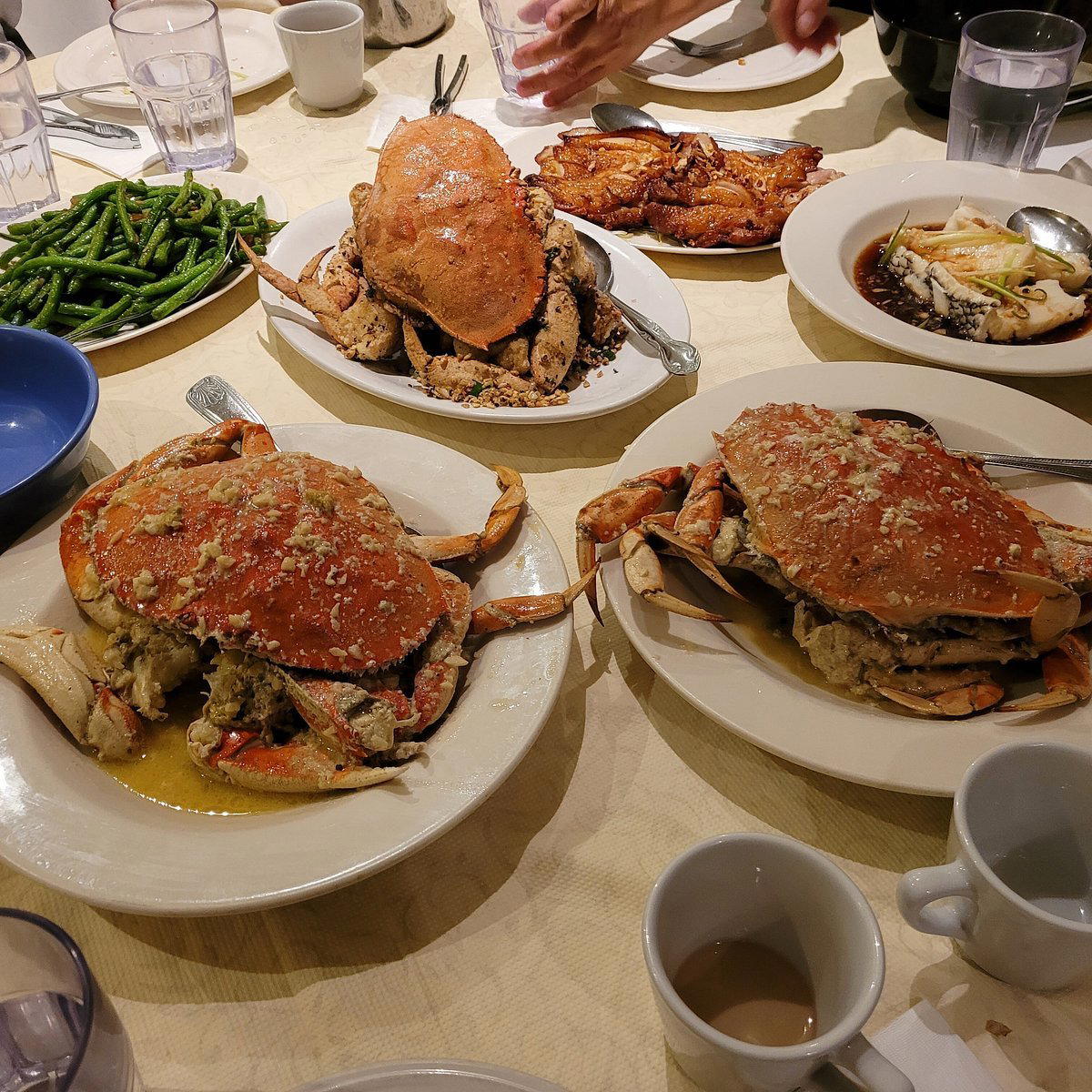
Where the Pacific Coast Shellfish Tradition Lands in San Francisco
Geary Boulevard through the Outer Richmond is a direct stretch of restaurant real estate in San Francisco. No design budgets competing for attention, no tasting-menu theatre, no imported European credentials on the wall. What it has, in concentrated form, is Vietnamese and Chinese cooking shaped around the Pacific Coast's defining shellfish: Dungeness crab. PPQ Dungeness Island at 5821 Geary Blvd sits inside that tradition, in a neighbourhood that treats the crab as a seasonal staple rather than a prestige ingredient deployed for effect.
The Dungeness crab question is worth taking seriously as a matter of ingredient geography. Metacarcinus magister is caught commercially from Alaska down to central California, with the primary San Francisco season running roughly November through June, though the fishery's exact calendar shifts year to year based on marine surveys and sustainability thresholds set by state regulators. What that means practically is that the crabs arriving at kitchens along Geary in peak season are not freight-flown from elsewhere. They come from waters close enough that the quality differential between fresh and recently caught is measurable on the plate. This is the sourcing argument that gives the Richmond District's crab-focused kitchens a structural advantage over restaurants treating Dungeness as an off-season luxury import.
The Ingredient as the Point
Across American seafood cooking, there is a recurring tension between kitchens that subordinate the ingredient to technique and those that treat sourcing as the primary statement. Le Bernardin in New York City and Providence in Los Angeles represent the former school, where French-trained rigour shapes everything the fish or shellfish becomes. The Richmond District model is closer to the latter, where the crab's own sweetness and brininess are the measure of success. Garlic, butter, and chilli preparations common at Vietnamese crab houses along this corridor exist to amplify rather than reframe the shellfish's character.
This is a meaningfully different competitive frame from the San Francisco restaurant scene that generates most of the critical attention. Lazy Bear, Atelier Crenn, Benu, Quince, and Saison operate in the $$$$ tasting-menu tier with tightly controlled formats, advance booking windows, and menus designed to express chef authorship. PPQ Dungeness Island operates in a different register entirely: the shellfish is the focus. Neither model is categorically superior; they answer different questions about what a meal in San Francisco should be.
Dungeness in Regional Context
To understand why this style of crab cooking matters, it helps to look at how Dungeness fits into the broader American seafood picture. The species does not travel as a fine-dining staple to the East Coast the way Maine lobster does westward. Its range is genuinely regional, which makes kitchens close to the source functionally different from those working with the same ingredient after it has crossed the country. Comparisons to sourcing-focused restaurants elsewhere, Single Thread Farm in Healdsburg or Blue Hill at Stone Barns in Tarrytown, are instructive: those kitchens build their menus around geographic proximity to specific producers. The Richmond District's Vietnamese crab houses operate on an equivalent logic, even if the format and price point look nothing alike.
That regional specificity is also what distinguishes San Francisco's Dungeness tradition from the broader Vietnamese-American seafood corridor that runs through Houston, New Orleans (where Emeril's represents a different Gulf Coast seafood sensibility), and the mid-Atlantic coast. What San Francisco has that those cities do not is direct access to a crab that is, by most accounts of professional cooks and fishmongers who have worked across both coasts, a different product in terms of meat-to-shell ratio and sweetness when handled within hours of the catch.
The Richmond District as a Dining Destination
The Outer Richmond is not where San Francisco visitors typically anchor their itinerary. Restaurants attracting national attention, The French Laundry in Napa, Alinea in Chicago, Atomix in New York City, sit in contexts designed to signal their tier at a glance. Geary Boulevard does not signal anything in particular except density: restaurants, bakeries, pharmacies, and hardware stores sharing blocks without hierarchy. The crab houses benefit from that absence of scenography. The work is in the bowl or on the plate, not in the room.
The stretch around 5821 Geary has several Vietnamese and Chinese seafood kitchens in close proximity, which makes the area genuinely worth a dedicated trip rather than a detour. The concentration also provides a useful comparison: eating at more than one establishment across an evening is practically feasible in a way it would not be across the city's more dispersed neighbourhoods.
Restaurants in the same regional seafood sourcing conversation, Addison in San Diego, working Southern California's Pacific Coast producers, or Bacchanalia in Atlanta drawing from southeastern farms, work with geographic specificity as a core value. The Outer Richmond crab corridor operates on the same principle at a fraction of the price and with none of the formal dining apparatus. That is not a compromise; it is a different argument about how sourcing should be communicated to the person eating.
For those tracking where American cooking takes its ingredient sourcing most seriously, the Richmond District's crab kitchens belong in the same conversation as The Inn at Little Washington or 8½ Otto e Mezzo Bombana in Hong Kong, not because the formats are comparable, but because the underlying commitment to ingredient provenance as the primary editorial statement runs through all of them, regardless of price tier or cultural context.
Planning Your Visit
PPQ Dungeness Island is located at 5821 Geary Blvd, San Francisco, CA 94121 in the Outer Richmond District. Visiting outside that window may mean working with frozen or out-of-season product, which changes the core sourcing argument significantly. Getting there: The 38 Geary Muni bus connects downtown San Francisco to this address directly. Format: This is a casual, walk-in-friendly neighbourhood seafood restaurant. No dress code applies and the format does not require advance planning at the same level as the city's tasting-menu tier.
A Tight Comparison
Comparable venues nearby, for context on price, style, and recognition.
| Venue | Cuisine | Price | Notes |
|---|---|---|---|
| PPQ Dungeness IslandThis venue — the venue you are viewing | Outer Richmond, Vietnamese Seafood | $$ | Not listed |
| Flore on Market | Not listed | $$ | Castro/Upper Market, Sustainable Seafood & American |
| Hayes Street Grill | Not listed | $$$ | Hayes Valley, Classic San Francisco Seafood Grill |
| Pier Market Seafood Restaurant | Not listed | $$ | North Beach, Sustainable Mesquite-Grilled Seafood |
| Pacific Catch | Marina, Pacific Rim Seafood Fusion | $$ | Not listed |
| Pompei's Grotto | North Beach, Fresh Seafood | $$ | Not listed |
Continue exploring
More in San Francisco
Restaurants in San Francisco
Browse all →
Bars in San Francisco
Browse all →
Hotels in San Francisco
Browse all →
At a Glance
- Classic
- Lively
- Family
- Group Dining
- Casual Hangout
- Standalone
- Sake Program
- Local Sourcing
Current opening hours
- Monday
- Closed
- Tuesday
- Closed
- Wednesday
- 4–9 PM
- Thursday
- 4–9 PM
- Friday
- 4–9:30 PM
- Saturday
- 12–9:30 PM
- Sunday
- 12–9 PM
Hours can change for holidays and private events. Last verified .
Casual and homey with efficient service; simple interior focused on hearty seafood feasts rather than fancy decor.