The Progress








1 Michelin Star · Star Wine List · James Beard Award Semi Finalist
Our verdict
The Progress on Fillmore Street earns its Michelin star through a whole-animal, whole-vegetable approach rooted in California's seasonal abundance, with smoke, fire, curing, and fermentation doing the heavy lifting. Sister restaurant to State Bird Provisions, it occupies a tier of San Francisco dining where the cooking is genuinely regional rather than globally referential.162 reviews confirms sustained execution night after night.

Pearl is the En Primeur Club membership app — saves, bookings, and concierge access live there. Same editors, same standards.
- Address
- 1525 Fillmore St, San Francisco, CA 94115
- Phone
- (415) 673-1294
- Hours
- Daily 5:30–10 PM
- Website
- theprogress-sf.com
- Directions
- Get directions
- Booking
- Book on OpenTable
The menu
What to order
- Liberty Farms Duck with Peanut Fried Rice
- Brown Butter Seaweed Noodles
- Potato Cloud with Caviar
Fillmore Street and the California Larder
San Francisco's Fillmore corridor has always carried a particular culinary seriousness. The stretch between the Western Addition and Lower Pacific Heights hosts restaurants that draw from the same Northern California supply chain as Napa's fine-dining rooms, but at a register that feels more lived-in, less ceremonial. The Progress, at 1525 Fillmore, fits that character: a one-Michelin-star room that deploys the full breadth of California's larder through smoke, fire, curing, fermentation, and preservation rather than through classical French scaffolding.
That distinction matters in a city where the upper end of the dining tier is occupied by heavily European-inflected formats. Restaurants like Lazy Bear and, further afield, The French Laundry in Napa anchor the $$$$-tier with tasting-menu formality. The Progress operates at $$$, a positioning that reflects both a different format and a different philosophy: abundance over precision, sharing over sequence.
What the Whole-Animal, Whole-Vegetable Approach Actually Means
California's regional cooking identity has been built, over decades, on two pillars: the proximity of exceptional produce and livestock, and a willingness to use all of it. The Progress applies that logic systematically. The cooking philosophy on record is "Whole Animal, Whole Vegetable" — a phrase that signals not nose-to-tail novelty but a practical, ingredient-driven discipline that treats a farm's output as a complete set of possibilities rather than a selection of premium cuts and first-of-season vegetables.
This approach places The Progress in a specific tradition. Across California, a handful of restaurants have built identities around working through the full spectrum of an ingredient: Single Thread Farm in Healdsburg does it through a hyper-local farm-to-table framework with Japanese structural influence; Rustic Canyon in Los Angeles applies similar whole-larder thinking to a more casual West Side register. The Progress is perhaps the clearest expression of that tradition within San Francisco itself, with smoke and fermentation doing work that would fall to cream and butter in a more European-leaning kitchen.
The emphasis on big, bold flavors — from the char of a wood fire, the acidity of a long ferment, the salt of a house cure, reflects how Northern California's leading casual-fine dining has differentiated itself from its French Laundry lineage. Where Yountville precision-plates, Fillmore Street tends to share.
Stuart Brioza, Nicole Krasinski, and the State Bird Context
The Progress is the sister restaurant to State Bird Provisions, and that relationship is worth understanding as context rather than biography. State Bird Provisions introduced dim sum-style service to a New American format on Fillmore, earning Michelin stars and landing consistently on national lists. The model proved that San Francisco diners would accept unconventional service formats when the cooking was serious enough.
Progress, which occupies a larger, more theatrical space, extends that experiment: a fuller menu, a broader canvas for the whole-animal, whole-vegetable philosophy, and a room that can accommodate groups and occasions that the more intimate State Bird format cannot. Chefs Stuart Brioza and Nicole Krasinski built both rooms, and the two restaurants together represent a distinct node in San Francisco's dining identity, one that reads as distinctly Pacific Coast American rather than globally aspirational.
For comparable ambition at higher price points, San Francisco offers Nightbird and Prospect; for the city's tasting-menu tier, Rich Table offers a different version of informed casualness. The Progress sits in its own space between these, with a format and philosophy that doesn't closely mirror any of them.
Awards Trajectory and What It Signals
The Progress has held a Michelin star in both 2024 and 2025, providing the clearest external validation of its consistency. On Opinionated About Dining, the trajectory tells its own story: a Highly Recommended classification in 2023 became a North America Casual ranking of #104 (also in the 2023 Gourmet Casual list) before shifting to #285 in 2024 and #613 in 2025. That movement within OAD's rankings reflects the expanding size of the list as much as any change in quality, and the continued Michelin recognition in the same period suggests the kitchen has maintained its standard.
In a city where dining rooms at this price and ambition level tend to polarize opinion, sustained consensus across more than a thousand independent reviews indicates consistent execution rather than occasional excellence.
For reference, the broader Northern California region offers comparison points: Cyrus in Geyserville works the New American Californian space at a higher price tier; Single Thread in Healdsburg applies similar regional sourcing at $$$$.
Regional Identity in a National Context
It is worth placing The Progress against the national picture. The American fine and casual-fine dining tier includes rooms like Le Bernardin in New York City, where classical French technique remains the primary identity, and Alinea in Chicago, where the identity is conceptual and experiential. Emeril's in New Orleans represents a different strand of American regional cooking. Providence in Los Angeles anchors its identity in coastal seafood and classical reference.
The Progress doesn't fit neatly into any of those categories. Its closest analogue nationally might be the group of Pacific Coast kitchens where open-fire cooking, house fermentation, and whole-animal sourcing are the defining technical vocabulary, restaurants that read as distinctly Western American in their relationship to ingredients and heat. That regional specificity is, increasingly, a commercial and critical differentiator rather than a limitation.
Planning Your Visit
The Progress serves dinner seven nights a week. Hours: Monday through Sunday, 5:30–10 pm. Address: 1525 Fillmore St, San Francisco, CA 94115. Price range: $$$ (mid-upper tier; comparable to peer New American rooms operating at this level in the Bay Area). Dress: Booking: No specific booking method is listed in available data; check directly with the restaurant or standard reservation platforms for current availability.
For a fuller picture of what San Francisco's dining, drinking, and hospitality scene offers, see our full San Francisco restaurants guide, full San Francisco hotels guide, full San Francisco bars guide, full San Francisco wineries guide, and full San Francisco experiences guide.
Frequently asked questions
What's the price range at The Progress?
Pricing at The Progress is listed as $$$.
What are the operating hours at The Progress?
Hours at The Progress: Hours: Monday 5:30–10 pm Tuesday 5:30–10 pm Wednesday 5:30–10 pm Thursday 5:30–10 pm Friday 5:30–10 pm Saturday 5:30–10 pm Sunday 5:30–10 pm.
Does The Progress have a Michelin star or similar recognition?
The Progress has received recognition including: Opinionated About Dining Casual in North America Ranked #613 (2025); Modern Rustic cooking with a "Whole Animal, Whole Vegetable" philosophy, specializing in the abundance of the California region with big, bold flavors from smoke, fire, cu….
What do people recommend at The Progress?
The Progress holds a Michelin star in both 2024 and 2025, and its awards record consistently recognizes cooking built around smoke, fire, curing, fermenting, and preserving — techniques applied to seasonal California produce and whole-animal sourcing. Opinionated About Dining ranked the restaurant #104 in Gourmet Casual Dining in North America in 2023 and #285 in 2024, reflecting sustained recognition for its regional approach rather than any single dish. The kitchen's philosophy — shared with sister restaurant State Bird Provisions — prioritizes the full expression of the California larder, so the menu shifts with what the season and the region actually offer.
A Quick Peer Check
| Venue | Cuisine | Price | Awards | Notes |
|---|---|---|---|---|
| The ProgressThis venue — the venue you are viewing | Modern California | $50–100 | 1 Michelin Star · Star Wine List | Not listed |
| Lazy Bear | Modern American Tasting Menu | Not listed | 2 Michelin Stars · World's 50 Best #25 | Progressive American, Contemporary |
| Benu | Modern Asian Fusion Fine Dining | $150–200 | 3 Michelin Stars · World's 50 Best #33 | French - Chinese, Asian |
| Atelier Crenn | Contemporary French Fine Dining | $300–500 | 3 Michelin Stars · World's 50 Best #44 | Modern French, Contemporary |
| Quince | Modern French Fine Dining | $300–500 | 3 Michelin Stars · World's 50 Best #48 | Italian, Contemporary |
| Saison | Modern French-Italian | Not listed | Michelin Plate | Progressive American, Californian |
Recognition history
Dated appearances from independent guides and award organizations, with the underlying list record or original source where available.
Michelin 1 Star
Michelin
Star Wine List
Star Wine List
James Beard Award Semi Finalist
James Beard Award
New York Times Best Restaurants in San Francisco
New York Times
Opinionated About Dining Casual in North America Recommended
Opinionated About Dining
Full recognition history (15 entries)
San Francisco Chronicle Top 100 Bay Area Restaurants #2
San Francisco Chronicle
San Francisco Travel San Francisco Martini Trail Selection
San Francisco Travel
James Beard Award Semi Finalist
James Beard Award
Michelin 1 Star
Michelin
OpenTable Top 100 Restaurants
OpenTable
Opinionated About Dining Casual in North America Ranked #613
Opinionated About Dining
Michelin 1 Star
Michelin
Opinionated About Dining Casual in North America Ranked #285
Opinionated About Dining
Opinionated About Dining Gourmet Casual Dining in North America Ranked #104
Opinionated About Dining
Opinionated About Dining Casual in North America Highly Recommended
Opinionated About Dining
Continue exploring
More in San Francisco
Restaurants in San Francisco
Browse all →
Bars in San Francisco
Browse all →
Hotels in San Francisco
Browse all →
Details
- Lively
- Elegant
- Sophisticated
- Modern
- Special Occasion
- Celebration
- Date Night
- Group Dining
- Private Event
- Private Dining
- Open Kitchen
- Design Destination
- Craft Cocktails
- Sommelier Led
- Farm To Table
- Local Sourcing
- Small Plates
- Family Style
- Craft Cocktails
- Wine
- Vegetarian Friendly
- Gluten Free Options
- Allergy Accommodating
Current opening hours
- Monday
- 5:30–10 PM
- Tuesday
- 5:30–10 PM
- Wednesday
- 5:30–10 PM
- Thursday
- 5:30–10 PM
- Friday
- 5:30–10 PM
- Saturday
- 5:30–10 PM
- Sunday
- 5:30–10 PM
Hours can change for holidays and private events. Last verified .
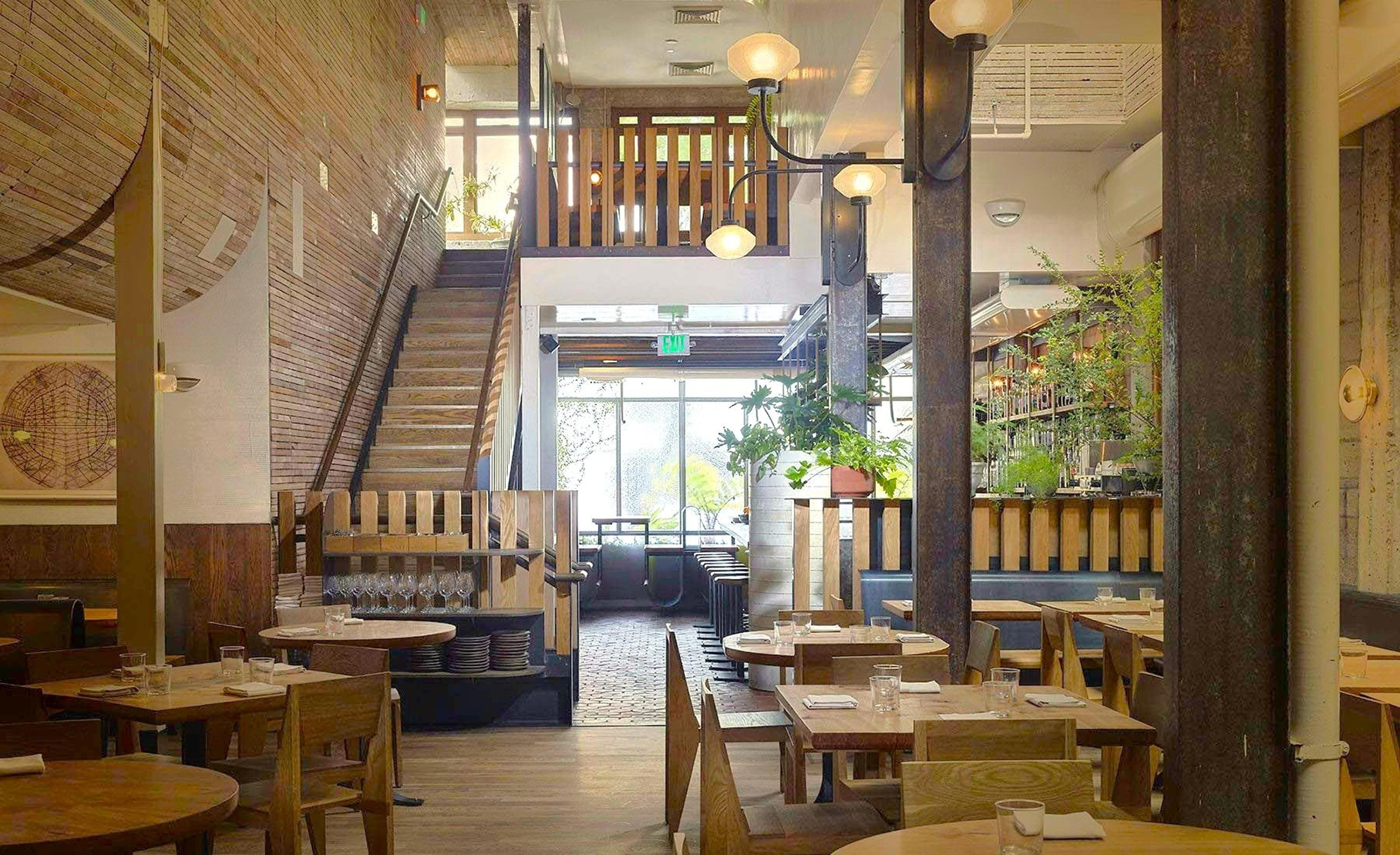
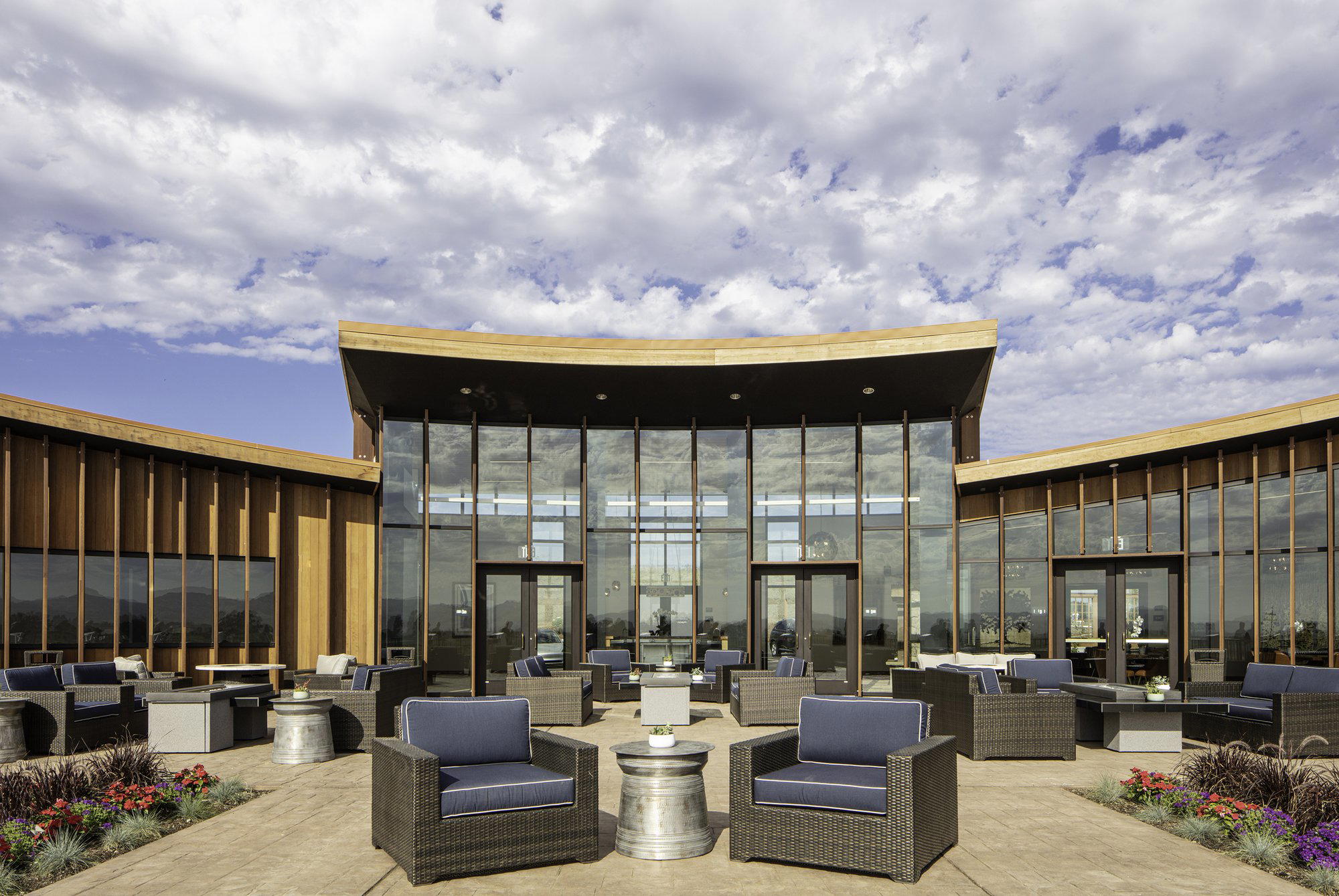
Grandiose yet airy dining room with high ceilings and light wood, bright yet cozy lighting that creates an intimate yet energetic atmosphere; the space is lively with close-together tables and can be loud.