Portugalia Tasca
Portugalia Tasca brings the neighbourhood intimacy of a Lisbon tasca to Amsterdam's canal belt, operating from a modest address on Bakkersstraat in the city centre. The format follows the Portuguese tradition of tight tables, sustained regulars, and a kitchen defined by the kind of unfussy cooking that makes tascas worth returning to. It occupies a distinct position in a city where Iberian dining rarely receives the editorial attention given to Dutch or French formats.
Pearl is the En Primeur Club membership app — saves, bookings, and concierge access live there. Same editors, same standards.
- Address
- Bakkersstraat 12, 1017 CW Amsterdam, Netherlands
- Phone
- +31 6 43705806
- Website
- portugalia.nl
- Directions
- Get directions
 Saves & bookings on Pearl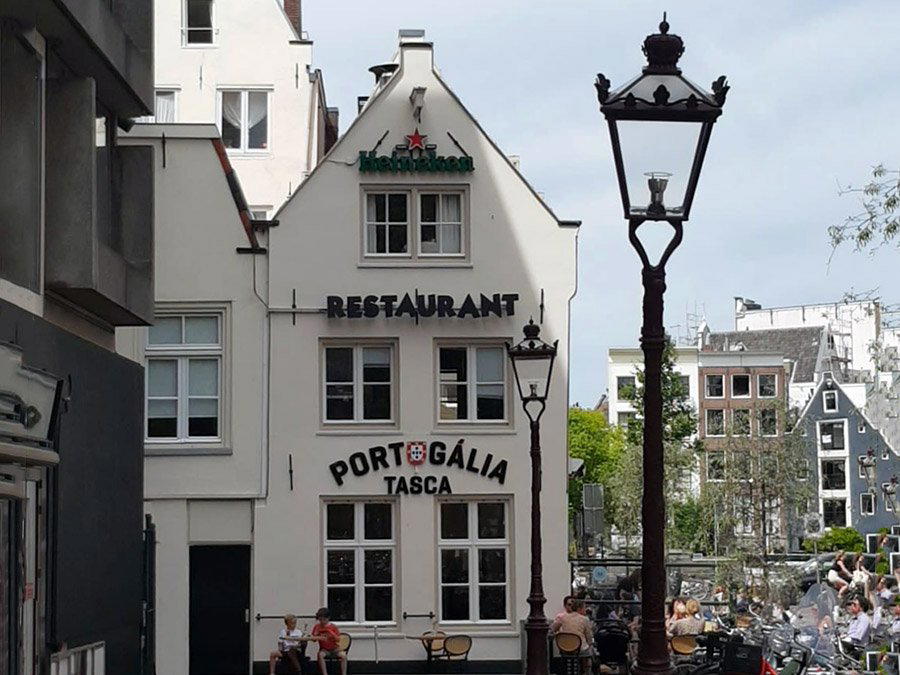
Where Amsterdam's Portuguese Dining Tradition Has Landed
Portugal's culinary standing in northern Europe has shifted considerably over the past decade. What was once treated as budget-tier Iberian has acquired a different register. Lisbon's recognition as one of Europe's more compelling food cities, combined with a generation of Portuguese chefs moving through serious kitchens in France, Spain, and the UK, has changed how the tasca format reads to an informed diner. The tasca, historically a neighbourhood fixture defined by daily specials, honest wine, and the absence of any attempt to impress, now carries weight precisely because of that directness. Portugalia Tasca, on Bakkersstraat in Amsterdam's canal-district centre, is an Authentic Portuguese Seafood Tasca with a casual dress code and a recommended reservation policy.
Amsterdam's dining scene has long leaned toward its own northern-European vocabulary. The city's celebrated restaurants, Ciel Bleu, Flore, Spectrum, and Vinkeles, occupy a creative fine-dining tier that prices itself against international comparable venues and draws on local produce, Dutch technique, and tasting-menu formats. That bracket has grown increasingly coherent over the past several years. What has developed more slowly is a confident middle register of European regional cooking: the kind of place that delivers accumulated knowledge about a specific cuisine without the apparatus of a formal tasting menu. Portugalia Tasca belongs to a smaller category that the Amsterdam scene has generally underserved.
The Tasca Format and What It Requires of a City
A tasca, properly understood, is not a simplified version of Portuguese restaurant cooking. It is a distinct format with its own logic: limited choice, dishes that rotate with availability, wine poured from open bottles, and a dining room that functions partly as a community space for regulars and partly as an entry point for the curious. The format works in Lisbon because the surrounding food culture, access to fresh Atlantic fish, daily bread, quality olive oil and wine at modest price points, supports it structurally. Transplanting it to Amsterdam requires either importing that supply chain or adapting around what the Netherlands can provide, and the result in either case tends to differ from the Lisbon original. What survives the translation, when a tasca is executed with discipline, is the pacing and the proportion: smaller plates, wines by the glass or carafe, a room that doesn't expect you to perform an occasion.
This is the territory Portugalia Tasca occupies on Bakkersstraat. The address sits in the 1017 CW postcode, central Amsterdam, within walking distance of the Rembrandtplein and a short distance from the canal-ring streets that concentrate much of the city's restaurant activity. The location places it in conversation with a neighbourhood that draws both local and visiting diners, though the tasca model historically survives on repeat local custom rather than tourist discovery.
How the Category Has Evolved in Amsterdam
The editorial angle worth applying to the restaurant is not simply what it is, but how the category it represents has changed. Dutch cities spent much of the 1990s and 2000s treating southern European cooking as primarily a price-point proposition. Spanish and Portuguese restaurants occupied a different register than French or Italian formats, and the tasca in particular was rarely considered a destination in its own right. The shift in that perception mirrors broader European food media trends: Lisbon's ascent in travel editorial, the international success of Portuguese wine regions outside the Douro, and a general interest in unfussy, produce-led cooking that doesn't require a tasting menu or a dress code.
Within the Netherlands, the serious dining conversation has largely concentrated elsewhere. De Librije in Zwolle and Aan de Poel in Amstelveen represent the kind of destination-fine-dining tier that earns regional and national attention. At the opposite end, neighbourhood spots like Portugalia Tasca operate below that visibility threshold, not because the cooking is secondary, but because the format deliberately resists the signals that generate editorial coverage. There are no tasting menus or prix-fixe structures. The tasca's resistance to those conventions is, in part, what has kept it an overlooked category in cities that aren't Lisbon.
Across the Netherlands more broadly, the restaurants that have attracted sustained attention, De Nieuwe Winkel in Nijmegen, Brut172 in Reijmerstok, De Bokkedoorns in Overveen, share a commitment to specific culinary propositions executed with rigour. The tasca format demands a comparable rigour, just applied to different criteria: consistency, sourcing, the rotation of dishes, the calibration of the wine list to the food. Places like De Lindenhof in Giethoorn and De Treeswijkhoeve in Waalre have demonstrated that Dutch diners engage seriously with restaurants that hold a clear and consistent point of view, regardless of category. The same logic applies to an Amsterdam tasca when it earns the loyalty of the neighbourhood around it.
Placing Portugalia Tasca in Amsterdam's Current Dining Map
For the reader planning time in Amsterdam, the practical question is where the restaurant sits relative to what else the city offers. The canal-district centre has a high density of restaurants competing for the same foot traffic, and the tasca format only functions properly when it is treated on its own terms rather than held to the expectations of a white-tablecloth European restaurant. Booking is recommended, and the restaurant is open daily from 12 to 11 PM. For broader Amsterdam restaurant context, our Amsterdam restaurants guide maps the city's dining by neighbourhood and format, including the fine-dining tier represented by venues like 't Nonnetje and destination operations such as De Groene Lantaarn in Staphorst and De Lindehof in Nuenen for those extending their trip across the Netherlands.
At the formal end of seafood-led European cooking, restaurants like Le Bernardin in New York City or the precision-focused formats at Atomix occupy a tier defined by technical investment and sustained critical infrastructure. The tasca sits at the opposite pole of the same European culinary lineage: it succeeds through accumulated informality rather than formal achievement. In Amsterdam, a venue operating in the tasca tradition fills a category gap in the city's food scene.
Cuisine and Recognition
Comparable venues nearby, for context on price, style, and recognition.
| Venue | Cuisine | Price | Notes |
|---|---|---|---|
| Portugalia TascaThis venue — the venue you are viewing | Authentic Portuguese Seafood Tasca | $$ | Not listed |
| Lumbini Restaurant | Authentic Indian & Nepalese | $$ | BG-terrein e.o. |
| Thaise Snackbar Bird | Authentic Thai Snackbar | $$ | Kop Zeedijk |
| THE BUTCHER Social Club | American Burger Bar | $$ | Overhoeks |
| Vertigo | Classic French Bistro | $$ | Vondelparkbuurt Oost |
| Olofspoort | Dutch Tasting Room | $$ | Stationsplein e.o. |
Continue exploring
More in Amsterdam
Restaurants in Amsterdam
Browse all →
Bars in Amsterdam
Browse all →
Hotels in Amsterdam
Browse all →
Wineries in Amsterdam
Browse all →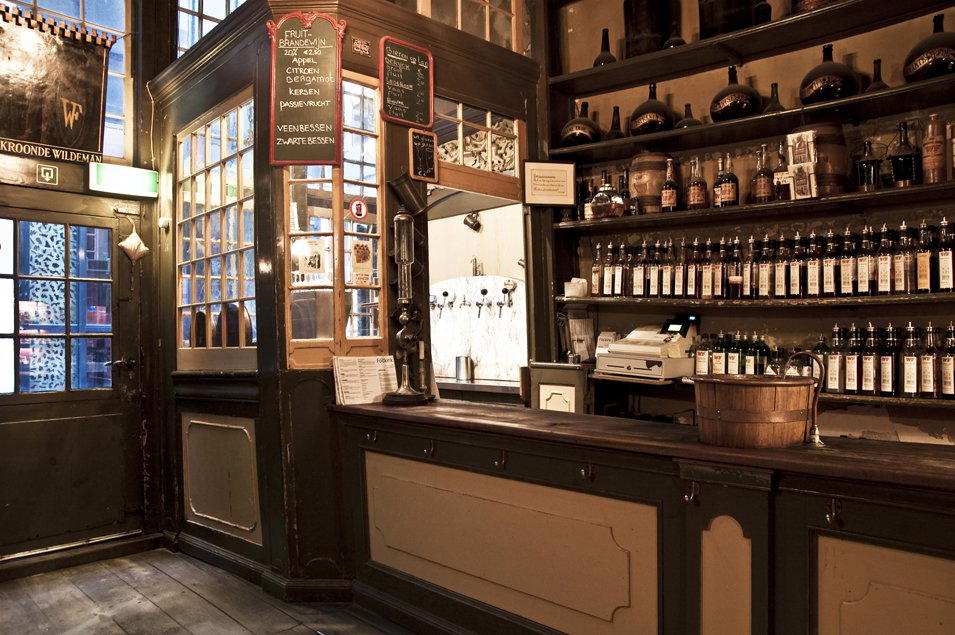
At a Glance
- Cozy
- Elegant
- Classic
- Casual Hangout
- Date Night
- Brunch
- Terrace
- Extensive Wine List
- Street Scene
Current opening hours
- Monday
- 12–11 PM
- Tuesday
- 12–11 PM
- Wednesday
- 12–11 PM
- Thursday
- 12–11 PM
- Friday
- 12–11 PM
- Saturday
- 12–11 PM
- Sunday
- 12–11 PM
Hours can change for holidays and private events. Last verified .
Warm and inviting with an elegant Portuguese haven feel, featuring a wide pavement terrace.