

Chef's Table Featured on Chef's Table
Our verdict
Pizzarium has ranked among Europe's top cheap eats on Opinionated About Dining every year from 2023 to 2025, placing Roman-style pizza al taglio in a category that rewards technique over theatre. Chef Gabriel Bonci's Prati-neighbourhood counter operates on a sell-by-the-weight model that has become a reference point for serious bread-based cooking across Italy and beyond.

Pearl is the En Primeur Club membership app, where members save venues, book tables and use the concierge.
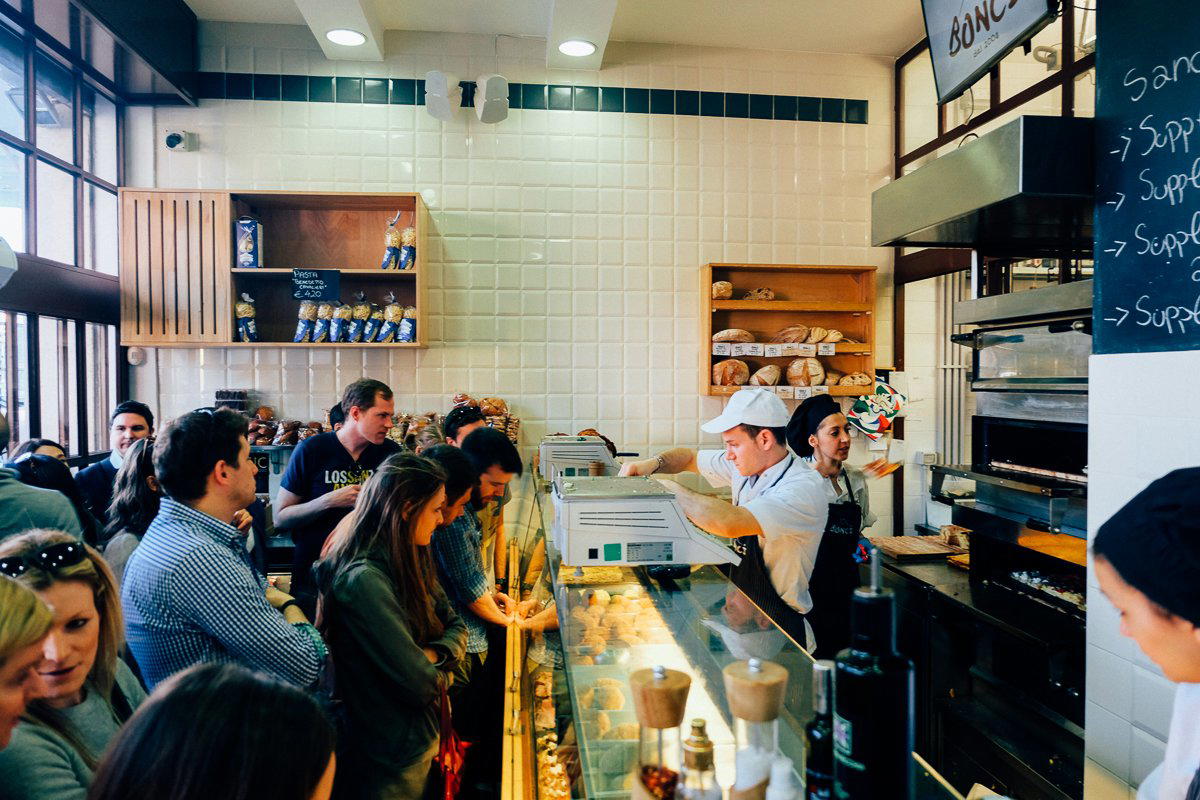
Pizza al Taglio as a Discipline
Roman pizza al taglio occupies a different tier from Neapolitan round pizza in Italy's hierarchy of bread-based cooking. Where Neapolitan pizza is governed by strict certification bodies and judged against a defined canon, al taglio operates with more structural freedom: rectangular trays, variable thickness, longer cold fermentation windows, and toppings that change with the season and the baker's supply chain. That freedom has historically made the format difficult to evaluate critically. It also means that when a counter does it at a high level, the gap between it and an average slice shop is unusually wide.
Pizzarium, on Via della Meloria in Rome's Prati district, sits at the serious end of that gap. The Opinionated About Dining Cheap Eats in Europe list has ranked it in the leading twenty for three consecutive years: 17th in 2025, 15th in 2024, and 16th in 2023.
What the Menu Structure Tells You
The architecture of a Pizzarium visit is defined entirely by the tray format. Rectangular slabs arrive at the counter already baked, each labelled with its topping combination. You point, the counter staff cuts, weighs, and charges by the gram. There is no table service, no printed menu that holds from week to week, and no fixed progression from starter to main. What the format reveals instead is a kitchen organised around the base as the constant and the topping as the variable.
That inversion matters. In most pizza contexts, the dough is a given and the toppings carry the kitchen's identity. Here, the dough is the anchor: Gabriel Bonci's approach to fermentation and hydration, developed over years working with heritage grain varieties and long cold-proofing cycles, produces a base that functions structurally like a focaccia but with the open crumb and controlled char associated with serious sourdough baking. The toppings are seasonal and rotate, which means the menu at any given visit is a direct readout of what the kitchen considers worth putting on a base that is already doing most of the work.
For a format associated with cheap, quick eating, this is a sophisticated editorial position. It also means there is no single answer to what Pizzarium serves. The tray selection changes, and repeat visitors often note that the appeal is as much in reading the daily lineup as in any specific combination. The kitchen's sourcing instincts are visible in the tray labels: expect topping combinations built around seasonal vegetables, cured products, and legumes rather than a fixed roster of margherita and variants.
Prati as Context
The Prati neighbourhood sits immediately north of Vatican City, and its residential, relatively unhurried character places it outside the tourist-density corridors that compress much of central Rome. The address on Via della Meloria is not a destination street in the way that the area around Campo de' Fiori or Trastevere operates. That geography is relevant: Pizzarium draws a lunch crowd that skews local and informed rather than foot-traffic-driven, which shapes both the atmosphere at the counter and the kitchen's pressure to compromise on quality for volume.
Rome's broader dining spectrum runs from counter operations like this one through to the city's formal fine dining tier. La Pergola, Acquolina, Enoteca La Torre, Il Pagliaccio, and Achilli al Parlamento represent the city's contemporary tasting-menu and creative cooking register. Pizzarium's position is structurally different, no bookings, no service formality, priced by weight, but its critical recognition sits in the same documented conversation. The OAD Cheap Eats list functions as a parallel critical infrastructure to Michelin and 50 Best, and consistent top-twenty placement across three years carries weight in that context.
Gabriel Bonci's Place in the Broader Conversation
Bonci's approach to pizza baking has been referenced frequently in discussions about how artisan bread techniques entered the Roman pizza al taglio tradition. His work with heritage grains and high-hydration doughs aligned him with a generation of Italian bakers who were applying the same rigour to pizza that the country's natural wine producers were applying to viticulture. That alignment is useful context: Pizzarium is not a craft project in isolation, but part of a movement in Italian food culture that revalued process over convention.
Italy's critical dining scene is concentrated heavily in the north, where Osteria Francescana in Modena, Enrico Bartolini in Milan, Enoteca Pinchiorri in Florence, Atelier Moessmer Norbert Niederkofler in Brunico, and Dal Pescatore in Runate occupy the formal fine dining register. Quattro Passi in Marina del Cantone anchors the south. Pizzarium's standing in Rome represents a different kind of critical recognition: proof that the cheap eats tier, when treated with the same discipline as haute cuisine, generates results that critics track with equal attention.
The same logic applies internationally. Artisan bakery operations like Radio Bakery in New York City and 26 Grains in London reflect how bread-centred venues have earned serious critical attention in major cities outside Italy. Pizzarium predates much of that wave and remains one of the more documented examples of what the format can produce when the baker treats fermentation as a primary variable rather than a background condition.
Reading the Google Signal
A 4.1 in that context is not a soft endorsement; it indicates consistent execution at scale while serving a heterogeneous audience. The OAD ranking, which reflects a smaller pool of specialist critics, tells a different story that amplifies rather than contradicts the Google signal.
Know Before You Go
Address: Via della Meloria, 43, 00136 Roma, Italy
Hours: Tuesday to Friday 11am–10pm; Saturday 11am–10pm; Sunday 11am–3pm and 5–10pm; Monday closed
Format: Counter service, sold by weight. No table service, no reservations.
Awards: Opinionated About Dining Cheap Eats in Europe, ranked 17th (2025), 15th (2024), 16th (2023)
Ideal time to visit: Arriving shortly after opening on weekdays reduces wait time and gives the widest tray selection before popular combinations sell through.
Neighbourhood: Prati, northwest of Vatican City. Reachable on foot from the Vatican Museums or by metro to Ottaviano.
Booking: Walk-in only.
Frequently asked questions
What dish is Pizzarium famous for?
Pizzarium is associated with Roman-style pizza al taglio built on a high-hydration, long-fermented dough developed by Gabriel Bonci using heritage grain varieties. The base is the consistent element; toppings rotate and are seasonal, so there is no single fixed combination attached to the venue's reputation. What critics and regulars return for is the structural quality of the dough itself, open crumb, controlled crust, fermentation-forward flavour, paired with whatever the kitchen has sourced that week. The OAD Cheap Eats in Europe ranking (leading twenty, three consecutive years from 2023 to 2025) is grounded in that dough quality rather than in any single topping or dish.
For the full range of what Rome's dining scene covers across every format and price tier, see our full Rome restaurants guide, our full Rome hotels guide, our full Rome bars guide, our full Rome wineries guide, and our full Rome experiences guide.
Recognition Snapshot
| Venue | Cuisine | Price | Awards | Notes |
|---|---|---|---|---|
| PizzariumThis venue (the venue you are viewing) | Modern Roman Pizza al Taglio | $20–30 | Chef's Table Featured on Chef's Table | Not listed |
| La Pergola | Modern Italian Fine Dining | $500+ | 3 Michelin Stars · La Liste Top Restaurants | Italian, Mediterranean Cuisine |
| Enoteca La Torre | Modern Italian Fine Dining | $200–300 | 2 Michelin Stars · La Liste Top Restaurants | Creative |
| Il Pagliaccio | Modern Italian-Japanese Fusion Fine Dining | $150–200 | 2 Michelin Stars · La Liste Top Restaurants | Contemporary Italian, Creative |
| Aroma | Modern Roman Fine Dining | $200–300 | 1 Michelin Star · Falstaff Restaurant - 93 Falstaff Points | Modern Cuisine |
| Idylio by Apreda | Modern Mediterranean-Asian Fusion | $150–200 | 1 Michelin Star · La Liste Top Restaurants | Modern Italian, Italian Contemporary |
Recognition history
Dated appearances from independent guides and award organizations, with the underlying list record or original source where available.
Opinionated About Dining Cheap Eats in Europe Ranked #17
Opinionated About Dining
Chef's Table Featured on Chef's Table
Chef's Table
Full recognition history (5 entries)
Opinionated About Dining Cheap Eats in Europe Ranked #17
Opinionated About Dining
Opinionated About Dining Cheap Eats in Europe Ranked #15
Opinionated About Dining
Opinionated About Dining Cheap Eats in Europe Ranked #16
Opinionated About Dining
Continue exploring
More in Rome
Restaurants in Rome
All restaurants in Rome →
Bars in Rome
All bars in Rome →

Details
- Well Known
- Casual Hangout
- Standalone
- A La Carte
- Small Plates
- Vegetarian Friendly
- Vegan Options
Current opening hours
- Monday
- 11 AM–10 PM
- Tuesday
- 11 AM–10 PM
- Wednesday
- 11 AM–10 PM
- Thursday
- 11 AM–10 PM
- Friday
- 11 AM–10 PM
- Saturday
- 11 AM–10 PM
- Sunday
- 11 AM–3 PM, 5–10 PM
Hours can change for holidays and private events. Hours as of .
Sparse and utilitarian with minimal seating, long queues, and a hectic street-food atmosphere.