Pitmaster
Pitmaster brings serious smoke-and-fire cooking to Bareket Street in Petah Tikva, a city whose dining scene has grown considerably more ambitious over the past decade. The format sits squarely in the direct-fire, low-and-slow tradition that has found a committed following across Israel's grilling culture. For the wider Petah Tikva picture, see our full guide to the city's restaurants.
 Discover on Pearl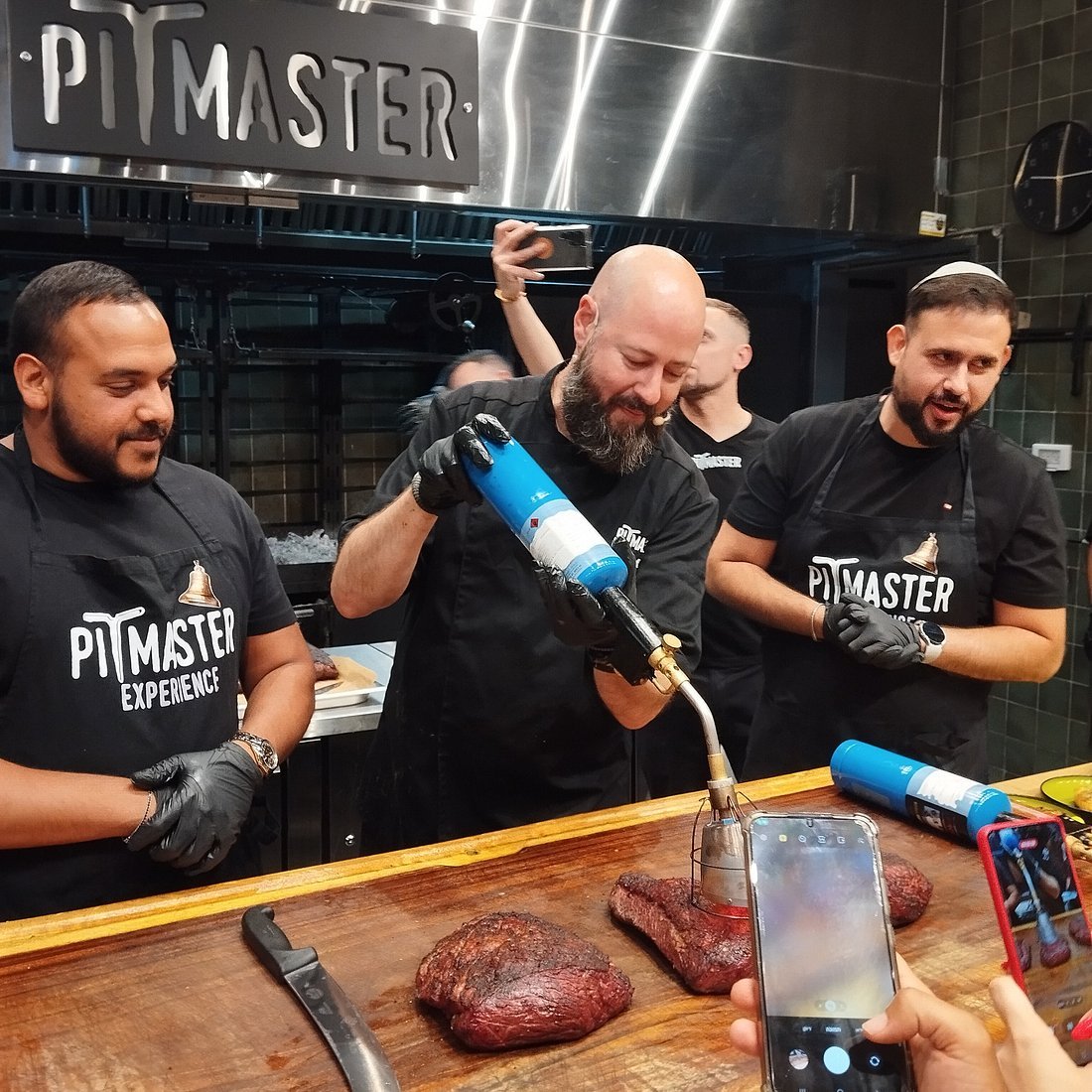
Fire, Smoke, and the Israeli Barbecue Tradition
Across Israel, the live-fire grill is not a trend but a foundation. From the mangal pits of Arab households in the Galilee to the wood-burning ovens that anchor Mizrahi cooking in Jaffa, the application of direct heat to quality cuts is culturally embedded in a way that predates any restaurant movement. What has changed over the past decade is the emergence of a more specialised tier of smoke-focused restaurants, ones that place sourcing discipline and technique at the centre of the proposition rather than treating the grill as a backdrop. Pitmaster, on Bareket Street in Petah Tikva, occupies that more deliberate register.
Petah Tikva itself is worth contextualising. Situated east of Tel Aviv, the city has historically functioned as a working residential hub rather than a dining destination. That has shifted, and a cluster of addresses now draws diners who are prepared to travel for quality rather than proximity. המקדש - מסעדת בשרים is another example of serious meat cooking taking root here, and the two together suggest that Petah Tikva is building a credible identity in the grill-and-fire category. For the broader picture, the full Petah Tikva restaurants guide maps the scene across categories.
The shortlist, unlocked.
Hard-to-book tables, cellar releases, and concierge-planned trips.
Get Exclusive Access →What the Sourcing Question Means for Smoke Cooking
The logic of barbecue, in any of its serious regional forms, is inseparable from ingredient provenance. Low-and-slow cooking amplifies rather than masks raw material quality: a brisket smoked for twelve hours will tell you exactly what the animal ate and how it was raised, in a way that a quick sear on a hot grill will not. This is why the best-regarded smoke-focused restaurants, whether in central Texas, the Basque Country, or increasingly in Israel, treat their supply chain as a first-order concern rather than an afterthought.
Israel has the raw material for this. Domestic beef and lamb production has improved in quality over time, and the country's relationship with whole-animal cooking, drawn from both Ashkenazi and Mizrahi traditions, creates cultural permission for the kind of low-waste, slow-fire approach that defines serious barbecue. The cuts that require the longest cooking, brisket, short rib, shoulder, are precisely the cuts that reward sourcing discipline most visibly. A restaurant operating under a name like Pitmaster is making an implicit claim about that relationship: that the smoke is in service of the product, not a substitute for it.
For context on how ingredient-led cooking plays out differently across Israeli registers, Diana in Nazareth demonstrates what decades of sourcing focus look like in a wood-fire context, while Uri Buri in Acre applies similar provenance thinking to seafood. The principle, that where food comes from shapes what it can become, runs across the better addresses in the country.
The Petah Tikva Address and What the Room Signals
Bareket Street places Pitmaster in the commercial residential texture of central Petah Tikva, away from the Tel Aviv dining circuit but close enough that the city's food-aware population is a practical audience. The approach that smoke restaurants tend to take physically, exposed materials, functional surfaces, the visible presence of the pit or smoker, communicates something about intent. When the cooking process is the spectacle, the room typically steps back rather than competing with it. That spatial discipline is itself an editorial statement about where the value lies.
The Israeli barbecue category has a sister venue in Beersheba: Pitmaster Beer-Sheva operates under the same name, suggesting a consistent format philosophy applied across different cities. Multi-site barbecue operations that maintain quality coherence face a particular supply challenge, since the sourcing logic described above has to be replicated rather than improvised locally. How that challenge is resolved says as much about an operation's seriousness as any single dish.
Reading the Israeli Grill Scene: Where Pitmaster Sits
The Israeli restaurant spectrum in the meat-and-fire category runs from the neighbourhood mangal, which is informal, often family-run, and priced accessibly, through mid-tier grill houses, to the more considered smoke-focused format that Pitmaster represents. The comparable venues operating at different points on that spectrum include Burger 232 in Magen, which takes a different angle on quality meat in a less formal format, and Majda in Jerusalem, which applies a farm-to-table rigour to Palestinian-Israeli cooking with fire at its core.
Further afield, Herbert Samuel Herzliya represents the contemporary Israeli fine dining end of the spectrum, where the grill appears but within a broader composed menu framework. The contrast is instructive: a dedicated smoke operation and a fine dining grill address are making different promises about what the evening is, even when both take sourcing seriously. Pitmaster's identity is built around the former commitment.
Other addresses that illustrate the range of ingredient-focused cooking across Israel include Abu Hassan in Jaffa, where the raw material is chickpeas and the provenance discipline shows in consistency rather than variety, Helena in Caesarea, which connects ingredient sourcing to a specific coastal geography, and Pescado in Ashdod, which applies similar thinking to Mediterranean fish. The throughline across all of these is that knowing what you are cooking, where it came from, and why it matters is what separates a considered restaurant from a competent one.
For Tel Aviv comparisons in the same fire-focused register, Kab Kem offers a point of reference for how the smoke tradition translates into the city's denser, more competitive dining environment. Menza in Jerusalem and Michael Local Bistro in Liman each demonstrate how regional provenance thinking shapes menus differently depending on local agricultural context. And for those tracking the broader arc of what sourcing discipline looks like at the international level, Le Bernardin in New York and Atomix in New York represent what ingredient-first philosophy produces when applied with decades of refinement in a different culinary tradition entirely. The gap between those addresses and a smoke restaurant in Petah Tikva is one of register and budget, not necessarily of intent. Finally, Azura and Ali Karawan Abu Hassan round out the picture of how fire and slow-cooking traditions persist across Israel's culinary geography.
Planning Your Visit
Pitmaster is located at Bareket Street 4, Petah Tikva. For current hours, booking details, and pricing, direct contact with the venue is advised, as this information is not available through the EP Club database at time of publication. Petah Tikva is accessible from Tel Aviv by public transport and by car, with the journey from the centre of Tel Aviv typically under thirty minutes by road. Given the nature of smoke-focused cooking, arriving at opening or shortly after tends to give the leading access to the full range of available cuts, since popular items on smoke menus sell through earlier in service.
The shortlist, unlocked.
Hard-to-book tables, cellar releases, and concierge-planned trips.
Get Exclusive Access →Frequently Asked Questions
A Quick Peer Check
A fast peer set for context, pulled from similar venues in our database.
| Venue | Cuisine | Price | Awards | Notes |
|---|---|---|---|---|
| Pitmaster | This venue | |||
| Abu Hassan | Humus | Humus | ||
| Dr. Shakshuka | Middle Eastern | Middle Eastern | ||
| Ha'Achim | Israeli | Israeli | ||
| Habasta | Israeli | Israeli | ||
| HaSalon | Israeli - Mediterranean, Israeli | Israeli - Mediterranean, Israeli |
Need a table?
Our members enjoy priority alerts and concierge-led booking support for the world's most difficult tables.
Get Exclusive AccessThe shortlist, unlocked.
Hard-to-book tables, cellar releases, and concierge-planned trips.
Get Exclusive Access →