<h2>Where the Mediterranean Writes the Menu</h2><p>The old port of Caesarea carries the kind of weight that most dining rooms can only borrow from decoration. Roman-era stone, salt air off the Mediterranean, the hum of a harbour that has loaded and unloaded cargo for two millennia: these are the conditions under which Helena operates. Arriving along the quayside, with the water close enough that spray marks the stone, the setting frames what follows inside before a plate arrives. This is not incidental atmosphere — it is the editorial argument the kitchen has chosen to make.</p><p>Coastal Israeli cooking at its most honest is defined less by technique than by access. A kitchen positioned at a working port sits closer to the supply chain than almost any inland equivalent, and that proximity shapes what lands on the table. Chef Amos Sion works from that logic: the catch determines the menu, not the other way around. In a regional dining culture where fish is often supported by vivid vegetable preparation rooted in Levantine and Mediterranean tradition, Helena operates in the same register — the sea provides the headline, the land fills the frame around it.</p><h2>The Case for Vegetables at a Fish Restaurant</h2><p>Israeli restaurant cooking has undergone a significant shift over the past decade. Vegetables, once a supporting act in a cuisine historically centred on mezze and grilled protein, have moved into primary territory across the country's serious kitchens. At restaurants like <a href="https://www.enprimeurclub.com/restaurants/machneyuda-jerusalem-restaurant">Machneyuda in Jerusalem</a>, the market-driven approach refined seasonal produce to the centre of the plate. Helena follows a parallel logic, where salads, toasts, and prepared vegetables are treated with the same sourcing rigour applied to the fish.</p><p>This matters because it signals something about the kitchen's broader philosophy: ingredient sourcing, not menu architecture, is the organising principle. The colourful vegetable preparations here are not filler between fish courses. They are the kitchen's acknowledgment that Israeli agricultural produce , herbs, tomatoes, preserved lemons, legumes , deserves the same attention as what the sea brings in. For a diner arriving expecting direct seafood, this is a recalibration worth making. Order the vegetable dishes alongside the fish, not instead of them.</p><p>Across the Israeli coast, seafood restaurants tend to cluster into two tiers: the high-volume tourist-facing operations that rely on location over sourcing, and the smaller, supply-led kitchens that build menus around what the Mediterranean actually yields on a given day. Helena sits in the second category. That distinction matters practically: the menu will vary, and dishes described by one visitor may not appear for another. This is a feature, not an inconsistency.</p><h2>Seafood in the Eastern Mediterranean Context</h2><p>The Eastern Mediterranean is not a single seafood tradition , it is a layered one. Greek, Lebanese, Turkish, and Israeli coastal kitchens share many ingredients but apply them through different cultural filters. In Israeli cooking, the influence of North African Jewish communities (particularly in preparations involving preserved vegetables and spiced fish) sits alongside a lighter, European-inflected approach to raw and barely-cooked seafood. Globally, the model of proximity-driven coastal cooking is well established: <a href="https://www.enprimeurclub.com/restaurants/aponiente-el-puerto-de-santa-mara-restaurant">Aponiente in El Puerto de Santa María</a> takes it to a three-Michelin-star extreme, while <a href="https://www.enprimeurclub.com/restaurants/le-bernardin">Le Bernardin in New York City</a> made restraint in fish cookery a defining aesthetic. Helena operates at a different register , more informal, port-anchored, supply-dependent , but the underlying logic of letting the ingredient lead is shared.</p><p>For comparison within Israel, <a href="https://www.enprimeurclub.com/restaurants/pescado-ashdod-restaurant">Pescado in Ashdod</a> works similar coastal territory, and <a href="https://www.enprimeurclub.com/restaurants/alena-at-the-norman-tel-aviv-restaurant">Alena at The Norman in Tel Aviv</a> applies a more refined hotel-dining approach to Mediterranean fish. Helena sits between these modes: neither the polish of a hotel dining room nor the volume of a tourist port operation. It occupies the specific niche of the serious casual coastal kitchen.</p><h2>The Old Port Setting and What It Means Practically</h2><p>Caesarea is not a conventional city stop. The ancient port was developed as a major Roman harbour under Herod the Great, and the archaeological site that surrounds the old port area is among the most significant in Israel. Dining at Helena places the visitor inside that history in a way that most heritage sites do not permit , the view across the water, framed by Roman masonry, is active background rather than museum context.</p><p>For visitors planning a day in Caesarea, the restaurant's location at the old port makes sequencing direct. The archaeological park, the Roman theatre, and the Crusader city walls are all within the same footprint. A late lunch at Helena after a morning at the site makes practical sense: the kitchen's supply-led approach means the midday service is likely to reflect the morning catch, and the port setting reads differently in afternoon light than at dinner.</p><p>Caesarea sits roughly halfway between Tel Aviv and Haifa along the coastal highway, making it accessible from both cities without requiring an overnight stop. For visitors building an itinerary around Israel's coast, [Our full Caesarea restaurants guide](https://www.enprimeurclub.com/restaurants/caesarea) covers the broader dining picture, and <a href="https://www.enprimeurclub.com/hotels/caesarea">our full Caesarea hotels guide</a> outlines accommodation options for those staying in the area. The <a href="https://www.enprimeurclub.com/experiences/caesarea">experiences guide for Caesarea</a> covers the archaeological and cultural programming around the port.</p><h2>Planning Your Visit</h2><p>Because Helena's menu is shaped by daily supply rather than a fixed card, visiting with flexibility about what to order is more productive than arriving with specific dishes in mind. The fish preparations are the anchor; the vegetable dishes are the argument for ordering more broadly. The sea view is leading appreciated from tables positioned toward the water, and the old port's open layout means the setting works across seasons, though the Caesarea coast is at its most comfortable in spring and autumn when temperatures sit between 18 and 26 degrees Celsius. For further context on drinking and exploring around the port area, <a href="https://www.enprimeurclub.com/bars/caesarea">our Caesarea bars guide</a> and <a href="https://www.enprimeurclub.com/wineries/caesarea">wineries guide</a> provide options for extending the visit.</p><h2>Frequently Asked Questions</h2><h3>What should I order at Helena?</h3><p>Let the fish preparations lead , Chef Amos Sion's kitchen is built around what the Mediterranean brings in on any given day, so freshness is the main credential here. Beyond the seafood, the vegetable dishes are worth treating as a genuine part of the meal rather than a side note. Salads, toasts, and prepared vegetable plates reflect the same sourcing logic as the fish, and skipping them leaves the meal incomplete. Order across both categories.</p><h3>What is the atmosphere like at Helena?</h3><p>The setting at the old port of Caesarea is the defining condition of the experience. Roman-era stone, a working harbour, and an open Mediterranean view position this as outdoor coastal dining at its most historically layered. The tone is casual rather than formal , this is not the studied polish of a hotel dining room like <a href="https://www.enprimeurclub.com/restaurants/alena-at-the-norman-tel-aviv-restaurant">Alena at The Norman</a> or the high-intensity urban energy of <a href="https://www.enprimeurclub.com/restaurants/machneyuda-jerusalem-restaurant">Machneyuda</a>. It suits afternoon meals and long lunches over quick dinners.</p><h3>Is Helena good for families?</h3><p>The port setting and the informal tone make Helena accessible for families visiting Caesarea's archaeological sites. The menu's range across fish and vegetable preparations , including salads and toasts , gives enough breadth for varied appetites. Caesarea itself is set up for family day visits, with the archaeological park directly adjacent to the old port, so the restaurant fits naturally into a day-trip itinerary rather than requiring a dedicated dining occasion.</p>

Where the Mediterranean Writes the Menu
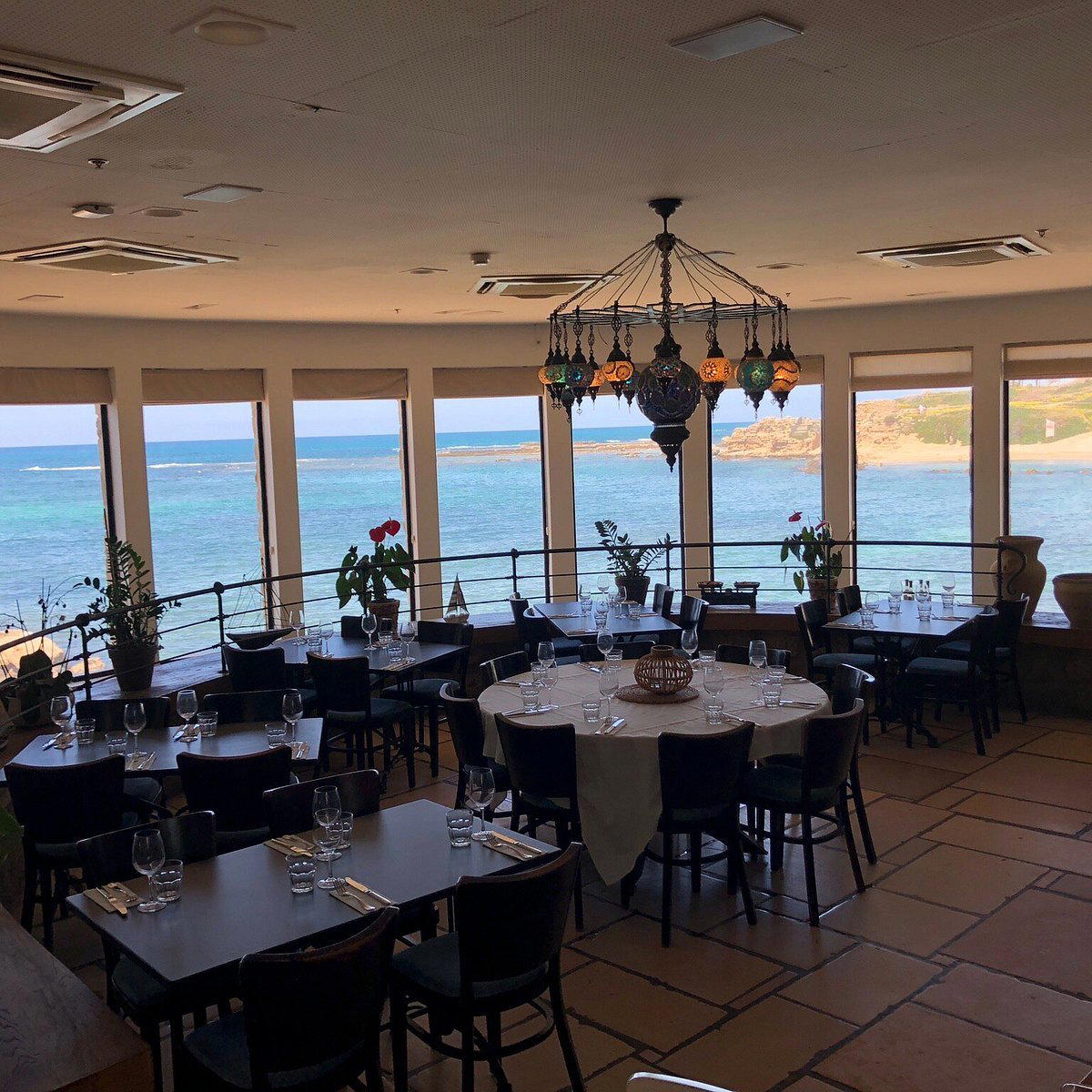
The old port of Caesarea carries the kind of weight that most dining rooms can only borrow from decoration. Roman-era stone, salt air off the Mediterranean, the hum of a harbour that has loaded and unloaded cargo for two millennia: these are the conditions under which Helena operates. Arriving along the quayside, with the water close enough that spray marks the stone, the setting frames what follows inside before a plate arrives. This is not incidental atmosphere — it is the editorial argument the kitchen has chosen to make.
Coastal Israeli cooking at its most honest is defined less by technique than by access. A kitchen positioned at a working port sits closer to the supply chain than almost any inland equivalent, and that proximity shapes what lands on the table. Chef Amos Sion works from that logic: the catch determines the menu, not the other way around. In a regional dining culture where fish is often supported by vivid vegetable preparation rooted in Levantine and Mediterranean tradition, Helena operates in the same register — the sea provides the headline, the land fills the frame around it.
The Case for Vegetables at a Fish Restaurant
Israeli restaurant cooking has undergone a significant shift over the past decade. Vegetables, once a supporting act in a cuisine historically centred on mezze and grilled protein, have moved into primary territory across the country's serious kitchens. At restaurants like Machneyuda in Jerusalem, the market-driven approach refined seasonal produce to the centre of the plate. Helena follows a parallel logic, where salads, toasts, and prepared vegetables are treated with the same sourcing rigour applied to the fish.
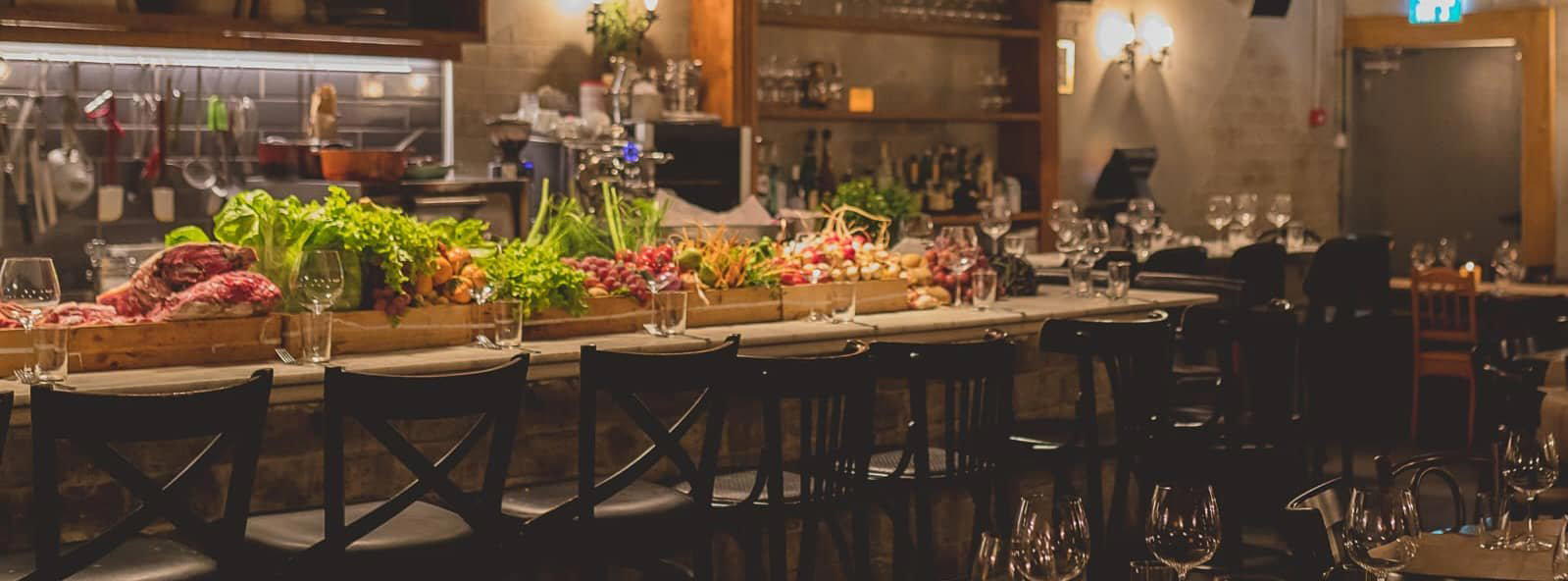
This matters because it signals something about the kitchen's broader philosophy: ingredient sourcing, not menu architecture, is the organising principle. The colourful vegetable preparations here are not filler between fish courses. They are the kitchen's acknowledgment that Israeli agricultural produce , herbs, tomatoes, preserved lemons, legumes , deserves the same attention as what the sea brings in. For a diner arriving expecting direct seafood, this is a recalibration worth making. Order the vegetable dishes alongside the fish, not instead of them.
Across the Israeli coast, seafood restaurants tend to cluster into two tiers: the high-volume tourist-facing operations that rely on location over sourcing, and the smaller, supply-led kitchens that build menus around what the Mediterranean actually yields on a given day. Helena sits in the second category. That distinction matters practically: the menu will vary, and dishes described by one visitor may not appear for another. This is a feature, not an inconsistency.
Seafood in the Eastern Mediterranean Context
The Eastern Mediterranean is not a single seafood tradition , it is a layered one. Greek, Lebanese, Turkish, and Israeli coastal kitchens share many ingredients but apply them through different cultural filters. In Israeli cooking, the influence of North African Jewish communities (particularly in preparations involving preserved vegetables and spiced fish) sits alongside a lighter, European-inflected approach to raw and barely-cooked seafood. Globally, the model of proximity-driven coastal cooking is well established: Aponiente in El Puerto de Santa María takes it to a three-Michelin-star extreme, while Le Bernardin in New York City made restraint in fish cookery a defining aesthetic. Helena operates at a different register , more informal, port-anchored, supply-dependent , but the underlying logic of letting the ingredient lead is shared.
For comparison within Israel, Pescado in Ashdod works similar coastal territory, and Alena at The Norman in Tel Aviv applies a more refined hotel-dining approach to Mediterranean fish. Helena sits between these modes: neither the polish of a hotel dining room nor the volume of a tourist port operation. It occupies the specific niche of the serious casual coastal kitchen.
The Old Port Setting and What It Means Practically
Caesarea is not a conventional city stop. The ancient port was developed as a major Roman harbour under Herod the Great, and the archaeological site that surrounds the old port area is among the most significant in Israel. Dining at Helena places the visitor inside that history in a way that most heritage sites do not permit , the view across the water, framed by Roman masonry, is active background rather than museum context.
For visitors planning a day in Caesarea, the restaurant's location at the old port makes sequencing direct. The archaeological park, the Roman theatre, and the Crusader city walls are all within the same footprint. A late lunch at Helena after a morning at the site makes practical sense: the kitchen's supply-led approach means the midday service is likely to reflect the morning catch, and the port setting reads differently in afternoon light than at dinner.
Caesarea sits roughly halfway between Tel Aviv and Haifa along the coastal highway, making it accessible from both cities without requiring an overnight stop. For visitors building an itinerary around Israel's coast, Our full Caesarea restaurants guide covers the broader dining picture, and our full Caesarea hotels guide outlines accommodation options for those staying in the area. The experiences guide for Caesarea covers the archaeological and cultural programming around the port.
Planning Your Visit
Because Helena's menu is shaped by daily supply rather than a fixed card, visiting with flexibility about what to order is more productive than arriving with specific dishes in mind. The fish preparations are the anchor; the vegetable dishes are the argument for ordering more broadly. The sea view is leading appreciated from tables positioned toward the water, and the old port's open layout means the setting works across seasons, though the Caesarea coast is at its most comfortable in spring and autumn when temperatures sit between 18 and 26 degrees Celsius. For further context on drinking and exploring around the port area, our Caesarea bars guide and wineries guide provide options for extending the visit.
Frequently Asked Questions
A Quick Peer Check
These are the closest comparables we have in our database for quick context.
| Venue | Cuisine | Price | Awards | Notes |
|---|---|---|---|---|
| Helena | Chef Amos Sion naturally works with what the sea brings him, but the ever-increa… | This venue | ||
| Machneyuda | Israeli | Israeli | ||
| Abu Hassan | Humus | Humus | ||
| Dr. Shakshuka | Middle Eastern | Middle Eastern | ||
| Ha'Achim | Israeli | Israeli | ||
| HaSalon | Israeli - Mediterranean, Israeli | Israeli - Mediterranean, Israeli |
Need a table?
Our members enjoy priority alerts and concierge-led booking support for the world's most difficult tables.
Get Exclusive Access