Diana sits on Paul VI Street in Nazareth's Old City, where Arab-Christian cooking traditions run deep and ingredient provenance is taken seriously. The kitchen draws on Galilee's agricultural hinterland, placing it in a peer group that includes some of the most consequential Arab-Israeli tables in the north. For anyone tracing the arc of Levantine food in Israel, Nazareth is the logical starting point, and Diana is one of its most discussed addresses.
 Discover on Pearl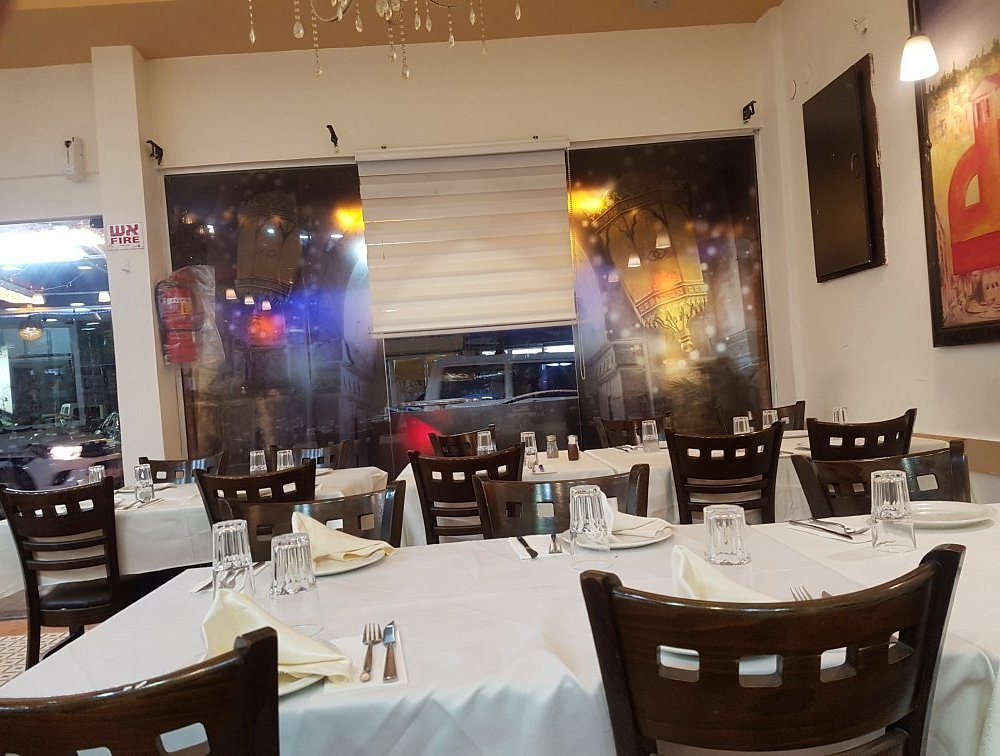
Where Galilee Comes to the Table
Paul VI Street cuts through the commercial heart of Nazareth's Old City, past spice merchants, butchers, and coffee traders who have occupied the same footprint for generations. Arriving at Diana, you are already inside the ingredient supply chain before you sit down. The market economy that surrounds the restaurant is not incidental to the food served inside it; in Arab-Galilean cooking, proximity to source is structural. Herbs arrive from growers in the villages above the city. Lamb comes from the surrounding hill country. The spice blends that anchor the cuisine, the baharat ratios that vary family to family and kitchen to kitchen, are sourced locally, not standardised through a wholesale distributor.
That provenance matters more here than it does in, say, Tel Aviv's restaurant corridor, where the Levantine pantry has become something of a trend reference. In Nazareth, it is simply the operating condition of the kitchen. The city sits at the centre of the Lower Galilee agricultural zone, and what grows nearby, olives, pomegranates, bitter greens, stone fruits, shows up on the table without needing to be curated or narrated. The food is the place.
Nazareth's Position in Arab-Israeli Dining
To understand Diana's context, it helps to map Nazareth against the broader geography of Arab-Israeli cooking in the country. Arab restaurants tend to cluster in three zones: the mixed cities of the coast (Jaffa, Acre, Haifa), the Galilee towns (Nazareth, Shfar'am, Sakhnin), and the Negev periphery. The coastal addresses, places like Abu Hassan in Jaffa and Uri Buri in Acre, tend to emphasise fish and hummus, shaped by port culture and proximity to the Mediterranean. Galilee kitchens work differently. The distance from the coast pushes the larder inland: lamb over fish, grains over seafood, dairy from local herds over imported product.
Nazareth specifically carries the weight of an Arab-Christian culinary tradition, distinct in small but meaningful ways from the predominantly Muslim food culture of, for example, Umm al-Fahm or Sakhnin. The city's Christian communities have historically maintained trading relationships with Lebanon and Syria, which has filtered into the kitchen as a slightly more elaborate meze culture and a particular attention to pastry and sweets. Diana operates within that tradition, in a city that has been a reference point for Levantine cooking well before modern Israeli food writing discovered it.
For a sense of how Nazareth compares to the mixed-city Arab dining scene further south, the full נצרת restaurants guide maps the city's tables in more detail. Further afield, Majda in Har Nof represents another strand of high-end Arab-Israeli cooking that rewards comparison.
The Ingredient Logic of Arab-Galilean Cooking
Arab-Galilean food is built on a different sourcing logic than the farm-to-table rhetoric that has colonised fine-dining menus in Western cities. There is no gap to close between farm and kitchen because there was never a meaningful separation to begin with. Small producers in the Galilee, whether olive oil pressers in Kfar Kanna or grain growers east of Afula, have always supplied the local market directly. The restaurant sits downstream of that supply chain, and the menu reflects what the season makes available rather than what a creative concept demands.
This is worth noting when comparing Diana to Israeli restaurants that have incorporated Arab pantry ingredients as a contemporary gesture. At places like Chakra in Jerusalem or the hummus-forward counters of HaKosem in Tel Aviv, Arab-derived ingredients appear within a framework that is partly Israeli-European in its culinary logic. In Nazareth, that framework does not apply. The cooking is not a reference to a tradition; it is the tradition itself, sourced and prepared within the community that originated it.
The distinction matters when deciding where to eat. Diners seeking fusion or a contemporary Israeli interpretation of Levantine food will find that more readily in Tel Aviv. Diners seeking the unmediated original should be in Nazareth.
The Room and What to Expect
Diana occupies a ground-floor address on Paul VI Street, the main artery connecting the Old City to the newer commercial districts. The room is established rather than fashionable, the kind of space that has accumulated its reputation over time rather than through a design moment. Nazareth's Old City is dense and walkable, and the surrounding neighbourhood delivers sensory orientation even before you sit down: the smell of cardamom from the coffee traders, the sound of the call to prayer overlapping with church bells, the compressed street life of a city that has been continuously inhabited for millennia.
Comparable northern restaurants in Israel's coastal cities, such as Rola Levantine Kitchen in Haifa, share some of the same ingredient relationships but operate within a more cosmopolitan dining register. Diana is more rooted in place, which is either its advantage or its limitation depending on what the visitor is looking for.
Planning a Visit
Nazareth is accessible from Tel Aviv and Jerusalem by car in roughly ninety minutes, and from Haifa in under forty. The city does not have the hotel infrastructure of the coast, though several guesthouse options have opened in the Old City in recent years as religious and culinary tourism to the area has grown. For diners arriving from the south, a meal at Diana pairs logically with other northern stops: Michael Local Bistro in Liman and Imad Humus Place represent adjacent but distinct expressions of Galilee-sourced cooking. For broader itinerary context across Israel's dining geography, comparison points include Helena in Caesarea and Pescado in Ashdod, both of which demonstrate how coastal proximity shapes a different sourcing conversation.
Frequently Asked Questions
- Is Diana a family-friendly restaurant?
- By Nazareth standards, yes. Arab-Galilean restaurants in the city generally accommodate mixed-age groups, and the format at Diana is sit-down meze rather than tasting-menu formality.
- Is Diana better for a quiet night or a lively one?
- If the city is full and the Old City market is active, expect ambient noise from the street and the surrounding tables. Diana draws a local crowd alongside tourists, and Nazareth's evening pace tends toward the social rather than the contemplative. If quiet is the priority, a weeknight mid-week visit in the off-season is the better bet.
- What dish is Diana famous for?
- The kitchen is rooted in Arab-Galilean cooking, which means the starting point is meze: hummus, mutabal, stuffed vegetables, and grilled meats sourced from the surrounding hill country. No specific signature dish can be confirmed without current menu data, but the lamb preparations and the meze spread are the category markers for this type of Nazareth table.
- How far ahead should I plan for Diana?
- Nazareth attracts both pilgrimage tourism and food-focused visitors, particularly on weekends and during Christian holiday periods. Walk-ins are more viable on weekdays. If travelling specifically for a meal at Diana, confirming availability a few days in advance is sensible, particularly if arriving as a larger group.
- What makes Diana different from other Arab-Galilean restaurants in the region?
- Diana operates on Paul VI Street in the heart of Nazareth's Old City, which places it within walking distance of the same spice traders, butchers, and produce suppliers that have defined the city's food culture for decades. That physical proximity to source, specific to Nazareth's densely integrated Old City market, is harder to replicate in restaurants that draw on similar ingredients but sit outside that supply network. For context on how the Arab-Israeli table varies across the country, Imad Humus Place and Majda offer useful comparison points.
Side-by-Side Snapshot
These are the closest comparables we have in our database for quick context.
| Venue | Cuisine | Price | Awards | Notes |
|---|---|---|---|---|
| Diana | This venue | |||
| Machneyuda | Israeli | Israeli | ||
| Pescado | Mediterranean | Mediterranean | ||
| Abu Hassan | Humus | Humus | ||
| Dr. Shakshuka | Middle Eastern | Middle Eastern | ||
| Ha'Achim | Israeli | Israeli |
Need a table?
Our members enjoy priority alerts and concierge-led booking support for the world's most difficult tables.
Get Exclusive Access