המקדש - מסעדת בשרים
המקדש - מסעדת בשרים sits on Ha-Psagot Street in Petah Tikva, operating as a meat restaurant in a city that takes its grill culture seriously. The name — 'The Temple' — signals the register the kitchen is working in, placing red meat at the centre of the dining experience rather than treating it as one option among many. For those tracing the meat-focused dining thread running through Israel's suburban restaurant scene, this address is part of that conversation.
Pearl is the En Primeur Club membership app — saves, bookings, and concierge access live there. Same editors, same standards.
- Address
- Ha-Psagot St 9, Petah Tikva, Israel
- Phone
- +972772311881
- Website
- hamikdash-restaurant.co.il
- Directions
- Get directions
 Saves & bookings on Pearl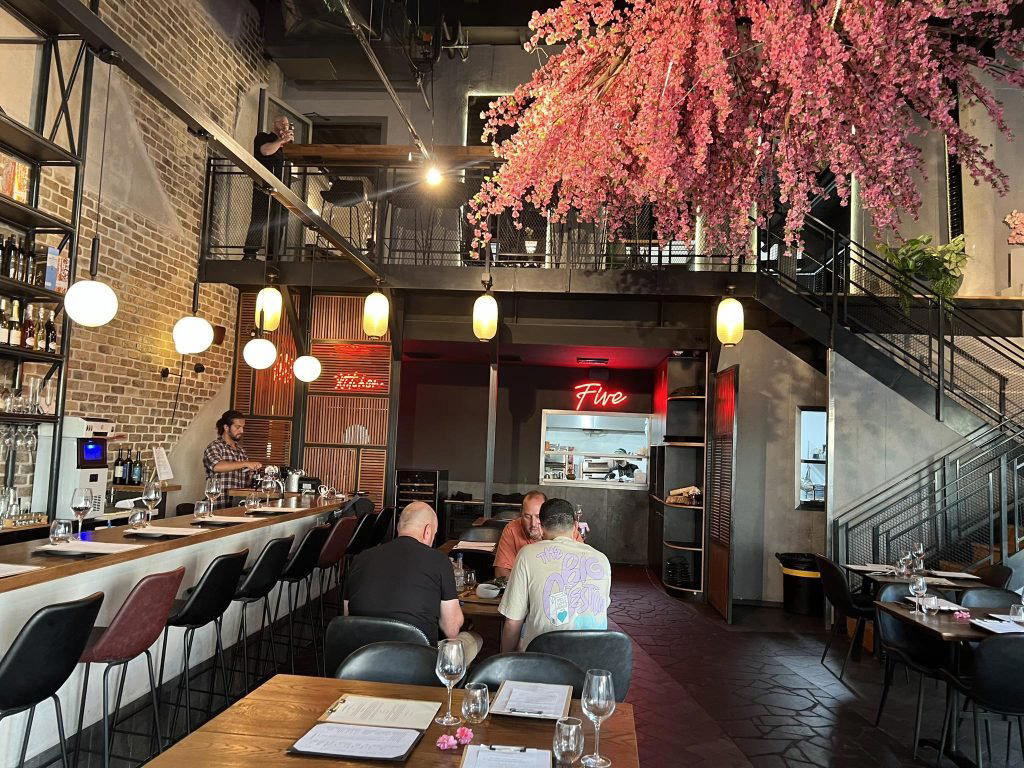
Petah Tikva and the Meat Restaurant Tradition
Israel's suburban dining culture has long organised itself around the grill. From the mangal traditions carried across from North African and Middle Eastern Jewish communities to the brasseried beef-forward formats that gained ground in the 2000s and 2010s, meat restaurants in cities like Petah Tikva occupy a specific cultural position: they are gathering places, not just restaurants. The language of the feast — communal, abundant, centred on fire and protein — runs through the format in ways that distinguish it from the more composed, plated cooking that dominates Tel Aviv's restaurant press. See our full Petah Tikva restaurants guide for broader context on where the city's dining scene sits today.
המקדש, which translates directly as 'The Temple', places that cultural register front and centre in its name alone. A meat restaurant that calls itself a temple is making a statement about its relationship to the product, not as background protein but as the central subject of the meal. This is a position shared by a handful of addresses across Israel's mid-size cities, where the format tends to run looser and more generous than the steakhouse conventions imported from Europe or North America.
Ha-Psagot Street and the Address
Ha-Psagot Street in Petah Tikva is a working address rather than a destination dining strip, which places המקדש in the category of neighbourhood institution rather than crosstown draw. Petah Tikva, one of Israel's oldest modern cities and among its most populous, has a dining scene that largely serves its own residents rather than attracting significant tourism. That context matters: a meat restaurant succeeding on Ha-Psagot Street is doing so on the strength of its cooking and its local reputation, not on foot traffic from visitors or proximity to a hotel cluster.
The comparison set for a restaurant in this position includes places like Pitmaster, which operates in the same city and works the American-influenced barbecue and smoked meat format. Where Pitmaster draws on low-and-slow American traditions, a restaurant named המקדש signals a different orientation, one rooted more directly in the Israeli and broader Levantine relationship with grilled meat. Both addresses speak to how seriously Petah Tikva takes this category, even if the stylistic approaches diverge. For further comparison, Pitmaster Beer-Sheva in Beersheba and Burger 232 in Maggen represent how the meat-focused format distributes across Israeli cities of varying sizes.
Meat Dining in the Israeli Context
To understand what a restaurant like המקדש is doing, it helps to understand how meat functions in Israeli dining culture more broadly. The kashrut framework, Jewish dietary law, separates meat and dairy entirely, which means a dedicated meat restaurant is not simply a steakhouse but a complete dining environment built around that separation. No butter sauces, no cream, no cheese. The cooking has to deliver on the strength of the protein, the fire, and the supporting cast of vegetables, salads, and bread. This constraint has historically pushed Israeli meat restaurants toward clarity: the cut, the char, the accompaniments.
That tradition connects upward to places like Diana in Nazareth, where Arab-Israeli grill traditions have attracted sustained critical attention, and laterally to the mezze-and-meat format that Majda has developed in a different register entirely. The diversity of approaches to meat and fire across Israeli cuisine is wider than the international press typically acknowledges, and suburban restaurants like המקדש are part of that full picture.
For readers building an itinerary across the region, it is worth noting that the Tel Aviv dining corridor offers different reference points: Kab Kem in Tel Aviv works Thai-influenced grilling, while Abu Hassan in Jaffa and Ali Karawan Abu Hassan anchor the hummus and mezze tradition that often accompanies meat-heavy meals in this part of the world. The geography of Israeli dining, from Acre's Uri Buri on the coast to Helena in Caesarea and Menza in Jerusalem, makes clear that the country's restaurant identity is not reducible to any single format. Meat restaurants in suburban Petah Tikva are one strand in a much wider picture.
What the Format Implies
A dedicated meat restaurant in Israel typically operates with a defined house style: charcoal or gas grill, a range of cuts from entrecôte to lamb chops to offal, and a set of salads and sides that function as the framing rather than the main event. The kashrut separation from dairy shapes the drink programme as well as the food, pushing toward wines, spirits, and soft drinks rather than the dairy-heavy cocktail formats that appear in mixed kitchens. Israeli wine production has matured significantly over the past two decades, and meat restaurants now have access to a domestic wine market that can genuinely support a serious pairing conversation.
For comparison, Herbert Samuel Herzliya operates at the higher-end, hotel-backed end of the Israeli restaurant spectrum, and Pescado in Ashdod and Michael Local Bistro in Liman represent the coastal and bistro formats that sit alongside the meat tradition in Israeli dining. Even globally, dedicated meat-focused kitchens operate in a different register from the tasting-menu world exemplified by Le Bernardin in New York City or the fermentation-and-technique driven approach of Atomix. המקדש belongs to a format where directness and abundance carry more weight than precision and restraint. Neither approach is inferior; they are answering different questions about what a restaurant should do. And Azura and Michael Local Bistro further illustrate how wide the Israeli dining conversation runs beyond any single format.
Planning Your Visit
המקדש is located at Ha-Psagot St 9 in Petah Tikva. Petah Tikva is connected to Tel Aviv by both train and bus, making it accessible as a half-day or evening trip from the centre. Given its neighbourhood orientation and the communal format typical of Israeli meat restaurants, group bookings tend to suit the format better than solo or couple visits.
How המקדש - מסעדת בשרים, Petah Tikva: Hours & Planning compares with similar nearby venues.
| Venue | Cuisine |
|---|---|
| HaSalon | Israeli - Mediterranean, Israeli |
| Vong | French Fusion |
Continue exploring
More in Petah Tikva
Restaurants in Petah Tikva
Browse all →
Bars in Petah Tikva
Browse all →
Hotels in Petah Tikva
Browse all →

At a Glance
- Modern
- Elegant
- Sophisticated
- Trendy
- Date Night
- Special Occasion
- Celebration
- Group Dining
- Open Kitchen
- Private Dining
- Design Destination
- Craft Cocktails
- Sommelier Led
- Local Sourcing
Current opening hours
- Monday
- Closed
- Tuesday
- 6–10:30 PM
- Wednesday
- 6–10:30 PM
- Thursday
- 6–11:30 PM
- Friday
- Closed
- Saturday
- Closed
- Sunday
- 6–10:30 PM
Hours can change for holidays and private events. Last verified .
Modern Japanese aesthetic with warm wood and metal accents, soft lighting from a striking chandelier combining branches and ambient light, jazz and blues music playing softly in the background, creating an intimate yet sophisticated atmosphere.
Know Before You Go
- Getting there
- Ha-Psagot St 9, Petah Tikva, Israel