On Herzl Street in the heart of Beersheba, Pitmaster brings the slow-cook tradition to Israel's Negev capital, a city whose dining scene has long punched above its size. The focus is on fire, smoke, and the kind of sourcing discipline that defines serious barbecue wherever it appears. For the Negev region, it represents a specific and deliberate approach to meat cookery that goes well beyond the grill.
Pearl is the En Primeur Club membership app — saves, bookings, and concierge access live there. Same editors, same standards.
- Address
- Herzl St 12, Be'er Sheva, Israel
- Phone
- +972732777777
- Website
- pitmaster.show
- Directions
- Get directions
 Saves & bookings on Pearl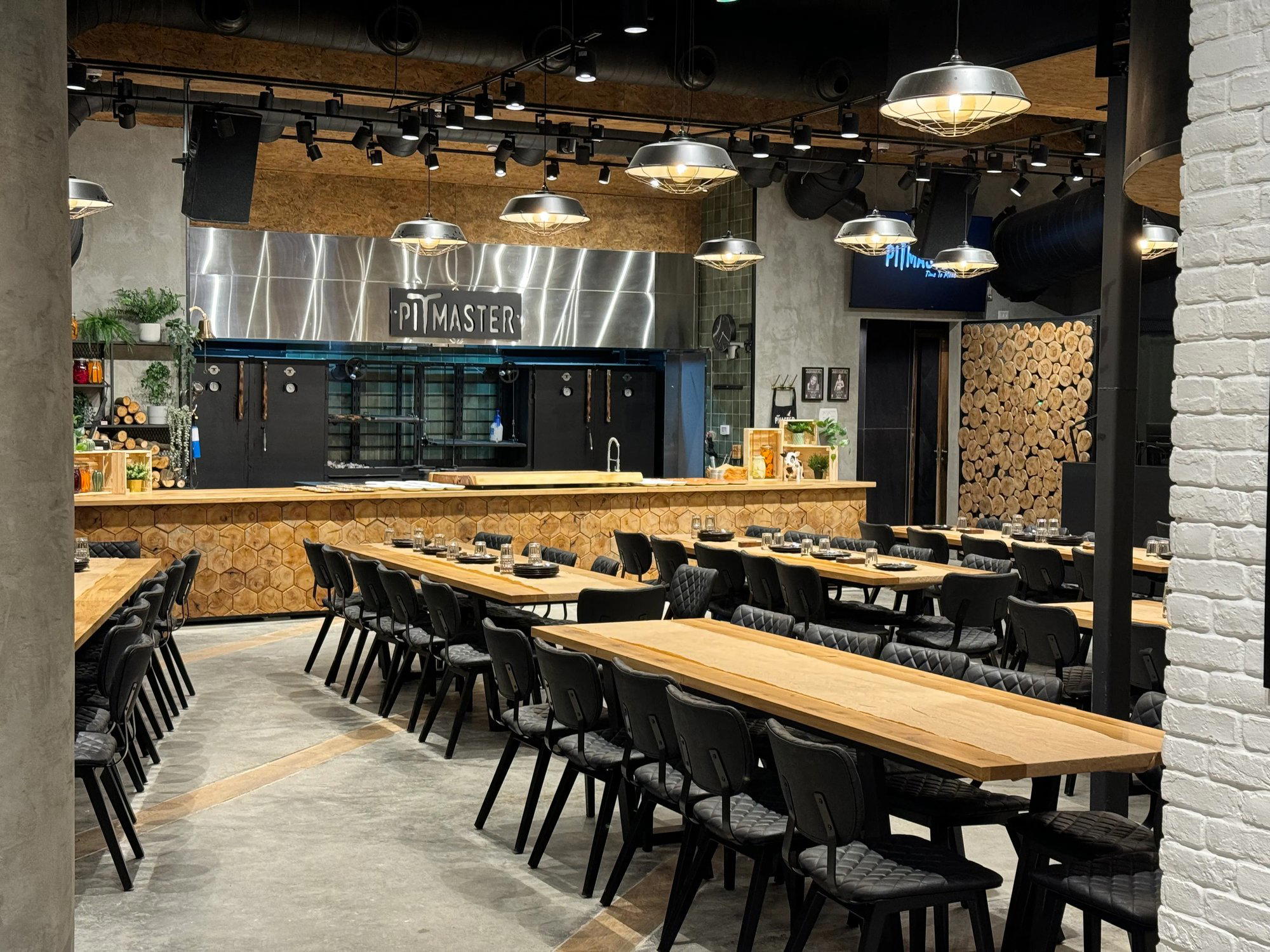
Smoke and the Southern City
Beersheba sits at the northern edge of the Negev, a city of roughly 200,000 that functions as the administrative and cultural capital of Israel's south. Its restaurant culture has historically been underwritten by Ben-Gurion University's student population and a civic appetite for no-nonsense eating: generous portions, direct flavours, and a preference for substance over theatre. Into that context, Pitmaster lands on Herzl Street, the city's central spine, carrying the logic of American-style low-and-slow barbecue translated through an Israeli lens. The address places it squarely in the pedestrian heart of the city.
The broader Pitmaster operation has a presence in other Israeli cities as well, the Pitmaster in Petah Tikva serves as a reference point for what the brand represents across the country. Opening in a city where serious barbecue has not historically commanded a strong foothold, it reflects a deliberate bet on a southern audience that knows its meat and is increasingly willing to pay attention to how that meat was prepared before it reached the fire.
The Sourcing Logic Behind Slow Cooking
Barbecue, in the tradition that Pitmaster draws from, is fundamentally an ingredient-first discipline. The reason low-and-slow cooking became a craft category rather than just a cooking method is that the process of extended smoke and heat is unforgiving: it amplifies the quality of the raw product rather than concealing it. A well-marbled brisket emerges from hours of smoke as something rich and tender; a poorly sourced cut, cooked the same way, produces something dry and flat. The technique is, in this sense, a truth serum for ingredient quality.
This sourcing logic places Pitmaster in a different conversation from Israel's more casual grill culture. The mangal tradition, the backyard or street-side charcoal grill that underpins so much Israeli outdoor eating, operates on relatively fast, high heat, and its quality bar centres on freshness and seasoning. Slow barbecue asks something different of its supply chain: consistent marbling, correct ageing, and the kind of breed and feed discipline that produces connective tissue capable of rendering over extended cooking times. In Israel, where the meat market is shaped by both import regulations and kosher certification requirements, sourcing at that level is a logistical commitment, not an afterthought.
That context matters when reading Pitmaster in Beersheba. The Negev has its own agricultural character, the surrounding region includes livestock operations adapted to arid conditions, but the demands of serious barbecue often point toward a broader national supply network. The discipline of sourcing for smoke cookery is part of what defines establishments like this relative to the wider Israeli barbecue market, where the line between dedicated pitmaster-style operations and generalist grill restaurants can otherwise be difficult for a first-time visitor to read.
Where Beersheba's Dining Scene Sits
Beersheba is not Tel Aviv, and its restaurant culture does not try to be. The city's eating culture rewards directness. Visitors who arrive expecting the layered, technique-heavy menus common to the northern coast, the kind of territory explored by venues such as Herbert Samuel Herzliya or the seafood focus of Helena in Caesarea, will find a different register here. Beersheba's strength is in restaurants that do one thing with conviction.
Within the city itself, the drinking and eating scene around Herzl Street offers a range of options. בית הבירה של באר שבע B7 Beer House serves as a natural pairing destination for anyone building an evening around meat and beer on the same street, while רווה קולינריה נוזלית represents another node in the city's emerging culinary identity. Together, these venues suggest a Beersheba dining scene that is finding its own logic rather than simply importing formats from the north.
Across Israel, the serious end of meat cookery appears in several forms. Diana in Nazareth has long defined what Arab-Israeli grill culture looks like at its most considered, while Majda applies a different kind of sourcing intelligence to its kitchen. The Tel Aviv end of the spectrum, represented by venues like Kab Kem and the long-running hummus institution Abu Hassan in Jaffa, shows how committed single-product restaurants can achieve sustained cultural authority. Pitmaster in Beersheba operates in a similar register, a venue defined by its commitment to a specific cooking tradition rather than by menu breadth.
Planning a Visit
Pitmaster Beer-Sheva sits at Herzl St 12, in the walkable centre of Beersheba. The city is connected to Tel Aviv via frequent direct trains, making it viable as a day or evening trip from the coast. For visitors travelling from Jerusalem, road access via Route 40 is the standard approach. Reservations are essential, and current hours run Mon: 8-11:30 PM; Tue: 8-11:30 PM; Wed: 8-11:30 PM; Thu: 6-8 PM, 9:15 PM-12 AM; Fri: Closed; Sat: 9-11:30 PM; Sun: 8-11:30 PM. Expect roughly $77 per person. The Herzl Street location means parking in the immediate vicinity is limited during peak hours; arriving by transit or on foot from the central station is the more practical approach for most visitors.
Pitmaster's slow-cook model engages with a broader national conversation about ingredient provenance from the meat side. That conversation is worth following wherever you eat in Israel.
Comparable Spots, Quickly
Comparable venues nearby, for context on price, style, and recognition.
| Venue | Cuisine | Price | Notes |
|---|---|---|---|
| Pitmaster Beer-Sheva - פיטמאסטר באר-שבעThis venue — the venue you are viewing | Live Fire Smoked Meats | $$$ | Not listed |
| רווה קולינריה נוזלית | Liquid Culinary | Not listed | Tvuna |
| בית הבירה של באר שבע B7 Beer House | Craft Beer Hall | $$ | Old Quarter |
| Rola Levantine Kitchen | Levantine Kitchen | $$ | HaNamal |
| Tmol Shilshom | Kosher Israeli Dairy Cafe | $$ | Nachalat Shiva |
| Hummus Abu Hassan | Authentic Middle Eastern Hummus | $ | El Ajami |
Continue exploring
More in Beersheba

At a Glance
- Lively
- Energetic
- Rustic
- Group Dining
- Celebration
- Casual Hangout
- Open Kitchen
- Live Music
- Beer Program
Current opening hours
- Monday
- 8–11:30 PM
- Tuesday
- 8–11:30 PM
- Wednesday
- 8–11:30 PM
- Thursday
- 6–8 PM, 9:15 PM–12 AM
- Friday
- Closed
- Saturday
- 9–11:30 PM
- Sunday
- 8–11:30 PM
Hours can change for holidays and private events. Last verified .
Energetic atmosphere with lively music, communal long tables, and interactive fire cooking performances visible from kitchen-facing seats.