
Tabelog 100 #33
Our verdict
Piatti Castellina sits in Kagurazaka’s quieter Italian lane, where Tokyo’s appetite for pasta, wine, and seasonal Japanese produce meets a compact room rather than a grand dining stage. Its Tabelog Italian TOKYO 100 selections in 2021, 2023, and 2025 place it among the city’s more closely watched Italian addresses, with a 16-seat scale that keeps the experience intimate.

Pearl is the En Primeur Club membership app, where members save venues, book tables and use the concierge.
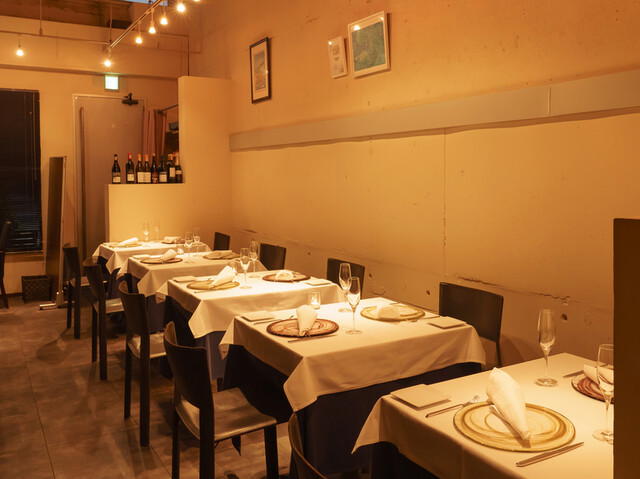
Tokyo rewards restraint. Its dining rooms do not need spectacle to feel memorable; they can be built around small gestures, low voices, careful pacing, and kitchens that treat Italian cooking as a framework rather than a costume. Piatti Castellina belongs to that Tokyo mode: Italian, pasta, and innovative on paper, and best read as part of the city’s wider conversation around imported technique and local dining habits.
Tokyo Italian dining is not one category. One end has trattoria-style rooms built around comfort and regulars; another has tasting-menu restaurants where pasta is one movement in a larger composition. The quieter Tokyo version is more room-conscious and more locally fluent, shaped by focused settings and diners who know how much precision fits into a measured meal. Tabelog Hyakumeiten recognition in 2025 gives Piatti Castellina a public marker in that crowded field without turning it into a trophy room.
Tokyo Italian, scaled for a focused room
The focused-room format matters. In Tokyo, atmosphere changes the meal before the first plate lands: service pacing tightens, advice becomes less ceremonial, and the cooking has less space to hide behind decoration. A restaurant of this kind sits closer to Tokyo’s intimate dining mentality than to a spectacle-led model, even when the cuisine is European. The result is Italian cooking read through proximity: pasta, courses, conversation, and a kitchen whose decisions show in the room’s rhythm.
That intimacy explains the appeal for diners who know the city’s sharper edges. Tokyo has long balanced older textures with polished contemporary dining, and Italian restaurants here often succeed by not imitating Italy wholesale. The stronger approach is translation: Italian structure, Tokyo produce habits, and a local sense of portion, sequence, and silence. Piatti Castellina’s Italian, pasta, and innovative listing points to that hybrid register without needing a manifesto.
Within Tokyo’s dining map, comparison helps. Tori Takuchu works in a serious spending bracket but belongs to another tradition, where chicken, charcoal, and sequence define the night. CRAZY BRAVO sits nearer the Italian orbit, making it a more direct reference for diners weighing contemporary Italian options. Naniwaya Edogawabashi shows another side of the city’s range. Yakitori SANKA and マティーニバーガー underline the point: Tokyo dining does not move in one culinary lane.
Pasta, pacing, and the Tokyo habit of quiet precision
The pacing signal is not incidental. Tokyo Italian rooms at this level often build identity through timing and restraint as much as through pasta technique, because diners expect precision across the city’s strongest dining categories. Piatti Castellina belongs among restaurants where the meal’s architecture matters, while the room’s appeal still rests on the balance between food, pacing, and atmosphere.
The cooking category gives useful boundaries without overpromising specifics. Pasta is the clearest Italian anchor, while the innovative tag suggests a kitchen comfortable with Tokyo’s habit of adaptation. That matters because many overseas diners expect either rustic Italian abundance or luxury tasting-menu theatre. Tokyo’s stronger restaurants often offer something more measured. They prize controlled pacing, considered portions, and a room that lets dinner feel private without needing spectacle.
Piatti Castellina’s Tabelog score of 3.72 is worth reading locally. On Japanese restaurant platforms, high scores move slowly and often reflect repeat local attention, category competition, and reservation friction. Tabelog Hyakumeiten inclusion is the cleaner trust signal: it places the restaurant in a curated Tokyo Italian context in a city where Italian cooking is deep, competitive, and technically ambitious.
A practical social code is embedded too. This is not the kind of restaurant to treat as a large-group party room by default; its appeal is better understood through focus, pacing, and attention at the table. The restaurant suits diners who want the meal itself to carry the evening, with conversation, courses, and quiet precision doing more work than scene-making.
How to place it within a Tokyo dining itinerary
For visitors building a Tokyo dining week, Piatti Castellina fits a night when the goal is not sushi counter intensity or formal hotel dining, but a quieter expression of the city’s European dining fluency. It pairs naturally with a Tokyo evening before dinner and with an itinerary that separates the city’s genres instead of chasing one headline meal after another. Put Italian here, yakitori on another night, and a more casual daytime stop elsewhere, letting the city’s range do the work.
Readers mapping the area can compare other nearby and citywide options through unnamed Tokyo dining rooms across yakitori, casual cafes, curry shops, and seafood counters. For the wider city edit, use Our full Tokyo restaurants guide, then round out the trip with Our full Tokyo hotels guide, Our full Tokyo bars guide, Our full Tokyo wineries guide, and Our full Tokyo experiences guide.
For travelers extending the same appetite beyond Tokyo, the broader Japan and trans-Pacific dining map can move from compact local restaurants to casual cafes, curry specialists, sake bars, and quick daytime stops without needing a single fixed template. The useful lesson is not that one genre dominates, but that careful dining cultures often travel through modest rooms, precise service, and a clear sense of place.
Keep Piatti Castellina on the list not because Tokyo lacks Italian restaurants, but because the city’s Italian rooms reveal a particular dining intelligence: European technique made compact, attentive, and suited to quiet precision. In Tokyo, that intelligence feels at home.
Style and Standing
Comparable venues by cuisine and category.
| Venue | Cuisine | Price | Awards | Notes |
|---|---|---|---|---|
| Piatti CastellinaThis venue (the venue you are viewing) | Italian Course Dining | $30–50 | Tabelog 100 #33 | Not listed |
| neo | Italian Standing Bar | $50–100 | Tabelog 100 #18 | Shibuya |
| エリオ・ロカンダ・イタリアーナ | Authentic Southern Italian Trattoria | $50–100 | Tabelog 100 #86 | Chiyoda |
| caffe Michelangelo | Italian café with house-made desserts and pinsa pizza | $20–30 | Tabelog 100 #29 | Shibuya |
| La Barrique Tokyo | Italian Fine Dining | $200–300 | Tabelog 100 #16 | Bunkyō |
| TRATTORIA GRAN BOCCA | Italian steakhouse trattoria with A5 Wagyu | $30–50 | Tabelog 100 #3 | Chiyoda |
Recognition history
Dated appearances from independent guides and award organizations, with the underlying list record or original source where available.
Tabelog 100 #33 · No. 33
Tabelog · Tabelog 100 - Italian - TOKYO - 2025
Continue exploring
More in Tokyo
Restaurants in Tokyo
All restaurants in Tokyo →


Bars in Tokyo
All bars in Tokyo →






Details
- Sophisticated
- Elegant
- Intimate
- Classic
- Date Night
- Business Dinner
- Special Occasion
- Group Dining
- Standalone
- Extensive Wine List
- Local Sourcing
- Set Menu
- A La Carte
- Wine
Current opening hours
- Monday
- 11:30 AM–1:30 PM, 6–8 PM
- Tuesday
- 11:30 AM–1:30 PM, 6–8 PM
- Wednesday
- 11:30 AM–1:30 PM, 6–8 PM
- Thursday
- 11:30 AM–1:30 PM, 6–8 PM
- Friday
- 11:30 AM–1:30 PM, 6–8 PM
- Saturday
- 11:30 AM–1:30 PM, 6–8 PM
- Sunday
- 11:30 AM–1:30 PM, 6–8 PM
Hours can change for holidays and private events. Hours as of .
A refined, intimate dining room with a calm, polished atmosphere suited to a leisurely course meal.