Pasta & Vino - Pastificio e Vineria
Among Copacabana's trattorias and wine bars, Pasta & Vino - Pastificio e Vineria on Rua Francisco Sá occupies a specific register: the kind of informal Italian dining room that takes pasta and wine seriously without the formality of Rio's fine-dining tier. It sits in a neighbourhood where casual and considered often overlap, and it reads as a counter-argument to the city's grander Italian addresses.
Pearl is the En Primeur Club membership app — saves, bookings, and concierge access live there. Same editors, same standards.
- Address
- R. Francisco Sá, 35 - Copacabana, Rio de Janeiro - RJ, 22080-010, Brazil
- Phone
- +552135470300
- Website
- pastaevino.com.br
- Directions
- Get directions
 Saves & bookings on Pearl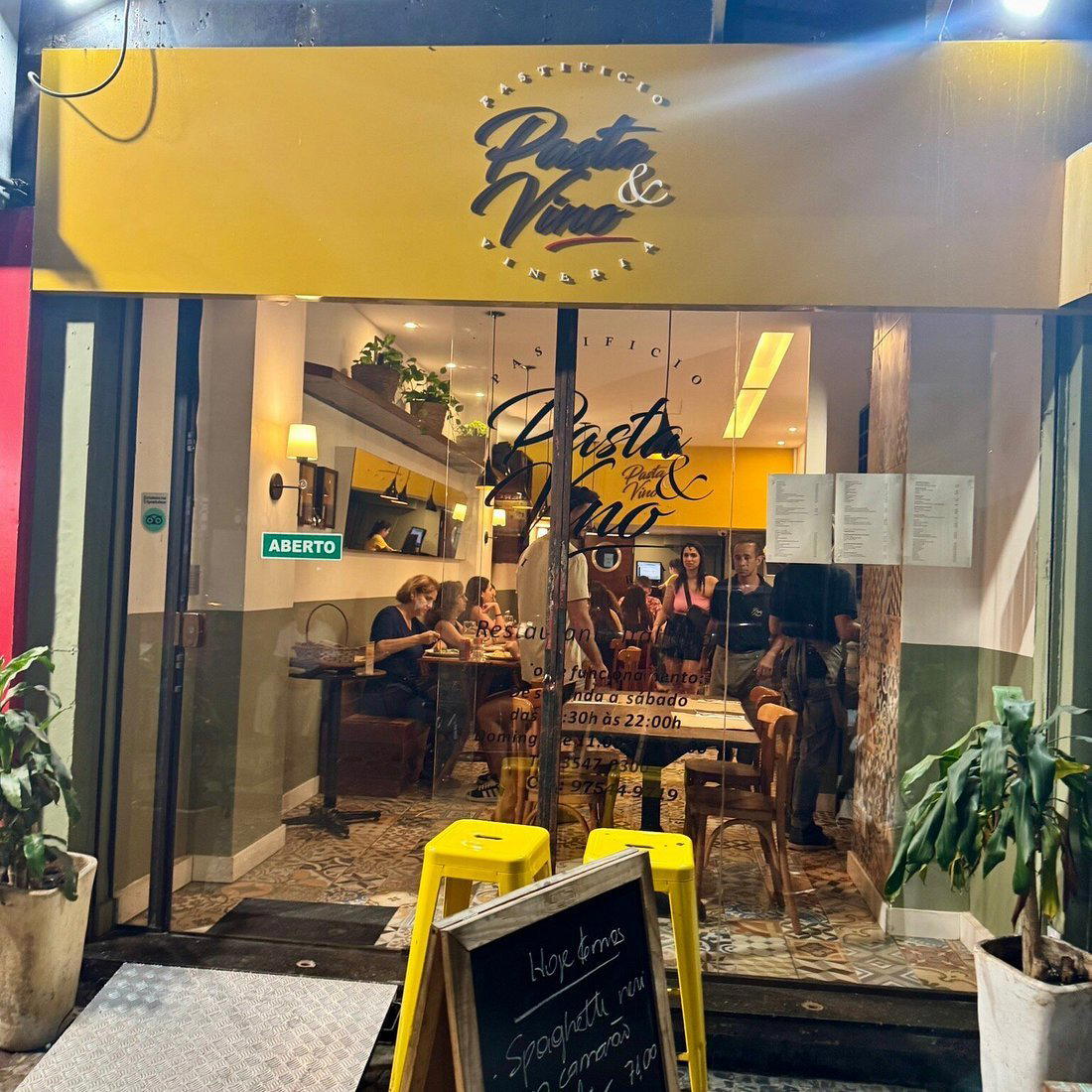
The Room Before the Food
Copacabana's dining character is shaped by the tension between its beachside informality and the ambitions of the people who actually live there. The neighbourhood is a residential district rather than a tourist strip. Rua Francisco Sá, where Pasta & Vino - Pastificio e Vineria occupies number 35, sits a few blocks from the waterfront in a residential pocket where locals eat on weeknights and the rhythm is slower than the Zona Sul's more performative dining rooms. The physical context matters here: this is a neighbourhood address. It is a neighbourhood address, and that distinction shapes everything about how the space reads and how you should approach it.
The pastificio-e-vineria format itself carries architectural implications. Across Italy, the model typically organises space around a working pasta counter visible to diners, shelves of wine integrated into the room rather than locked behind a cellar list, and seating that prioritises density over comfort theatrics. The format communicates that the product, fresh pasta, a considered wine selection, is the spectacle. At Pasta & Vino, that Italian typology arrives in a Brazilian context, where the surrounding neighbourhood has its own set of expectations about hospitality pace and informality. The result is tighter and more convivial than Rio's grander dining rooms.
Where It Sits in Rio's Italian Tier
Rio's Italian dining operates across a wide range of registers. At the formal end, Cipriani at the Copacabana Palace represents the legacy grand-hotel model, with white tablecloths and a price point aligned to international luxury hotel dining. Oro operates in a contemporary Brazilian-Italian register, drawing on modern techniques and a tasting-menu format. Pasta & Vino positions itself at neither extreme. The pastificio-and-wine-bar model is, by design, an everyday format, the Italian equivalent of a serious neighbourhood bistro, where the cooking is craft-level without requiring the institutional apparatus of a fine-dining kitchen.
In São Paulo, this middle tier is more developed, with a long lineage of Italian immigration shaping a pasta culture that runs from family-style houses in the Bixiga neighbourhood to contemporary trattorias. Rio's equivalent tier is thinner, which makes the format more conspicuous. A pastificio in Copacabana is not competing against a dense field of peers the way it might in São Paulo or in the Italian-Brazilian communities of Rio Grande do Sul, where places like Cantina Pozzobon in Santa Maria have built multigenerational reputations on handmade pasta traditions. In Rio, the format is less common, which shapes both the audience and the expectation.
The Pasta and Wine Logic
The pairing of a working pasta operation with a wine focus is not incidental. The pastificio-e-vineria model implies a kitchen built around dough, the kind of daily production that prioritises ingredient quality and technique over menu range. Fresh pasta made on-site has a different negotiation with sauce than dried pasta: it absorbs differently, requires different timing, and generally pairs better with lighter, more acid-driven wines than with heavy reductions. A vineria operating alongside that kind of kitchen tends to build its list around Italian regional wines precisely because of those structural affinities: the acidity of a northern Italian white or a lighter-bodied red from Emilia-Romagna or the Veneto reads differently against a fresh egg pasta than it would against a grilled protein.
Rio's wine culture has developed significantly over the past decade, with the city's better restaurants moving beyond a Brazil-and-Argentina duopoly toward lists that engage with European regions at multiple price points. The vineria component of this format sits within that broader shift. For context on where Rio's most ambitious wine programs operate, Lasai and Casa 201 both maintain serious wine programs at the $$$$-tier, while the pastificio model targets a more accessible price register with a narrower, more focused selection.
Copacabana as a Dining Neighbourhood
Understanding Copacabana's dining geography is useful for placing Pasta & Vino correctly. The neighbourhood runs south from the tunnel that connects it to Botafogo and Flamengo, and its dining character is genuinely mixed: hotel dining rooms serving international guests, decades-old botequins serving cold beer and petiscos, a wave of more considered neighbourhood restaurants targeting residents rather than tourists. Rua Francisco Sá sits in the latter category, a street where the audience is predominantly local and where the dining register is correspondingly unpretentious.
That residential audience tends to value consistency and accessibility over occasion dining. It is a different dining contract than the one operating at Oteque in Botafogo, where the tasting-menu format requires advance planning and a specific kind of attention. The pastificio model asks less of the diner in terms of occasion, and more in terms of ingredient attention. You come back repeatedly for the pasta itself, not for a single transformative experience.
The Italian-Brazilian thread specifically runs through communities from Passo Fundo to the interior, where handmade pasta and Italian-origin recipes have been adapted over generations into a distinct Brazilian-Italian culinary register.
Planning Your Visit
Pasta & Vino - Pastificio e Vineria is located at Rua Francisco Sá, 35 in Copacabana. The address places it in a walkable residential area of the neighbourhood, reachable on foot from most Copacabana accommodation and a short taxi or rideshare ride from Botafogo and Ipanema. Reservations are recommended, and the restaurant keeps daily service from 11:30 AM to 10 PM Monday through Saturday, with Sunday service ending at 6 PM. The menu centers on handmade pasta and a focused wine list.
Just the Basics
Comparable venues nearby, for context on price, style, and recognition.
| Venue | Cuisine | Price | Notes |
|---|---|---|---|
| Pasta & Vino - Pastificio e VineriaThis venue — the venue you are viewing | Not listed | $$ | Not listed |
| COLTIVI ☕️Café & 🍕Pizzaria | Humaitá, Italian Pizza Café | $$$ | Not listed |
| Bento Pizzeria | Tijuca, Neapolitan Pizza | $$ | Not listed |
| Tutto Nhoque | Botafogo, Traditional Italian Gnocchi | $$ | Not listed |
| Capricciosa | Not listed | $$$ | Ipanema, Contemporary Neapolitan Pizzeria & Italian Trattoria |
| Casa do Sardo | São Cristóvão, Sardinian Italian | $$ | Not listed |
Continue exploring
More in Rio de Janeiro
Restaurants in Rio de Janeiro
Browse all →
Bars in Rio de Janeiro
Browse all →




At a Glance
- Cozy
- Intimate
- Rustic
- Date Night
- Solo
- Family
- Open Kitchen
- Extensive Wine List
Current opening hours
- Monday
- 11:30 AM–10 PM
- Tuesday
- 11:30 AM–10 PM
- Wednesday
- 11:30 AM–10 PM
- Thursday
- 11:30 AM–10 PM
- Friday
- 11:30 AM–10 PM
- Saturday
- 11:30 AM–10 PM
- Sunday
- 11:30 AM–6 PM
Hours can change for holidays and private events. Last verified .
Cozy and intimate small space with simple, familial atmosphere and attentive personal service.