Mee

1 Michelin Star
Our verdict
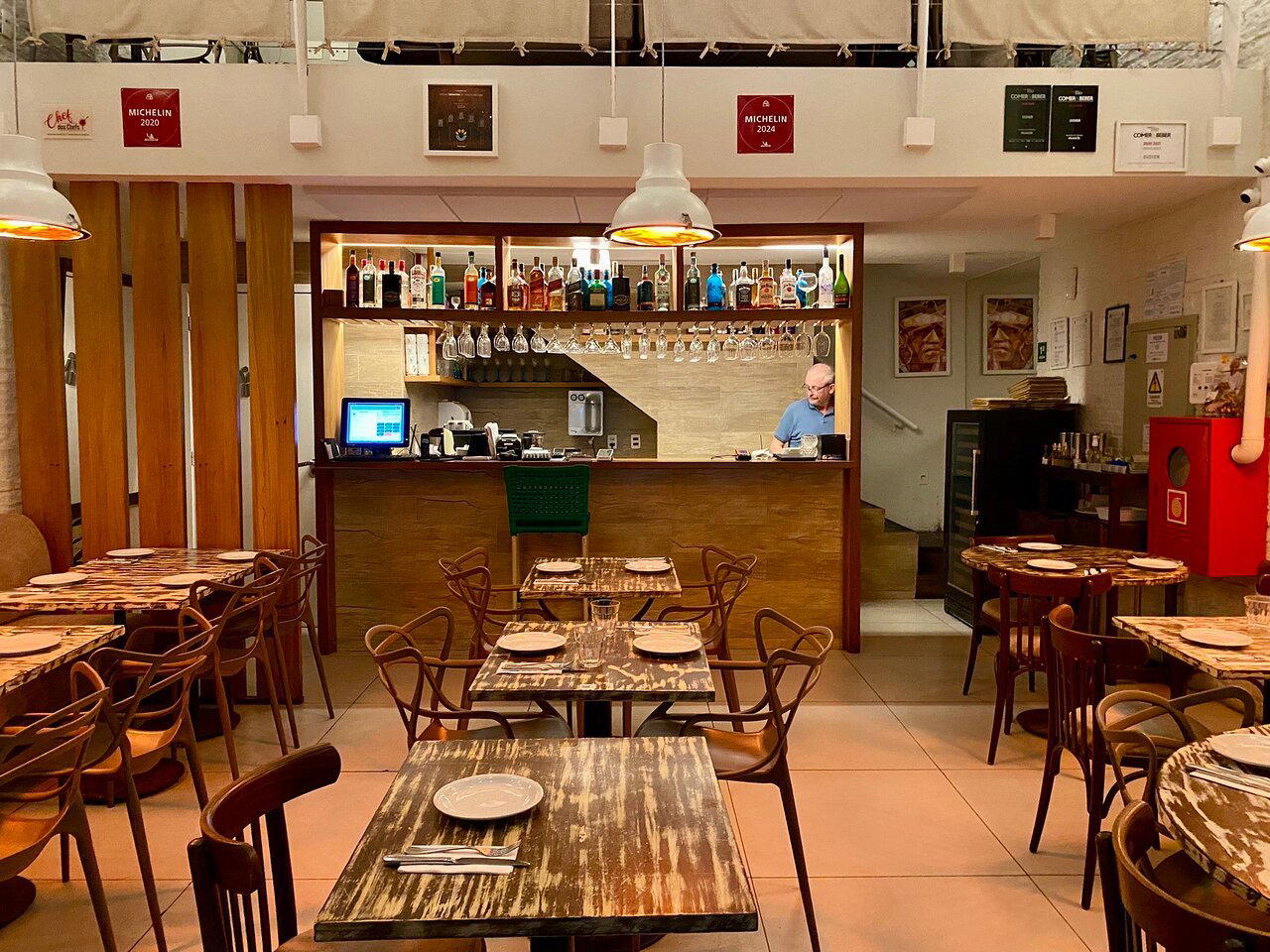
Mee holds consecutive Michelin stars (2024 and 2025) for its Asian-influenced menu along Copacabana's Avenida Atlântica. Under chef Jean-François Rouquette, the kitchen operates in a register distinct from Rio's Brazilian-focused fine dining tier, drawing from pan-Asian culinary traditions at a $$$$ price point.

Pearl is the En Primeur Club membership app, where members save venues, book tables and use the concierge.
The menu
What to order
- Omakase
- Sushi and Sashimi
- Crispy Sichuan Tea Smoked Duck
- Shrimp Tempura
- Dim Sum Sampler
Where Copacabana's Waterfront Sets the Tempo
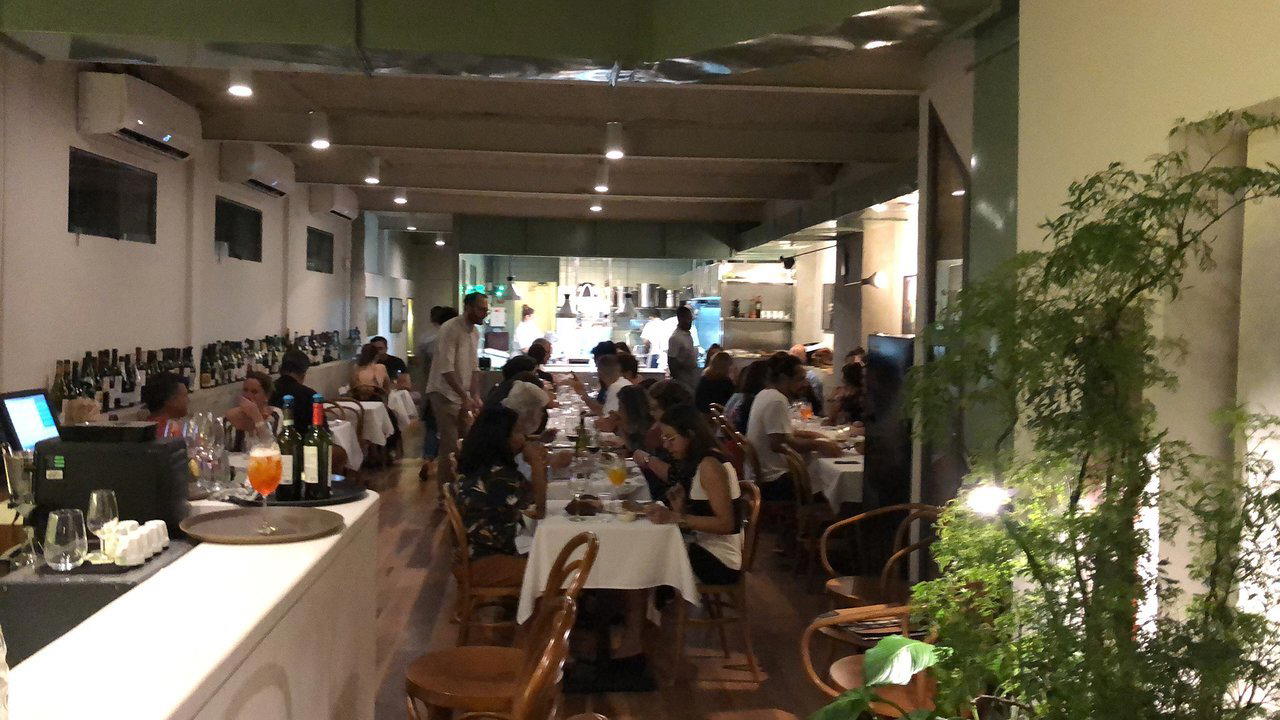
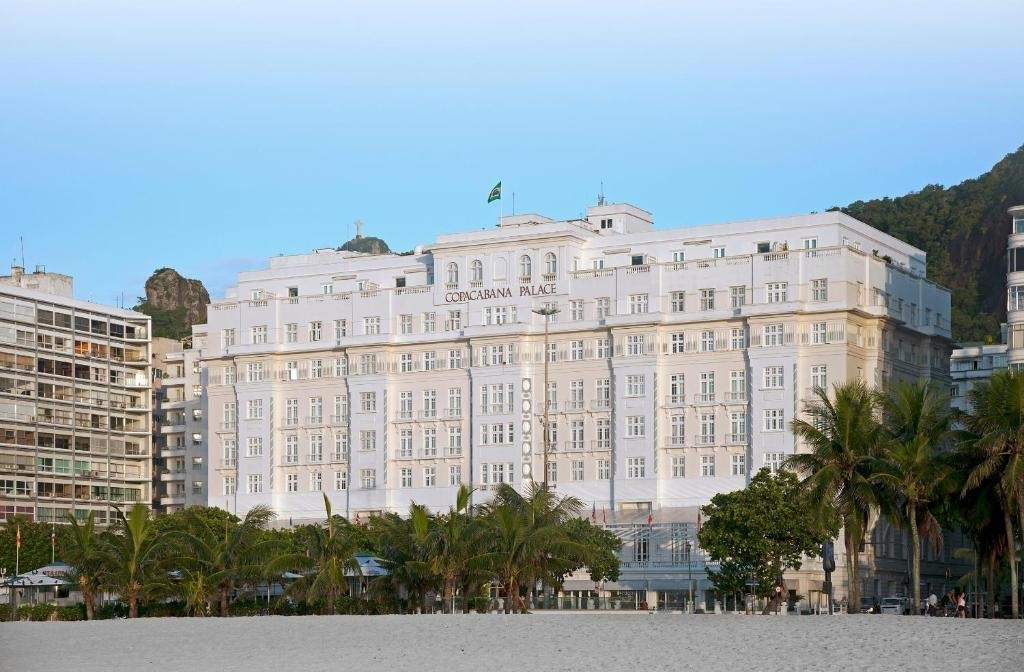
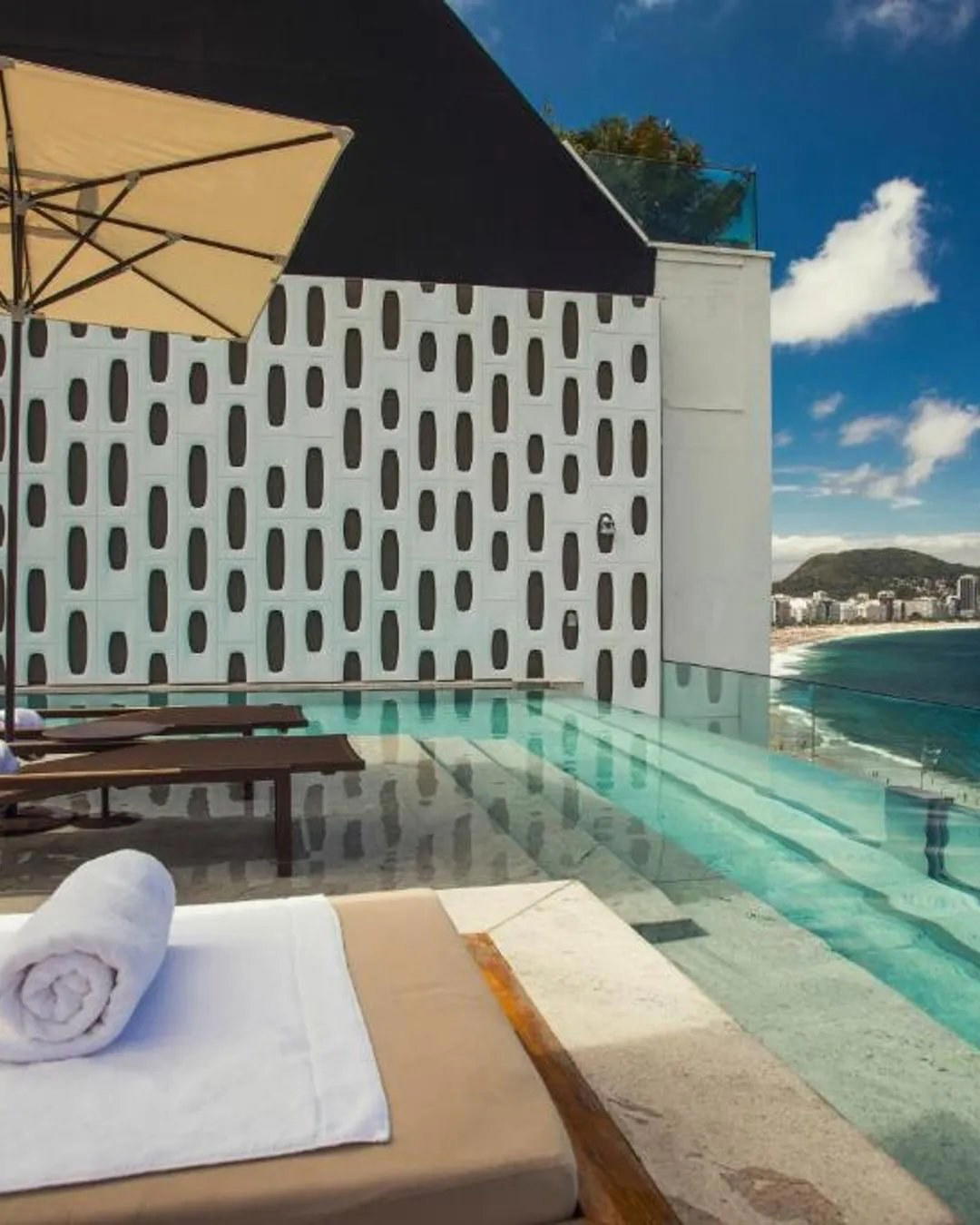
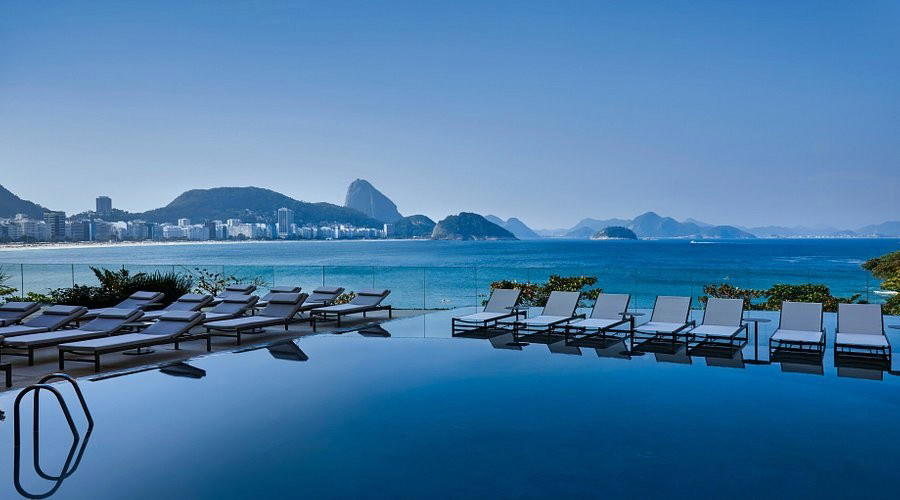
Avenida Atlântica is one of the few addresses in the world where the boulevard itself functions as the dining room's first course. The ocean-facing promenade runs the full length of Copacabana beach, and the light changes across it with a particular drama at dusk, salt air, the hum of the city, and a horizon that flattens the usual restaurant ritual into something slower. Mee occupies this setting along that stretch, at number 1702, and the address is not incidental to how the meal is framed. A dinner here is structured around that position: the physical environment does preparatory work before the first dish arrives.
This matters because Mee operates in a culinary idiom, Asian influences in a pan-Asian rather than single-country sense, that asks the diner to slow down and read each course individually. The pacing that works in Tokyo or Hong Kong tasting-format restaurants translates here partly because the surrounding environment already encourages unhurried attention. Rio's fine dining tier is dominated by kitchens rooted in Brazilian ingredients and technique, represented in this city by addresses like Lasai (Regional Brazilian, Modern Cuisine) and Oteque (Modern Brazilian, Modern Cuisine). Mee sits outside that tradition entirely, which makes its consecutive Michelin recognition, one star in both 2024 and 2025, a notable signal about how the guide reads the city's broader ambitions.
The Ritual of an Asian-Influenced Table in Rio
Dining at a kitchen that draws from pan-Asian traditions carries its own set of customs and expectations that differ from the Brazilian-led menus that define much of Rio's Michelin tier. Where a table at Oro (Contemporary Italian, Brazilian, Modern Italian) might be structured around familiar Italian-Brazilian intersections, and Casa 201 (French) follows French service logic, Mee requires a different kind of attention from the diner. Dishes tend to carry layered seasoning, fermented notes, umami depth, contrast between acidity and fat, that reward sequential eating rather than free-form grazing. The meal is meant to be read as a progression.
Chef Jean-François Rouquette shapes that progression. His involvement situates Mee within a European-trained perspective applied to Asian culinary vocabulary, a combination that has become a recognised format in major hotel dining rooms across Asia and Europe. The result is not fusion in the pejorative sense but rather a structured dialogue between techniques. At the $$$$ price point, the expectation is a multi-course format with deliberate pacing, and the service rhythm at a Michelin-starred table at this tier is designed to extend the meal rather than compress it. Arriving with time to spare rather than rushing from another engagement is the appropriate approach.
For comparison, the Asian-influences category in other major cities tends to split between single-cuisine precision, Japanese omakase counters, for example, and the broader pan-Asian format that Mee represents. Kazuo in São Paulo operates in the same category within Brazil, while internationally, MAIN TOWER Restaurant and Lounge in Frankfurt offers a point of comparison for how Asian-influenced menus function in a European fine dining context. In Rio, Mee has no direct peer in the starred tier, which concentrates attention on what it does rather than how it compares laterally.
Rio's Michelin Map and Where Mee Fits
Brazil's Michelin Guide has expanded its scope considerably in recent years, and Rio's starred list now includes tables working in several distinct registers. The regional Brazilian kitchens, driven by native ingredients, pre-colonial techniques, and contemporary plating, have attracted the most critical attention, with Lasai and Oteque representing that current. But the guide has also recognised restaurants operating in European classical traditions and, with Mee, an Asian-influenced table that has now held its star across two consecutive editions.
That consistency across two years carries more information than a single star. It signals that the kitchen's execution is stable rather than dependent on a single exceptional moment, and that the Michelin inspectors are reading the menu as coherent rather than eclectic. Among Rio's starred restaurants at the $$$$ price tier, Mee is the only one working in this culinary register, which means it functions as the reference point for this category in the city rather than as one entry in a crowded field. For context on how the broader Michelin-starred scene extends across Brazil, Evvai in São Paulo represents the São Paulo starred tier, while regional addresses like Manga in Salvador and Mina in Campos do Jordão show how the guide's attention has spread beyond the two major cities.
Michelin recognition and crowd-sourced ratings measure different things, the guide prioritises technique, coherence, and consistency at the top tier; public ratings aggregate overall experience including service, value perception, and accessibility. A 4.4 at this price point in a market where $$$$ dining provokes strong expectations about value for money suggests the kitchen is meeting those expectations more often than not, even among diners who may not arrive with a fine dining frame of reference.
Asian Influences in a Brazilian Context
Brazil's relationship with Asian culinary traditions is longer and more complex than most visitors realise. São Paulo hosts one of the largest Japanese-Brazilian communities outside Japan, and that intersection has shaped the country's food culture over more than a century. Rio's relationship with Asian cooking is less historically embedded than São Paulo's, which makes the presence of a Michelin-starred Asian-influenced restaurant on Copacabana's main waterfront address an interesting cultural signal rather than a predictable commercial choice.
The city's fine dining market has historically been more anchored in European, particularly French and Italian, classical training, with the Brazilian-ingredient-forward wave arriving relatively recently. Mee occupies a third position: Asian culinary vocabulary, European technical training in the kitchen, and a physical address on one of Brazil's most internationally visible streets. That combination positions it as a restaurant that speaks simultaneously to the international traveller familiar with Asian-influenced haute cuisine in other cities and to the Rio diner interested in something structurally different from the Brazilian-modern or European-classical tables that fill out the rest of the starred tier.
For those exploring the city's dining more broadly, Mr. Lam represents the more accessible, casual end of Asian cooking in Rio, useful as a point of contrast for how the same culinary tradition operates at different formality and price levels. The gap between those two registers illustrates how much work the Mee format is doing to hold the $$$$ price point.
Planning the Visit
Mee's Copacabana address, Avenida Atlântica, 1702, is accessible from across the Zona Sul, with the beachfront location meaning transport by rideshare is the practical choice for most visitors. The $$$$ price tier signals a restaurant where booking in advance rather than walking in is the assumed behaviour, and given the combination of Michelin recognition and a relatively small likely seat count for a restaurant operating at this service level, lead time matters.
For the broader context of an evening in the area, Copacabana's waterfront position means pre-dinner or post-dinner access to the promenade is direct. Those building a longer Rio itinerary can reference our full Rio de Janeiro restaurants guide alongside our full Rio de Janeiro hotels guide, our full Rio de Janeiro bars guide, our full Rio de Janeiro experiences guide, and our full Rio de Janeiro wineries guide to build out a full programme. For those travelling more widely in Brazil, additional context is available from addresses including Orixás North Restaurant in Itacaré, Primrose in Gramado, and Castelo Saint Andrews in Gramado.
Frequently asked questions
What kind of recognition has Mee received?
Mee has received recognition including: Michelin 1 Star (2025); Michelin 1 Star (2024).
What type of food is Mee known for?
What's the best thing to order at Mee?
Mee's kitchen draws from pan-Asian culinary traditions, so the menu is oriented around dishes where that range is most precisely executed, look to preparations that reflect the kitchen's strongest technique within that broad framework. Given the restaurant has held a Michelin star consecutively in both 2024 and 2025, the tasting menu format, if offered, represents the clearest statement of what chef Jean-François Rouquette's team is doing. For the most current menu details and seasonal focus, contacting the restaurant directly via the Copacabana location at Avenida Atlântica, 1702 is the reliable route.
What price level is Mee?
Pricing at Mee is listed as $$$$.
Where is Mee in Rio de Janeiro?
Mee is located at Av. Atlântica, 1702 - Copacabana, Rio de Janeiro - RJ, 22021-001, Brazil, Rio de Janeiro.
City Peers
| Venue | Cuisine | Price | Awards | Notes |
|---|---|---|---|---|
| MeeThis venue (the venue you are viewing) | Pan-Asian Fusion with Japanese Influence | $50–100 | 1 Michelin Star | Not listed |
| Lasai | Modern Brazilian Fine Dining | Not listed | 2 Michelin Stars · World's 50 Best #28 | Regional Brazilian, Modern Cuisine |
| Oteque | Modern Seafood Fine Dining | $100–150 | 1 Michelin Star · World's 50 Best #38 | Modern Brazilian, Modern Cuisine |
| Oro | Brazilian Vanguard Fine Dining | Not listed | 2 Michelin Stars · La Liste Top Restaurants | Contemporary Italian, Brazilian, Modern Italian |
| Lilia | Modern Brazilian Creative | $20–30 | Michelin Plate | Italian, Brazilian |
| Casa 201 | Modern French with Brazilian Ingredients | $150–200 | 1 Michelin Star | French |
Recognition history
Dated appearances from independent guides and award organizations, with the underlying list record or original source where available.
Michelin 1 Star
Michelin
Full recognition history (3 entries)
Michelin 1 Star
Michelin
Michelin 1 Star
Michelin