Tutto Nhoque
Our verdict
Tutto Nhoque sits on Rua São Clemente in Botafogo, one of Rio's most food-literate neighbourhoods, where the appetite for Italian-rooted comfort cooking runs alongside a serious local dining culture. The name alone signals the specialty: gnocchi in its many forms, positioned within a city that has long absorbed Italian culinary tradition through waves of immigration. Plan ahead — neighbourhood spots of this type in Botafogo fill quickly on weekends.

Pearl is the En Primeur Club membership app — saves, bookings, and concierge access live there. Same editors, same standards.
- Address
- R. São Clemente, 24 - Botafogo, Rio de Janeiro - RJ, 22260-000, Brazil
- Phone
- +552138192011
- Hours
- Daily 11:30 AM–11 PM
- Website
- tuttonhoque.com.br
- Directions
- Get directions
The menu
What to order
- Gnocchi
- Nonna aida
- Lasanha de costela
- Burrata
Botafogo's Appetite for Italian Comfort
Rio de Janeiro's relationship with Italian food is not superficial. Waves of Italian immigration through the late nineteenth and early twentieth centuries seeded a culinary tradition that now runs through Brazilian cooking at every level, from the everyday to the fine-dining register occupied by places like Oro, which weaves contemporary Italian technique into a Brazilian framework, and Cipriani, which imports Venetian formality to Copacabana. Somewhere between those poles sits a quieter category: the neighbourhood specialist, focused on a single thing done with precision. Tutto Nhoque, on Rua São Clemente in Botafogo, belongs to that category. The name is a declaration of intent. This is a gnocchi house.
Botafogo itself has earned its place as one of the city's more interesting dining corridors. It sits between the tourist density of Copacabana and the more polished residential calm of Humaitá and Lagoa, which gives it a slightly grittier, more local character. The streets around Rua São Clemente carry a mix of long-standing neighbourhood institutions and newer openings that reflect a rising appetite for food that prioritises craft over spectacle. In that context, a restaurant built around a single pasta format reads less as a novelty and more as a statement of confidence. Rio's broader dining scene, where Lasai and Oteque represent the high-investment modern Brazilian end, has room for this kind of focused, mid-register offer.
The Logic of the Single Specialist
Gnocchi as a restaurant concept is more defensible than it might first appear. In Italy, regional gnocchi traditions diverge sharply: the potato-based pillows of the Veneto, the semolina-baked Roman gnocchi alla Sorrentina, ricotta-lightened versions from Campania, and bread-based preparations from further north. Each represents a different set of decisions about texture, density, and sauce compatibility. A restaurant that names itself after the dish is implicitly claiming mastery across at least some of that range, or deep authority within one strand of it. In Brazil, the cultural resonance runs deeper still. Gnocchi carries a specific ritual meaning in the country's Italian-descended communities, particularly in the south: eating it on the twenty-ninth of each month, with money placed under the plate, is a tradition observed across generations and taken seriously enough to be a genuine social occasion, not just superstition.
The specialist model also changes the booking and planning logic compared with a broader trattoria. When a kitchen's output is concentrated on one format, the craft signals concentrate there too. Expectations become specific. Diners arrive knowing what they are there for, which typically produces a more coherent room and a clearer critical standard. In Rio's mid-tier Italian category, that kind of focus is less common than menus that attempt to cover pasta, risotto, meat, and fish across three pages. The city's appetite for that broader format is well served by places ranging from casual neighbourhood trattorias to the more formal offerings at Casa 201. Tutto Nhoque occupies a different position.
Planning Your Visit: What to Know Before You Go
Rua São Clemente, 24 is a direct address to reach from most of Rio's central and south zone neighbourhoods. Botafogo is well connected by metro on the Orange Line, and the street sits within walking distance of Botafogo station. This matters in Rio, where traffic around the south zone can extend journey times significantly, particularly on weekend evenings when the neighbourhood's restaurant strip draws a concentrated local crowd.
The editorial angle most relevant to a first visit is not discovery but preparation. Botafogo's better-known dining spots fill on Thursday through Saturday without needing much press attention. A neighbourhood gnocchi specialist with a self-explanatory name and a focused offer is the type of place that accumulates a loyal repeat clientele quickly. Securing a table with advance contact rather than walking in is the prudent approach, especially on weekends.
In terms of peer context within Rio's Italian dining tier, Tutto Nhoque sits below the investment and formality level of Cipriani or Oro. It operates closer to the neighbourhood end of the spectrum, where the experience is defined by the food's reliability and the room's comfort rather than by service theatrics or an extensive wine program. Visitors who have calibrated their expectations against Rio's top-tier modern Brazilian restaurants, such as Lasai or Oteque, should arrive here in a different register. This is not the city's headline fine-dining. It is the kind of place that earns return visits through consistency. For a broader picture of where this sits within Rio's full dining range, the EP Club Rio de Janeiro guide maps the city's restaurants across formats and price points.
Gnocchi Traditions in a Brazilian Frame
Brazil's Italian food culture is most often associated with São Paulo, where the sheer density of the Italian-descended population produced a restaurant scene with genuine depth. D.O.M. in São Paulo represents the apex of how Brazilian chefs have reinterpreted European traditions through native ingredients, but that transformation is built on a foundation of everyday Italian cooking that the city absorbed over a century. Rio's relationship with that tradition is quieter but real, expressed through neighbourhood restaurants rather than a single dominant Italian district.
Across Brazil more broadly, Italian-rooted comfort cooking takes different regional forms. Cantina Pozzobon in Santa Maria represents the cantina model common in Rio Grande do Sul, where Italian immigration was concentrated and where the food retains a more direct connection to northern Italian templates. That southern Brazilian cantina tradition and Rio's more eclectic neighbourhood Italian offer are distinct expressions of the same historical root. Tutto Nhoque, with its single-format focus, sits closer to the specialist end of that spectrum than the cantina generalist model.
For readers interested in the full range of Italian-influenced dining in Brazil, the contrast between a place like Tutto Nhoque and the more formal or contemporary expressions at Fornazzo Pizzaria in Passo Fundo or Famosa Pizza in Ribeirão Preto illustrates how broadly the Italian culinary inheritance has distributed itself across Brazilian geography and how differently each regional context has shaped it.
Frequently asked questions
Is Tutto Nhoque good for families?
Botafogo is a residential neighbourhood, and restaurants along Rua São Clemente tend to draw a local crowd that includes families. A gnocchi-focused menu with Italian comfort food at its core is a format that generally works across age groups.
What should I expect atmosphere-wise at Tutto Nhoque?
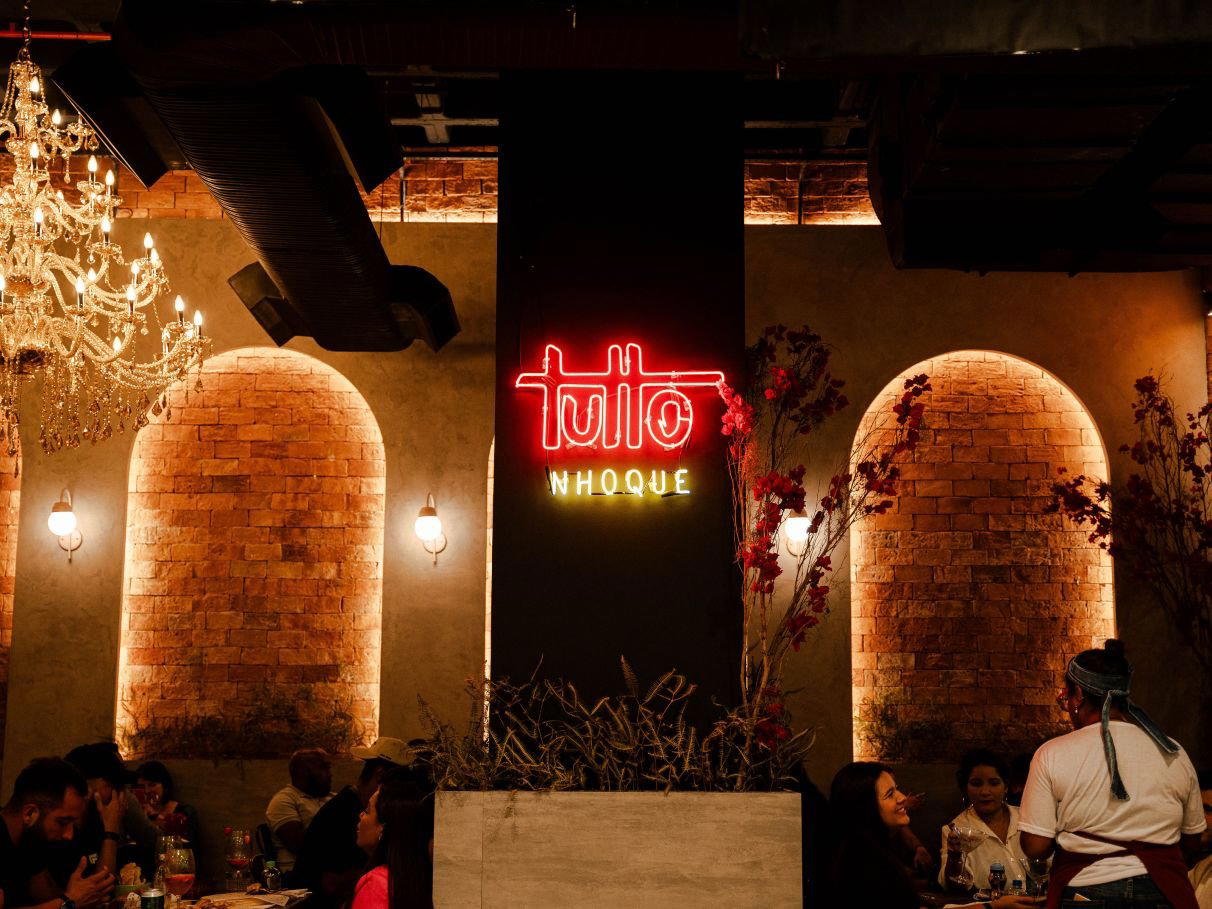
Tutto Nhoque sits at Rua São Clemente, 24 in Botafogo, a neighbourhood defined more by everyday Rio life than by tourist circuits. That address puts it in the company of casual, neighbourhood-facing restaurants rather than destination dining rooms. Expect a setting calibrated to regulars and local diners rather than spectacle.
Why does Tutto Nhoque specialise in gnocchi rather than offering a broader Italian menu?
Rio de Janeiro has a documented history of Italian immigration that shaped pockets of the city's food culture, and Botafogo sits within that tradition. Concentrating on a single category like gnocchi is a defensible restaurant model because Italian gnocchi alone spans enough regional variation to sustain a full menu. Tutto Nhoque, located at Rua São Clemente, 24, applies that specialist logic within a neighbourhood already oriented toward local, repeat-visit dining.
What's the signature dish at Tutto Nhoque?
The name answers the question directly: nhoque, the Brazilian-Portuguese rendering of gnocchi, is the restaurant's entire focus. Gnocchi traditions vary considerably across Italian regions, from potato-based preparations to ricotta or semolina versions, and a specialist format like this one is built on that breadth rather than a single fixed recipe. The specific preparations on offer are best confirmed with the venue.
Side-by-Side Snapshot
Comparable venues nearby, for context on price, style, and recognition.
| Venue | Cuisine | Price | Awards | Notes |
|---|---|---|---|---|
| Tutto NhoqueThis venue — the venue you are viewing | Traditional Italian Gnocchi | $20–30 | Not listed | Not listed |
| Pasta & Vino - Pastificio e Vineria | Authentic Handmade Italian Pasta | Not listed | Not listed | Copacabana |
| Bento Pizzeria | Neapolitan Pizza | $20–30 | 50 Top Pizza World #70 | Tijuca |
| Alloro | Refined Regional Italian | $30–50 | Not listed | Copacabana |
| Grado | Italian Handmade Pasta | $30–50 | Not listed | Jardim Botânico |
| Anna | Italian Seafood | $50–100 | Not listed | Leblon |
Continue exploring
More in Rio de Janeiro
Restaurants in Rio de Janeiro
Browse all →
Bars in Rio de Janeiro
Browse all →

Details
- Cozy
- Modern
- Casual
- Casual Hangout
- Family
- Open Kitchen
- Extensive Wine List
- A La Carte
- Vegan Options
- Vegetarian Friendly
Current opening hours
- Monday
- 11:30 AM–11 PM
- Tuesday
- 11:30 AM–11 PM
- Wednesday
- 11:30 AM–11 PM
- Thursday
- 11:30 AM–11 PM
- Friday
- 11:30 AM–11 PM
- Saturday
- 11:30 AM–11 PM
- Sunday
- 11:30 AM–11 PM
Hours can change for holidays and private events. Last verified .
Casual atmosphere with modern decor and industrial style, praised for nice ambiance and friendly service.