Paseo de la Princesa
Our verdict
Paseo de la Princesa is a 19th-century promenade running along the southern edge of Old San Juan's walls, where the historic port meets the Atlantic. Street vendors, local families, and the occasional cruise-ship crowd share the same cobbled stretch, making it one of the most socially layered public spaces in the Caribbean. The Raíces fountain at its western end has marked the boulevard's terminus for decades.

Pearl is the En Primeur Club membership app — saves, bookings, and concierge access live there. Same editors, same standards.
- Address
- San Juan, 00901, Puerto Rico
- Phone
- (787) 721-2400
- Directions
- Get directions
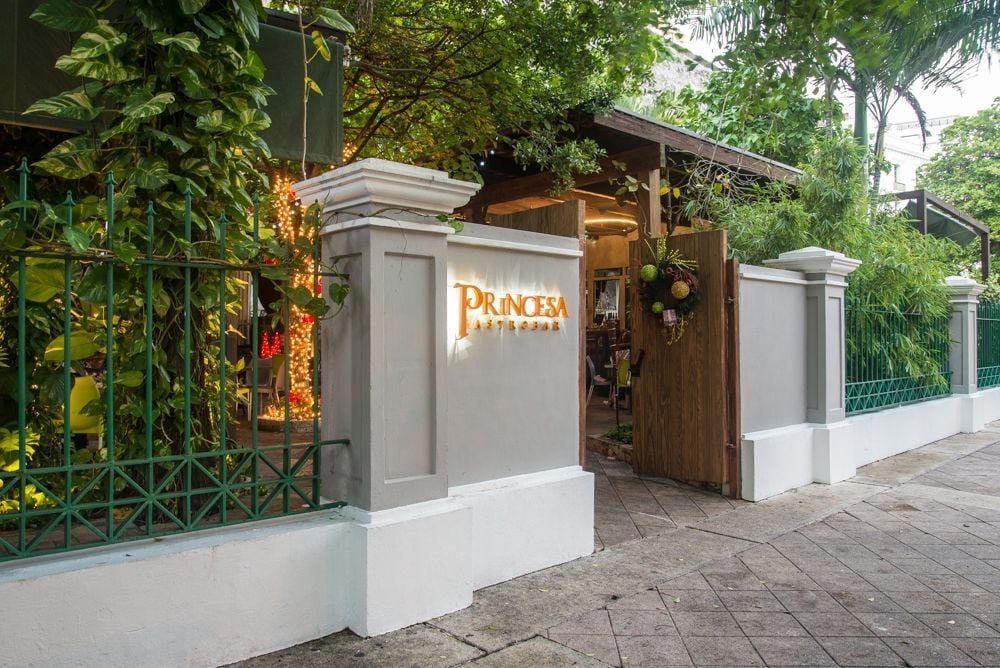
Where the City Meets the Water: San Juan's Most Storied Promenade
Approach Paseo de la Princesa from the Old City's narrow grid and the spatial shift registers immediately. The tight colonial streets give way to a broad, tree-lined walkway that follows the base of the ancient sandstone fortification walls, with the harbor opening ahead and the breeze carrying salt air from the Bahía de San Juan. This is not a manicured tourist precinct designed from scratch. It is a 19th-century promenade that has been used continuously by successive generations of sanjuaneros, and its layered social character shows. On any given morning, joggers pass food carts, artisans display work under the tamarind trees, and the cruise-ship crowd from Pier One filters into the eastern end while local families claim the benches closer to the water.
The Architecture of a Public Space
In cities with a strong heritage tourism industry, the tension between preservation and activation is often managed badly, with one overwhelming the other. Old San Juan has historically threaded that needle better than most comparable Caribbean colonial cities, and Paseo de la Princesa is the clearest evidence. The promenade runs roughly parallel to the harbor, with the massively thick city walls rising to one side and the water to the other. The paving, the cast-iron lampposts, and the alignment of the royal poinciana trees all reflect the Spanish colonial planning logic of the 1800s, but the space has never calcified into a museum exhibit. It remains functional public infrastructure first.
At the western terminus, the Raíces fountain serves as the promenade's anchor point. Unveiled in 1992 to mark the 500th anniversary of Columbus's arrival in the Americas, the bronze sculpture depicts the three cultural streams that define Puerto Rican identity: Taíno, African, and Spanish. It is the kind of civic artwork that tells you more about a city's self-understanding than any official tourism narrative would. The fountain's placement at the junction where the promenade meets the old city gate also makes it a natural gathering and orientation point.
Reading the Scene: Vendors, Artisans, and the Question of Authenticity
The vendor and artisan presence along Paseo de la Princesa operates as an informal but persistent retail layer. Puerto Rican crafts, paintings, and food items share the space with the kind of souvenir merchandise you find in any high-traffic heritage zone. The ratio shifts depending on the day and the season. Winter months, when cruise arrivals peak, pull the composition toward the tourist-facing end of the spectrum. In the slower summer period, the local artisan contingent becomes more pronounced. Neither version is the definitive one. Both are the promenade operating as it always has, absorbing whoever is present.
Street food here leans toward traditional Puerto Rican forms: fried snacks, fresh coconut, and cold drinks from mobile carts. This is not a destination dining corridor in the way that certain sections of Old San Juan closer to Plaza de Armas have become. The food is incidental and casual, suited to eating while walking rather than sitting down for a meal. For more considered dining in the immediate vicinity, the surrounding streets of Old San Juan hold most of the serious options. Amor y Sal and Areyto Modern Cuisine by Chef Jason González represent the more structured end of San Juan dining, while 1919 Restaurant operates in the Modern American register with significant local sourcing.
The Promenade in Context: Old San Juan's Waterfront Character
San Juan's relationship with its waterfront has been complicated for much of its modern history. Large sections of the harbor edge were industrial or port-adjacent, with public access limited. Paseo de la Princesa, precisely because it runs below the old walls rather than along an open harbor road, escaped the fate of many Caribbean waterfronts that were consumed by commercial port infrastructure in the 20th century. That accident of geography preserved it as a genuine public promenade when other comparable spaces were lost.
The effect on the surrounding neighborhood is measurable. The streets immediately north of the promenade, including Calle Recinto Sur and Calle San Justo, carry a higher concentration of restaurant and bar activity than comparable blocks further into the old city grid. The promenade functions as a population distributor, drawing people toward the waterfront and then releasing them back into the neighborhood streets, where the commercial offerings capture them. For visitors oriented to dining and drinking rather than sightseeing, this circulation pattern is worth understanding before arriving. Paros Restaurant is one of several options in this corridor worth considering when the promenade walk gives way to hunger.
Beyond San Juan, Puerto Rico's dining geography is wider than most visitors account for on a first trip. COA in Dorado and Estela Restaurant in Rincón represent the island's western arc, while Lago Dos Bocas in Arecibo and Charco Azul in Vega Baja point toward the interior and northern coast. La Parguera on the southwest coast and El Dorado in Playita extend that range further. For visitors willing to move beyond San Juan, Brazo Gitano Franco in Mayagüez, Kaplash in Añasco, and Da Bowls in Aguadilla map a northwest corner of the island with its own distinct dining character. The full picture of Puerto Rican food is not contained within Old San Juan's walls, useful as those walls are as a starting point. See our full San Juan restaurants guide for a broader breakdown.
When to Go and How to Use the Promenade
The promenade is at its most comfortable in the early morning and late afternoon. Midday heat in San Juan, especially from June through September, makes extended outdoor walking less pleasant, and the vendor activity is in full force from mid-morning onward. Arriving at or before 8 a.m. gives access to the full spatial experience of the promenade without the crowd compression. Sunset draws a predictable surge, particularly near the Raíces fountain, where the light on the harbor and the city walls converges in a way that rewards being there on time rather than planning to arrive gradually.
There is no admission cost and no booking requirement. The promenade is a public space operated by the city, accessible at all hours. For visitors building a multi-restaurant itinerary around Old San Juan, it makes a useful structural anchor for the day: walk the promenade in the morning, use the surrounding streets for lunch and afternoon exploration, and return for the evening light before moving to dinner. The neighborhood's restaurant scene extends late enough to accommodate any sequence.
Frequently asked questions
Where is Paseo de la Princesa located?
Paseo de la Princesa is located at San Juan, 00901, Puerto Rico, San Juan.
Is Paseo de la Princesa accessible for visitors with mobility limitations?
The promenade runs along a flat, paved path connecting Old San Juan to the harbor in the 00901 district, which makes it manageable for most mobility needs. The surface is generally even, though the surrounding Old City streets involve significant cobblestone gradients. Visiting during cooler hours helps, as there is limited shade along parts of the route.
What's the best thing to order at Paseo de la Princesa?
Paseo de la Princesa is a public promenade in San Juan, not a restaurant, so there's no fixed menu. Vendors and food carts along the walkway typically sell local snacks and drinks, giving visitors a ground-level introduction to Puerto Rican street food. The experience is informal and varies by day and season.
What's the best way to book Paseo de la Princesa?
No reservation is required. Paseo de la Princesa is a public promenade in Old San Juan, open to pedestrians without ticketing or booking of any kind. The early morning and late afternoon hours are the most comfortable times to visit, particularly during the June-through-September heat.
What's the defining dish or idea at Paseo de la Princesa?
The defining idea is the spatial transition itself: a 19th-century promenade that pulls visitors out of Old San Juan's tight colonial grid and delivers them to the harbor edge. The Raíces fountain at the bay end functions as the promenade's visual anchor and a widely recognized symbol of Puerto Rican cultural identity.
How does Paseo de la Princesa handle allergies?
As an open-air public promenade in San Juan rather than a fixed food establishment, Paseo de la Princesa has no centralized allergy policy. Food and drink purchased from vendors along the walkway should be vetted directly with each vendor before purchase.
Recognition Snapshot
Comparable venues nearby, for context on price, style, and recognition.
| Venue | Cuisine | Price | Notes |
|---|---|---|---|
| Paseo de la PrincesaThis venue — the venue you are viewing | Authentic Puerto Rican | $20–30 | Not listed |
| Los Yeyos Restaurant | Puerto Rican Mofongo House | $10–20 | San Francisco |
| Café Manolín Old San Juan | Traditional Puerto Rican Criolla | $10–20 | San Francisco |
| EL JEFE | Puerto Rican Rooftop Grill | $20–30 | Condado |
| Ola Ocean Front Bistro | Oceanfront Puerto Rican Bistro | $30–50 | Condado |
| Sazón Cocina Criolla DTMO | Authentic Puerto Rican Criolla | $20–30 | Isla Grande |

Details
- Romantic
- Cozy
- Scenic
- Rustic
- Intimate
- Date Night
- Special Occasion
- Garden
- Historic Building
- Craft Cocktails
- Farm To Table
- Local Sourcing
- Waterfront
- Garden
- A La Carte
- Vegetarian Friendly
- Vegan Options
- Gluten Free Options
Lush tropical garden surrounded by trees and vegetation with fairy lights, creating a magical, romantic atmosphere; quiet during lunch.