

Tucked discreetly along a quiet Berlin side street, Oukan is a revelation in modern plant-based gastronomy, where Japanese-inspired technique meets the quiet poetry of fermentation. Its seven- to nine-course tasting journey distills flavors to their elegant essence, exemplified by delicately grilled king oyster mushrooms brightened with lime and crowned with a yeast-brioche crumble, bathed in a thyme and apple cider-kissed mushroom broth. In a serene, minimalist space of ink-dark woods and Far Eastern restraint, an intriguing tea pairing elevates each course with rare leaves and precise extractions. Service is gracious and intuitive, the pacing deliberate, and the feeling unmistakably exclusive, an intimate sanctuary for informed diners who appreciate nuance, purity, and creative depth.
Pearl is the En Primeur Club membership app — saves, bookings, and concierge access live there. Same editors, same standards.
- Address
- Hinterhof, Rote Tür, Ackerstraße 144, 10115 Berlin, Germany
- Phone
- +49 30 54774716
- Website
- oukan.de
- Directions
- Get directions
 Saves & bookings on Pearl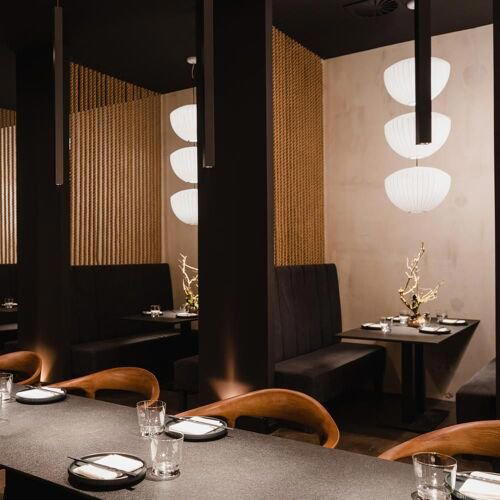
Through the Red Door in Mitte
The approach sets the tone before a single dish arrives. Ackerstraße 144 sits in Mitte, and the entrance to Oukan is not a restaurant facade facing the street but a Hinterhof passage marked by a red door. That detour through a courtyard functions as a kind of decompression chamber: by the time you reach the interior, the minimal dark-toned room lined with Far Eastern reference points feels like a deliberate withdrawal from the noise outside. Clean lines, low contrast, considered silence. This is a dining room designed to focus attention on what is on the plate.
Where Japanese Technique Meets German Produce
Berlin has developed one of the more serious vegan fine-dining circuits in Europe, with venues like FREA and Lucky Leek occupying different tiers of the same conversation. Oukan sits toward the technical end of that spectrum. The kitchen works from a Japanese framework, applying fermentation, precise heat, and layered seasoning to plant-based ingredients in a way that has drawn a Michelin Plate in 2025 and placed the restaurant on a Michelin recognition in 2025 underscores that point.
The structural logic here is Japanese: restraint in presentation, complexity in construction, seasonal ingredients treated as primary rather than supporting material. German and broader European vegetables are processed through that lens, which means fermentation is not an accent but a foundational tool. A dedicated Fermentation Lab has been built in the cellar specifically to develop the preserved, aged, and cultured components that run through the tasting menu. That kind of infrastructure investment signals something about intent. Most restaurants ferment as a finishing gesture; here it is woven into the sourcing and production cycle from the beginning.
The Sourcing Logic Behind the Menu
Oukan's appeal lies in the supply chain. Japanese vegetable culture has a long history of treating produce as the protagonist of a meal rather than its backdrop, and that philosophy only holds when the ingredients arrive in a condition worth treating with that kind of care. Berlin's position within the agricultural belt of Brandenburg gives kitchens in this part of the city access to growers working at a smaller, more deliberate scale than industrial supply chains allow. The Fermentation Lab downstairs is the downstream expression of that upstream relationship: produce that arrives with sufficient character is worth preserving, aging, and transforming rather than simply cooking and plating.
Michelin commentary singles out king oyster mushrooms, finely sliced, grilled, and served with a mushroom broth containing thyme and apple cider, finished with a yeast and brioche crumble and lime. That dish is worth reading as a document of sourcing philosophy: the mushroom is the subject, the broth amplifies rather than masks it, and the crumble and citrus are there to introduce contrast and brightness without overwhelming the primary ingredient. Achieving that balance at a seven-to-nine course menu length requires consistency of supply, not just technique.
Rutz and CODA Dessert Dining, operate at a €€€€ price tier and anchor their sourcing stories in named producers and regional provenance. Oukan, priced at €€€, positions itself as accessible relative to that tier while operating at a technical level that the Michelin recognition places in the same broader conversation.
The Format: Seven to Nine Courses, Tea Pairing Included
The menu runs seven to nine courses, a format that gives the kitchen enough runway to develop themes across the meal without tipping into endurance-test territory. Dishes are described in the Michelin documentation as “pleasantly stripped back, but no less complex for it” a useful framing for what the kitchen is attempting. Visual restraint at the point of plating is not the same as simplicity in construction. The fermentation work in the cellar, the layered broth-building, the precision of temperature and texture all happen before the plate is composed.
The tea pairing is a structural choice worth noting rather than treating as an optional add-on. In Japanese dining culture, tea is used with the same intentionality that European fine dining applies to wine: as a vehicle for acidity, astringency, or aromatic lift that the food alone cannot supply. At a restaurant where no animal proteins are present to anchor the flavor architecture, those pairing decisions carry more weight than usual. The tea program here has been flagged as a specific point of interest by the Michelin assessment, which suggests it is functioning as a genuine counterpart to the food rather than a beverage alternative for non-drinkers.
Berlin's Vegan Fine-Dining Position in a European Context
Across Europe, the cities where vegan fine dining has moved furthest from its health-food origins tend to share a few characteristics: a dense restaurant ecosystem that creates competitive pressure, a younger demographic willing to spend on technical cooking regardless of protein content, and proximity to agricultural networks that can supply at the quality level a serious kitchen requires. Berlin has all three. KLE in Zurich and Légume in Seoul represent the same tendency in different markets: plant-based tasting menus operating at a technical register that would have seemed implausible in the category fifteen years ago.
Germany's broader fine-dining circuit is anchored by meat-centric kitchens at addresses like Schwarzwaldstube in Baiersbronn, Aqua in Wolfsburg, Vendôme in Bergisch Gladbach, ES:SENZ in Grassau, and JAN in Munich. The Restaurant Haerlin in Hamburg represents the classical end of that circuit. Oukan occupies a different coordinate within that system entirely, competing not on the traditional prestige axes but on technical specificity within a constrained ingredient set.
Berlin also hosts Restaurant Tim Raue, which approaches Asian culinary frameworks from a different angle entirely, and the comparison is instructive: both kitchens use Japanese or broader East Asian reference points, but one layers those references over luxury proteins while the other applies them to vegetables and fermentation. The city now has enough range across these approaches that a serious dining itinerary in Berlin can map different relationships between European produce and Asian technique across multiple meals.
Planning a Visit
Oukan is located at Ackerstraße 144, 10115 Berlin, in the Mitte district. The restaurant is accessed through a courtyard via a red door, which is worth knowing before you arrive rather than discovering while searching the street. The price tier sits at €€€, moderate relative to Berlin's upper-end addresses, with a seven-to-nine course format. Booking ahead is advisable given the Michelin attention and the limited capacity implied by the format. The tea pairing is worth requesting at the time of reservation rather than deciding on arrival. For a complete picture of where Oukan sits within the broader Berlin dining scene, our full Berlin restaurants guide maps the city's current range. Further planning resources include our Berlin hotels guide, our Berlin bars guide, our Berlin wineries guide, and our Berlin experiences guide.
Accolades, Compared
Comparable venues nearby, for context on price, style, and recognition.
| Venue | Cuisine | Price | Awards | Notes |
|---|---|---|---|---|
| OukanThis venue — the venue you are viewing | Vegan Japanese Shōjin Ryōri Fine Dining | $$$ | Michelin Plate | Not listed |
| November Brasserie | Contemporary Japanese Omakase & Sashimi | $$$$ | Bib Gourmand | Prenzlauer Berg |
| Lovis | Contemporary German | $$$ | Michelin Plate | Charlottenburg |
| SAN | Modern Japanese Sushi | $$$ | Not listed | Prenzlauer Berg |
| Sticks'n'Sushi | Japanese Sushi & Yakitori with Nordic Twist | $$$ | Not listed | Tiergarten |
| est. | Modern Japanese Fusion | $$$ | Not listed | Charlottenburg |
Recognition history
Dated appearances from independent guides and award organizations, with the underlying list record or original source where available.
Michelin Plate
Michelin
Michelin Plate
Michelin
We're Smart World 4 Radishes
We're Smart World
Michelin Plate
Michelin
Continue exploring
More in Berlin
Restaurants in Berlin
Browse all →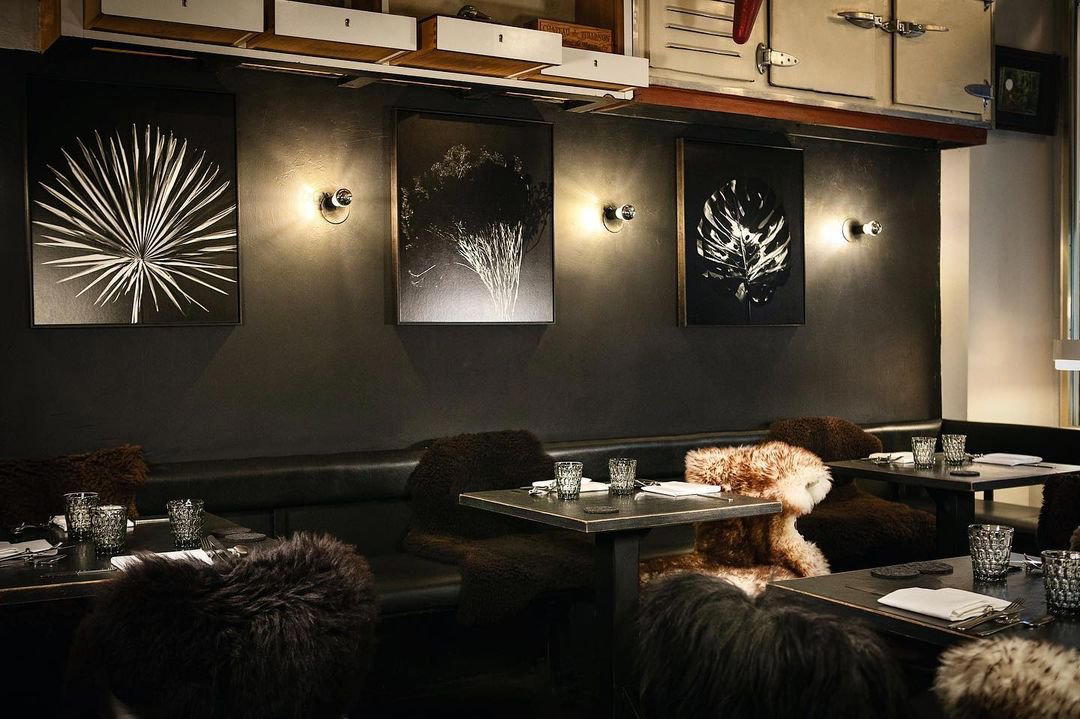
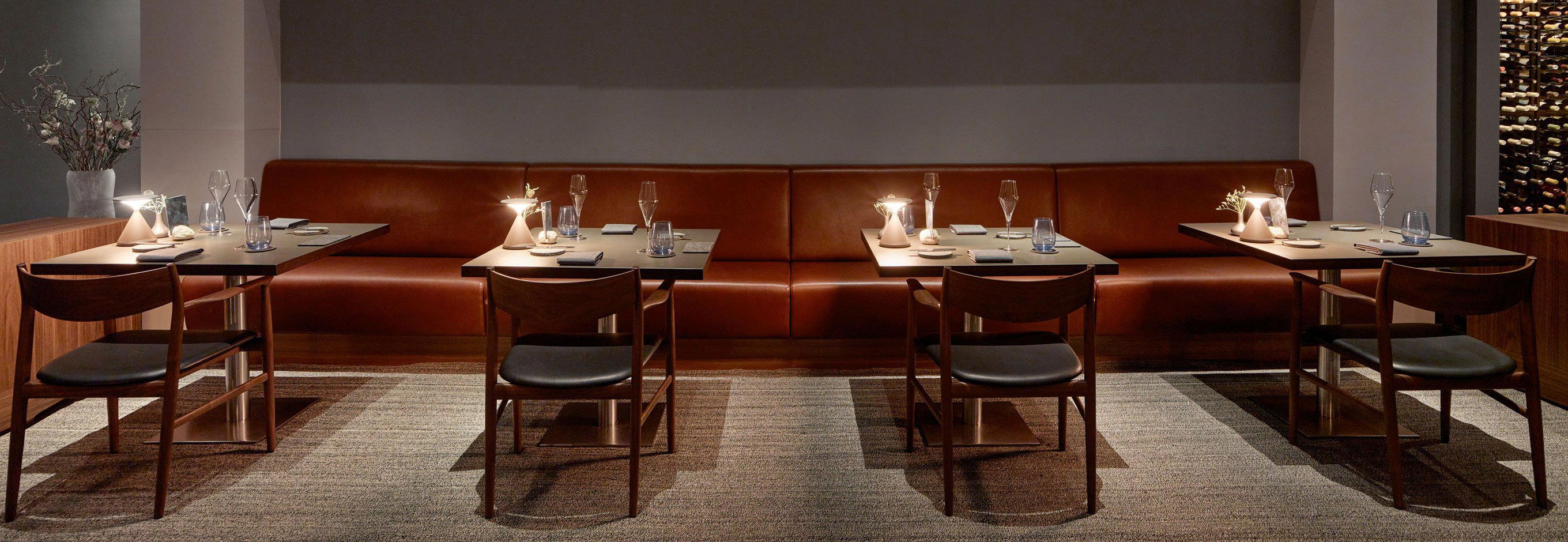
Bars in Berlin
Browse all →
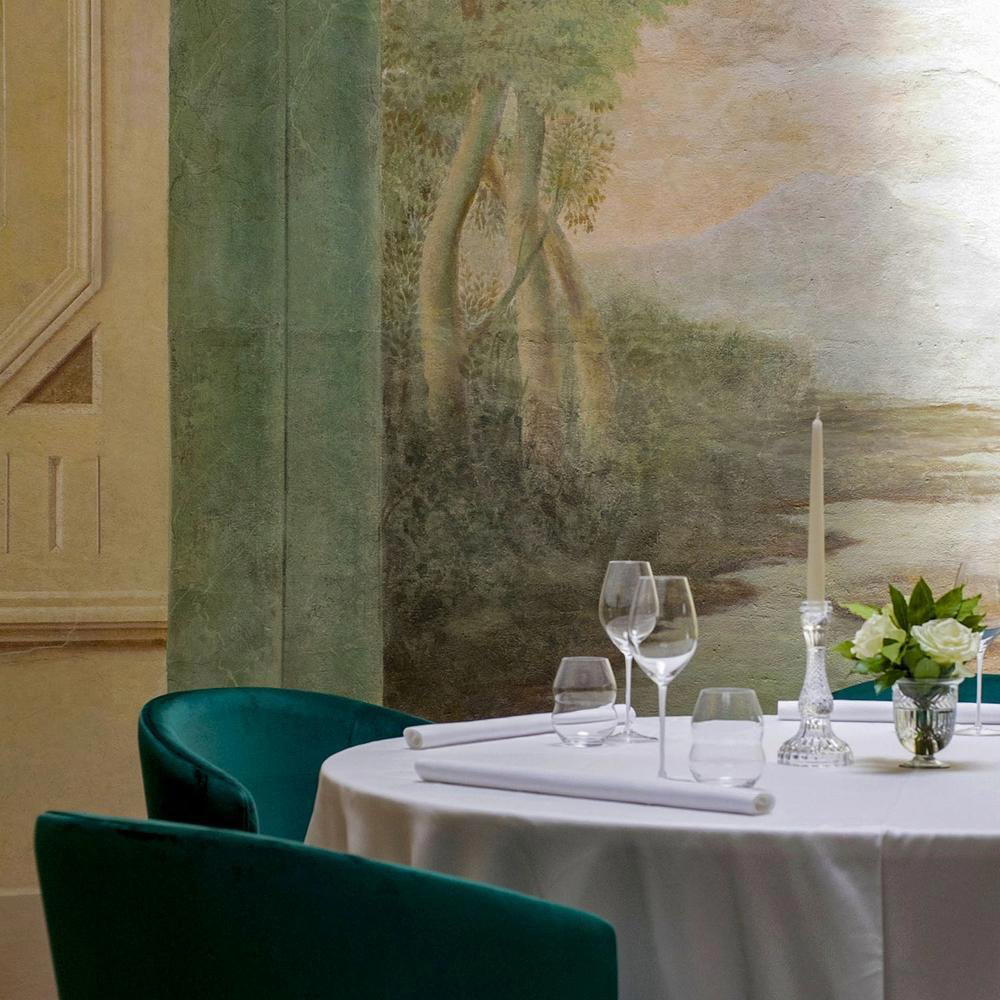
Hotels in Berlin
Browse all →



At a Glance
- Intimate
- Elegant
- Minimalist
- Sophisticated
- Date Night
- Special Occasion
- Open Kitchen
- Extensive Wine List
- Sake Program
- Local Sourcing
- Organic
Current opening hours
- Monday
- Closed
- Tuesday
- Closed
- Wednesday
- 6–11 PM
- Thursday
- 6–11 PM
- Friday
- 6–11 PM
- Saturday
- 6–11 PM
- Sunday
- Closed
Hours can change for holidays and private events. Last verified .
Dark, minimalist interior resembling a Buddhist monastery with concrete walls, intimate seating areas, soft pendant lighting, and a central bonsai tree creating a reverent, tranquil atmosphere.