
OTSUKA operates from a discreet address inside a Nordbahnhof building, offering one of Berlin's most focused omakase formats: three seatings daily, nigiri prepared and presented from a simple wooden counter, and pricing that sits well below the European omakase norm. The format is spare, the ingredient sourcing serious, and the counter experience as close to a traditional Japanese one-to-one service as the city offers.
Pearl is the En Primeur Club membership app — saves, bookings, and concierge access live there. Same editors, same standards.
- Address
- Gartenstr. 86
- Website
- instagram.com
- Directions
- Get directions
 Saves & bookings on Pearl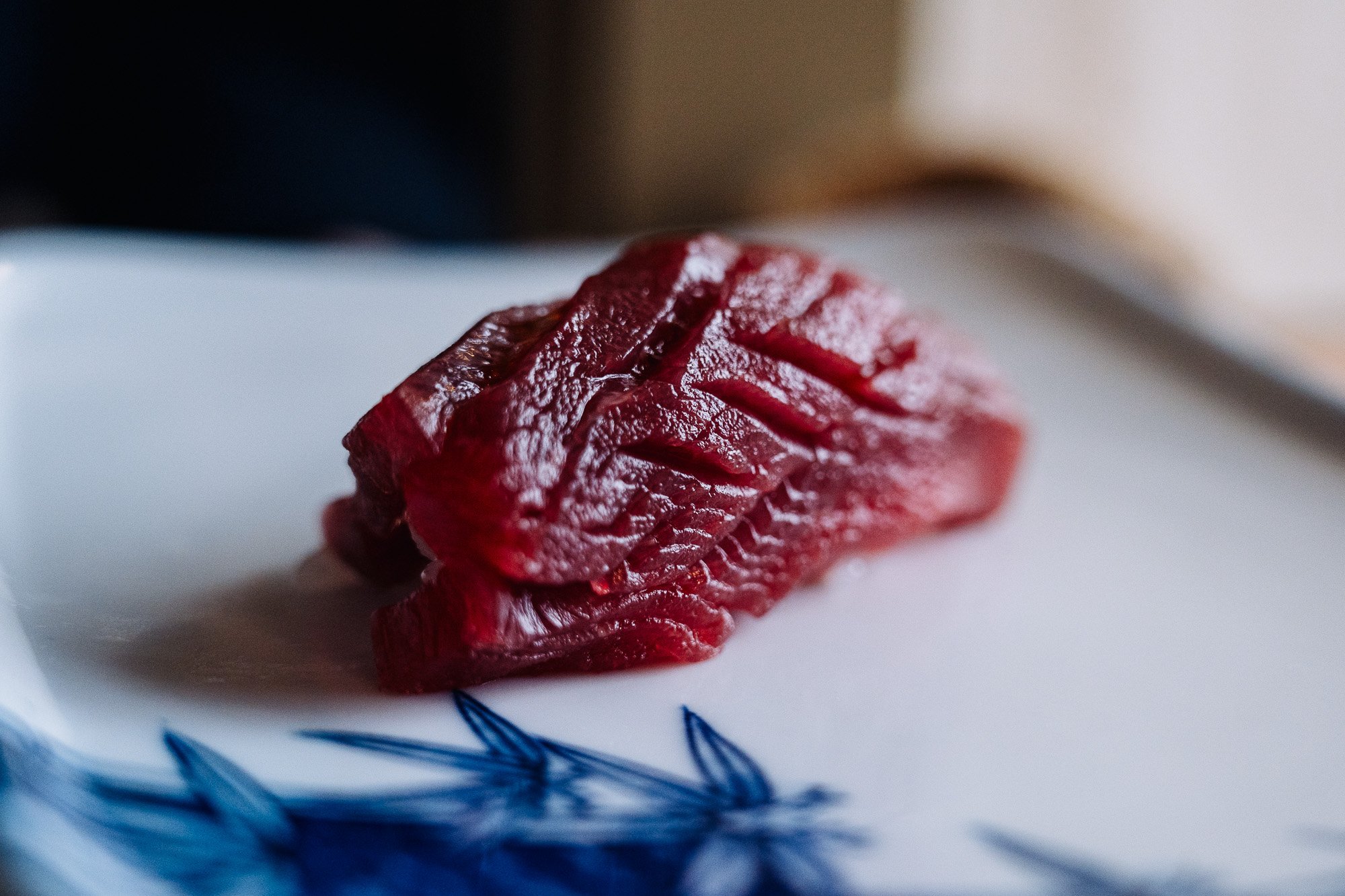
A Counter in a Corridor: Berlin's Omakase Outlier
OTSUKA is a Berlin restaurant serving authentic omakase sushi at a minimalist wooden counter inside Gartenstr. 86, with bookings essential and pricing around $60 per person. Omakase, as a format, resists the casual. In Tokyo, the tradition developed around a particular social contract: the guest surrenders choice, the chef assumes total responsibility, and the physical space collapses to its minimum, a counter, two hands, and a sequence of nigiri that moves at the chef's pace. That contract rarely survives its export intact. In most European cities, the omakase idiom gets stretched into something larger: tasting menus with ten courses, dining rooms with forty seats, and price points that treat the Japanese original as a luxury signal rather than a structural logic. Berlin, which has built a serious dining reputation largely around Modern European formats, Rutz, Nobelhart & Schmutzig, FACIL, and CODA Dessert Dining among them, has relatively few spaces where Japanese counter discipline is applied with this level of seriousness. OTSUKA is one of them, and its scale and positioning are both deliberate and telling.
The Smallest Room in the Room
Finding OTSUKA requires intention. The address is Gartenstrasse 86, a building directly at Nordbahnhof that also contains an organic supermarket. The restaurant is positioned inside that building in a way that rewards prior research rather than walk-in discovery.
The interior operates at the extreme end of minimalism. The wooden counter is simple rather than theatrical, and the setting has been described as the smallest restaurant in Berlin. That scale is not incidental. In traditional Japanese counter culture, small capacity is structural: it limits the number of covers the chef can properly attend to at once, keeps the preparation visible, and makes the hand-to-plate sequence immediate. Nigiri that travel ten steps from hand to plate is not the same as nigiri served across a counter to the person sitting directly in front of the person making it. OTSUKA maintains the latter model.
Nigiri as the Argument
The omakase format at OTSUKA centres on nigiri, which is the right emphasis. Within Japanese sushi culture, the nigiri counter is a distinct category from the broader sushi restaurant: it asks more of the rice, more of the fish temperature, and more of the timing, because there is less to hide behind. There are no elaborate garnishes, no secondary preparations, and no architectural constructions to distract from whether the rice was seasoned at the right moment and whether the fish was handled correctly from storage to service.
Owner prepares and presents the nigiri directly, working in full view behind the counter. This is consistent with the tradition where the itamae occupies the same visible space as the preparation itself, and where the service is also an act of demonstration. At this scale, the chef's technique is not something that happens in a kitchen and arrives plated, it happens in front of the guest, and its quality is immediately legible. That transparency raises the stakes in both directions: it demands consistent skill, and it rewards an attentive diner in a way that kitchen-to-table service cannot.
Ingredient sourcing has drawn recognition for its quality relative to the format's price point, which is the detail that places OTSUKA in an unusual position among European omakase counters. In most cities with a serious sushi scene, London, Paris, Amsterdam, the omakase format at this level of ingredient rigour commands prices that effectively restrict it to a narrow bracket of occasion dining. OTSUKA prices accessibly, which is not a comment on compromise but on a particular set of priorities about who the format should be available to.
Three Seatings, No Flexibility
Operational structure at OTSUKA reflects the same logic as the physical one. There are three seatings per day: 1pm, 5pm, and 8pm. This is not a restaurant where you arrive, wait for a table, and eat when the kitchen is ready for you. Each seating is its own event, and the fixed sequence means the chef can prepare ingredients precisely for each service rather than holding food across an open-ended evening. For the guest, booking in advance is essential. Given the capacity constraints, demand reliably outpaces availability, particularly for evening seatings.
1pm seating is worth considering seriously. Sushi at midday is not a compromise in the Japanese tradition, many Tokyo counter chefs argue that fish handled through a morning's preparation and served at lunch is at its optimum. The 1pm slot also attracts less competition than the 8pm, which is where most European diners default out of habit. For anyone planning a Berlin itinerary around the counter, consulting our full Berlin restaurants guide in parallel will help sequence the meal within a broader day or multi-day visit.
Where OTSUKA Sits in the Berlin Dining Picture
Berlin's most-discussed restaurant addresses lean heavily toward creative European formats. Restaurant Tim Raue is the partial exception, deploying Asian flavour structures through a high-technique lens, but it operates in a different register from a compact sushi counter. The city's concentration of €€€€-tier tasting menus means that OTSUKA's combination of format rigour and accessible pricing occupies a position that is practically uncontested at this level of specificity.
Internationally, the tradition of the small, serious, affordably priced omakase counter is well-established in Japan but rare in export. Counters at the opposite end of the price spectrum, where a single omakase reaches figures comparable to a flight, exist in New York (see Le Bernardin for what that city's seafood-serious end looks like) and across the European capitals. OTSUKA's position is closer in spirit to the Tokyo neighbourhood counter than to the European luxury sushi tier, and that is precisely the point of the comparison. For those exploring Germany's broader fine dining scene, Schwarzwaldstube in Baiersbronn, Vendôme in Bergisch Gladbach, ES:SENZ in Grassau, and Restaurant Haerlin in Hamburg represent the country's multi-course European tradition at its most developed, a different proposition from what OTSUKA is doing, but useful context for understanding where the counter fits within the national dining picture.
Planning Your Visit
OTSUKA is at Gartenstrasse 86, inside the building at Nordbahnhof that also houses an organic supermarket. Nordbahnhof is on the S-Bahn S1 line and is a short walk from Mitte. The three fixed seatings, 1pm, 5pm, and 8pm, mean you need to book before you arrive in Berlin, not after. The restaurant's scale and the owner-operated nature of the service mean that capacity is genuinely limited and there is no walk-in option in practice. Separately, Emeril's in New Orleans offers a useful point of contrast for how different culinary traditions handle the owner-operated, counter-forward service model in a Western context.
Cost and Credentials
Comparable venues nearby, for context on price, style, and recognition.
| Venue | Cuisine | Price | Awards | Notes |
|---|---|---|---|---|
| OTSUKAThis venue — the venue you are viewing | Gesundbrunnen, Authentic Omakase Sushi | $$$ | Michelin Plate | Not listed |
| VOX | Tiergarten, Modern Japanese Fusion | $$$ | Michelin Plate | Not listed |
| MIYO Sushi Experience | Charlottenburg, Modern Japanese Sushi | $$$ | Not listed | Not listed |
| Kabuki Berlin | Tiergarten, Japanese Teppanyaki | $$ | Not listed | Not listed |
| momiji | Not listed | $$ | Not listed | Charlottenburg, Authentic Japanese Street Food & Izakaya |
| Smartdeli | Mitte, Japanese Sushi & Deli | $$ | Not listed | Not listed |
Recognition history
Dated appearances from independent guides and award organizations, with the underlying list record or original source where available.
Michelin Plate
Michelin
Continue exploring
More in Berlin
Restaurants in Berlin
Browse all →
Bars in Berlin
Browse all →
Hotels in Berlin
Browse all →

At a Glance
- Minimalist
- Intimate
- Date Night
- Solo
- Special Occasion
- Chefs Counter
- Open Kitchen
- Sustainable Seafood
Minimalist no-frills setting with bright lights focusing on the sushi preparation rather than luxury decor.