Michelin Plate
Our verdict
An Italian osteria in Osaka's Nishitenma district run by a couple who previously operated a similar establishment in Italy. The menu holds to Lombard tradition, Carnaroli risotto, al dente pasta, while the wine list foregrounds Franciacorta, the sparkling wine of Lombardy. The name itself is a bilingual pun: '87' in Italian doubles as a phonetic echo of 'ho tanta sete', meaning 'I'm thirsty'.

Pearl is the En Primeur Club membership app, where members save venues, book tables and use the concierge.
A Lombard Room in Kita Ward
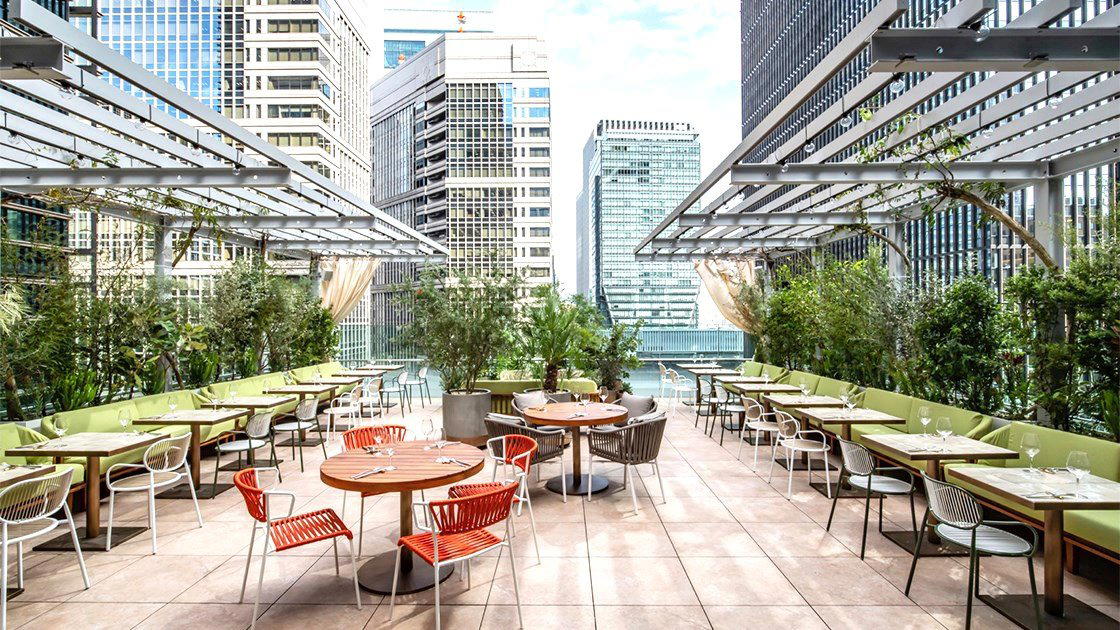
Osaka's Nishitenma district sits at the northern edge of the city's restaurant concentration, a few blocks from the Osaka Prefectural Court and closer in character to the office-and-bar corridors of Kita Ward than to the tourist-facing density of Dotonbori. It is the kind of address where a well-kept Italian osteria can go quietly about its business for years, sustained by regulars rather than walk-in traffic. Osteria Ottanta Sette occupies a ground-floor unit in the Shōei Building's south wing at 4 Chome-1-11 Nishitenma, a location that tells you something about what the room prioritises: proximity to its neighbourhood rather than to a passing crowd.
The Italian osteria format has a particular ecology in Japanese cities. Unlike the urban-Italian chains that proliferated in the 1990s boom years, a genuine osteria operates closer to a wine-first premise, food is serious but the bottle shapes the evening as much as the plate. That distinction matters most in a country where the alternative is kaiseki precision or the izakaya model, and where a room built around convivial wine drinking represents a specific, considered choice. At the top of Osaka's European fine-dining tier you have addresses like HAJIME and La Cime, both operating at ¥¥¥¥ with formal tasting-menu structures. The osteria sits in a different register entirely, a register defined less by ceremony than by the logic of a well-poured glass.
Franciacorta and the Wine-First Premise
Franciacorta is a sparkling wine produced in the hills south of Lake Iseo in Lombardy, made primarily from Chardonnay, Pinot Nero, and Pinot Bianco under a Denominazione di Origine Controllata e Garantita framework that requires extended lees ageing, 18 months minimum for non-vintage, 30 months for vintage, 60 months for Riserva. It is Italy's most methodologically demanding sparkling appellation, and it remains dramatically underexposed in export markets relative to Champagne, which means that a venue building its identity around the category is making a considered editorial statement about Italian wine culture rather than defaulting to the internationally recognisable.
The name Ottanta Sette encodes that priority. In Italian, '87' reads as 'ottanta sette', which the owners have mapped phonetically onto 'ho tanta sete', 'I'm thirsty'. The pun works in Italian and loses nothing in translation as a declaration of intent: this is a room where drinking well is the premise, not the afterthought. For a wine-focused audience already familiar with Lombardy's red production from Valtellina or the Oltrepò Pavese, a Franciacorta-led list offers vertical depth that a pan-Italian list rarely achieves.
The parallel in Japan's broader European-import dining scene would be the handful of Burgundy-specialist importers who have built dedicated restaurant formats around single-region depth rather than comprehensive coverage. Among European sparkling categories, Franciacorta occupies a position roughly analogous to Grower Champagne three decades ago: known to specialists, undervalued in casual retail, and capable of significant variation across producers. Tying a restaurant's identity to that category requires confidence in the audience, which tells you something about how the room reads its clientele.
The Kitchen: Lombard Tradition Without Revision
Where the wine list signals conviction about a specific Italian region, the kitchen reinforces it through culinary discipline. Risotto made with Carnaroli rice and pasta served al dente are details that read as baseline quality markers in Italy but function as editorial decisions in Osaka, where the temptation to adapt Italian cooking to local palate preferences is constant and commercially legible. Carnaroli is the preferred variety for risotto in Lombard and Piedmontese kitchens because of its high amylose content, which allows it to absorb liquid progressively while maintaining structural integrity through the mantecare finish. An osteria that specifies the variety is communicating fidelity rather than approximation.
The same logic applies to pasta texture. 'Al dente' is not a preference in traditional Italian cooking; it is a technical standard that Japanese pasta restaurants, responding to a domestic market that historically preferred softer noodles, frequently bend. Holding to that standard in an Osaka setting is a form of culinary integrity that costs something commercially and gains something in credibility among the diners who notice.
This approach to technique positions Ottanta Sette within a small cohort of Osaka restaurants where a specific foreign cuisine is practiced on its own terms rather than mediated through local convention. Japanese-language restaurant culture distinguishes between 'honkaku' (authentic/orthodox) and accommodated cooking, and the kitchen's adherence to Lombard grain and texture standards puts it firmly in the former category. Compare this to the kaiseki discipline at Kashiwaya Osaka Senriyama or the precision of Taian, the underlying instinct, across very different cuisines, is identical: materials and technique practiced without dilution.
Sourcing and the Low-Footprint Logic of a Regional Menu
A menu anchored to a single Italian region carries a structural advantage from a sourcing standpoint. Lombard cuisine built around risotto, pasta, and the wines of Franciacorta operates with a narrower, more traceable ingredient set than a pan-Italian menu attempting to represent twenty regions simultaneously. Carnaroli from the Po Valley, the sparkling wines of Brescia province, the cheeses and cured products of the Padana plain, these form a coherent supply chain that an operator with direct Italian contacts can maintain with greater consistency than a kitchen ordering across multiple regions and appellations.
In the context of Japan's import-food supply chain, specificity of this kind also maps onto reduced waste. A kitchen that knows its menu in advance, orders to a defined Lombard template, and builds its wine list around a single appellation is not running the excess inventory that a more eclectic format requires. That is not a formal sustainability programme; it is the natural outcome of cooking with conviction inside a defined tradition. The osteria format has always operated this way in Italy, seasonal, regional, practical, and that discipline travels well to a small room in Nishitenma.
Where Ottanta Sette Sits in Osaka's Dining Map
Osaka's European fine-dining tier tends toward French technique. HAJIME, La Cime, and Fujiya 1935 all operate in French or French-influenced idioms at the ¥¥¥¥ tier. Italian cooking of this commitment level occupies a smaller niche, which is partly a function of how Italian cuisine has been received in Japan and partly a matter of the osteria format itself, it does not scale or formalise in the way that earns institutional recognition. That positioning keeps it outside the conversation about decorated restaurants in Osaka, which is where addresses like Kashiwaya Osaka Senriyama and Taian operate, but it also gives the room a different kind of durability: neighbourhood loyalty and a repeat-visitor rate that tasting-menu destinations rarely build.
For travellers moving through the Kansai region, the osteria offers a functional counterpoint to formal Japanese dining. A long evening at Gion Sasaki in Kyoto or the kaiseki precision of akordu in Nara creates appetite for a different register, and a bottle of Franciacorta in a small Italian room in Nishitenma fills that gap cleanly. The comparison set beyond Kansai is similarly niche: Harutaka in Tokyo and Goh in Fukuoka both represent the same instinct, a specific tradition practiced with discipline, even if the cuisines are entirely different. Further afield, 1000 in Yokohama and 6 in Okinawa share this quality of small-format commitment. For those planning around European comparisons, the obsessive sourcing rigour of Le Bernardin in New York City or the ingredient philosophy at Atomix in New York City speak to the same underlying values, transposed into entirely different contexts.
For the full picture of what Osaka offers at every level, see our full Osaka restaurants guide, or extend your planning across hotels, bars, wineries, and experiences.
Planning Your Visit
Address: 4 Chome-1-11 Nishitenma, Kita Ward, Osaka 530-0047, Shōei Building South Wing, 1F. Reservations: Booking method not confirmed; contact directly via the venue's own channels before visiting, as small osteria formats in this district frequently fill mid-week through regulars. Getting There: Nishitenma is served by the Tanimachi Line (Minami-Morimachi Station) and the Sakaisuji Line; the address is walkable from either. Timing: Evening visits are standard for osteria formats; the Franciacorta list makes this a natural choice for an extended pre- or post-dinner drink session, so factor in time accordingly.
Frequently asked questions
Is Osteria Ottanta Sette Michelin-listed?
Osteria Ottanta Sette has received recognition including: Franciacorta is a sparkling wine from Italy’s Lombardy region. The couple who run this osteria used to run one back in Italy and now offer both Lombardy wines and cuisine. Dishes are faithful to tradition: risotto is made with Carnaroli ric….
What's the address for Osteria Ottanta Sette?
Osteria Ottanta Sette is located at Japan, 〒530-0047 Osaka, Kita Ward, Nishitenma, 4 Chome−1−11 昭栄ビル 南館 1F, Osaka.
What's the signature dish at Osteria Ottanta Sette?
Risotto made with Carnaroli rice is the clearest expression of the kitchen's Lombard identity. Pasta is served al dente, consistent with northern Italian tradition rather than the softer textures common in fusion interpretations. Both dishes reflect the owners' background running an osteria in Italy before relocating to Osaka.
How hard is it to get a table at Osteria Ottanta Sette?
Booking details have not been confirmed publicly, so contacting the venue directly is the recommended approach. The restaurant operates from a compact ground-floor space in the Shōei Building South Wing at 4 Chome-1-11 Nishitenma, Kita Ward, which suggests seating is limited. For a small Italian-specialist in Osaka's Nishitenma district, advance planning is advisable.
What do critics highlight about Osteria Ottanta Sette?
The wine premise draws the most attention: Franciacorta, produced in Lombardy's hills south of Lake Iseo from Chardonnay, Pinot Nero, and Pinot Bianco, is a niche category even within Italian wine circles and anchors the entire concept here. The name itself encodes the philosophy, ottanta sette (87) is a spoken-word pun on ho tanta sete, meaning I'm thirsty. In Osaka's European dining tier, which skews heavily French, a wine-first regional Italian specialist occupies a distinct position.
Credentials Lens
Comparable venues nearby, for context on price, style, and recognition.
| Venue | Cuisine | Price | Awards | Notes |
|---|---|---|---|---|
| Osteria Ottanta SetteThis venue (the venue you are viewing) | Traditional Lombardy Italian | Not listed | Michelin Plate | Not listed |
| isolata | Seasonal Italian in Historic Building | $50–100 | Michelin Plate | Chūō |
| L'angolo | Contemporary Italian with Organic Wine Pairings | $100–150 | Michelin Plate | Kita |
| CarneSio158 | Meat-focused Italian Bistro & Steakhouse | $50–100 | Tabelog 100 #9 | Kita |
| ALBALONGA | Seasonal Italian Fine Dining | $50–100 | Tabelog 100 #4 | Chūō |
| Shoroku | Traditional Japanese Kaiseki | $50–100 | Michelin Plate | Kita |
Recognition history
Dated appearances from independent guides and award organizations, with the underlying list record or original source where available.
Michelin Plate
Michelin