Osaka
Our verdict
In Palermo's quieter residential stretch along Soler, Osaka occupies a position that Buenos Aires dining regulars tend to know well: a Japanese-Peruvian kitchen that reads the city's appetite for Nikkei cuisine through a distinctly local lens. The address alone, Soler 5608, has accumulated enough word-of-mouth to keep tables in demand without much advertising support.

Pearl is the En Primeur Club membership app, where members save venues, book tables and use the concierge.

The menu
What to order
- Smoked octopus tiradito
- Scallop and shrimp ceviche
- Chirashi Causa
Where Nikkei Cooking Found a Palermo Address
The broader story of Nikkei cuisine, the fusion tradition born from Japanese immigration to Peru in the late nineteenth century, has travelled further and faster in the past decade than almost any other Latin American culinary movement. Lima put it on the international map. Buenos Aires absorbed it through its own considerable immigrant history and appetite for experimentation. Osaka, on Soler 5608 in Palermo, sits at the intersection of those two currents: a kitchen that draws from the Nikkei playbook while operating within a Buenos Aires dining scene that increasingly measures its ambitions against cities well beyond the region.
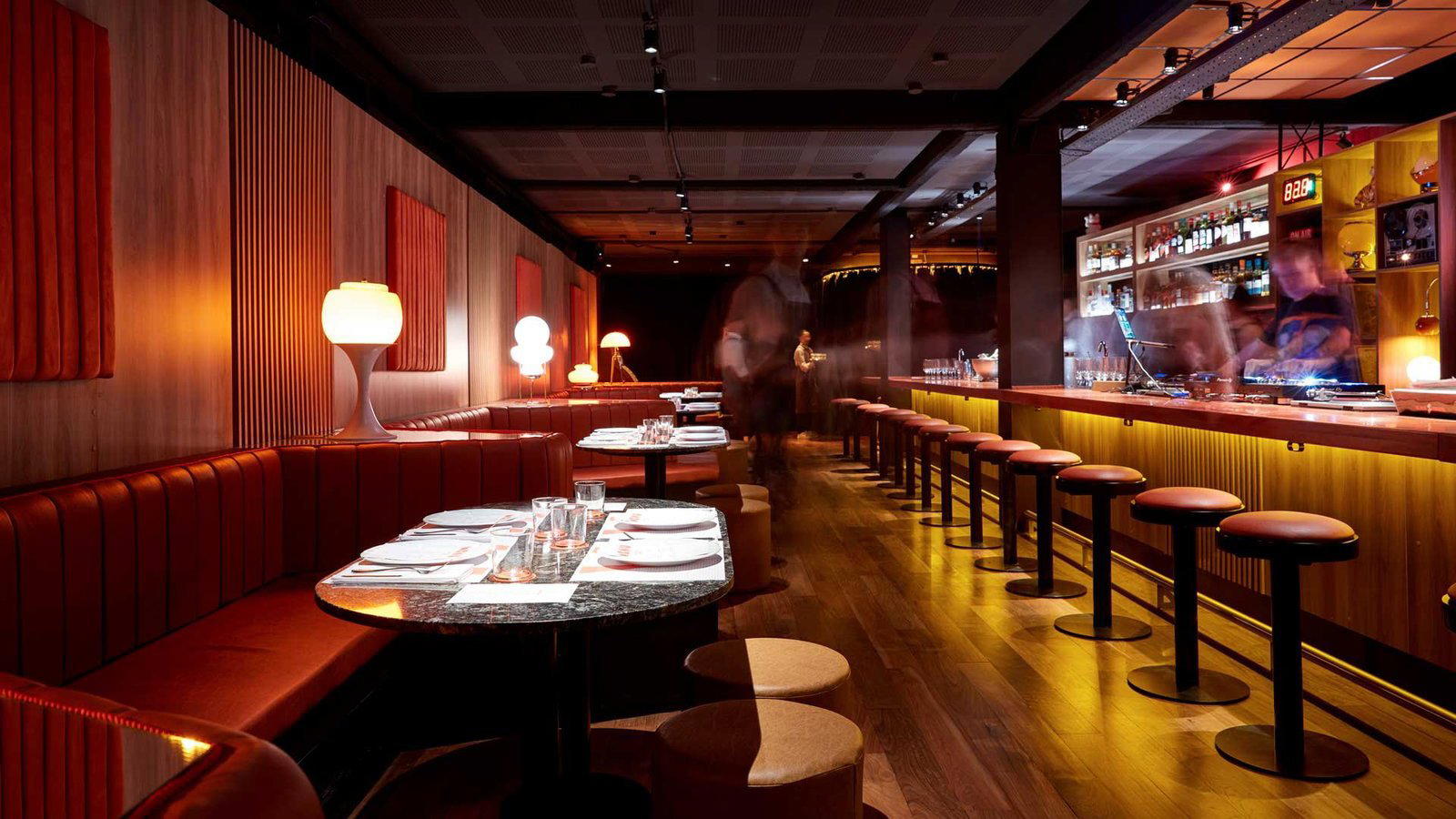
The neighbourhood context matters here. Palermo's restaurant corridor has stratified considerably in recent years, splitting between high-profile destinations that draw diners from across the city and quieter addresses that rely on neighbourhood loyalty and word-of-mouth. Soler 5608 falls closer to the latter geography, a residential pocket that filters out casual foot traffic and rewards those who arrive with purpose. That self-selecting dynamic tends to produce a particular kind of dining room energy: calmer, more deliberate, less performative than the louder tables on Honduras or Thames.
The Logic of a Nikkei Kitchen in Buenos Aires
Nikkei cooking asks a great deal of collaboration from the team that executes it. The cuisine sits across two very different technical traditions, Japanese precision and restraint on one side, Peruvian acidity, heat, and abundance on the other, and the kitchen-to-floor relationship has to be tightly coordinated for the result to read coherently to the guest. At restaurants that handle this well, the front-of-house team carries as much editorial weight as the kitchen, translating the logic of ceviches finished with soy, tiraditos built on dashi, or tempura inflected with aji amarillo to a Buenos Aires audience that may be more familiar with malbec and milanesa than with leche de tigre.
This is where the team dynamic at a venue like Osaka becomes the actual subject. The sommelier's role in a Nikkei setting is particularly demanding: pairing structures that span Japanese technique and South American ingredients require a list with genuine range, and the ability to move guests between sake, white Burgundy, and Mendoza torrontés within a single meal is a skill that doesn't develop by accident. Restaurants in this format that invest in that kind of floor expertise, rather than treating wine and service as secondary to the kitchen, tend to produce a noticeably different experience. The meal becomes a conversation rather than a sequence of dishes.
How Osaka Sits in the Buenos Aires Competitive Set
Buenos Aires has no shortage of serious kitchens. Don Julio has become the reference point for Argentine beef at its most ceremonially correct. Aramburu operates in the creative tasting-menu tier, pushing Modern Argentinian technique toward international standards. Trescha and Crizia represent the contemporary cohort that is reshaping what Buenos Aires fine dining looks like from the outside. Anafe anchors a different register entirely, neighbourhood-scaled, ingredient-focused, less concerned with category.
Osaka occupies a different lane from all of them. It competes, instead, with a small group of Buenos Aires kitchens that have committed to non-Argentinian culinary traditions executed at a level high enough to earn repeat business from a city that has strong opinions about food and limited patience for approximation. In that context, sustaining a Nikkei program in Palermo, where the ingredient sourcing demands are higher and the reference palate is less immediately familiar to the local diner, represents a specific kind of institutional confidence.
For travellers building a broader picture of Argentine dining beyond Buenos Aires, the country's restaurant scene extends well past the capital. Azafrán in Mendoza is the reference address for wine-country cooking in Cuyo, while Cavas Wine Lodge and Entre Cielos in Luján de Cuyo combine vineyard dining with accommodation. In the lake district, Las Balsas in Villa La Angostura holds its own category. And for estancia-style eating anchored in Argentine tradition, La Bamba de Areco and Los Talas del Entrerriano offer context that no amount of Buenos Aires restaurant-going can replicate. The full picture of how Osaka fits into the city's dining scene is mapped in our Buenos Aires restaurants guide.
Planning a Visit
Soler 5608 is in the western stretch of Palermo, past the more densely trafficked blocks around Plaza Serrano, in a quieter section that is most easily reached by taxi or rideshare from central Buenos Aires. The address puts it roughly equidistant from the Palermo and Scalabrini Ortiz subte stations, though the walk from either is fifteen minutes or more through residential streets. Evening is the natural register for a meal here, Buenos Aires dinner culture runs late by most international standards, with tables typically filling between 9pm and midnight. Arriving before 8:30pm generally means the room is still finding its rhythm.
Dress code follows Palermo's broadly casual-smart convention: the room won't require a jacket, but the dining context rewards a degree of intention.
For international context on what a Nikkei-influenced kitchen at this level can achieve, Le Bernardin in New York offers a reference point for the kind of technical discipline that separates serious fish-forward kitchens from the category broadly, and Lazy Bear in San Francisco demonstrates what happens when collaborative service structure, kitchen and floor working as a single editorial voice, becomes the defining feature of a dining program. Osaka's ambitions, operating within a different budget tier and cultural context, are legible against those references even if the execution operates at a different scale.
Frequently asked questions
Where exactly is Osaka?
Osaka is located at Soler 5608, C1425BYH Cdad. Autónoma de Buenos Aires, Argentina, Buenos Aires.
How does Osaka in Buenos Aires fit into Argentina's broader Nikkei dining scene?
Buenos Aires has a long-established Japanese community concentrated in the Once neighbourhood, but Nikkei cuisine, the specifically Japanese-Peruvian tradition, occupies a distinct position from straight Japanese cooking in the city. Osaka, operating out of Palermo rather than the traditional Japanese district, addresses a dining public that already engages seriously with both Peruvian and Japanese food as separate reference points. That context makes Buenos Aires one of the few cities in South America where a Nikkei kitchen can be read against genuinely informed local expectations.
What dish is Osaka famous for?
Osaka anchors its menu in Nikkei cooking, the culinary tradition that emerged from Japanese immigration to Peru in the late nineteenth century and blends Japanese technique with Peruvian ingredients and seasoning logic. That means ceviches built with Japanese precision, tiraditos, and proteins handled with the kind of knife discipline that comes from the Japanese side of the tradition. The specific dishes on the current menu are best confirmed directly with the restaurant at Soler 5608, Palermo.
Can I walk in to Osaka?
Osaka sits in the quieter western stretch of Palermo, past the busier blocks around Plaza Serrano, which means foot traffic is lower than at restaurants closer to the neighbourhood's commercial centre. That said, Nikkei kitchens at this level in Buenos Aires tend to fill quickly, and arriving without a reservation carries real risk of being turned away. Contacting the restaurant in advance is the practical approach.
What's the defining dish or idea at Osaka?
The defining idea at Osaka is the Nikkei synthesis itself: Japanese technical discipline applied to Peruvian flavour frameworks, with Argentine produce available locally in Buenos Aires shaping the raw material. Nikkei cooking is not a simple hybrid but a century-old tradition with its own grammar, and Osaka's kitchen is organised around executing that grammar in a city where the Peruvian and Japanese dining scenes are both well established independently.
Is Osaka allergy-friendly?
Nikkei menus typically involve soy, fish, shellfish, and sesame at structural levels, not as garnishes but as core seasoning and preparation ingredients, which makes them more complex to adapt than single-cuisine kitchens. Guests with serious allergies should contact Osaka at Soler 5608 directly before booking to discuss what the kitchen can accommodate on a given service.
Comparison Snapshot
| Venue | Cuisine | Price | Awards | Notes |
|---|---|---|---|---|
| OsakaThis venue (the venue you are viewing) | Nikkei Peruvian-Japanese Fusion | $30–50 | Not listed | Not listed |
| Don Julio | Argentinian Parrilla Steakhouse | $100–150 | 1 Michelin Star · World's 50 Best #44 | Argentinian Steakhouse |
| Aramburu | Modern Argentine Haute Cuisine | $200–300 | 2 Michelin Stars · World's 50 Best #35 | Modern Argentinian, Creative |
| El Preferido de Palermo | Classic Italian Bodegón | $50–100 | Michelin Plate · World's 50 Best #24 | Not listed |
| Elena | Contemporary Argentinian Steakhouse | $30–50 | Michelin Plate · Star Wine List | Not listed |
| La Carniceria | Modern Argentine Parrilla | $30–50 | Michelin Plate | Not listed |