Our verdict
On a quiet residential stretch of Via Bergamo in the Trieste quarter, Ops occupies a position in Rome's serious wine-focused dining tier. The address signals intent: this is not a tourist-circuit destination but a place frequented by those with a considered interest in Italian cellars and the food that belongs alongside them. Sparse details in the public record make advance research essential.

Pearl is the En Primeur Club membership app, where members save venues, book tables and use the concierge.
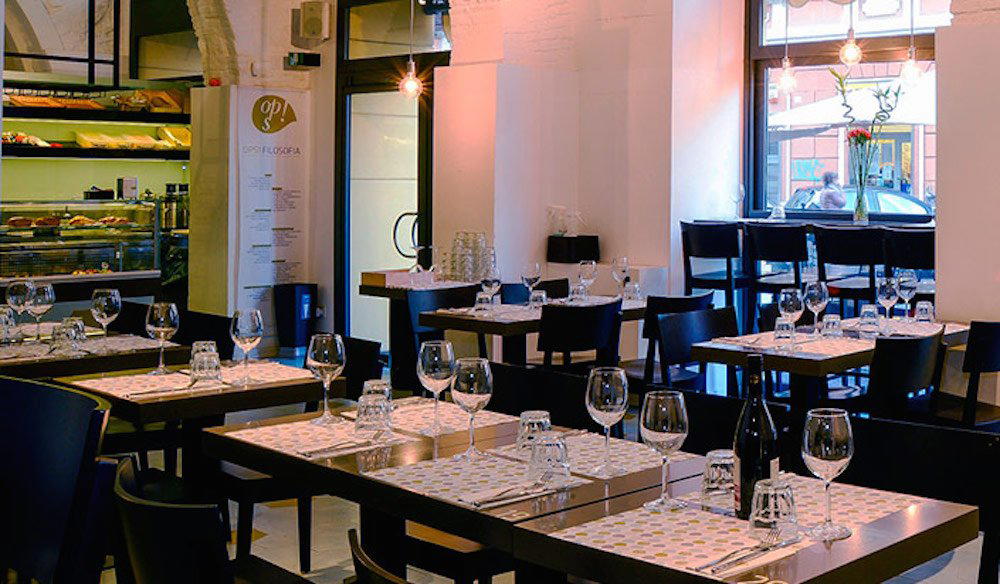
Rome's Wine-Led Dining Tier and Where Ops Sits Within It
Rome has never been a city that wears its wine culture loudly. The capital's dining identity tilts toward theatre, history, and the gravitational pull of pasta and offal traditions, the sort of cooking that doesn't need a sommelier to justify it. But a quieter tier of the city's restaurant scene has, over the past decade, built something more deliberate: rooms where the wine list is not an afterthought but the primary editorial statement, and where the kitchen is calibrated to support it. Ops, on Via Bergamo in the Trieste neighbourhood, belongs to that more considered bracket.
Trieste is not a quarter most visitors pass through. It sits north of the Borghese gardens, in a part of Rome where the streets are wider and the buildings are solidly early twentieth-century bourgeois, liberty-style facades, interior courtyards, a residential density that keeps the foot traffic genuinely local. Arriving at Via Bergamo 56, you're not in the Rome of the tourist maps. That is precisely the point. In a city where the dining scene is stratified sharply between spectacle venues and neighbourhood institutions, an address like this self-selects for a particular kind of guest.
The Wine Argument: Cellar Depth in a City of Casual Pours
Rome's wine culture has historically lagged behind its northern counterparts. Milan and Florence have long sustained a culture of serious cellars and dedicated wine service, Enoteca Pinchiorri in Florence represents the apex of that tradition, a three-Michelin-star operation built as much around its wine archive as its kitchen. Rome has produced fewer equivalents, though the gap has narrowed. Places like Achilli al Parlamento have long anchored the city's enoteca tradition, while the more recent wave of creative-leaning restaurants, Enoteca La Torre and Il Pagliaccio at the higher end, Acquolina for seafood-focused tasting menus, have each brought a stronger wine sensibility to the formal dining tier.
Ops fits a different register within this pattern: the wine-forward address that doesn't necessarily signal itself through Michelin status or price-bracket signposting, but through the quality of curation evident in what's in the glass. Across Italy, some of the most interesting wine programs sit outside the formal tasting-menu format entirely, the osteria that stocks aged Barolo, the enoteca that pours natural Campanian whites alongside grilled vegetables. Ops appears to occupy a version of that space in Rome's Trieste quarter, though the specific character of the cellar is better assessed in person than on paper.
The broader Italian wine context is worth holding in mind. Italy's cellar depth is unmatched in range if not always in depth at any single address: from the oxidative whites of Jura-influenced producers in Friuli, to the structured reds of Barolo and Barbaresco, to the volcanic terroir expressions coming out of Etna. For venues outside the multi-star bracket, the wine list is often the most direct signal of seriousness. How a room chooses between Piedmont and Campania, between natural producers and conventional estates, between depth in one region and breadth across many, tells you more about editorial intent than a menu description ever can.
Food and Setting: What the Address Suggests
Without a confirmed cuisine type or menu format in the public record, the food at Ops requires careful framing. What is knowable is the context. Restaurants in Trieste tend to draw a neighbourhood crowd that skews professional and Italian-local rather than tourist-facing, which typically produces a kitchen with less pressure to perform internationally recognisable gestures and more latitude to cook in ways that make sense alongside serious wine. Whether that means Roman tradition updated with restraint, or something closer to the contemporary Italian mode practised at Enrico Bartolini in Milan or Le Calandre in Rubano, is a question the room itself will answer.
What the Italian dining scene at this level consistently demonstrates is that wine-led addresses tend to cook with restraint: fewer heavy sauces, more attention to acidity and texture, a preference for dishes that open rather than close the palate between pours. That logic connects Ops to a broader Italian tradition of food and wine as genuinely co-equal, the philosophy that animates places as different in scale as Uliassi in Senigallia and Dal Pescatore in Runate.
Rome's Fine Dining Frame: Where Ops Doesn't Compete
It's worth being clear about what Ops is not. It is not competing in the same tier as La Pergola, Rome's only three-Michelin-star address, where the cellar runs to tens of thousands of bottles and the wine service matches the kitchen in formality and investment. Nor does the Via Bergamo address signal the kind of showpiece creative cooking associated with Osteria Francescana in Modena or Piazza Duomo in Alba.
For those who come to Rome primarily for wine and want to move beyond the tourist-facing enoteca experience, the Trieste quarter and addresses like Ops represent the kind of local infrastructure the city's wine culture depends on but rarely publicises. The same dynamic operates in other cities: Reale in Castel di Sangro draws guests to a small Abruzzo town partly on the strength of its cellar; Atelier Moessmer Norbert Niederkofler in Brunico pairs regional food philosophy with Alpine wine selections that reflect the same local commitment.
Planning a Visit: What to Know in Advance
Via Bergamo 56 is accessible from the Trieste quarter, reachable by tram or a short taxi ride from the historic centre. The absence of a prominent web presence is itself a signal: addresses in this tier of the Roman scene rely on word-of-mouth and a loyal regular base rather than digital marketing. Walk-ins may be possible depending on the format, but given the neighbourhood character and likely local clientele, advance contact is advisable where possible. For a broader map of where Ops fits within the capital's dining scene, our full Rome restaurants guide provides context across price points and neighbourhoods.
Frequently asked questions
at Ops?
What the address and context suggest is a kitchen calibrated to accompany serious wine, which in Rome's mid-tier typically means dishes with enough acidity and textural interest to work across multiple pours. The wine list, whatever its specific depth, is likely the primary reason the room has built a following in the Trieste quarter. Consult the list first and let the food follow, which is the logic that animates comparable Italian addresses from Acquolina to Quattro Passi in Marina del Cantone.
Can I walk in to Ops?
Without confirmed booking policy, the safest approach in any serious wine-led Rome address is to enquire in advance. The Trieste quarter skews local and regular rather than tourist-facing, which means tables may fill with repeat guests early in the week. If you're already in Rome, a phone call or visit during off-peak hours is likely the most direct route; the city's prix-fixe and tasting-menu tier, which includes addresses like Il Pagliaccio and Enoteca La Torre, generally requires advance booking, while more casual wine-bar formats are more permissive.
What is Ops known for?
Based on its address and positioning within Rome's Trieste neighbourhood, Ops is associated with the city's wine-focused dining tier rather than with showpiece creative cuisine. The room draws a local rather than tourist crowd, which in Rome is a reliable indicator of genuine neighbourhood standing. For context on how it fits within the capital's broader scene, including the Michelin-starred addresses and creative kitchens that define the upper bracket, the EP Club Rome guide maps the full range.
Is Ops in Rome suitable for a special wine-focused dinner away from the tourist centre?
The Via Bergamo 56 address in the Trieste quarter positions Ops firmly outside the historic-centre restaurant circuit, which is exactly the condition that tends to produce Rome's most sincere wine-led dining rooms. Guests who have made comparable pilgrimages to serious cellars at Atomix in New York City or Le Bernardin will recognise the logic: addresses that depend on a returning local clientele rather than passing trade have stronger incentive to maintain cellar quality over time. Specific wine program details should be confirmed directly, as the public record does not include a current list.
Recognition, Side-by-Side
Comparable venues nearby, for context on price, style, and recognition.
| Venue | Cuisine | Price | Notes |
|---|---|---|---|
| OpsThis venue (the venue you are viewing) | Vegan Italian Buffet | $20–30 | Not listed |
| Il Cortile | Traditional Roman Trattoria | $30–50 | Ludovisi |
| Pommidoro dal 1890 Ristorante | Traditional Roman Trattoria | Not listed | Tiburtino |
| Beppe and His Cheeses | Italian Cheese & Wine Bar | Not listed | Regola |
| 180g Pizzeria Romana | Roman-Style Pizza | $20–30 | Centocelle |
| Doney Restaurant & Café | Modern Italian Mediterranean | $50–100 | Ludovisi |
Continue exploring
More in Rome
Restaurants in Rome
All restaurants in Rome →
Bars in Rome
All bars in Rome →

Details
- Modern
- Cozy
- Casual Hangout
- Open Kitchen
- Organic
- Buffet
- Vegan Options
- Vegetarian Friendly
- Gluten Free Options
Current opening hours
- Monday
- 12:30–4 PM
- Tuesday
- 12:30–4 PM, 7:30–11 PM
- Wednesday
- 12:30–4 PM, 7:30–11 PM
- Thursday
- 12:30–4 PM, 7:30–11 PM
- Friday
- 12:30–4 PM, 7:30–11 PM
- Saturday
- 12:30–4 PM, 7:30–11 PM
- Sunday
- 12:30–4 PM, 7:30–11 PM
Hours can change for holidays and private events. Hours as of .
Warm and inviting cafe-style atmosphere with a focus on fresh, healthy vegan cuisine.