One of Rome's most enduring neighbourhood trattorias, Pommidoro dal 1890 has held its position on Piazza dei Sanniti in the San Lorenzo district for well over a century. The kitchen draws on the deep grammar of Roman-Jewish and working-class Roman cooking, making it a reference point for anyone tracing the roots of the city's table rather than its fine-dining surface.
Pearl is the En Primeur Club membership app — saves, bookings, and concierge access live there. Same editors, same standards.
- Address
- Piazza dei Sanniti, 44/46, 00185 Roma RM, Italy
- Phone
- +39 06 445 2692
- Website
- octotable.com
- Directions
- Get directions
 Saves & bookings on Pearl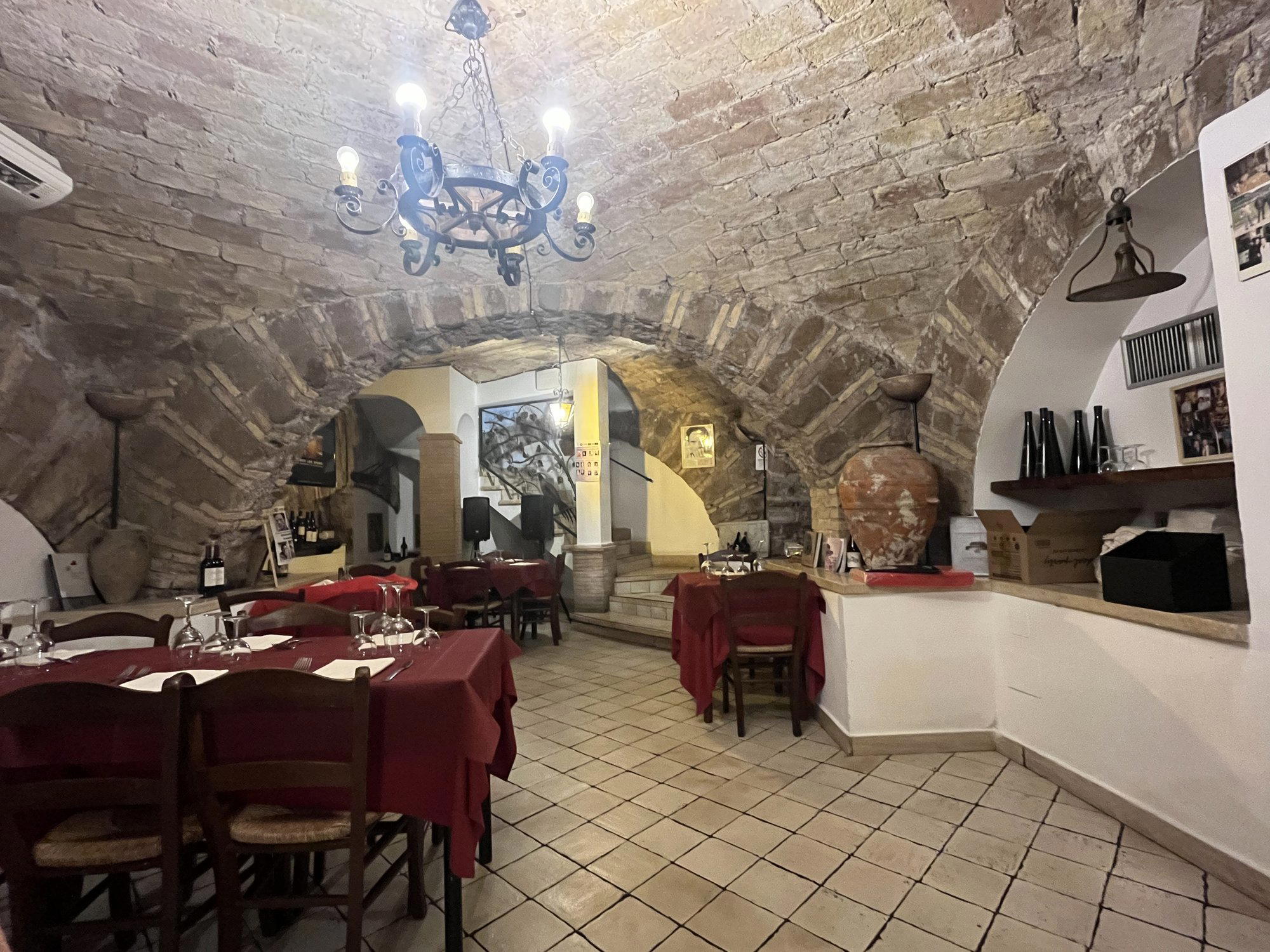
A Century of Roman Cooking in San Lorenzo
The piazzas of San Lorenzo carry a different register from the tourist-facing centro storico. This is a working neighbourhood, historically tied to Sapienza university and the families who rebuilt it after wartime devastation, and the trattorias that survived here did so by feeding people, not by performing nostalgia for them. Pommidoro dal 1890 Ristorante, on Piazza dei Sanniti, is a traditional Roman trattoria in Rome's San Lorenzo district. It has served Roman cucina povera since 1890.
Roman cooking at this tier is not about refinement in the modernist sense. It is about the correct execution of a fixed canon: the offal preparations, the slow-braised secondi, the pasta that arrives in earthenware rather than on architectural ceramics. Across Rome, fine-dining restaurants such as Il Pagliaccio and Enoteca La Torre reinterpret these roots through contemporary creative frameworks. Pommidoro occupies a different position entirely: it is a keeper of the source material itself.
The Cultural Grammar of the Roman Table
To understand what a place like Pommidoro represents, it helps to understand how Roman cooking is structured. The cuisine draws on three overlapping traditions: the cucina povera of the working-class Roman borgate, the Roman-Jewish kitchen that kept its own dietary logic through centuries of the Ghetto, and the abbacchio and offal culture tied to the slaughterhouses of Testaccio. San Lorenzo, as a neighbourhood built by labourers, sits squarely in the first of these traditions, though all three have influenced the city's tavern culture broadly.
The canonical dishes of this tradition are not secret: coda alla vaccinara, rigatoni con la pajata, trippa alla romana, carciofi alla giudia. What distinguishes their execution at long-standing trattorias is the accumulated institutional knowledge of a kitchen that has made these dishes for over a hundred years. That kind of temporal depth is not replicable by opening a new restaurant with a historically-minded menu. Rome's three-Michelin-star address, La Pergola, operates at the opposite pole of this spectrum, internationalist, precision-driven, with the booking window and price architecture of a global luxury restaurant. The value of trattorias like Pommidoro lies precisely in not being that.
San Lorenzo and the City's Eating Geography
Rome's dining geography has stratified significantly over the past two decades. The centro storico and Prati districts now accommodate the majority of Michelin-recognised tables, including Acquolina and Achilli al Parlamento, while neighbourhoods like San Lorenzo, Pigneto, and Ostiense have retained a denser concentration of places operating outside the formal recognition circuit. This is partly economic, the rents and footfall profiles of these areas do not support tasting-menu pricing, and partly cultural, as local regulars in these quartieri have historically exercised a conservative pull on the menus of their favoured restaurants.
Piazza dei Sanniti itself is a small square by Roman standards, with the kind of daily foot traffic that sustains a lunch trade and an early-evening sitting without relying on destination-dining tourism. The address, 44/46, occupies a position visible from the square, which means the outdoor seating, in warmer months, connects the dining room to the neighbourhood rather than enclosing it. This spatial logic is characteristic of Roman trattoria culture, where the boundary between the street and the table has always been porous.
Italian Longevity and What It Signals
Longevity in Italian restaurant culture is its own credential. The country's most respected tables include addresses that have been in continuous operation for generations: Dal Pescatore in Runate, which has held three Michelin stars across multiple decades, and Enoteca Pinchiorri in Florence, whose wine cellar depth reflects forty-plus years of accumulation. At the trattoria end of the market, longevity signals something different: not the refinement that comes from sustained investment and international recognition, but the community trust that comes from never having abandoned the people who ate there first.
Pommidoro's 1890 founding date is not decorative. It means the restaurant was operating before the Roman borgate assumed their modern form, before Fascist-era urban replanning, before San Lorenzo was bombed in 1943. That a kitchen on this piazza has continued through all of it is a fact worth holding onto when considering what the space represents to its neighbourhood. Italian culinary geography is full of creative contemporary addresses worth seeking out, Reale in Castel di Sangro, Uliassi in Senigallia, Piazza Duomo in Alba, but they belong to a different project than the one a century-old trattoria pursues.
Planning Your Visit
Pommidoro sits on Piazza dei Sanniti in the San Lorenzo district, a fifteen-minute walk or short taxi ride from Termini station. For anyone working through Rome's restaurant geography with the EP Club guide, the San Lorenzo stop pairs naturally with a neighbourhood walk before or after eating. The full context of what to eat and where across the city is mapped in our full Rome restaurants guide.
Price and Recognition
Comparable venues nearby, for context on price, style, and recognition.
| Venue | Cuisine | Price | Notes |
|---|---|---|---|
| Pommidoro dal 1890 RistoranteThis venue — the venue you are viewing | Tiburtino, Traditional Roman Trattoria | $$$ | Not listed |
| Soho House Rome | Tiburtino, Modern Roman & Venetian | $$$ | Not listed |
| Doney Restaurant & Café | Ludovisi, Modern Italian Mediterranean | $$$ | Not listed |
| Vico Pizza&Wine Roma | San Eustachio, Modern Neapolitan Pizza | $$$ | Not listed |
| Anima Ristorante Roma | Not listed | $$$ | Sallustiano, Modern Italian - Roman & Neapolitan |
| Clementino Ristorante & Bistrot | Colonna, Contemporary Roman Cuisine | $$$ | Not listed |
Continue exploring
More in Rome
Restaurants in Rome
Browse all →
Bars in Rome
Browse all →
Hotels in Rome
Browse all →

At a Glance
- Classic
- Rustic
- Well Known
- Date Night
- Group Dining
- Special Occasion
- Historic Building
Current opening hours
- Monday
- 7–11:30 PM
- Tuesday
- 7–11:30 PM
- Wednesday
- 7–11:30 PM
- Thursday
- 7–11:30 PM
- Friday
- 12–3 PM, 7–11:30 PM
- Saturday
- 12–3 PM, 7–11:30 PM
- Sunday
- Closed
Hours can change for holidays and private events. Last verified .