
Our verdict
Opera Bombana brings Italian cooking rooted in DOP-certified products and artisan provenance to Beijing's Chaoyang district, where it has held Opinionated About Dining recognition across three consecutive years. Chef Andrea Susto leads a kitchen that positions itself against the capital's growing tier of serious European addresses. Open daily from 10:30 am, the restaurant sits on Dongdaqiao Road in one of Beijing's most internationally active neighbourhoods.

Pearl is the En Primeur Club membership app, where members save venues, book tables and use the concierge.
The menu
What to order
- Tagliolini with black truffle
- Roasted scallops
- Limoncello soufflé
Dongdaqiao Road in Chaoyang moves at a different register from the hutong-lined dining corridors further west. The embassy quarter spills into this stretch, and the clientele that has settled around it over the past two decades has created real demand for European cooking that doesn't compromise on raw material quality to suit a perceived local palate. Opera Bombana occupies that space with some conviction, and its sustained appearance on Opinionated About Dining's Asia rankings, Highly Recommended in 2023, ranked #199 in 2024, and #221 in 2025, confirms that informed diners and serious critics have taken consistent notice.
The Italian Ingredient Argument, Made in Beijing
The central challenge for any Italian kitchen operating outside Italy is sourcing. The cuisine's credibility rests almost entirely on provenance: a Parmigiano Reggiano aged under DOP rules tastes categorically different from an imitation, and the same logic applies to San Marzano tomatoes, Sicilian capers, Calabrian chilli, and the dozens of other ingredients whose character is inseparable from place and method. In Beijing, where freight logistics, customs timelines, and cold-chain infrastructure all work against the import of delicate artisan goods, a kitchen that insists on this standard is making a real operational commitment, not a marketing claim.
Opera Bombana is connected to the broader Bombana restaurant group, most visibly through 8½ Otto e Mezzo Bombana in Hong Kong, which holds three Michelin stars and has long been the reference point for serious Italian cooking at the top of the Asia market. That lineage matters when reading Opera Bombana's position in Beijing: the group's identity is built around ingredient discipline and classical Italian technique, and those commitments carry through to the Beijing address under Chef Andrea Susto.
Italian cuisine in Asia has split into two broad camps. One adapts freely, softening acidity, adjusting seasoning, and substituting local ingredients where imported ones are difficult to obtain. Opera Bombana belongs to the second camp, which is why its OAD rankings are the relevant benchmark rather than broader popularity metrics.
What the Provenance Emphasis Means at the Table
In Italian cooking, the concept of materia prima, raw material quality above all, is not a modern trend but a foundational principle. Regions like Emilia-Romagna have built centuries of culinary identity around protecting specific products through designation of origin: Prosciutto di Parma, Aceto Balsamico Tradizionale di Modena, Culatello di Zibello. When a kitchen outside Italy chooses to anchor its offer in these ingredients, it is making a statement about what Italian cooking actually is, as opposed to what it is often reduced to in export versions.
Chef Andrea Susto works within that framework. The kitchen's approach is classically grounded rather than modernist, which means the cooking's ambition shows in selection and technique rather than in theatrical plating or concept-driven provocation. For a diner accustomed to the more internationally hybridised Italian menus that dominate Beijing's mid-market, the difference in eating experience is significant: flavours are denser, less adjusted, and more clearly traceable to specific Italian regions and their ingredient cultures.
For comparison with Italian cooking at a similar provenance-focused level in another Asian city, cenci in Kyoto offers a useful counterpoint, a kitchen that similarly situates Italian ingredients within a non-Italian context, but with a Japanese aesthetic filtering the presentation.
Beijing's European Restaurant Tier
Opera Bombana sits in a specific tier within Beijing's dining market. The city's European restaurant offer has consolidated around a smaller number of addresses that compete on credentials and ingredient quality rather than price accessibility. Comparison venues in the Chaoyang area across other cuisines, including Xin Rong Ji on Xinyuan South Road for Taizhou seafood, Chao Shang Chao for Chao Zhou, and Lamdre for serious vegetarian, all operate at the ¥¥¥¥ price tier, which contextualises where serious dining in this district sits. Opera Bombana competes not against the Italian chains or hotel buffet Italians that still populate the capital's mid-market, but against addresses like these, where the proposition is specificity and sourcing discipline.
Giada Garden represents another Italian presence in Beijing's competitive set, and Jingji anchors the local Beijing cuisine end of the capital's formal dining tier. The mix illustrates how Chaoyang's serious restaurant market has developed into a genuinely varied offer, where OAD-ranked Italian sits alongside OAD-ranked Chinese regional cooking without either feeling anomalous.
Across China more broadly, the cities producing comparable international dining ambition include Shanghai, where 102 House operates in its own serious European register, and Hangzhou, where Ru Yuan demonstrates the depth of the regional Chinese fine-dining tier. For a full picture of where Opera Bombana fits within the capital's overall offer, see our full Beijing restaurants guide, as well as our Beijing hotels guide, bars guide, wineries guide, and experiences guide.
Planning Your Visit
Address: 9 Dongdaqiao Road, Chaoyang, Beijing 100020
Open: Monday to Sunday, 10:30 am to 10 pm
Cuisine: Italian, with emphasis on DOP-certified and artisan-sourced ingredients
Chef: Andrea Susto
Recognition: Opinionated About Dining Leading Restaurants in Asia, Highly Recommended 2023; Ranked #199 (2024); Ranked #221 (2025)
Booking: Contact details not publicly listed; reservation via the restaurant directly is advisable given the venue's recognition tier
Neighbourhood: Chaoyang, embassy and diplomatic quarter; accessible by taxi or metro
Frequently asked questions
When is Opera Bombana open?
Hours at Opera Bombana: Hours: Monday 10:30 am–10 pm Tuesday 10:30 am–10 pm Wednesday 10:30 am–10 pm Thursday 10:30 am–10 pm Friday 10:30 am–10 pm Saturday 10:30 am–10 pm Sunday 10:30 am–10 pm.
Does Opera Bombana have a Michelin star or similar recognition?
Opera Bombana has received recognition including: Opinionated About Dining Top Restaurants in Asia Ranked #221 (2025); Opinionated About Dining Top Restaurants in Asia Ranked #199 (2024); Opinionated About Dining Top Restaurants in Asia Highly Recommended (2023).
What do people recommend at Opera Bombana?
Diners familiar with OAD-ranked Italian restaurants consistently highlight preparations that foreground DOP-certified Italian products, where the sourcing argument is most visible on the plate. Under Chef Andrea Susto, classical technique frames the ingredients rather than obscuring them, which makes pasta and cured-product courses the most discussed. The kitchen's connection to the broader Bombana group gives it access to supplier networks that few Italian kitchens in Beijing can match.
Where exactly is Opera Bombana?
Opera Bombana is located at 9 Dongdaqiao Rd, Chaoyang, Beijing, China, 100020, Beijing.
Who is the chef at Opera Bombana?
The chef associated with Opera Bombana is Andrea Susto.
What's Opera Bombana best at?
Its clearest strength is executing Italian cooking with the kind of ingredient rigour that the cuisine actually demands, rather than approximating it with local substitutes. Consecutive OAD Asia rankings, Highly Recommended in 2023, #199 in 2024, and #221 in 2025, reflect a consistent level of delivery across multiple independent dining cycles. Among Beijing's European restaurants, that sustained recognition places it in a small peer group where sourcing discipline and classical output align.
The Minimal Set
| Venue | Cuisine | Price | Awards | Notes |
|---|---|---|---|---|
| Opera BombanaThis venue (the venue you are viewing) | Modern Italian Fine Dining | $150–200 | Not listed | Not listed |
| Jing | Modern French with Asian Influences | $300–500 | 1 Michelin Star · Black Pearl 1 Diamond | French Contemporary |
| Xin Rong Ji (Xinyuan South Road) | Taizhou Chinese Fine Dining | $300–500 | 3 Michelin Stars · World's 50 Best #84 | Taizhou |
| Chao Shang Chao (Chaoyang) | Modern Teochew (Chaoshan) Fine Dining | $200–300 | Michelin Plate · La Liste Top Restaurants | Chao Zhou |
| Lamdre | Modern Plant-Based Chinese Vegetarian | Not listed | 2 Michelin Stars · World's 50 Best #17 | Vegetarian |
| Jingji | Imperial Beijing Royal Cuisine | $200–300 | 2 Michelin Stars · La Liste Top Restaurants | Beijing Cuisine |
Recognition history
Dated appearances from independent guides and award organizations, with the underlying list record or original source where available.
Opinionated About Dining Top Restaurants in Asia Ranked #221
Opinionated About Dining
Full recognition history (3 entries)
Opinionated About Dining Top Restaurants in Asia Ranked #199
Opinionated About Dining
Opinionated About Dining Top Restaurants in Asia Highly Recommended
Opinionated About Dining
Continue exploring
More in Beijing
Restaurants in Beijing
All restaurants in Beijing →
Bars in Beijing
All bars in Beijing →
Opera Bombana
The wine
- Wine program
- Deep wine list
- Extensive wine list
- Sake program
Details
- Elegant
- Sophisticated
- Ornate
- Date Night
- Business Dinner
- Special Occasion
- Celebration
- Private Dining
- Hotel Restaurant
- Extensive Wine List
- Sake Program
- Local Sourcing
- A La Carte
- Set Menu
- Tasting Menu
- Wine
- Cocktails
- Vegetarian Friendly
- Gluten Free Options
Current opening hours
- Monday
- 10:30 AM–10 PM
- Tuesday
- 10:30 AM–10 PM
- Wednesday
- 10:30 AM–10 PM
- Thursday
- 10:30 AM–10 PM
- Friday
- 10:30 AM–10 PM
- Saturday
- 10:30 AM–10 PM
- Sunday
- 10:30 AM–10 PM
Hours can change for holidays and private events. Hours as of .
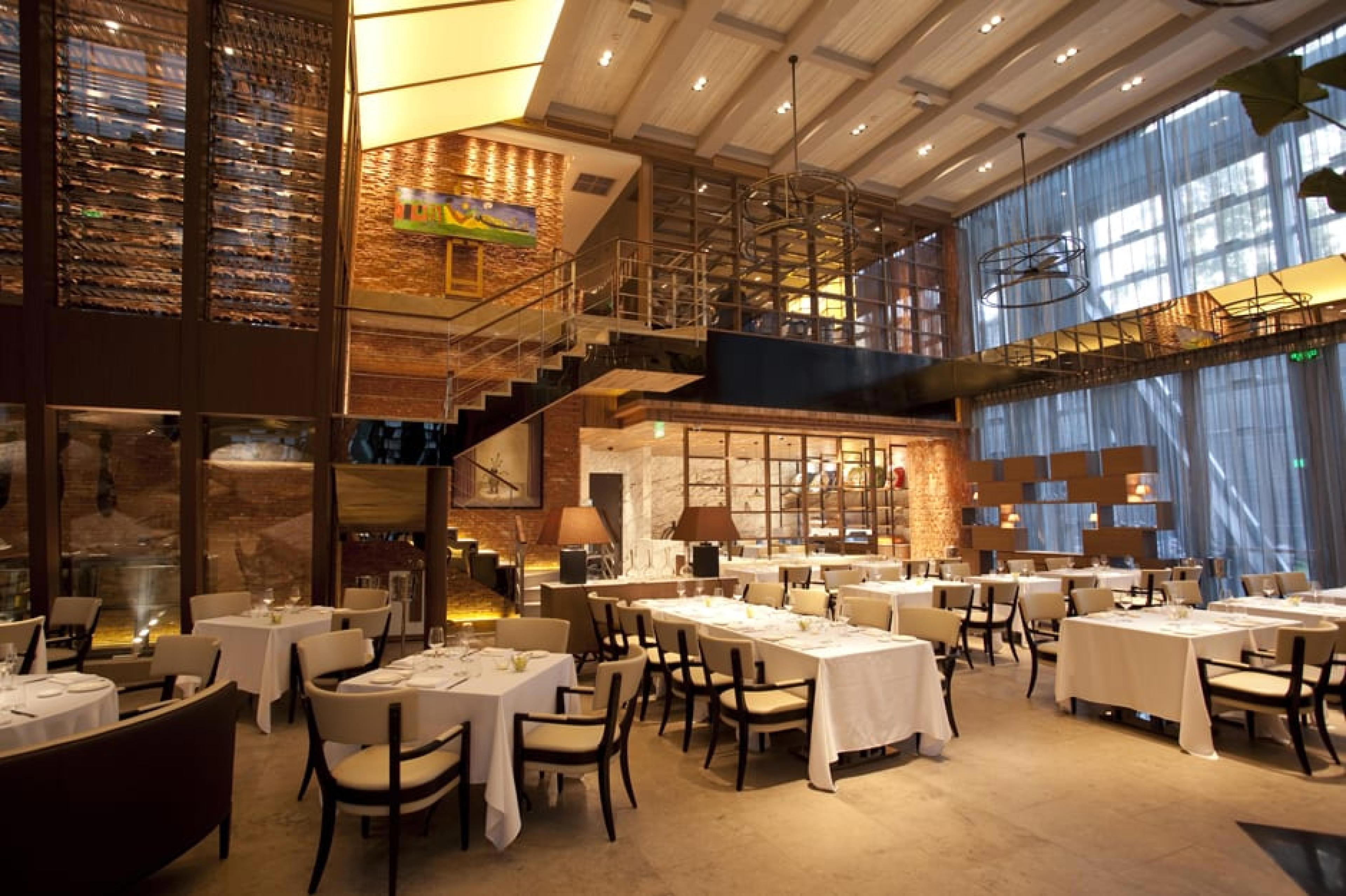
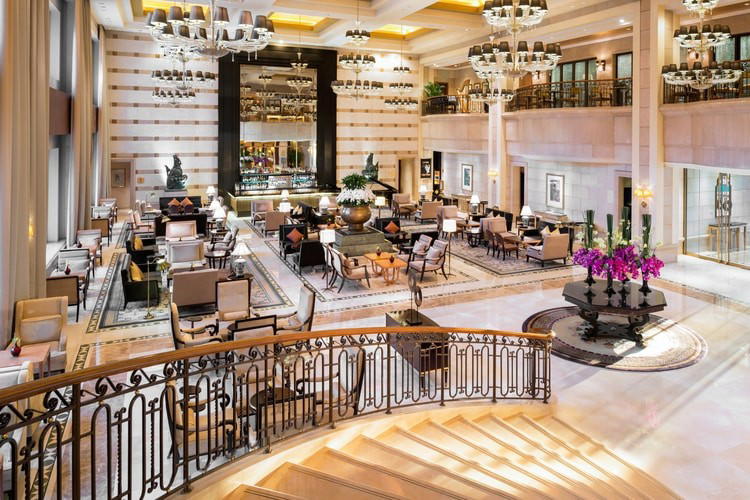
Sophisticated and glamorous with high ceilings, minimalist decor featuring mirrors, brick walls, original art including Marilyn Monroe paintings, and an opera-inspired luxurious atmosphere.