Onkee Korean Grill House
Onkee Korean Grill House occupies a second-floor address at 1000 Auahi Street in Honolulu's Ward Village, bringing Korean barbecue to a neighborhood increasingly defined by design-conscious dining. The format centers on tabletop grilling, situating Onkee within a category that rewards both the communal ritual of live-fire cooking and the specificity of Korean banchan culture.
Pearl is the En Primeur Club membership app — saves, bookings, and concierge access live there. Same editors, same standards.
- Address
- 1000 Auahi St Unit 220, Honolulu, HI 96814
- Phone
- +18083123758
- Website
- onkeehi.com
- Directions
- Get directions
 Saves & bookings on Pearl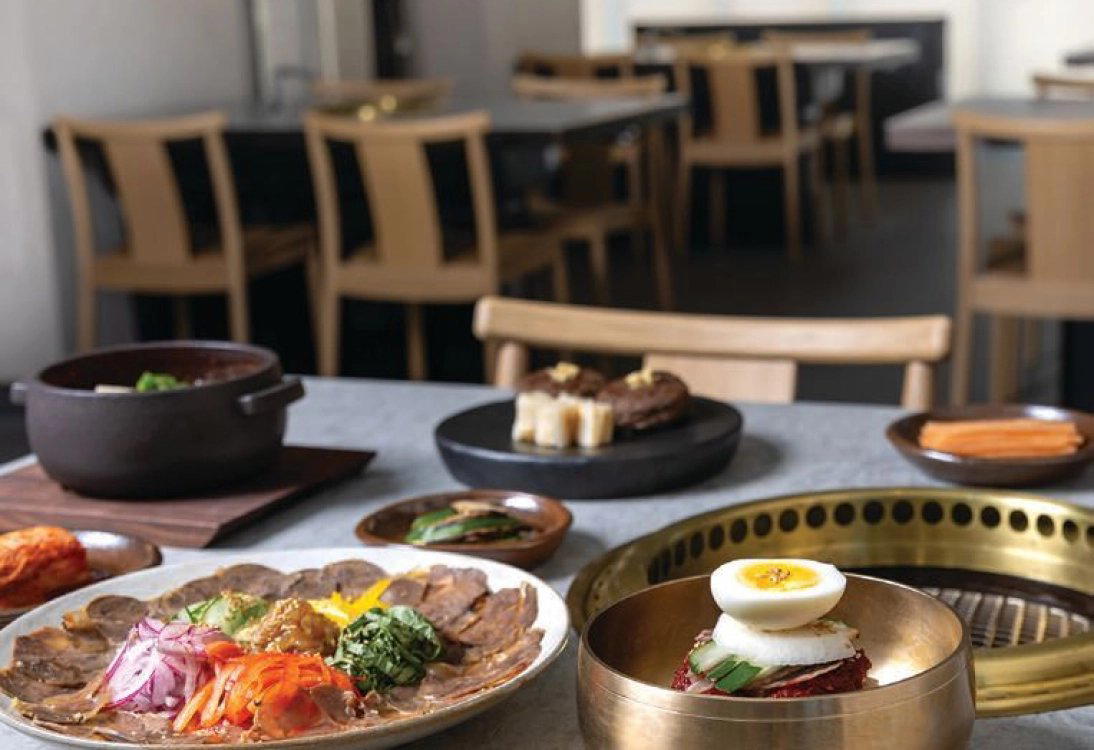
Where Ward Village's Dining Scene Meets Korean Grill Culture
Ward Village has become one of Honolulu's more deliberate dining corridors. The development's ground-floor and second-floor restaurant slots attract formats that depend on a certain spatial generosity: open kitchens, communal tables, concepts that need room to breathe. Korean barbecue, with its built-in grills, ventilation requirements, and shared-plate logic, fits that spatial grammar well. Onkee Korean Grill House, positioned at 1000 Auahi Street on the second floor, occupies that intersection of neighborhood ambition and culinary format.
The address places it within walking distance of several of Honolulu's more notable dining options, including Fête (New American) and 3660 On the Rise, both of which represent a different register of the city's dining ambitions. That proximity matters: Ward Village diners move between formats within a single evening, and a Korean grill house anchoring a second-floor unit signals a confidence in the neighborhood's capacity to support experiential dining that goes beyond quick service.
The Physical Logic of a Korean Grill House
Korean barbecue, as a design category, makes demands that most restaurant formats do not. Each table functions as a cooking station. Ventilation hoods descend from the ceiling or rise from the table surface. The sightlines are deliberately inward: the action is at your table, not in a distant kitchen. This architecture produces a particular kind of intimacy that other communal formats — izakayas, tapas bars, dim sum halls — approach differently. At a Korean grill house, the meal is the performance, and the room is organized to keep that performance central.
Second-floor placement, as Onkee has, typically allows for higher ceilings and better mechanical ventilation, both of which matter in a smoke-producing format. It also creates a threshold effect: arriving at a second-floor restaurant involves a deliberate choice, a small commitment that separates the dining room from street-level foot traffic. That separation tends to shape the clientele and the pace of service. Diners who climb a flight of stairs or take an elevator to reach a restaurant are usually not there by accident.
For context on how this spatial logic plays out at the highest levels of the category, venues like Atomix in New York City have demonstrated how Korean fine dining can use physical design, counter seating, and controlled sightlines to create an entirely different register of the same cultural tradition. Onkee operates in a more casual, communal register, but the underlying premise, that the arrangement of a room shapes the meal, applies across price points.
Korean Grill in Honolulu's Broader Dining Context
Honolulu's dining scene has historically leaned toward Pacific Rim synthesis and Japanese-inflected seafood, a natural result of geography and immigration patterns. Korean cuisine has a substantial presence in Hawaii, rooted in a Korean-American community with deep local history. That history means Korean food in Honolulu is not an imported trend; it is part of the city's culinary infrastructure, present in plate lunch counters, family restaurants, and, increasingly, formats oriented toward a younger, design-aware dining public.
The Korean grill house format specifically has gained traction across the American mainland over the past decade, shifting from strip-mall associations to mid-range and premium dining rooms in cities from Los Angeles to New York. Honolulu is a logical point for that shift: the city's multicultural dining public is comfortable with shared-plate formats, and the climate makes ventilated, open-feeling dining rooms appealing year-round. Venues like 53 By The Sea and Ahaaina Luau represent the ceremony-driven end of Honolulu dining; Korean barbecue sits at a different point on that spectrum, where the ceremony is tactile and participatory rather than theatrical.
For readers building a fuller picture of Honolulu's dining range, our full Honolulu restaurants guide covers the city's key neighborhoods and formats in detail.
What the Format Requires of the Diner
Korean barbecue is one of the few restaurant formats where the diner is also, in a limited sense, the cook. The quality of the meal depends in part on how the table manages the grill: when to turn the meat, how long to rest a slice before wrapping it in perilla, how to pace the banchan alongside the proteins. This is not a passive format. It rewards curiosity and a willingness to engage with the mechanics of the meal.
That participatory quality is precisely what makes the category durable at a time when dining experiences are increasingly evaluated on engagement rather than service formality. The communal grill table produces the kind of shared-decision, shared-result dynamic that drives repeat visits and group bookings. For larger parties, it functions almost as a social framework: the table organizes itself around the grill, and conversation follows the rhythm of the meal.
For travelers who want to compare this kind of participatory dining format against the more choreographed end of the spectrum, properties like Single Thread Farm in Healdsburg, The French Laundry in Napa, or Alinea in Chicago represent the opposite pole, where the diner is a deliberate audience rather than a participant. Both registers have their logic; knowing which you want on a given evening is most of the decision.
Planning Your Visit
Onkee Korean Grill House is located at 1000 Auahi Street, Unit 220, in Honolulu's Ward Village development. The second-floor positioning means the entrance is accessed via the building's interior rather than directly from the street. Ward Village is a walkable district with validated parking available in the development's garage. For visitors arriving from Waikiki, the drive is short; for those staying further east near 855-ALOHA territory, the cross-town trip is worth factoring into your evening timing.
For broader comparison across American fine dining formats on the mainland, venues including Le Bernardin in New York City, Providence in Los Angeles, Addison in San Diego, Blue Hill at Stone Barns in Tarrytown, The Inn at Little Washington, Lazy Bear in San Francisco, and Emeril's in New Orleans offer reference points for what different price tiers and service philosophies look like across the country. And for a view of Korean fine dining at its most decorated tier internationally, 8 1/2 Otto e Mezzo Bombana in Hong Kong offers a related study in how Asian culinary traditions operate at the top of the prestige market.
At a Glance
- Modern
- Trendy
- Cozy
- Group Dining
- Family
- Special Occasion
- Open Kitchen
- Sake Program
- Craft Cocktails
Current opening hours
- Monday
- 11 AM–10 PM
- Tuesday
- 11 AM–10 PM
- Wednesday
- 11 AM–10 PM
- Thursday
- 11 AM–10 PM
- Friday
- 11 AM–10:30 PM
- Saturday
- 11 AM–10:30 PM
- Sunday
- 11 AM–10 PM
Hours can change for holidays and private events. Last verified .
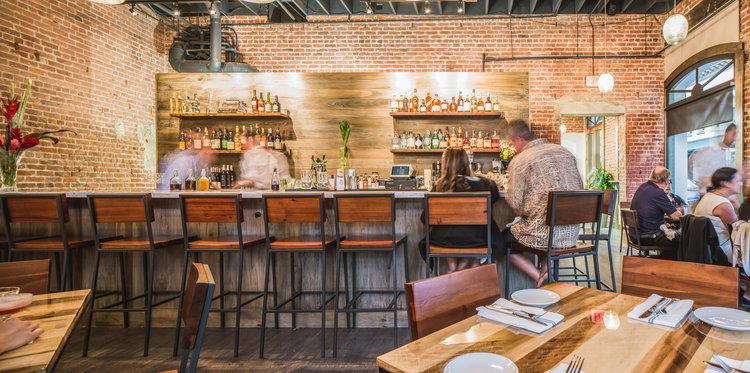
Contemporary and welcoming atmosphere blending Korean warmth with Hawaii's local charm, moderate noise level.
Know Before You Go
- Getting there
- 1000 Auahi St Unit 220, Honolulu, HI 96814