Giovedi


On Hotel Street in Honolulu's Chinatown, Giovedi blurs the line between Italian technique and pan-Asian flavor in ways that feel considered rather than calculated. Husband-and-wife team Bao Tran and Jennifer Akiyoshi run an à la carte menu that treats classic Italian culinary structure as a framework for Southeast and East Asian ingredients. It is one of the more genuinely cross-cultural restaurants operating in the city right now.
Pearl is the En Primeur Club membership app — saves, bookings, and concierge access live there. Same editors, same standards.
- Address
- 10 N Hotel St, Honolulu, HI 96817
- Phone
- (808) 723-9049
- Website
- giovedihawaii.com
- Directions
- Get directions
 Saves & bookings on Pearl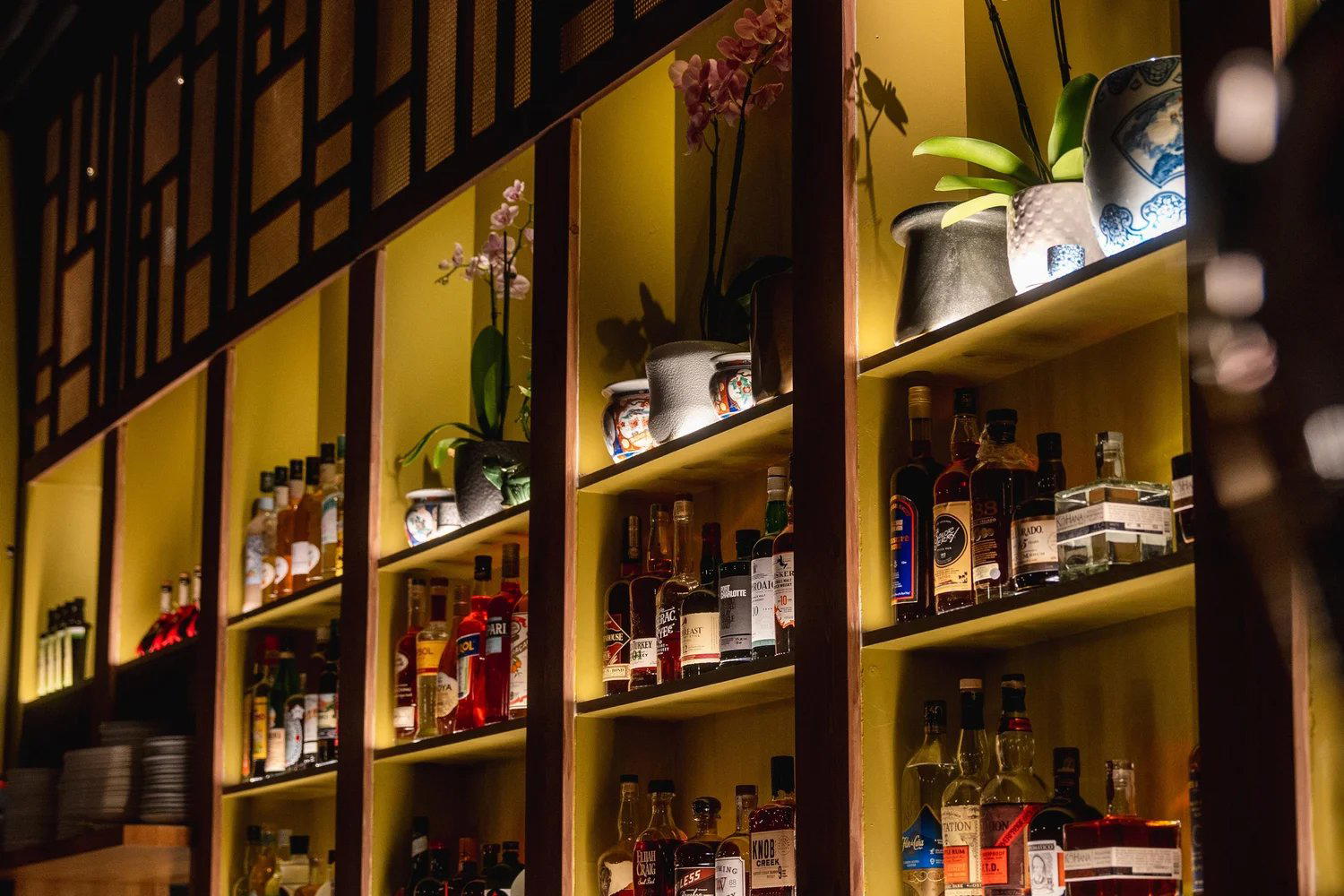
Where Chinatown Sets the Mood
Hotel Street in Honolulu's Chinatown carries a different register than the resort corridors of Waikiki or the polished blocks of Kakaako. The neighborhood is older, denser, and less curated, a grid of herb shops, art spaces, and late-night bars that has absorbed successive waves of immigrant culture and still wears most of them visibly. Arriving at Giovedi at 10 N Hotel St means arriving in that context: a block where the smells of the street, the palette of painted shopfronts, and the ambient sound of a working neighborhood are part of the experience before you step inside.
That location is not incidental. The cross-cultural cooking that husband-and-wife team Bao Tran and Jennifer Akiyoshi practice at Giovedi is more legible against this backdrop than it would be almost anywhere else in Honolulu. Chinatown is where the city's various Asian communities have historically overlapped, and a restaurant that proposes Italian culinary technique as a lens through which to read pan-Asian flavor is, in that sense, working in an appropriate register for the street it occupies.
The Logic of the Menu
The phrase "Asian fusion" has been so broadly applied, and so inconsistently executed, across American dining that it now functions more as a warning flag than a description. What Giovedi proposes is something more structurally specific: pan-Asian ingredients and flavor profiles processed through the methods of classical Italian cooking. The distinction matters. Italian technique carries a defined grammar of fat management, acid deployment, pasta-making, and sauce reduction that imposes discipline on whatever ingredients pass through it. When that grammar is applied to ingredients from Japanese, Vietnamese, Filipino, or Korean pantries, the results tend to be more coherent than the usual fusion shorthand suggests.
The à la carte format reinforces that coherence. Rather than a tasting menu that forces a narrative arc, the à la carte structure lets the kitchen present individual dishes on their own terms, and lets diners build a meal according to their own logic. That format also signals something about the kitchen's confidence: these dishes are designed to hold up individually, not only in sequence.
Honolulu's Fusion Moment in Context
Honolulu has been a site of culinary cross-pollination for most of its modern history, partly because Hawaii's population has never been ethnically homogeneous in the way that most American cities were through the twentieth century. Japanese, Filipino, Chinese, Korean, Portuguese, and Native Hawaiian food traditions have been coexisting and borrowing from each other on these islands for generations. The "local food" category that Hawaiians use to describe their everyday cuisine is already a fusion product, plate lunch, spam musubi, saimin, long before any restaurant frames cross-cultural cooking as a concept.
What has changed in recent years is the formal dining sector's engagement with that tradition. Where the previous generation of Honolulu's upscale restaurants often defaulted to either pure European fine dining or direct Japanese formats, a newer cohort of operators has started treating the multicultural baseline of island food culture as a premise rather than a backdrop. Giovedi fits that pattern. So, in different ways, do venues like Fête, which takes a New American approach to local sourcing, and Fujiyama Texas, which works a Japanese-American hybrid of its own. The contrast with more format-traditional Italian operations in the city, Arancino at The Kahala being the prominent, underlines how deliberately Giovedi is stepping outside Italian-American convention.
Nationally, the conversation around high-end cross-cultural cooking has been shaped by restaurants like Atomix in New York City, which applies French fine-dining structure to Korean ingredients, and to some degree by the kaiseki-adjacent precision of Single Thread Farm in Healdsburg. The ambition at Giovedi reads as closer-grained and neighborhood-scaled than either of those, this is not a tasting-menu destination in the mold of Alinea or The French Laundry, but the underlying premise, that serious technique earns a kitchen the right to disregard ingredient nationality, belongs to the same broader shift in American fine dining.
The Chinatown comparable set
Chinatown Honolulu has developed a credible restaurant and bar cluster in recent years, with enough density now that a visitor can build a full evening on the block without doubling back. Bar Maze, which combines cocktail programming with an omakase format, and Ginza Bairin, a Japanese katsu specialist with a long Tokyo pedigree, are among the neighborhood's better-defined options. Giovedi sits within that cluster but occupies a different register: its appeal is to the diner who wants to understand what happens when Italian culinary architecture meets Asian ingredient culture, rather than to someone seeking a defined Japanese or Italian experience.
Planning Your Visit
Giovedi is at 10 N Hotel Street in the Chinatown district, reachable from downtown Honolulu on foot or by a short ride from most Waikiki hotels. Giovedi is open Tuesday through Sunday, with hours from 5 to 10 p.m. Tuesday and Sunday, 5 to 11 p.m. Thursday through Saturday, and closed Monday. Reservations are essential. The à la carte format means you are not locked into a set spend, which gives Giovedi a flexibility that tasting-menu-only operations do not.
Peers Worth Knowing
Comparable venues nearby, for context on price, style, and recognition.
| Venue | Cuisine | Price | Notes |
|---|---|---|---|
| GiovediThis venue — the venue you are viewing | Italian with Asian Fusion | $$$ | Not listed |
| Arancino at The Kahala | Modern Italian | $$$ | Kahala |
| Arancino di Mare | Modern Italian Seafood | $$$ | Diamond Head |
| San Paolo Pizzeria | Brazilian-Italian Fusion Pizza | $$ | Waikiki |
| The Dotted Line | Global Fusion with Hawaiian Influences | $$$ | Downtown Honolulu |
| Fresco Italian Restaurant | Italian with Hawaiian Fusion | $$$ | Waikiki |
Recognition history
Dated appearances from independent guides and award organizations, with the underlying list record or original source where available.
James Beard Award Semi Finalist
James Beard Award
Bon Appétit The 20 Best New Restaurants #15
Bon Appétit
At a Glance
- Intimate
- Elegant
- Cozy
- Sophisticated
- Date Night
- Special Occasion
- Open Kitchen
- Courtyard
- Craft Cocktails
- Corkage Allowed
- Local Sourcing
- Sustainable Seafood
Current opening hours
- Monday
- Closed
- Tuesday
- 5–10 PM
- Wednesday
- 5–10 PM
- Thursday
- 5–11 PM
- Friday
- 5–11 PM
- Saturday
- 5–11 PM
- Sunday
- 5–10 PM
Hours can change for holidays and private events. Last verified .
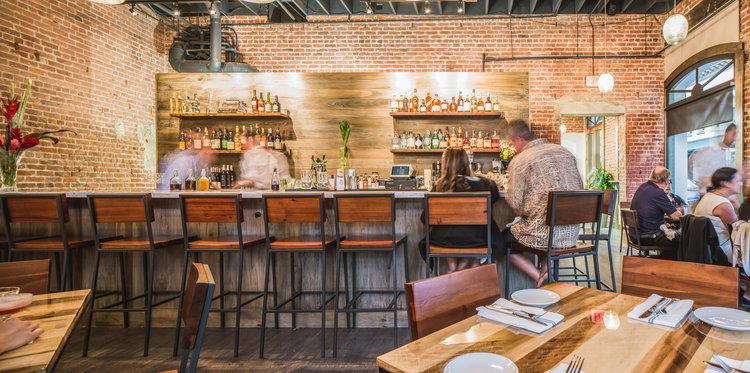
Cozy and intimate with intimate lighting, well-suited for quiet date nights inside or groups in the twinkling courtyard.