Onegin Dacha

On Prospekt Chekhova in central Rostov-on-Don, Onegin Dacha occupies a position in the city's more character-driven dining tier, where the dacha aesthetic and a southerly Russian pantry shape what reaches the table. Rostov sits at the agricultural crossroads of the Don steppe and the Black Sea basin, and restaurants drawing on that provenance carry a geographic authority that venues in more landlocked cities cannot replicate.
Pearl is the En Primeur Club membership app — saves, bookings, and concierge access live there. Same editors, same standards.
- Address
- Prospekt Chekhova, 45Б, Rostov-on-Don, Rostov Oblast, Russia, 344002
- Phone
- +78632018000
- Website
- facebook.com
- Directions
- Get directions
 Saves & bookings on Pearl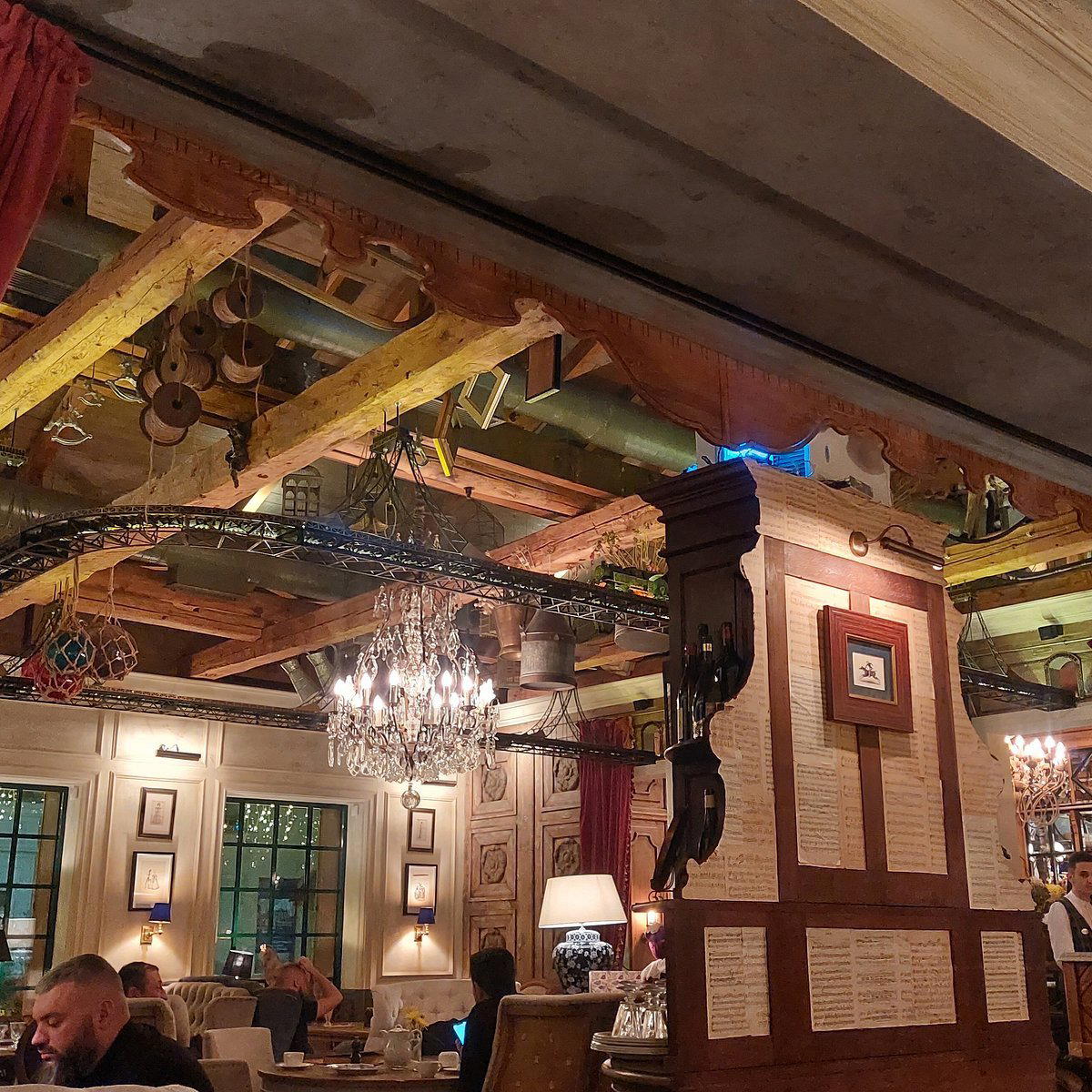
Where the Don Steppe Meets the Table
Prospekt Chekhova is one of Rostov-on-Don's more composed central addresses, a broad avenue where the city's pre-Soviet architectural fabric survives in patches between later construction. The dacha tradition it invokes is not purely decorative. In Russian dining culture, the dacha has long signalled a particular relationship with ingredients: seasonal, locally sourced, tied to a specific plot of land or region rather than to a wholesale market. Restaurants that adopt this framing are making an implicit promise about provenance, and in Rostov-on-Don, that promise carries specific geographic weight.
Rostov sits at one of Russia's most agriculturally productive intersections. The Don River basin to the north and east supplies freshwater fish, river crayfish, and riparian produce. To the south and west, the proximity to the Azov Sea and the broader Black Sea basin brings a coastal dimension to the pantry that cities further inland simply cannot replicate. The Krasnodar and Stavropol territories, within relatively close reach, contribute grains, sunflower-based products, dairy, and both cultivated and foraged vegetables across an extended growing season. For a restaurant framing itself through the dacha lens, this geography is the argument.
Sourcing as Editorial Position
The dacha concept in Russian cuisine functions as a kind of editorial stance on ingredients. It says: what grows here, what was preserved from last season, what the garden or the river provided. In a southern Russian context, that means a menu that can credibly rotate with the Don valley's seasons rather than defaulting to the consolidated supply chains that homogenise menus across Russian cities.
This places Onegin Dacha in a different competitive conversation from the pan-European modernist restaurants that have opened in Rostov-on-Don over the past decade. Those venues, many of them drawing inspiration from the contemporary Russian fine dining scene centred in Moscow and Saint Petersburg, tend to prioritise technique and presentation format. The dacha-register restaurant is making a different wager: that the reader of the menu cares first about where the sturgeon came from, or which farm supplied the tomatoes, before they care about what was done to them in the kitchen. Whether that wager pays off depends on execution, but the framing itself is a coherent one given the city's position in the Russian agricultural south.
For context, the modernist end of Russian dining, represented by venues like Twins Garden in Moscow or 1913 in Saint Petersburg, operates on different terms: high-technique, ingredient-as-canvas, with sourcing as one element of a larger compositional argument. The dacha register inverts that hierarchy. Sourcing is the argument, and the kitchen's job is to get out of the way.
Rostov-on-Don's Dining Position
Rostov-on-Don is Russia's largest southern city and a regional capital with a dining scene that has developed unevenly. The city has a concentrated hospitality strip along the Don embankment and a secondary cluster of more serious restaurant addresses in the central residential neighbourhoods, of which Prospekt Chekhova is one. The city sits between the gastronomic ambition of Moscow and Saint Petersburg on one hand and the more rustic, produce-led traditions of the Caucasus and the Cossack south on the other. That middle position is not a limitation; it is a productive tension.
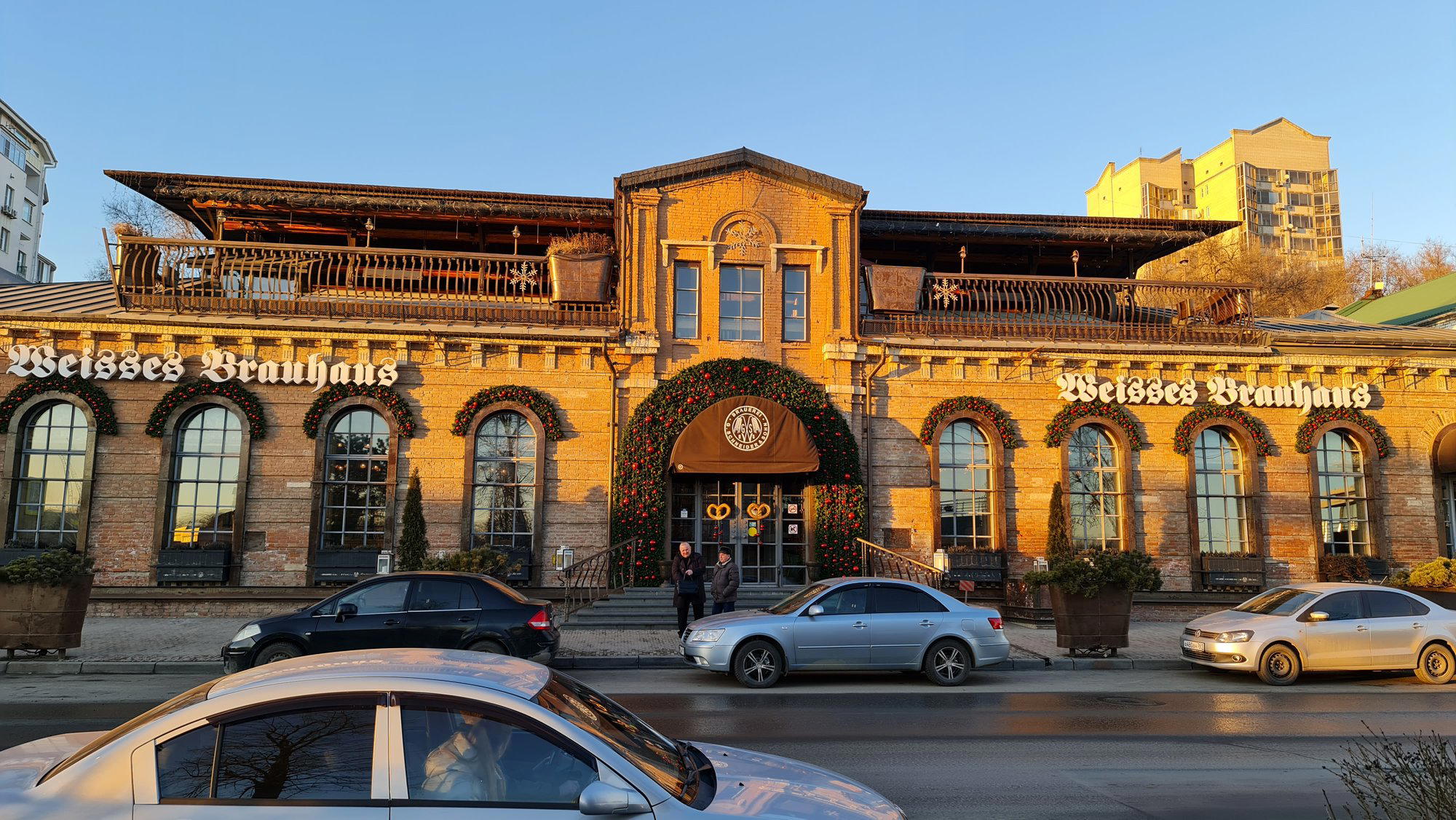
Locally, Rostov restaurants like Pinot Noir and Schneider-Weisse represent the city's more European-influenced tier, where wine lists and European technique frame the experience. Onegin Dacha operates at a different register, drawing on Russian and southern regional identity rather than looking west. Both tendencies coexist in a city that has enough dining traffic and cosmopolitan aspiration to sustain genuine variety. For a broader view of where Rostov-on-Don's dining scene sits as a whole, the EP Club Rostov-on-Don restaurants guide maps the full range.
Further afield in the Russian south, Alanskaya Kukhnya in Krasnodar represents a parallel impulse: the use of regional, Caucasus-adjacent ingredients as a primary identity marker rather than as background texture. Russian cities as different as Kukhterin in Tomsk, Grisha in Omsk, and Khmeli Suneli in Yekaterinburg have developed their own versions of this regionalist argument, each tethered to a different agricultural or culinary tradition. The southern Russian version, of which the dacha restaurant is one expression, has the advantage of geography: the pantry is genuinely richer here than in Siberia or the Urals.
The Dacha Register in Broader Russian Dining
Within Russian dining history, the dacha-and-estate framing has a long literary and cultural resonance, most obviously in the Pushkin-era romanticism that figures like Onegin embodied. The name itself signals a deliberate appeal to a pre-Soviet Russian identity, one associated with landed gentry, seasonal country life, and a particular idea of Russian abundance. That cultural positioning is common enough in Russian fine dining, from Cafe Pushkin in Moscow, which has operated in this register since 1999, to newer venues that invoke Russian literary or aristocratic heritage as a shorthand for quality and rootedness.
The risk in this positioning is that it becomes decorative rather than substantive: the aesthetic of a dacha without the actual sourcing discipline. The restaurants that make it work are those where the provenance claims are traceable and the menu changes reflect genuine seasonal availability rather than a fixed nostalgic tableau. Russian dining at its most serious, whether at the market-driven end represented by Lev I Ptichka in Saint Petersburg or the more European-inflected approaches of Made in China in St. Petersburg or Dzhani Restorani in Nizhny Novgorod, tends to succeed when identity and ingredient are genuinely aligned rather than one serving merely as backdrop for the other.
Planning Your Visit
Onegin Dacha is located at Prospekt Chekhova, 45Б in central Rostov-on-Don, within the city's residential and commercial core.
At-a-Glance Comparison
Comparable venues nearby, for context on price, style, and recognition.
| Venue | Cuisine | Price | Notes |
|---|---|---|---|
| Onegin DachaThis venue — the venue you are viewing | Russian Traditional Fine Dining | $$$$ | Not listed |
| Schneider-Weisse | German Brauhaus | $$ | central historical district |
| Pinot Noir | Author's French Fine Dining | $$$ | Pushkinskaya Street |
| Birch | Modern Fusion Tasting Menu | $$$ | Tsentralny District |
| Китайская грамота | Кантонская кухня | $$$ | Бульварное кольцо |
| Pyshechnaya | Russian Pyshechnaya (Donut Cafe) | $ | Nevskiy |
Recognition history
Dated appearances from independent guides and award organizations, with the underlying list record or original source where available.
La Liste Top Restaurants
La Liste
La Liste Top Restaurants
La Liste
Continue exploring
More in Rostov On Don
Restaurants in Rostov On Don
Browse all →
At a Glance
- Elegant
- Romantic
- Sophisticated
- Classic
- Date Night
- Business Dinner
- Special Occasion
- Celebration
- Private Dining
- Design Destination
- Extensive Wine List
- Local Sourcing
Current opening hours
- Monday
- 8 AM–12 AM
- Tuesday
- 8 AM–12 AM
- Wednesday
- 8 AM–12 AM
- Thursday
- 8 AM–12 AM
- Friday
- 8 AM–1 AM
- Saturday
- 8 AM–1 AM
- Sunday
- 8 AM–12 AM
Hours can change for holidays and private events. Last verified .
Stylish and cozy interior with seasonal decorations, featuring a small railway that runs through the dining space, creating an elegant yet warm atmosphere that transports guests to a different era.