Pinot Noir
On Pushkinskaya Ulitsa, one of Rostov-on-Don's most architecturally considered streets, Pinot Noir occupies a position in the city's mid-to-upper dining tier where European wine culture meets southern Russian hospitality. The name alone signals an editorial posture: this is a room that takes its cues from the grape rather than the steppe, placing it in a distinct niche within a city still defining its fine-dining identity.
Pearl is the En Primeur Club membership app — saves, bookings, and concierge access live there. Same editors, same standards.
- Address
- Pushkinskaya Ulitsa, 25, Rostov-on-Don, Rostov Oblast, Russia, 344082
- Phone
- +78632408138
- Website
- pinot-noir.ru
- Directions
- Get directions
 Saves & bookings on Pearl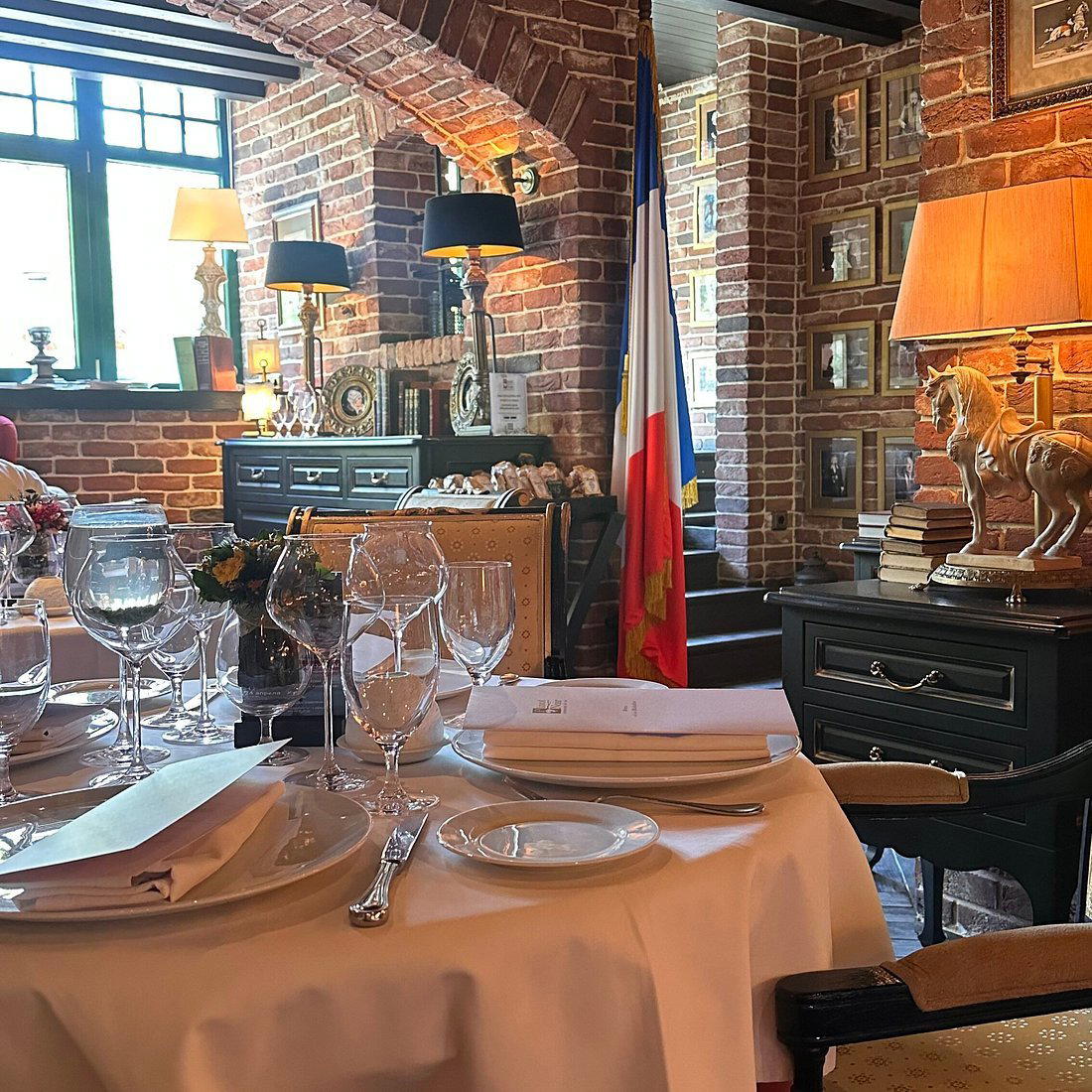
Pushkinskaya and the Grammar of Rostov Dining
Rostov-on-Don is not a city that announces itself to international food media with the frequency of Moscow or Saint Petersburg. That relative quiet is, in part, what makes its upper dining tier worth reading carefully. Pushkinskaya Ulitsa, where Pinot Noir sits at number 25, is among the city's most legible addresses for serious eating: a tree-lined boulevard whose 19th-century facades have attracted the kind of restaurant that wants to signal something beyond mere sustenance. The street functions, in the local imagination, something like what Tverskaya once did for Moscow's emerging restaurant class, a place where the physical environment does part of the editorial work before a guest even opens the door.
Southern Russia's restaurant culture has, over the past decade, moved through a recognizable sequence: the post-Soviet brasserie phase, the European import phase, and now a more considered period in which operators in cities like Rostov are asking what regional identity actually means on a plate. Pinot Noir's name positions it at an interesting intersection of that question. The grape variety, associated with Burgundy and cool-climate precision, is a deliberate choice of reference for a restaurant operating in a city whose own wine region, the Don River corridor, is historically associated with hardier, less internationally legible varieties. That tension between local geography and cosmopolitan aspiration is, in fact, the central cultural argument that restaurants like this one are making in provincial Russian cities right now.
The Cultural Weight of a Wine Name
Naming a restaurant after a grape variety rather than a chef, a neighborhood, or a literary figure carries specific implications. It aligns the dining room with a product category, fine wine, restraint, European technique, and sets an expectation about the room's register before a single dish arrives. Across Russia's regional cities, this approach has become a recognizable signal. In Yekaterinburg, Khmeli Suneli takes the opposite route, anchoring itself in a Georgian spice blend and the Caucasian culinary tradition. In Nizhny Novgorod, Dzhani Restorani draws from a different regional idiom entirely. Pinot Noir's choice to name itself after a French grape variety places it in a comparable set that is consciously European in orientation, even as it operates deep inside Russia's southern heartland.
That orientation matters because it shapes the guest's interpretive frame from the moment of booking. European wine culture carries a set of assumptions: measured pacing, considered pairings, service that defers to the glass as much as the plate. Whether a given kitchen can deliver on that implicit promise is a separate question from whether the name successfully communicates the intention. In the mid-tier of regional Russian dining, the gap between the signal and the execution is often where the interesting critical work happens. Rostov's dining scene is at a stage where that gap is narrowing, and Pinot Noir, by its address and its name, is one of the restaurants making that argument most explicitly.
Rostov in the Russian Regional Context
To understand where the restaurant sits, it helps to map Rostov against the broader pattern of Russian regional dining. Moscow's upper tier, represented by operations like Twins Garden, with its rigorous sourcing philosophy and documented critical recognition, sets a benchmark that filters down into secondary cities over a lag of roughly five to eight years. Saint Petersburg operates on a parallel track, with places like 1913 sustaining a different kind of historical-restaurant tradition rooted in pre-Revolutionary aesthetics. Rostov-on-Don, as a city of just over a million people and a significant trade and logistics hub, sits in a third category: large enough to support serious restaurants, but without the density of international tourism or corporate expense accounts that accelerates fine-dining development in the capitals.
That positioning creates a specific kind of opportunity. Restaurants in cities like Rostov are not competing for Michelin inspector visits in the near term. They are instead building the cultural infrastructure, wine lists, service training, kitchen technique, that positions the city for the next phase of recognition. Within Rostov itself, the comparison set includes Onegin Dacha, which occupies a more Russian-literary register, and Schneider-Weisse, which anchors itself in Central European brewing culture. The restaurant occupies a distinct niche within that local constellation: the wine-led European room, with all the curatorial work that implies. For a fuller picture of where this fits in the city's dining ecology, see our full Rostov-on-Don restaurants guide.
What the Address Tells You
Pushkinskaya Ulitsa 25 is a specific kind of address in Rostov. The street is a pedestrian-friendly boulevard, well-preserved by the standards of southern Russian urbanism, and it draws a mix of residents, students from nearby institutions, and the city's professional class. That demographic mix shapes the room's likely register: this is not an expense-account dining room insulated from local economic reality, but nor is it a casual neighborhood spot. It occupies the productive middle ground where wine knowledge is assumed but not performatively tested, and where the European orientation of the menu reads as aspiration rather than affectation. For visitors arriving from outside the city, Pushkinskaya is walkable from the central hotel district, making the restaurant a logical anchor for an evening that begins or ends on the boulevard.
The broader pattern of European-named, wine-focused restaurants on prestige streets in Russian regional cities is worth noting as a trend. From Cafe Pushkin in Moscow, which perfected the literary-historical register, to more recent openings in Siberian cities like Grisha in Omsk and Kukhterin in Tomsk, there is a coherent pattern of serious restaurants in non-capital Russian cities using European cultural references as anchoring devices while building an audience for more considered dining. The restaurant fits that pattern and, by its placement on one of Rostov's most prominent public streets, makes a relatively confident bet that the audience exists.
Planning Your Visit
The restaurant is located at Pushkinskaya Ulitsa, 25, Rostov-on-Don, Rostov Oblast 344082. Current booking details, hours, and pricing are best confirmed directly with the restaurant, as contact information and online booking options were not available at the time of writing. For visitors to Rostov, the Pushkinskaya corridor rewards an evening on foot: the boulevard's concentration of restaurants means that if one venue is at capacity, alternatives are within a short walk.
Cost Snapshot
Comparable venues nearby, for context on price, style, and recognition.
| Venue | Cuisine | Price | Notes |
|---|---|---|---|
| Pinot NoirThis venue — the venue you are viewing | Not listed | $$$ | Not listed |
| Onegin Dacha | Not listed | $$$$ | Central Rostov, Russian Traditional Fine Dining |
| Schneider-Weisse | Not listed | $$ | central historical district, German Brauhaus |
| Confectionary Pushkin | Not listed | $$$ | Tverskoy District, French Patisserie & Confectionery |
| Cafe Pushkin (Кафе Пушкинъ) | Tverskoy, Russian Noble Cuisine | $$$$ | Not listed |
| Kazbek | Presnensky, Authentic Georgian | $$ | Not listed |
Continue exploring
More in Rostov On Don
Restaurants in Rostov On Don
Browse all →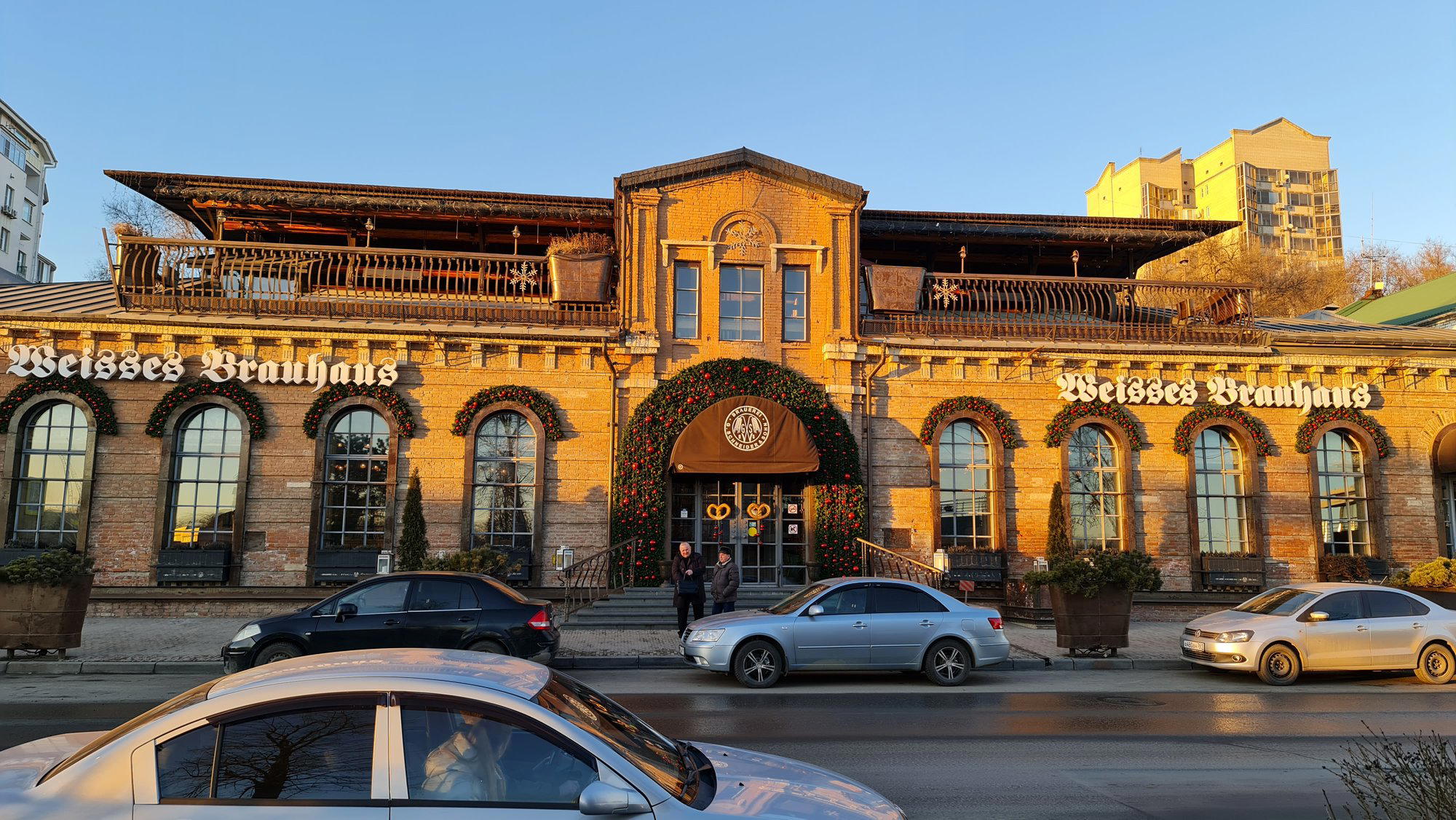
At a Glance
- Elegant
- Cozy
- Romantic
- Sophisticated
- Date Night
- Special Occasion
- Business Dinner
- Live Music
- Open Kitchen
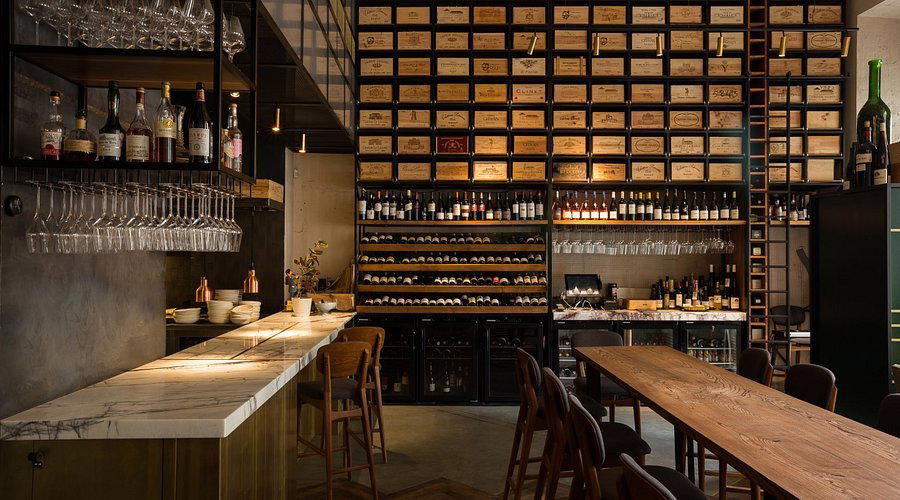
- Extensive Wine List
- Sommelier Led
Current opening hours
- Monday
- 12 PM–12 AM
- Tuesday
- 12 PM–12 AM
- Wednesday
- 12 PM–12 AM
- Thursday
- 12 PM–12 AM
- Friday
- 12 PM–1 AM
- Saturday
- 12 PM–1 AM
- Sunday
- 12 PM–12 AM
Hours can change for holidays and private events. Last verified .
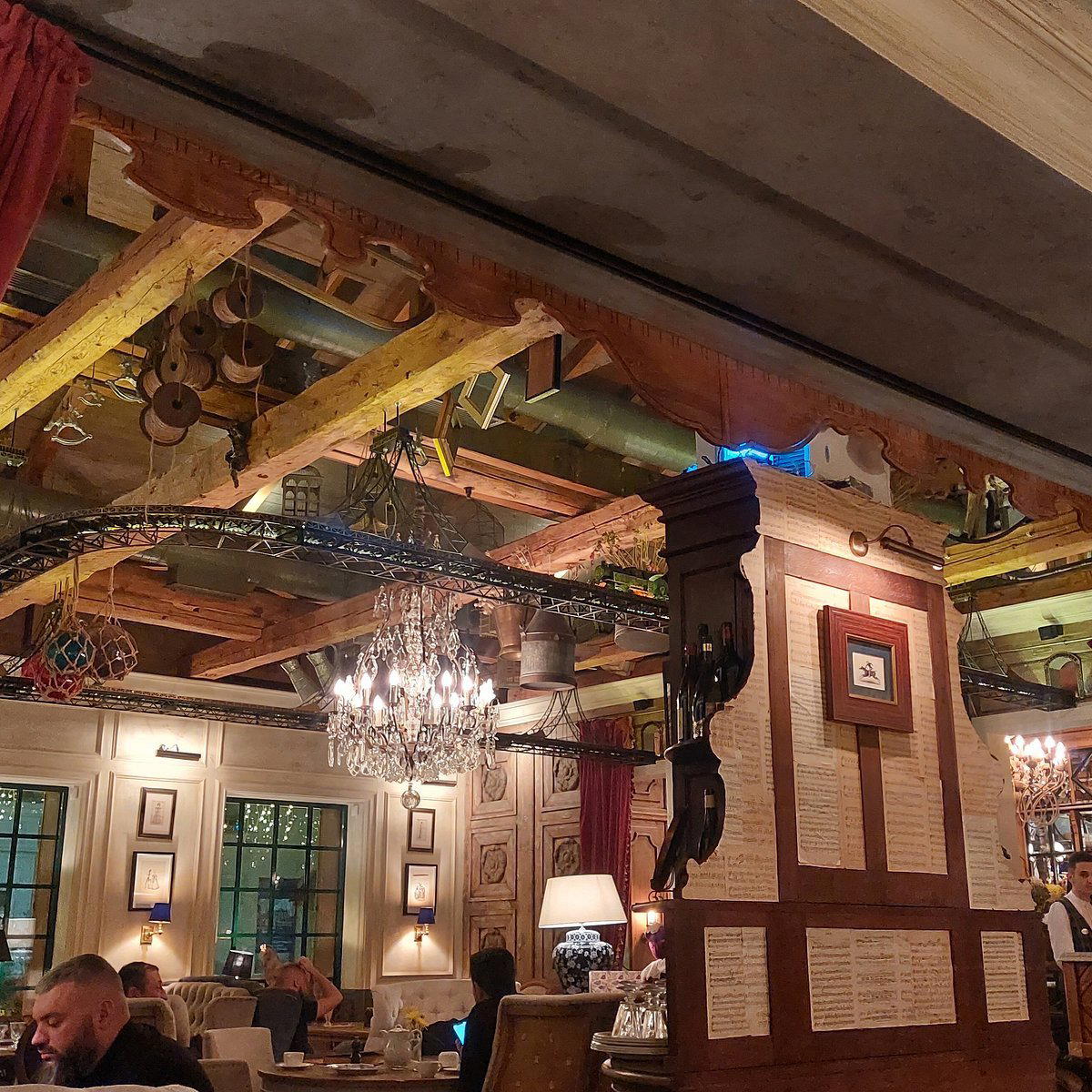
Stylish and cozy with exposed brick walls, crystal chandeliers, white tablecloths, and live music creating a sophisticated French atmosphere.