Ocaña occupies a prime corner of Plaça Reial, one of Barcelona's most theatrically staged public squares, where the ritual of sitting outdoors with a drink or meal is as much about the space as the plate. The terrace operates as a social institution in Ciutat Vella, drawing a cross-section of locals and visitors into a format where the pace is set by the square, not the kitchen.
Pearl is the En Primeur Club membership app — saves, bookings, and concierge access live there. Same editors, same standards.
- Address
- Pl. Reial, 13-15, Ciutat Vella, 08002 Barcelona, Spain
- Phone
- +34 936 76 48 14
- Website
- ocana.cat
- Directions
- Get directions
 Saves & bookings on Pearl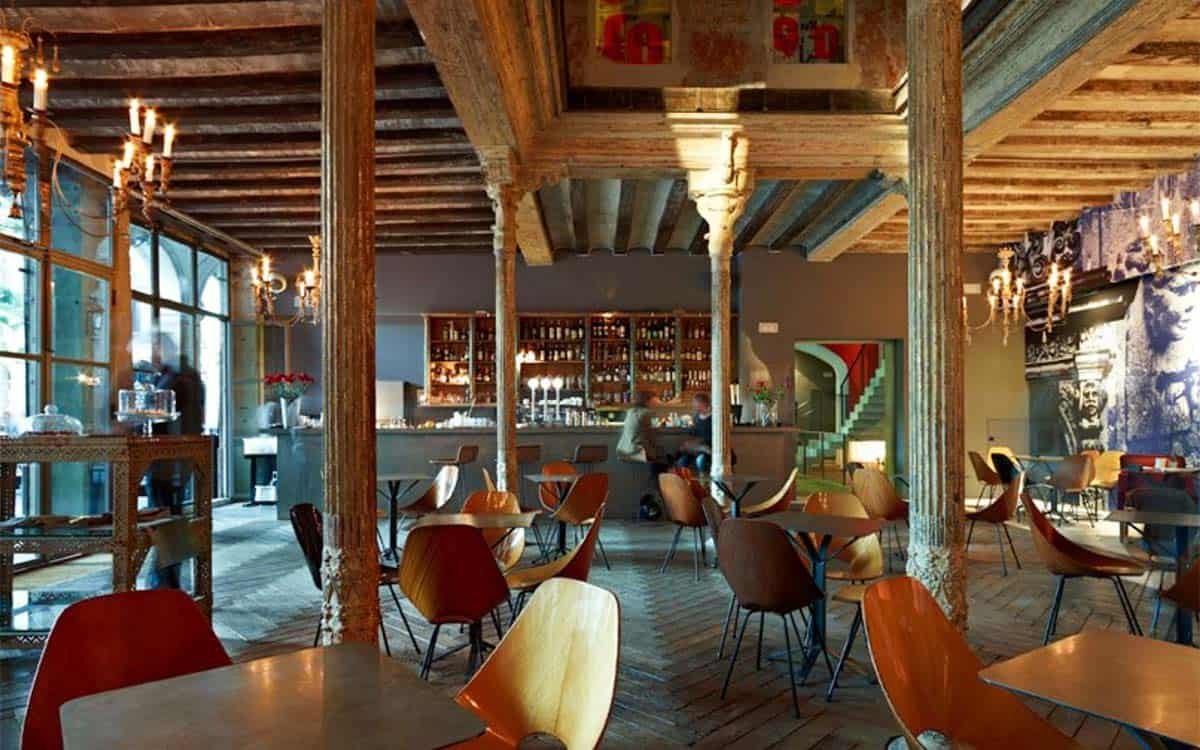
Plaça Reial and the Architecture of the Outdoor Meal
Barcelona has a particular gift for turning public squares into dining rooms, and Plaça Reial is among the more architecturally persuasive examples. The colonnaded neoclassical arcade wraps the square on all sides, providing both shade and a theatrical frame for the tables that extend outward from the ground-floor establishments. At Ocaña, positioned at numbers 13 to 15 on the plaza, this setting is the first and most insistent statement the venue makes. You arrive through the square itself, crossing Gaudi-designed lampposts and a central fountain before reaching a terrace where the boundary between restaurant and public space is deliberately porous. The ritual of eating or drinking here begins before you sit down.
This matters for how you approach a visit. Plaça Reial operates on a different rhythm than a dining room: the square sets the pace, and Ocaña works within it rather than against it. This is not a venue that structures the meal into tight courses with controlled timing. The experience is looser, socially oriented, and shaped as much by who else is in the square that evening as by what arrives on the table. Understanding this going in changes what you notice and what you order.
The Ritual of the Barcelona Terrace
The outdoor terrace tradition in Barcelona runs through almost every neighbourhood, but Plaça Reial's version has a particular weight behind it. The square sits just off Las Ramblas in Ciutat Vella, which means it carries the foot traffic of one of Europe's most-visited corridors while maintaining enough architectural coherence to feel self-contained once you're inside it. Ocaña's position on this square places it at the intersection of two overlapping dining cultures: the local habit of drinking and eating across two or three hours without a fixed structure, and the tourist-adjacent appetite for a set-piece location.
The way to read Ocaña within Barcelona's broader dining scene is to separate it cleanly from the city's fine dining tier. Venues like Disfrutar (Progressive, Creative), Cocina Hermanos Torres (Creative), and ABaC (Creative) operate in an entirely different register, one defined by tasting menus, controlled environments, and considerable advance planning. Lasarte (Progressive Spanish, Creative) and Enigma (Creative) similarly belong to a structured, high-commitment tier that shapes the entire evening around the meal. Ocaña belongs to a different category: the plaza institution, where the location and the social energy carry as much weight as the menu, and where dropping in for cocktails and staying for food is as valid a use of the space as arriving with a reservation.
How the Evening Tends to Unfold
Venue operates across multiple formats under one roof: the terrace, an interior bar, and what functions as a more formal dining area. The natural flow for a first visit is to start on the terrace in the later afternoon, when the square is animated but not yet at its noisiest, and to move inward or linger depending on the evening's direction. This graduated approach to the space reflects how Barcelona residents actually use places like this, rather than how visitors tend to approach them, which is usually with a fixed dinner-at-eight mentality that works against the venue's grain.
Cocktails occupy a serious position in Ocaña's format. The bar program aligns with a broader shift in Barcelona's drinking culture, where the distinction between a bar visit and a restaurant visit has become increasingly fluid. This mirrors patterns visible in other Spanish cities: Ricard Camarena in València and venues around the old quarter in San Sebastián demonstrate how one interesting use of a space is often neither purely drinking nor purely dining but the negotiated territory in between. At Ocaña, that territory is the terrace at dusk.
Ocaña in the Wider Spanish Context
Spain's restaurant scene is dominated, internationally, by its tasting-menu institutions. El Celler de Can Roca in Girona, Mugaritz in Errenteria, Arzak in San Sebastián, Quique Dacosta in Dénia, Azurmendi in Larrabetzu, Martin Berasategui in Lasarte-Oria, Aponiente in El Puerto de Santa María, and DiverXO in Madrid define a tier of Spanish dining that requires careful advance booking, significant financial commitment, and a specific kind of mental preparation. Atrio in Cáceres adds architectural and wine cellar credentials to that same rarefied tier.
Ocaña operates nowhere near that level of formality or ambition, and that is precisely its function within a well-planned Barcelona itinerary. A visitor who spends an evening at Disfrutar or Lasarte needs somewhere to decompress, to drink without ceremony, and to experience Barcelona as a city of plazas and light rather than as a sequence of tasting courses. Plaça Reial provides that counterweight, and Ocaña, as one of the square's most prominent occupants, is the natural expression of it. The same argument applies to international comparisons: the communal dining ritual at Lazy Bear in San Francisco or the refined seafood focus of Le Bernardin in New York City represent entirely different relationships between diner and space. Ocaña's version of hospitality is about absorption into a public environment, not insulation from it.
Planning a Visit
Plaça Reial draws considerable foot traffic year-round, which means Ocaña's terrace is rarely quiet outside of early afternoon. The square's character shifts across seasons: cooler months allow for a more composed experience on the terrace, while summer evenings compress arrival times and raise ambient noise levels considerably. Arriving before 20:00 on weekdays gives you a stronger chance of a terrace position without the weekend-night crush. For those combining Ocaña with Barcelona's fine dining circuit, the venue works well as a starting point for an evening that moves deeper into Ciutat Vella, or as a closing stop after an earlier dinner elsewhere. No advance reservation intelligence is available through public sources, so checking current booking options directly is advisable for larger groups. See our full Barcelona restaurants guide for the wider context on how to structure a multi-day dining itinerary across the city.
Side-by-Side Snapshot
Comparable venues nearby, for context on price, style, and recognition.
| Venue | Cuisine | Price | Notes |
|---|---|---|---|
| OcañaThis venue — the venue you are viewing | Mediterranean Tapas with Bohemian Flair | $$ | Not listed |
| Lady Babka Bistrot | French Pâtisserie with Mediterranean Influences | $$ | Sant Gervasi - Galvany |
| Soma restaurant | Modern Mediterranean with Italian Influences | $$ | l'Antiga Esquerra de l'Eixample |
| La Dentellière | Mediterranean Tapas & Small Plates | $$ | Barri Gotic |
| Minyam | Modern Mediterranean Rice & Seafood | $$ | el Poblenou |
| Sal Mar | Mediterranean Fusion with Paella | $$ | la Barceloneta |
Continue exploring
More in Barcelona
Restaurants in Barcelona
Browse all →
Bars in Barcelona
Browse all →
Hotels in Barcelona
Browse all →
At a Glance
- Bohemian
- Trendy
- Elegant
- Lively
- Date Night
- Casual Hangout
- Late Night
- Terrace
- Live Music
- Open Kitchen
- Craft Cocktails
- Local Sourcing
- Street Scene
Current opening hours
- Monday
- 8:30 AM–3 AM
- Tuesday
- 8:30 AM–3 AM
- Wednesday
- 8:30 AM–3 AM
- Thursday
- 8:30 AM–3 AM
- Friday
- 8:30 AM–3 AM
- Saturday
- 8:30 AM–3 AM
- Sunday
- 8:30 AM–3 AM
Hours can change for holidays and private events. Last verified .
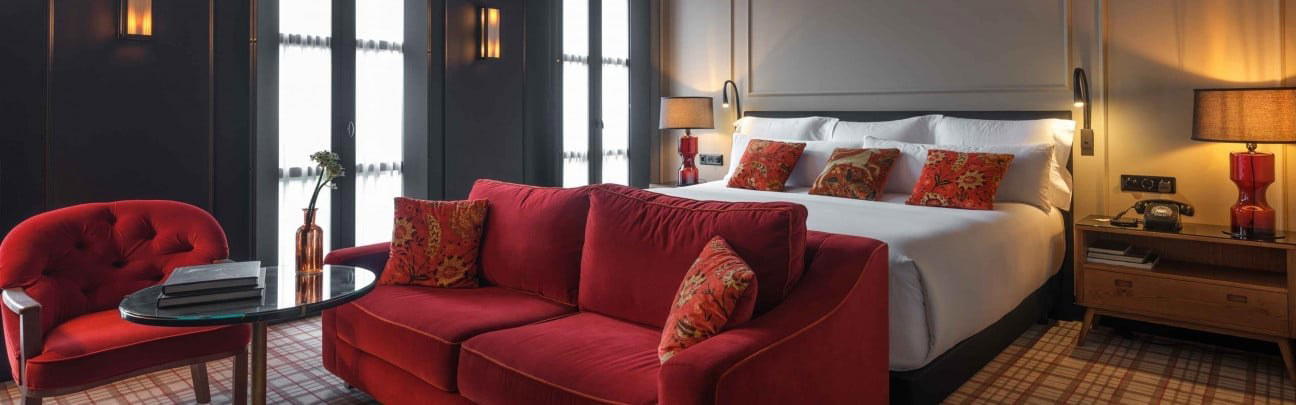
Ornate interiors evoking faded theatre glamour with chandeliers, red velvet seating, wooden floors, and contemporary art, creating a charming yet lively atmosphere.