Lady Babka Bistrot occupies a quiet address in Sarrià-Sant Gervasi, one of Barcelona's most residential and least tourist-trafficked districts. The bistrot format sits at a different register from the city's headline tasting-menu rooms, drawing a loyal neighbourhood crowd that returns for the kind of consistency that formal dining rarely delivers. For visitors willing to move beyond the Eixample circuit, it represents a grounded alternative.
Pearl is the En Primeur Club membership app — saves, bookings, and concierge access live there. Same editors, same standards.
- Address
- Carrer de Santa Fe de Nou Mèxic, 18, Sarrià-Sant Gervasi, 08017 Barcelona, Spain
- Phone
- +34931267051
- Website
- opentable.com
- Directions
- Get directions
 Saves & bookings on Pearl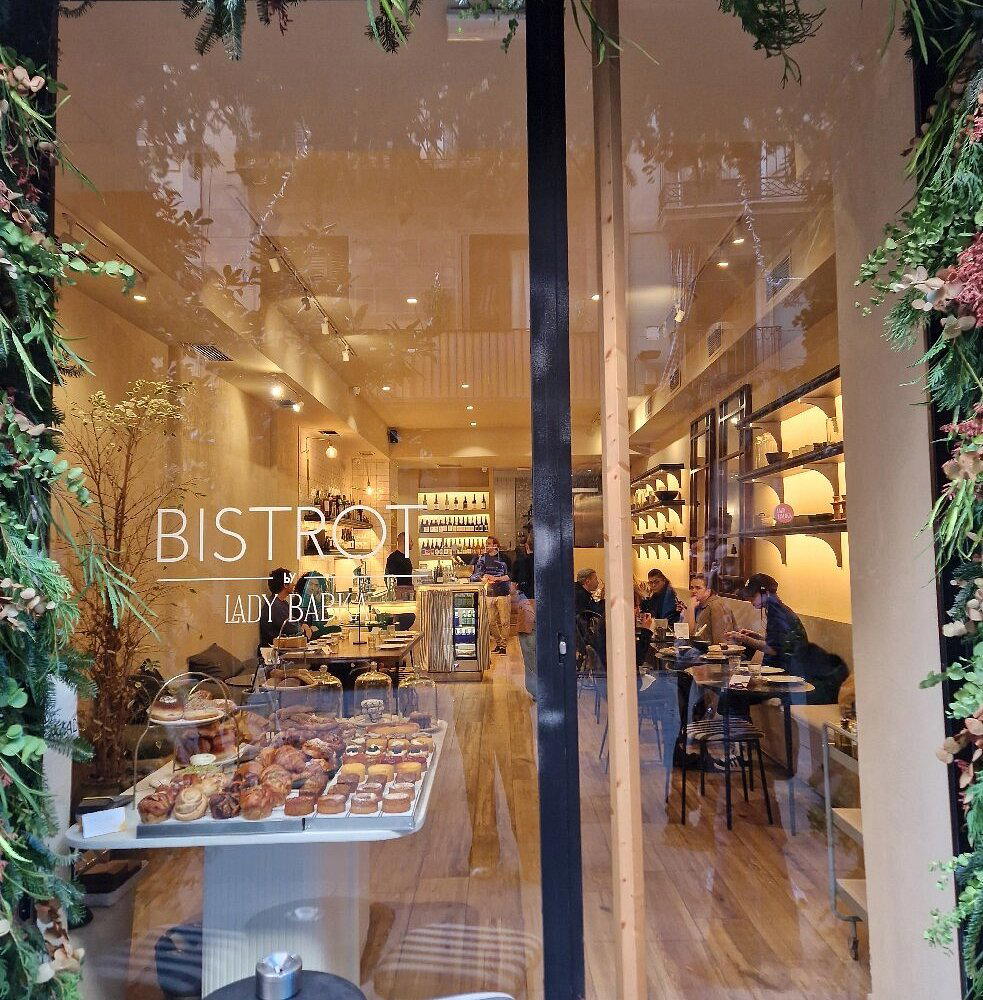
A Neighbourhood Register That Barcelona's Dining Scene Needs
Sarrià-Sant Gervasi is the part of Barcelona where residents actually live, not the Barcelona of Gaudí pilgrimage routes or Eixample expense-account dinners, but a quieter, more residential city of tree-lined streets, local markets, and a dining culture shaped by people who eat in the same places twice a week rather than once in a lifetime. Carrer de Santa Fe de Nou Mèxic sits inside that fabric. The street is unhurried, the buildings domestic in scale, and the clientele at Lady Babka Bistrot reflects the neighbourhood: people who have already made up their minds about where they trust and come back accordingly.
That regulars-first dynamic shapes how the bistrot functions in practice. The format belongs to a category of Barcelona dining that rarely generates international press, not because the food is unremarkable, but because the model is built around depth of relationship rather than breadth of reach. The city's marquee creative restaurants, from Disfrutar (Progressive, Creative) to Enigma (Creative), operate on a different logic: destination-driven, internationally booked, designed to deliver a complete theatrical experience to guests who may never return. A neighbourhood bistrot in Sarrià works from the opposite assumption, that the guest will be back next week and the week after, and that the kitchen needs to earn that loyalty through steadiness and attentiveness rather than spectacle.
What the Loyal Clientele Actually Comes Back For
In Barcelona's upper-residential districts, the bistrot format has developed its own vernacular. It borrows from French bistrot tradition, relaxed service, a shorter menu with genuine daily variation, an emphasis on sourcing over elaboration, but grafts onto it the local expectation of ingredient quality that Catalan dining culture enforces at every price tier. A neighbourhood crowd in Sarrià has options. They are not coming because Lady Babka is the only place within walking distance; they are coming because the kitchen has given them reasons to return.
That kind of repeat custom is earned through specifics rather than concepts. In neighbourhood bistrot culture generally, what builds the unwritten menu, the off-card requests, the dishes that regulars know to ask for on particular days, is consistency of sourcing and kitchen rhythm. A counter that sells out of something tells you more about its procurement discipline than a menu that lists the same twelve dishes year-round. Regulars at this kind of address learn the calendar of the kitchen the way they learn the rhythms of their local market.
Barcelona's upper-residential dining scene sits in a broader context worth noting: Spain's most decorated kitchens cluster in the north and northeast, and the infrastructure of serious eating runs deep across the country. El Celler de Can Roca in Girona and Martin Berasategui in Lasarte-Oria represent one end of that spectrum, internationally benchmarked, Michelin-decorated, and priced accordingly. Arzak in San Sebastián and Azurmendi in Larrabetzu occupy similar territory. What that high-end concentration has done for the broader Spanish dining culture is raise expectations at every level, including the neighbourhood bistrot, where informed local guests bring the same ingredient literacy they would bring to a tasting-menu room.
Barcelona's Creative Tier and Where the Bistrot Format Sits
Within Barcelona itself, the creative fine-dining tier is well-mapped. ABaC (Creative) and Lasarte (Progressive Spanish, Creative) anchor the city's upper bracket alongside Cocina Hermanos Torres (Creative), all operating at the €€€€ tier with the awards infrastructure to match. Lady Babka Bistrot does not compete in that register. It occupies a different tier and a different geography, Sarrià rather than the Eixample hotel corridor, and addresses a different question: not what the city's cooking can achieve at its most technically ambitious, but what a neighbourhood kitchen can offer to people who are there not as guests but as regulars.
That distinction matters more in Barcelona than in cities where neighbourhood dining lacks ambition. Catalan cooking has a strong larder tradition, the Boqueria, the neighbourhood mercats, the deeply embedded relationship between Catalan kitchens and seasonal Pyrenean and coastal produce, and a bistrot that taps into that tradition competently can deliver meals that compare favourably with more celebrated addresses on a cost-per-satisfaction basis. The point is not that neighbourhood bistrots are a compromise; in the right hands, the format is simply a different mode of seriousness.
For context on what serious Spanish cooking at the coastline looks like beyond Barcelona, Aponiente in El Puerto de Santa María and Quique Dacosta in Dénia represent the southern and Valencian poles of that ambition. Ricard Camarena in València occupies similar prestige territory on the eastern coast. Mugaritz in Errenteria and DiverXO in Madrid push into more experimental territory. These references help place the national ambition level; Lady Babka Bistrot addresses none of those ambitions and is better understood in relation to its street and its regulars than to any national benchmark. For our full assessment of where to eat across the city, see our full Barcelona restaurants guide.
Planning Your Visit
The restaurant is located at Carrer de Santa Fe de Nou Mèxic, 18, in the Sarrià-Sant Gervasi district of Barcelona (08017). The address is comfortably accessible from the upper parts of the city via public transport, and the residential setting means street parking is more available than in the Eixample or Gothic Quarter. The venue is walk-in friendly, and current hours run Mon-Sat 9 AM-11 PM and Sun 9 AM-10 PM. The Sarrià area rewards an unhurried approach, arriving early enough to walk the neighbourhood before a meal gives useful context for understanding why a bistrot at this address has built the following it has.
Cuisine and Awards Snapshot
Comparable venues nearby, for context on price, style, and recognition.
| Venue | Cuisine | Price | Notes |
|---|---|---|---|
| Lady Babka BistrotThis venue — the venue you are viewing | French Pâtisserie with Mediterranean Influences | $$ | Not listed |
| Fragments | Mediterranean Tapas | $$ | les Corts |
| Claudia | Mediterranean Catalan | $$ | Sant Gervasi - la Bonanova |
| Nonna Delia | Mediterranean Vermuteria with Italian-Spanish Fusion | $$ | la Sagrada Familia |
| Momo Avinyó | Mediterranean Tapas & Paella | $$ | Barri Gotic |
| Port Vela Barcelona | Mediterranean Seafood & Paella | $$ | Port Vell |
Continue exploring
More in Barcelona
Restaurants in Barcelona
Browse all →
Bars in Barcelona
Browse all →
Hotels in Barcelona
Browse all →
At a Glance
- Cozy
- Elegant
- Modern
- Brunch
- Casual Hangout
- Solo
- Date Night
- Family
- Standalone
- Terrace
- Craft Cocktails
- Street Scene
Current opening hours
- Monday
- 9 AM–11 PM
- Tuesday
- 9 AM–11 PM
- Wednesday
- 9 AM–11 PM
- Thursday
- 9 AM–11 PM
- Friday
- 9 AM–11 PM
- Saturday
- 9 AM–11 PM
- Sunday
- 9 AM–10 PM
Hours can change for holidays and private events. Last verified .
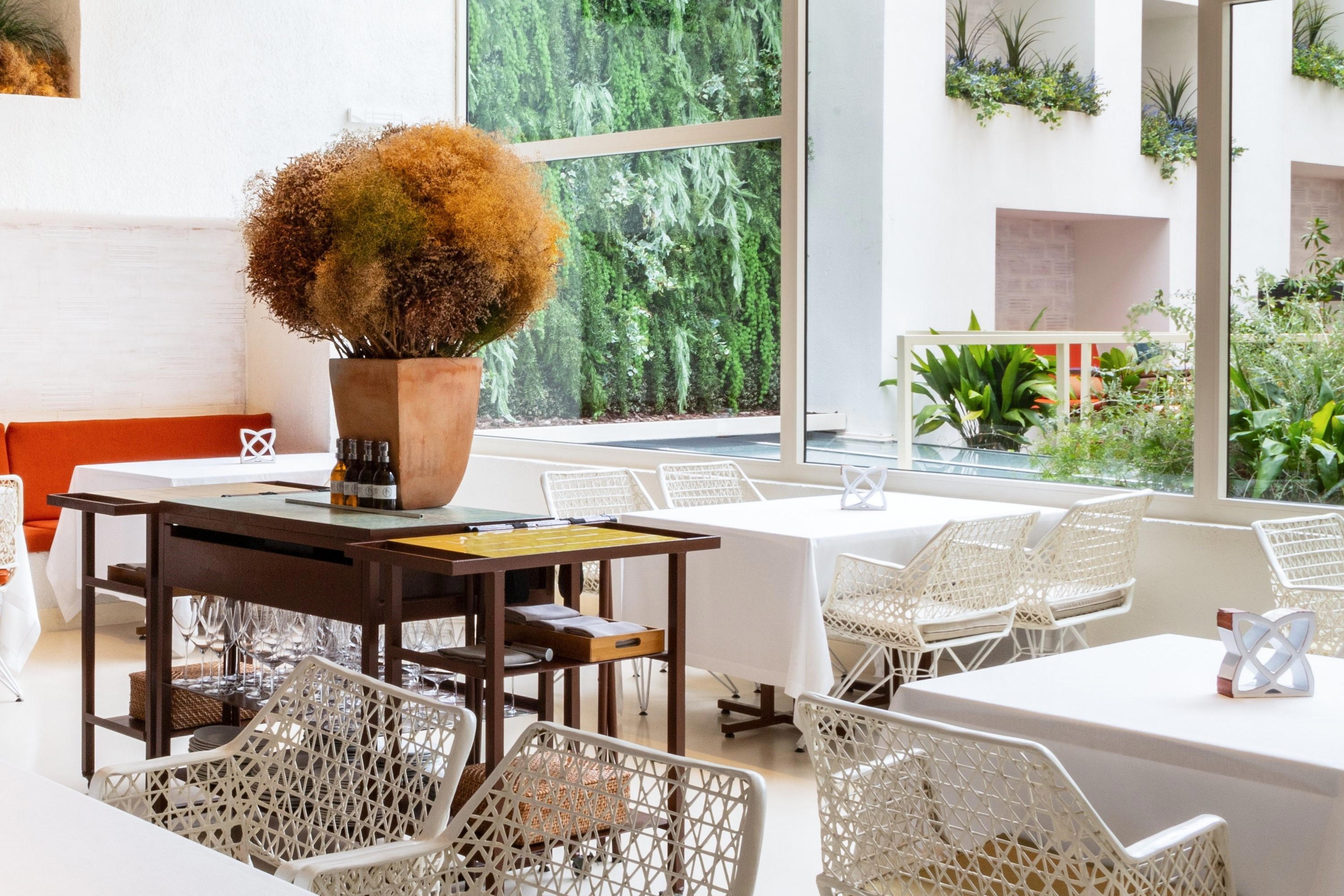
Refined and elegant interior with tasteful arrangement, bright and welcoming with natural light from street-facing windows, relaxed yet sophisticated atmosphere suitable for lingering.