A neighbourhood address on Carrer de Pujades in Sant Martí, Minyam draws a loyal local following in a Barcelona district better known for its design studios and Rambla del Poblenou than its restaurant density. The venue sits in a different register from the city's high-profile creative kitchens, making it a reference point for readers tracking where Barcelona eats when it isn't performing for tourists.
Pearl is the En Primeur Club membership app — saves, bookings, and concierge access live there. Same editors, same standards.
- Address
- Carrer de Pujades, 187, Sant Martí, 08005 Barcelona, Spain
- Phone
- +34 699 34 52 34
- Website
- minyambcn.com
- Directions
- Get directions
 Saves & bookings on Pearl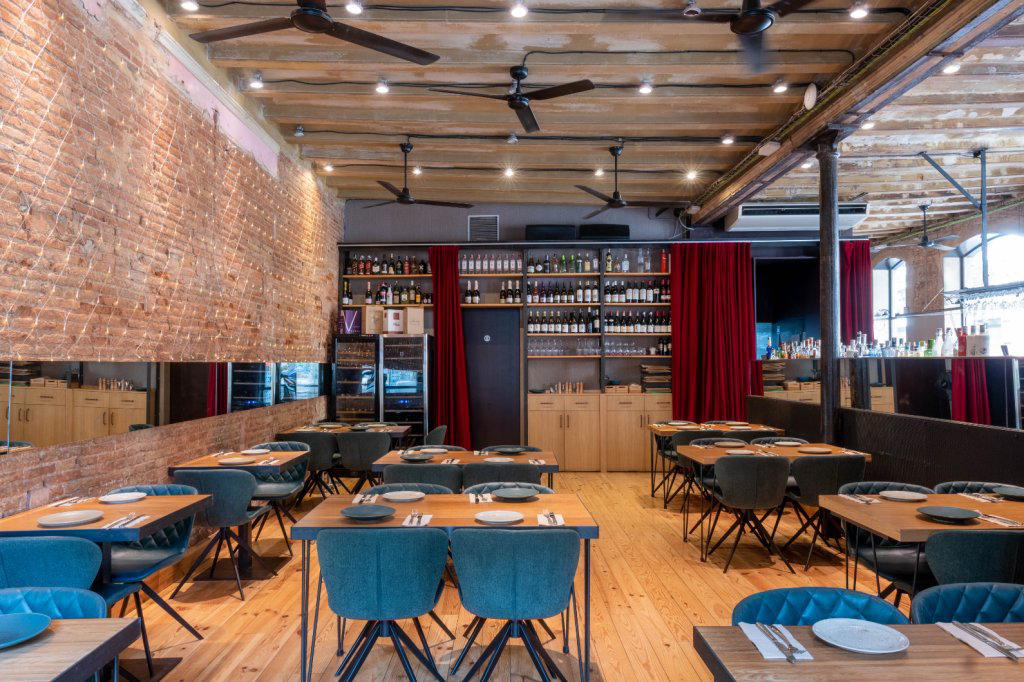
Sant Martí and the Restaurants That Don't Need to Try Hard
There is a particular kind of Barcelona restaurant that operates entirely outside the city's promotional apparatus. No tasting-menu press cycle, no starred-chef Instagram feed, no reservations platform with a months-long queue. These addresses survive, and in some cases thrive, because a fixed group of people returns consistently, often enough that the kitchen learns what they want before they order it. Minyam, on Carrer de Pujades in Sant Martí, sits in that category. The street runs through Poblenou, a district that spent two decades absorbing design agencies, co-working spaces, and the city's creative-industry overflow. The result is a neighbourhood with a resident population that has actual lunch breaks and genuine dinner habits, not tourist itineraries.
Sant Martí's dining scene has developed differently from Eixample or the Gothic Quarter. Fewer white tablecloths, fewer prix-fixe monuments, more addresses where the regulars are local and the kitchen is calibrated to them. That context matters when placing Minyam. It is not competing in the tier occupied by Disfrutar, Cocina Hermanos Torres, or ABaC. The comparison set is entirely different: neighbourhood tables where consistency over years earns more credibility than any single review cycle.
The Regulars' Logic
Loyal clientele at neighbourhood restaurants tend to reveal the kitchen's actual strengths faster than any critical assessment. What keeps people returning is rarely the dish that photographs well for a menu launch, it is the thing the kitchen does reliably, the preparation that arrives the same way on a Tuesday in February as it does on a Saturday in July. In Poblenou's working-week rhythm, that reliability carries real weight. The district's population skews toward people who eat out frequently by habit rather than occasion, which means the kitchen accumulates feedback and adjusts over time in ways that destination restaurants, serving largely transient clientele, cannot.
This is the dynamic that produces what regulars sometimes call the unwritten menu: preparations that aren't necessarily listed but are understood to be available, adjustments that happen without being requested, and a general fluency between kitchen and regular that takes months of repeat visits to build. The address profile, a neighbourhood table in a residential-commercial street in a district with genuine local density, is precisely the environment where that kind of relationship develops.
Poblenou as Context
Understanding why a restaurant earns loyalty in Poblenou requires understanding what the neighbourhood is and is not. The Rambla del Poblenou functions as a secondary promenade, quieter and more local than Las Ramblas, lined with cafés that serve the people who actually live there. The former industrial fabric, converted warehouses, the old @22 innovation district designation, has made Poblenou one of the more genuinely mixed neighbourhoods in Barcelona: residents, workers, and a growing cultural infrastructure that includes galleries and independent cinemas alongside the restaurant stock. Carrer de Pujades itself is a residential artery that runs parallel to the waterfront, with the kind of foot traffic that sustains a neighbourhood table without requiring destination-diner volume.
Barcelona's broader dining geography splits between the tourist-facing restaurant belt along the Gothic Quarter and Barceloneta, the high-end creative kitchens concentrated in Eixample and Les Corts, and the neighbourhood addresses distributed across districts like Gràcia, Sant Antoni, and Poblenou. The last group is the hardest to track from outside the city, because its reputation is built almost entirely through word of mouth among residents rather than through press coverage or award cycles.
Spain's Wider Restaurant Conversation
Barcelona's neighbourhood table culture exists alongside among the more concentrated fine-dining ecosystems in Europe. Spain's starred kitchens include El Celler de Can Roca in Girona, Mugaritz in Errenteria, and Arzak in San Sebastián, addresses that define how Spain's kitchen culture is perceived internationally. Within Barcelona itself, Lasarte and Enigma anchor the city's progressive end. That ecosystem produces a kind of trickle-down effect on neighbourhood cooking: technique and ingredient awareness that might once have been confined to high-end kitchens now circulate more widely. Azurmendi in Larrabetzu, Quique Dacosta in Dénia, Martin Berasategui, Aponiente in El Puerto de Santa María, Ricard Camarena in València, DiverXO in Madrid, and Atrio in Cáceres all represent different facets of a national dining conversation that has been running at high intensity for two decades. The neighbourhood addresses that regulars actually frequent sit downstream of that conversation, absorbing its influence at a different price point and with a different set of priorities.
Internationally, the archetype of the neighbourhood table with serious regulars appears in cities as different as New York, where Le Bernardin anchors the destination end while dozens of neighbourhood addresses absorb the local professional class, and San Francisco, where Lazy Bear operates a communal-format programme that blurs the line between neighbourhood table and destination kitchen. The common thread is that regular clientele creates a different accountability structure than critic visits or award cycles.
Planning a Visit
Minyam is located at Carrer de Pujades, 187, in the Sant Martí district, postal code 08005. The address is accessible by metro via the Poblenou or Llacuna stops on Line 4, and sits within walking distance of the Rambla del Poblenou. The restaurant is open Mon: 8 PM-12 AM; Tue: 8 PM-12 AM; Wed: 1-5 PM, 8 PM-12 AM; Thu: 1-5 PM, 8 PM-12 AM; Fri: 1-5 PM, 8 PM-2:30 AM; Sat: 12 PM-2 AM; Sun: 12-5 PM. Reservations are recommended. For a neighbourhood address of this type, arriving without a reservation on busier evenings carries the same risk it does at any local table where regulars hold repeat bookings. Midweek lunch, in a district with significant daytime working population, is typically the lower-friction entry point at addresses like this. The dress code is casual.
Cost and Credentials
Comparable venues nearby, for context on price, style, and recognition.
| Venue | Cuisine | Price | Notes |
|---|---|---|---|
| MinyamThis venue — the venue you are viewing | Not listed | $$ | Not listed |
| 4Amb5 Mujades | Not listed | $$ | el Raval, Modern Vegetable-Centric Mediterranean |
| Momo Avinyó | Not listed | $$ | Barri Gotic, Mediterranean Tapas & Paella |
| Restaurant Gabriel Barcelona | Barri Gotic, Mediterranean Tapas | $$ | Not listed |
| Atipical | Not listed | $$ | Poblenou, Creative Mediterranean neighborhood gastronomy with natural wine |
| Restaurant Agua | Not listed | $$$ | la Barceloneta, Mediterranean Rice Dishes & Seafood |
Continue exploring
More in Barcelona
Restaurants in Barcelona
Browse all →
Bars in Barcelona
Browse all →
Hotels in Barcelona
Browse all →
At a Glance
- Industrial
- Cozy
- Lively
- Group Dining
- Casual Hangout
- Date Night
- Family
- Open Kitchen
- Standalone
- Extensive Wine List
- Craft Cocktails
- Local Sourcing
Current opening hours
- Monday
- 8 PM–12 AM
- Tuesday
- 8 PM–12 AM
- Wednesday
- 1–5 PM, 8 PM–12 AM
- Thursday
- 1–5 PM, 8 PM–12 AM
- Friday
- 1–5 PM, 8 PM–2:30 AM
- Saturday
- 12 PM–2 AM
- Sunday
- 12–5 PM
Hours can change for holidays and private events. Last verified .
Warm brick-walled space with high ceilings and iron beams reminiscent of New York Soho lofts; dimmed lighting at night creates an intimate yet lively neighborhood atmosphere.