On Fasanenstraße in Charlottenburg, Nuovo Mario occupies a stretch of Berlin defined by mid-century residential weight and old-West-Berlin restaurant culture. Italian cooking in this neighbourhood has long served a clientele that returns by habit rather than trend, and Nuovo Mario positions itself within that tradition: a room where regulars expect consistency, familiarity, and the kind of Italian that does not chase the city's experimental fine-dining circuit.
Pearl is the En Primeur Club membership app — saves, bookings, and concierge access live there. Same editors, same standards.
- Address
- Fasanenstraße 12, 10623 Berlin, Germany
- Phone
- +493031998363
- Website
- nuovomariokudamm.de
- Directions
- Get directions
 Saves & bookings on Pearl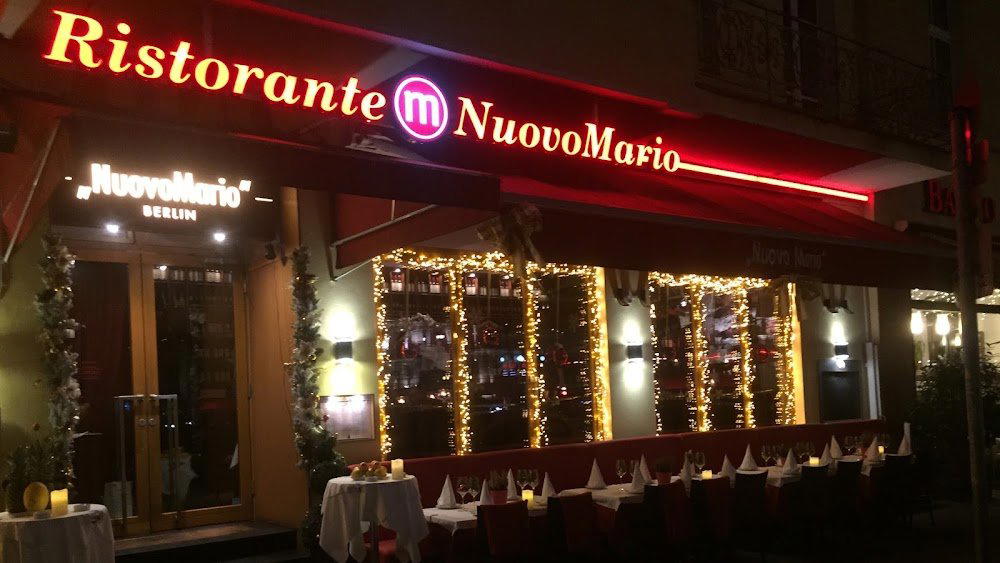
Fasanenstraße and the Logic of the Neighbourhood Italian
Charlottenburg's restaurant culture operates on a different axis from Mitte or Prenzlauer Berg. The stretch of Fasanenstraße near the Kurfürstendamm has held the same civic weight since the late postwar decades: wide pavements, gallery-scale windows, and a dining public that treats its local restaurants less as destinations and more as extensions of a domestic rhythm. Italian restaurants in this corridor do not survive on tourism or trend cycles. They survive on return visits from residents who have been eating in the same seat for years.
Nuovo Mario at Fasanenstraße 12 sits inside that pattern. The address puts it within walking distance of the Kurfürstendamm's commercial density while belonging, in character, to the quieter residential and cultural institutions further down the street, the Käthe Kollwitz Museum is a short walk north, and the neighbourhood draws a clientele that tends toward the established rather than the experimental. For visitors trying to read Berlin's Italian dining offer, that context matters. Nuovo Mario belongs to a different tradition: the neighbourhood Italian that earns its longevity through trust rather than novelty.
What Regulars Return For
In Italian restaurants of this type, the regulars are one reliable guide to what the kitchen actually does well. Berlin's longer-established Italian rooms, particularly those in Charlottenburg and Wilmersdorf, built their reputations on a clientele that formed habits over decades and maintained them through generational change. The appeal is rarely about a single dish or a seasonal tasting format. It is about the accumulation of small consistencies: pasta cooked to the same texture week after week, a wine list that does not surprise but does not disappoint, service that remembers preferences without being asked.
That dynamic shapes the way a regular approaches a room like Nuovo Mario differently from a first-time visitor. Where a first-time visitor reads a menu, a regular already knows which section holds the kitchen's strongest work. The Italian dining tradition that formed in the old West Berlin has always skewed toward the central and northern Italian registers, Lombardy, Emilia-Romagna, Veneto, partly because the wave of Italian immigration that established these restaurants came disproportionately from those regions, and partly because the clientele, shaped by proximity to German formal dining culture, responded to the structural clarity of northern Italian food over the looser, more variable southern register.
For those eating at Nuovo Mario without the benefit of that accumulated knowledge, a useful approach is to read the room as a regular would: note which tables are occupied by people who have clearly been here before, and pay attention to what they ordered before you arrived. In a restaurant built on return visits, the unwritten menu is usually visible if you look for it.
Charlottenburg in the Broader Berlin Dining Map
Berlin's dining conversation has shifted eastward and toward the experimental over the past fifteen years. The city's Michelin presence is concentrated in venues that either push German ingredients toward minimalist precision, as at FACIL, or take international references into genuinely novel territory, as at Restaurant Tim Raue. That shift has left Charlottenburg's Italian and French rooms in a position they occupy somewhat apart from the city's critical attention, not because the cooking has declined, but because the frame through which Berlin dining is now discussed privileges innovation over continuity.
That framing is, in part, a critical blind spot. The neighbourhood Italian in Charlottenburg serves a function that no tasting-menu room can replicate: it holds a community's eating habits across time. Germany's fine-dining circuit, from Aqua in Wolfsburg to Schwarzwaldstube in Baiersbronn and Vendôme in Bergisch Gladbach, operates on destination logic: you travel to the restaurant, or you plan around it. The neighbourhood Italian operates on the opposite logic: it is already there when you need it, and its value compounds with familiarity.
Visitors who arrive in Charlottenburg expecting the register of JAN in Munich or ES:SENZ in Grassau will be reading the wrong map entirely. The more useful comparison is with the long-running Italian institutions in comparable European residential districts: the kind of room that accumulates a following not through critical recognition but through the quiet arithmetic of consistent cooking and attentive service over many years.
Italian Dining Culture in the German Context
Italy's influence on German restaurant culture runs deeper than the tourist-facing pizza-and-pasta tier suggests. In cities like Berlin, Munich, and Hamburg, the Italian restaurant has functioned since the 1960s and 1970s as a kind of informal dining institution: a less formal alternative to the German Gaststätte, a more accessible version of French brasserie culture, and a space where the social rituals of eating out could unfold without the codes of a formal dining room.
Charlottenburg's Italian restaurants inherited that positioning, and strong examples among them refined it over decades. The tradition has produced rooms that operate at a different register from the Italian fine dining that surfaces at destination addresses in Germany's higher-end circuit or internationally at venues like Le Bernardin in New York City. The model here is older and more durable: a menu that does not change dramatically across seasons, a wine list that rewards loyalty over exploration, and a staff-to-table relationship built on recognition rather than script.
For the German dining public, and particularly for the Charlottenburg demographic that has sustained these rooms across generational change, the Italian restaurant occupies a category that sits between the convenience of a neighbourhood Stammlokal and the occasion-marker function of a formal restaurant. That in-between positioning is precisely why it endures when trendier formats do not.
Planning Your Visit
- Address: Fasanenstraße 12, 10623 Berlin, Germany
- Neighbourhood: Charlottenburg, near Kurfürstendamm
A Tight Comparison
Comparable venues nearby, for context on price, style, and recognition.
| Venue | Cuisine | Price | Notes |
|---|---|---|---|
| Nuovo Mario Berlin Charlottenburg am KurfürstendammThis venue — the venue you are viewing | Charlottenburg, Fine Italian | $$$ | Not listed |
| Caravaggi Bistro | Not listed | $$$ | Prenzlauer Berg, Contemporary Italian Bistro with Natural Wines |
| Hostaria del Monte Croce | Kreuzberg, Traditional Italian Trattoria | $$$ | Not listed |
| Ponte | Schoneberg, Modern Italian Trattoria | $$$ | Not listed |
| Cara | Mitte, Modern Italian | $$$$ | Not listed |
| Zola | Kreuzberg, Neapolitan Pizza | $$ | Not listed |
Continue exploring
More in Berlin
Restaurants in Berlin
Browse all →
Bars in Berlin
Browse all →
Hotels in Berlin
Browse all →

At a Glance
- Romantic
- Cozy
- Elegant
- Date Night
- Special Occasion
- Open Kitchen
- Extensive Wine List
Current opening hours
- Monday
- 4 PM–12 AM
- Tuesday
- 4 PM–12 AM
- Wednesday
- 4 PM–12 AM
- Thursday
- 4 PM–12 AM
- Friday
- 4 PM–12 AM
- Saturday
- 4 PM–12 AM
- Sunday
- Closed
Hours can change for holidays and private events. Last verified .
Cozy Italian-style interior with pleasant atmosphere, soft music, jacket reception, and elegant decor praised for romantic evenings.