Skip to Main Content
← Collection
Tokyo, Japan

La Rochelle Minami Aoyama

CuisineFrench
LocationTokyo, Japan
Michelin

La Rochelle Minami Aoyama brings together the legacy of Iron Chef Hiroyuki Sakai and the continuing work of Chef Takashi Kawashima in a format the kitchen calls 'French à la kaiseki': classical French technique reordered through the disciplined sequencing of Japanese kaiseki. Located in Minato-ku, the restaurant holds a Michelin Plate in 2024 and 2025 and carries a Google rating of 4.6 from 278 reviews.

La Rochelle Minami Aoyama restaurant in Tokyo, Japan
About

Where French Classicism Meets Kaiseki Discipline

Tokyo's French dining scene has long operated on a different axis from its European counterparts. Where Paris anchors French cuisine in terroir and regional identity, Tokyo's leading French kitchens have spent decades in productive tension between imported technique and domestic sensibility. That tension has produced a genuinely distinct category: French cooking shaped by the structural logic of kaiseki, the centuries-old Japanese multi-course tradition in which pacing, sequence, and seasonal awareness govern everything on the table. La Rochelle Minami Aoyama, in the Minato-ku neighbourhood of Minamiaoyama, sits near the centre of that tradition.

The restaurant's founding logic traces back to Hiroyuki Sakai, the chef credited with the concept of 'French à la kaiseki' and widely recognised as one of the key figures in Japanese French cuisine through his years as the so-called Iron Chef of French cooking. The port town of La Rochelle in western France provided the original inspiration: a working harbour city whose seafood and regional produce became a reference point for how French cooking could absorb local specificity without losing its classical structure. That founding idea has proved durable. The kitchen today is led by Chef Takashi Kawashima, whose approach the restaurant describes as a colourful assemblage of dishes with a classic base infused with modern elements, a formulation that aligns with how the broader category has evolved across Tokyo's middle and upper tiers of French dining.

The French-à-la-Kaiseki Format

The intersection of imported methods and indigenous products is where Tokyo's French restaurants most clearly depart from European models. In kaiseki, the structure of a meal is as semantically loaded as any single dish: the order of courses communicates the season, the occasion, and the chef's editorial judgment about what should arrive when. French cuisine, by contrast, has historically placed the main course at the centre of gravity, with everything else as supporting architecture. The French-à-la-kaiseki synthesis redistributes that weight, giving early and middle courses the same precision and intention normally reserved for a protein-led climax.

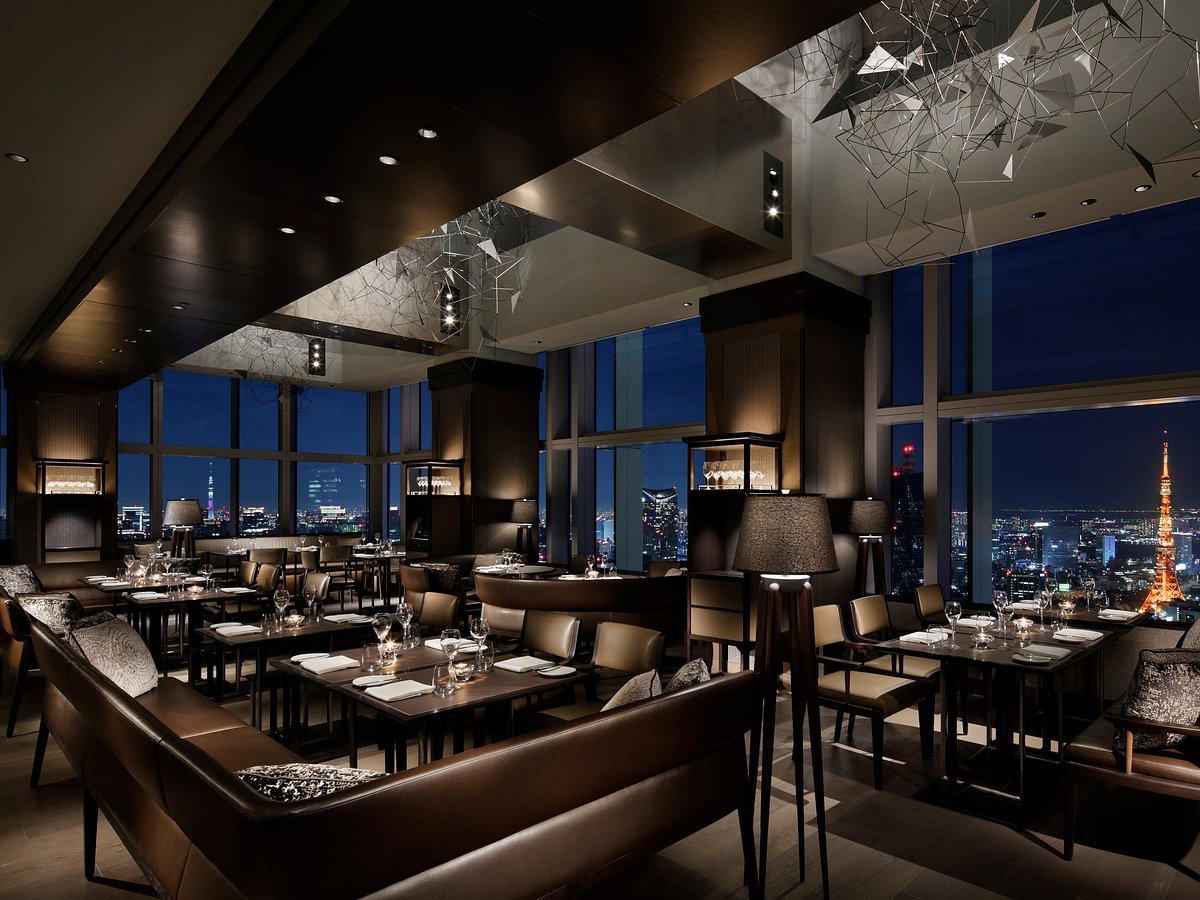
At La Rochelle Minami Aoyama, this plays out through Kawashima's menu structure, which draws on classical French preparation while applying a kaiseki-informed sequence and visual discipline. The Anton Molnar painting on the dining room wall functions as a kind of programmatic statement: Molnar's work, positioned here as a tribute to the intersection of past and modern, mirrors the culinary logic the kitchen operates under. Classical reference points are present and legible, but they are reorganised rather than reproduced.

This is a different proposition from what Tokyo's three-Michelin-starred French tables offer. L'Effervescence and Sézanne operate at the tier where a single meal represents a significant financial and logistical commitment, with tasting menus priced to reflect that positioning. ESqUISSE and Florilège occupy the two-star range and bring their own formal intensity. La Rochelle Minami Aoyama, priced at the ¥¥¥ level, offers a French kaiseki experience that sits below that upper bracket in cost without abandoning the format's underlying seriousness. For context, Château Restaurant Joël Robuchon represents the most formal end of Tokyo's European fine dining, where the room and the ceremony carry as much weight as the plate.

Minami Aoyama and the Address

The Minato-ku address places the restaurant inside one of Tokyo's most coherent high-end dining zones. Minamiaoyama and the surrounding blocks of Minato-ku run at a register where fashion houses, gallery spaces, and serious restaurants coexist at roughly the same density. The neighbourhood rewards walking: the proximity of Omotesando and the quieter back streets of Aoyama means a meal here can sit inside a broader evening rather than being the only destination. The specific address, 3-14-23 Minamiaoyama, Minato-ku, Tokyo (la rochelle minato-ku in shorthand for navigation purposes), is accessible from Omotesando Station on the Tokyo Metro Ginza, Chiyoda, and Hanzomon lines.

For practical planning: the restaurant has a 4.6 Google rating across 278 reviews, which represents a meaningful sample at this level of specialisation. Michelin awarded the restaurant a Plate in both 2024 and 2025, a designation that indicates cooking of quality that falls below star level but is considered worthy of attention. In Michelin's framework, the Plate is applied to a substantial number of Tokyo restaurants and should be read as a floor, not a ceiling.

Tokyo's French Dining in Wider Context

French cooking has found more sustained institutional support in Japan than in almost any other non-French-speaking country. The reasons are multiple: a culinary culture that already placed high value on precision, seasonality, and the aesthetics of presentation; a restaurant economy that rewarded specialisation and counter-level intimacy; and decades of knowledge transfer as Japanese cooks trained in France and returned to open their own kitchens. The French-kaiseki synthesis is one outcome of that long exchange, and it remains more developed in Tokyo than anywhere else in Asia.

Elsewhere in Japan, the French influence takes different forms. HAJIME in Osaka operates at three Michelin stars with a philosophy rooted in ecological thinking as much as classical training. Gion Sasaki in Kyoto represents kaiseki at its most codified, without the French overlay. akordu in Nara and Goh in Fukuoka each show how regional Japanese cities have developed their own interpretations of Western-influenced fine dining. For comparison outside Japan, Hotel de Ville Crissier in Switzerland and Les Amis in Singapore both represent how French classical training transmits through different cultural contexts.

Closer to home, 1000 in Yokohama and 6 in Okinawa extend the picture of how Japanese chefs have taken European frameworks and rebuilt them within local conditions.

Planning Your Visit

La Rochelle Minami Aoyama is a mid-to-upper range booking in the ¥¥¥ tier, which in Tokyo's French dining context typically means a multi-course format at a price point accessible to more diners than the starred competitors above it. Reservations are advisable given the restaurant's reputation and the Sakai legacy that draws both domestic and international visitors. The Minamiaoyama location is within easy reach of central Tokyo, and the neighbourhood has enough surrounding interest to frame the meal within a longer evening or afternoon. For a broader picture of what Tokyo offers at this level, our full Tokyo restaurants guide maps the city's dining scene across categories and price tiers. If you are building a longer itinerary, our Tokyo hotels guide, bars guide, wineries guide, and experiences guide cover the surrounding territory.

Frequently Asked Questions

What is the signature dish at La Rochelle Minami Aoyama?

The restaurant does not publish a fixed signature dish in standard reference sources, and the menu is described as a seasonal, sequenced format in the French-à-la-kaiseki mode. The broader approach, a classical French base reorganised through kaiseki structure and infused with modern elements, is the defining characteristic of the cuisine here. This framework, established through the founding influence of Hiroyuki Sakai and continued by Chef Takashi Kawashima, is what distinguishes the kitchen from direct French tasting menus elsewhere in Tokyo. The Michelin Plate recognition in both 2024 and 2025 confirms the consistency of execution.

What is the leading way to book La Rochelle Minami Aoyama?

Given the restaurant's position in Minato-ku and its sustained recognition through the Michelin Plate and a 4.6 Google rating across 278 reviews, advance booking is advisable rather than optional, particularly for weekend evenings. The restaurant is located at 3-14-23 Minamiaoyama, Minato-ku, Tokyo, 107-0062, accessible from Omotesando Station. For Tokyo's French dining tier at ¥¥¥ pricing, the booking window is generally shorter than at the starred establishments above it, but the Sakai legacy and consistent press attention mean the room fills on reputation alone. Contacting the restaurant directly is the standard approach for this category in Tokyo.

Category Peers

A compact peer set to orient you in the local landscape.

Collector Access

Need a table?

Our members enjoy priority alerts and concierge-led booking support for the world's most difficult tables.

Access the Concierge