
Gotanda’s izakaya culture rewards compact rooms, regulars’ rhythms, and menus that make sense after office hours rather than for ceremony. Nichinan belongs to that Shinagawa-side register: a Tabelog 100 Izakaya EAST 2025 selection with curry, kushiyaki, and a shochu-leaning drinks identity in a small counter-and-table format near Gotanda Station.
Pearl is the En Primeur Club membership app — saves, bookings, and concierge access live there. Same editors, same standards.
- Address
- 1 Chome-13-6 Higashigotanda, Shinagawa City, Tokyo 141-0022, Japan
- Phone
- +81 3-3449-4425
- Website
- facebook.com
 Saves & bookings on Pearl
Gotanda changes character quickly after dark. The station exits feed office workers, local drinkers, and small groups into side streets where the better izakaya rooms are rarely about spectacle. They are about compression: a counter, a few tables, smoke from the grill, orders moving fast enough to keep the evening informal. Nichinan fits that neighbourhood grammar, closer to the after-work tavern tradition than to the reservation-theatre side of Tokyo dining.
That matters because Gotanda is not Ginza, Aoyama, or Kagurazaka. Its dining strength lies in practical appetite: curry shops, grill counters, standing udon, yakiniku, and izakaya that carry a local following without dressing themselves for international tasting-menu traffic. In that field, an izakaya has to earn attention through consistency and breadth rather than polish alone. Nichinan’s selection for Tabelog 100 Izakaya EAST 2025 places it in a competitive eastern-Japan category where everyday formats are judged against serious peer expectations.
Gotanda's izakaya register: grill, curry, shochu, and close-range dining
Tokyo izakaya can mean many things: seafood-led counters, sake-heavy rooms, yakitori specialists, salaryman canteens, or hybrid kitchens that absorb whatever the neighbourhood wants to eat with a drink. Nichinan sits in the hybrid camp. The listed categories are izakaya, curry, and kushiyaki, which gives a clear read on the format without needing a chef mythology. This is not a single-product specialist; it belongs to the type of tavern where skewers, rice-based comfort, and a stronger drinks identity work together.
The shochu emphasis is useful context. In Tokyo, sake often gets the international attention, but shochu has a different izakaya role: less ceremonial, more flexible with grilled food, curry spice, and longer evenings. A room that signals care around shochu is usually asking to be read as a drinking place with food depth, not simply as a restaurant with alcohol attached. That distinction shapes the guest decision. Diners looking for a quiet progression of courses may be in the wrong mental category; diners looking for a compact tavern rhythm are closer to the point.
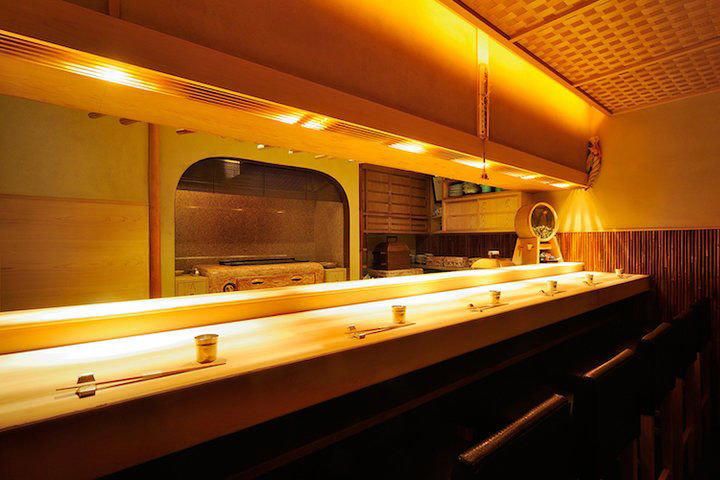
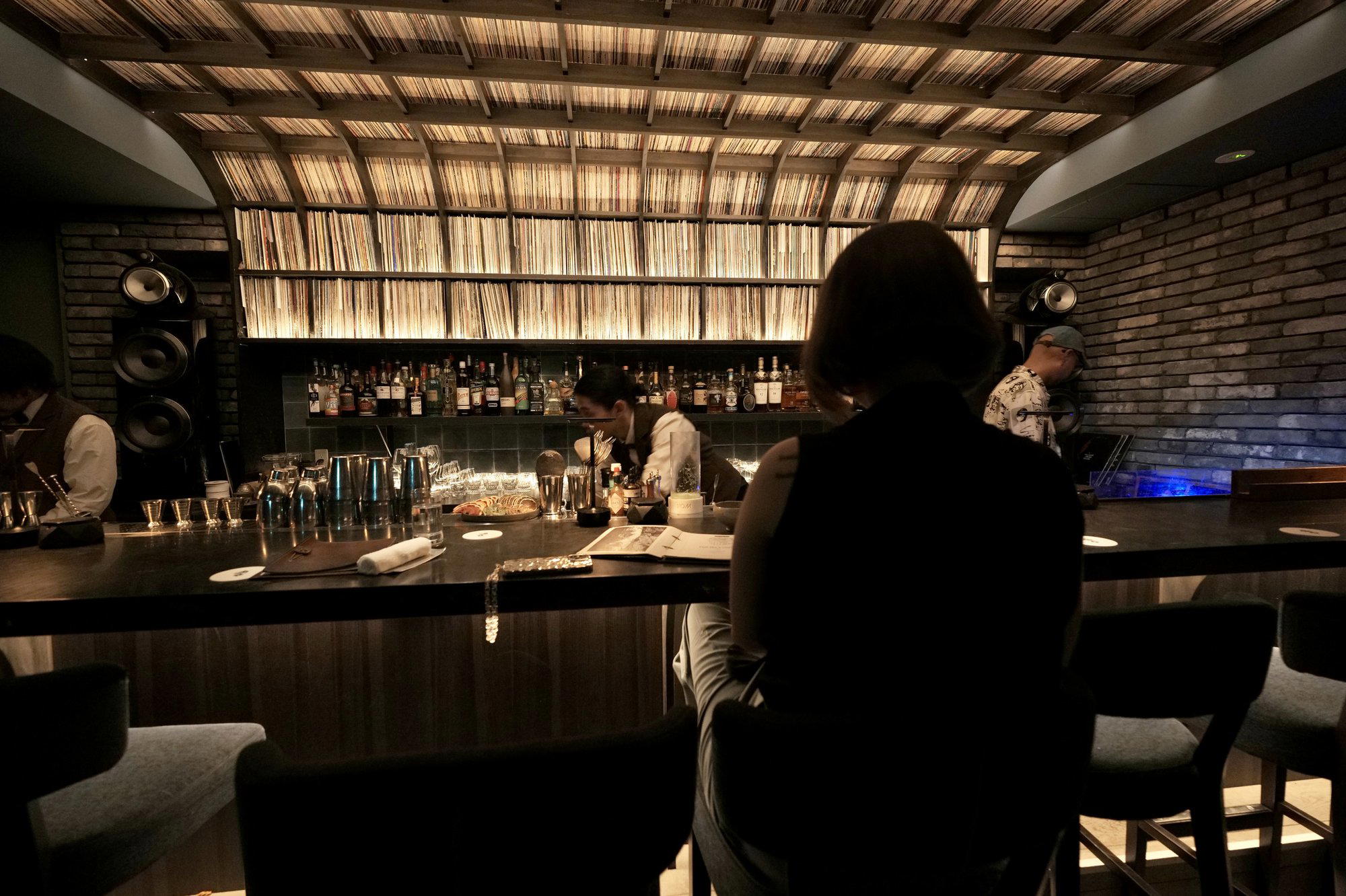
The room reinforces that scale. A counter-and-table setup keeps the experience local and direct, with enough structure for small groups but not the anonymity of a large chain izakaya. Counter seating also changes how food is perceived in this genre: the grill, pacing, and ordering cadence become part of the evening’s logic. In a neighbourhood dense with quick meals, that small-room format gives Nichinan a sharper identity than a broad menu alone would.
How it reads against Gotanda's other small-format dining
Gotanda’s appeal is the way different price and format tiers sit almost on top of one another. A curry specialist such as Hot Spoon Gotanda ten serves the lower-cost quick-meal lane; Oniyanma Gotanda honten occupies the fast udon end of the same station ecosystem. Grill F, by contrast, points toward a retro Western-style dining tradition at a modest dinner price. Sumibi Yakiniku Horumon Maruha pushes into a higher yakiniku spend band. Nichinan lands between these impulses: more drink-led and linger-friendly than a quick counter meal, less formal than destination fine dining, and more varied than a single-discipline grill room.
That middle position is where Tokyo’s izakaya tradition is strongest. The format has to support mixed ordering, conversation, and repeat use. The menu categories suggest a place built for appetite rather than purity: curry gives ballast, kushiyaki brings the grill, and the tavern frame lets drinking decide the pace. The Tabelog score of 3.63 is also worth reading in the Japanese context, where scores above the mid-3s can indicate meaningful local confidence rather than casual popularity. Combined with repeated Tabelog 100 izakaya selections in recent years, it gives the venue a stronger signal than a single viral mention would.
For travellers, the comparison is less about chasing a famous dish and more about understanding Tokyo’s non-ceremonial dining intelligence. The city’s polished counters teach precision; its izakaya teach usefulness. Nichinan belongs to the latter category, the kind of place that makes sense when the evening calls for skewers, curry, and shochu in a neighbourhood that eats after work rather than performs for the camera.
Where to place it in a Tokyo itinerary
This is a Shinagawa-side dinner choice, not a cross-city monument. Its value is strongest for travellers already moving through Gotanda, Meguro, Ebisu, or the Yamanote Line’s southern arc. Pairing it with a hotel base in this part of Tokyo makes more sense than treating it as a detour from a northern or eastern itinerary. For broader planning, Our full Tokyo restaurants guide gives the useful citywide frame, while Our full Tokyo hotels guide, Our full Tokyo bars guide, Our full Tokyo wineries guide, and Our full Tokyo experiences guide help place dinner within the rest of the trip.
Within Tokyo’s casual-dining spectrum, useful contrasts include the seafood-and-charcoal direction at. 鮪と炭火焼き うお炭 秋葉原店, the Shinjuku dining density around 12/10 Shinjuku ten, the yakitori focus at 124. KAGURAZAKA (Yakitori), the visual café lane at 2D Cafe, and the curry-specialist track at 3 Chome no Curry Ya San. For a wider Japan comparison set, see -Grilled beef Sukiyaki- KAMAKURA TANUKIAN 鎌倉 たぬき庵 in Kamakura.cafe in Osaka.know in Kumamoto, (Shoku) Vietnam in Kawasaki, [Curry Senmon Ten] Maruyama Kyoju. in Sapporo, and [ki:] in Kyoto. Abroad, Jōdo Saké Bar in Los Angeles and Onigiri Time in Pasadena show how Japanese casual formats translate outside Japan, though Tokyo’s neighbourhood izakaya culture remains a different operating system.
Recognition, Side-by-Side
Comparable venues by category and price.
| Venue | Cuisine | Price | Notes |
|---|---|---|---|
| NichinanThis venue — the venue you are viewing | Traditional Japanese Izakaya | $$ | Not listed |
| Re:s Cafe Bar & Sweets | Japanese Dessert Cafe | $$ | Nishi Waseda |
| Yamacho (黒うどん 山長) | Black Udon (Kuro Udon) | $$ | Harajuku |
| Okonomiyaki Kiji Shinagawa ten | Osaka-style okonomiyaki & teppan grill | $$ | Minato |
| HIGASHIYA man | Traditional Japanese wagashi & manju shop | $$ | Minato |
| Fukushima | Japanese Kamameshi | $$ | Meguro |
Recognition history
Dated appearances from independent guides and award organizations, with the underlying list record or original source where available.
Tabelog 100 #29 · No. 29
Tabelog · Tabelog 100 - Izakaya - EAST - 2025









At a Glance
- Lively
- Cozy
- After Work
- Group Dining
- Casual Hangout
- Late Night
- Standalone
- Sake Program
Current opening hours
- Monday
- 6–11 PM
- Tuesday
- 6–11 PM
- Wednesday
- 6–11 PM
- Thursday
- 6–11 PM
- Friday
- 6–11 PM
- Saturday
- Closed
- Sunday
- Closed
Hours can change for holidays and private events. Last verified .