Native Foods
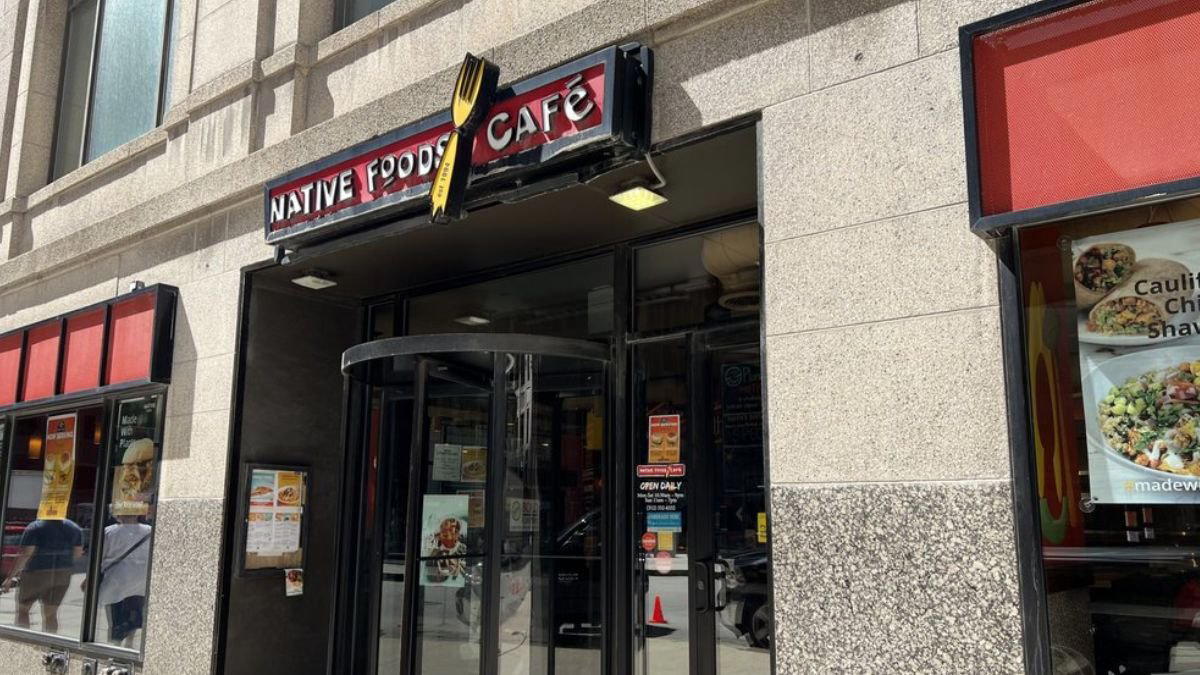
Native Foods sits on South Clark Street in Chicago's Loop, placing it inside one of the city's most transit-dense dining corridors. The address positions it squarely within the broader shift toward plant-forward eating that has reshaped American casual dining over the past decade. For visitors and downtown workers alike, it represents a practical entry point into that category in a neighborhood better known for steakhouses and power-lunch expense accounts.
- Address
- 218 S Clark St, Chicago, IL 60604
- Phone
- +13123326332
- Website
- order.chicagonativefoods.com
- Directions
- Get directions
Plant-Forward Dining in the Loop: Where the Category Has Landed
Chicago's Loop is a practical dining district shaped by office traffic and courthouse footfall. For decades, the corridor running south along Clark Street was organized around the needs of courthouse workers, financial professionals, and convention traffic: reliable, protein-heavy, expense-account-friendly. The emergence of plant-forward fast-casual concepts in that same corridor reflects a broader national pattern, one in which the question stopped being whether meat-free menus could survive in mainstream American dining and started being how many formats they could support simultaneously.
Native Foods, a 100% Vegan Comfort Food restaurant at 218 S Clark St, occupies a position within that shift. Its Loop address places it among a lunch-driven, weekday-heavy customer base rather than the destination-dining crowd that gravitates toward the West Loop or River North on weekend evenings. That distinction matters when reading the venue against Chicago's wider restaurant map. This is not the same category as Alinea or Smyth, which operate at the summit of the progressive American fine-dining tier with multi-course tasting formats and multi-month booking windows. Nor is it adjacent to the focused cultural ambition of Kasama or the theatrical menu-rotation model at Next Restaurant. Native Foods sits in a different register entirely, one where accessibility and format consistency carry more weight than culinary surprise.
The Evolution of Plant-Based Fast Casual in America
The plant-based fast-casual category has gone through at least three distinct phases since the early 2000s. The first was defined by health-food stores with prepared counters and a clientele already converted to vegetarian or vegan eating. The second, roughly spanning 2010 to 2018, saw dedicated chains attempt to normalize the format for mainstream audiences, building menus around familiar archetypes: the burger, the bowl, the wrap, reconstituted in animal-free versions. The third phase, still ongoing, involves a bifurcation. On one side, large-scale chains compete on price and convenience against conventional fast food. On the other, chef-driven plant-forward restaurants have entered fine-dining territory with tasting menus and sourcing narratives, sitting closer in format to Blue Hill at Stone Barns than to any fast-casual chain.
Native Foods as a brand belongs to the middle chapter of that story. The concept originated in California in the 1990s and expanded through the 2000s and 2010s, positioning itself as a vegan chain with broad appeal. That expansion cycle included multiple Midwest locations, with Chicago serving as one of the brand's key markets during its growth period. The Loop location on South Clark reflects that strategy: a high-footfall urban address designed to convert the curious and the convenience-driven, not to court destination diners.
Understanding where Native Foods sits in that arc helps set expectations. The comparison set is not Oriole or The French Laundry. It is closer to what Sweetgreen or Veggie Grill have attempted in other markets: a format-driven, repeatable experience anchored by a clear dietary identity rather than a single kitchen team or a chef's evolving point of view.
The Loop Address and What It Signals
South Clark Street between Adams and Jackson sits one block from both the Richard J. Daley Center and the federal courthouse complex. The daytime foot traffic in this corridor is dense and predictable, driven by workers who need a quick, reliable lunch rather than an occasion. That context shapes how any venue at this address functions, regardless of its cuisine category. Dinner service in the Loop has historically been harder to sustain than lunch, and the surrounding options reflect that reality: the blocks around 218 S Clark tilt heavily toward fast-casual and counter-service formats rather than full-service dining rooms.
For Chicago visitors whose itinerary is centered on the Loop, this geographic reality is worth understanding. The city's most discussed dining corridors, the stretch of Randolph Street in the West Loop, the Fulton Market District, the Wicker Park and Logan Square neighborhoods, are a short transit ride away but represent a different urban dining register. Visitors looking for the range that Chicago's restaurant scene is known for, from Smyth to neighborhood Korean to serious pastry programs, should treat the Loop primarily as a lunch district and plan evening meals elsewhere. Our full Chicago restaurants guide maps those distinctions across the city's key neighborhoods.
Within the American urban dining context more broadly, Chicago's Loop sits alongside other downtown-core districts that function on weekday lunch logic. The plant-forward casual format has found traction in all of these, for reasons that have more to do with urban planning and workforce demographics than with culinary culture per se.
Plant-Forward in Context: The American Fine-Dining Signal
For readers whose primary interest is the premium end of American dining, it is worth noting how pervasively plant-forward thinking has penetrated even particularly formal kitchens. Providence in Los Angeles builds multi-course menus that treat vegetables with the same sourcing rigor as its seafood program. Addison in San Diego and Lazy Bear in San Francisco both incorporate significant plant-forward courses within tasting formats that carry Michelin recognition. Single Thread Farm in Healdsburg makes its agricultural sourcing a structural part of the dining proposition, not a menu footnote. Even at Le Bernardin in New York, the vegetable tasting menu option now carries the same kitchen attention as the seafood-forward main program.
That context matters because it illustrates how thoroughly the plant-based category has fractured. A dedicated vegan fast-casual chain and a Michelin-starred kitchen incorporating seasonal vegetables from named farms are both, technically, operating in a meat-reduced or meat-free register. But they are separated by format, price, ambition, and audience in ways that make comparison unhelpful. Bacchanalia in Atlanta, Atomix in New York, and The Inn at Little Washington all occupy positions in fine dining where produce sourcing is central, but the dining architecture around that sourcing is as far from fast casual as steakhouse cooking is from kaiseki. Even internationally, venues like 8½ Otto e Mezzo Bombana in Hong Kong and Emeril's in New Orleans demonstrate that ingredient philosophy and format are independent variables.
Planning a Visit: Practical Details
Address: 218 S Clark St, Chicago, IL 60604. Reservations: Walk-in friendly. Budget: About $20 per person. Dress: Casual. Context: For dinner or occasion dining in Chicago, the West Loop and Fulton Market corridors offer broader options at every price tier, including tasting-menu formats at Smyth and Alinea.
Pricing, Compared
Comparable venues nearby, for context on price, style, and recognition.
| Venue | Cuisine | Price | Notes |
|---|---|---|---|
| Native FoodsThis venue — the venue you are viewing | Not listed | $$ | Not listed |
| Forno Mauri | Printer's Row, Northern Italian Pizzeria | $$ | Not listed |
| India House, Chicago | Not listed | $$ | River North, Authentic North Indian Tandoori |
| Zarella Pizzeria & Taverna | Not listed | $$ | River North, Tavern-Style & Artisan Pizza |
| Mariano's Tastemaker Kitchen | West Loop, American Tastemaker Kitchen | $$ | Not listed |
| Robert's Pizza and Dough Company | River North, Artisan Thin-Crust Pizza | $$ | Not listed |

At a Glance
- Trendy
- Modern
- Casual Hangout
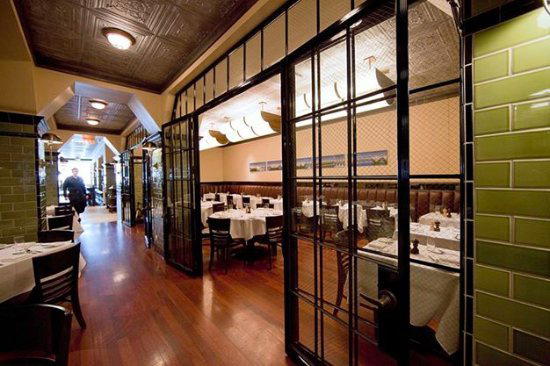
Casual fast-casual atmosphere with warm, welcoming service in a high-traffic downtown spot.