


Michelin Bib Gourmand · Tabelog 100 #54
Our verdict
Opened in July 2019 in the residential Suginami ward, Narikura has earned consecutive Tabelog Bronze Awards from 2021 through 2026 and three selections to the Tabelog Tonkatsu 100, alongside a Michelin Bib Gourmand and the top ranking in Opinionated About Dining's Casual Japan list for 2023 and 2025. Fourteen seats, reservation-only, and priced at around ¥6,000–¥8,000 per head.

Pearl is the En Primeur Club membership app, where members save venues, book tables and use the concierge.
The menu
What to order
- Bara Katsu
- Ribeye Katsu
- Shabutaburian Katsu
- Cheese Mille-feuille Katsu
Minami-Asagaya and the Quiet Geography of Serious Tonkatsu
Tokyo's most decorated tonkatsu counters are rarely where you'd expect them. The category's top tier does not cluster in Ginza or Shinjuku the way sushi omakase does; instead, it distributes across residential wards where rent permits tight menus and deliberate pacing. Suginami, the westward ward straddling the Chuo and Marunouchi lines, has produced a disproportionate share of that recognition, and Narikura, which opened on 8 July 2019 in Naritahigashi, sits at the sharp end of that pattern.
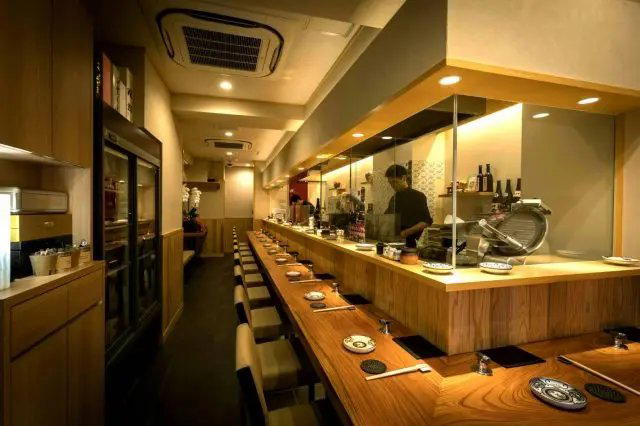
The walk from Minami-Asagaya Station takes roughly six minutes; the alternative approach from Asagaya Station on the Chuo and Sobu lines adds another six. Either way, you arrive in a neighbourhood that reads as domestic rather than commercial: low-rise housing, small gardens, the occasional corner konbini. The restaurant's own Tabelog profile categorises it as a house restaurant, which is accurate in the physical sense. That setting is not incidental. The separation from the tourist circuit of central Tokyo is part of what shapes the dining room's character, a 14-seat space with counter seating for six, operating on a reservation-only basis through the Omakase website.
What Six Consecutive Tabelog Bronze Awards Signal
Tabelog's annual awards draw on Japan's largest restaurant review database, weighting sustained high scores rather than single-year spikes. Narikura has held Tabelog Bronze every year from 2021 through 2026, a run that reflects consistent peer-reviewed quality over a period when the restaurant was still relatively new. Its current Tabelog score of 4.26 places it in the upper register for the category nationally, not just within Tokyo. The Tabelog Tonkatsu 100 selections in 2021, 2022, and 2024 add a category-specific credential: that list is compiled from tonkatsu specialists across Japan, so placement signals standing within the format rather than just a general dining score.
The Michelin Bib Gourmand designation, awarded for both 2024 and 2025, locates Narikura in a different credentialing framework entirely. The Bib category identifies cooking that Michelin inspectors consider above the category norm at a price point that remains accessible, broadly defined as under ¥5,000–¥8,000 per person in Tokyo. At Narikura, where review-based average spend runs ¥8,000–¥9,999 per person, that recognition places the kitchen in conversation with the price-to-quality argument that drives serious diners to residential neighbourhoods in the first place.
Opinionated About Dining's Casual Japan ranking adds a third, independent signal. Ranking first in 2023 and 2025, and third in 2024, Narikura holds a position that few specialist restaurants achieve: sustained top-three placement across consecutive years of a guide that assesses the full casual dining field in Japan, not just tonkatsu. For context on the competitive field, Butagumi and Ginza Katsukami represent the more central-Tokyo approach to premium tonkatsu, while Katsuyoshi and Katsusen occupy different positions across the city's specialist tier. Fry-ya extends the conversation into the broader fried-food category that tonkatsu anchors.
The White Tonkatsu Direction
Tonkatsu as a category has polarised over the past decade between high-volume set-lunch operations and small-counter specialists pursuing specific ingredient and technique theses. The latter group experiments with breed sourcing, breadcrumb selection, oil temperature control, and resting protocols in ways that have no direct parallel in the traditional form of the dish. Narikura's stated direction, drawing from the Tabelog description, is toward what it calls white tonkatsu: a lighter-coloured, less aggressively fried result that prioritises the flavour of the pork over the coating. The goal articulated in the venue's own language is to bring out the ultimate charm of pork through trial and error, which in practical terms points toward restraint in frying rather than the deeply golden crust associated with older Tokyo styles.
Chef Seizo Mitani operates the kitchen. The house-restaurant format at 14 seats means the ratio of preparation to covers is high, which is a structural feature of the specialist tonkatsu counter at this level rather than a differentiating claim in itself. What that format does determine is pace: seatings are timed, last entry at lunch is 12:30 with service running to 13:40, and last dinner entry is 19:30 with service closing at 20:40. The restaurant is closed Monday, Tuesday, and Friday, operating Wednesday, Thursday, Saturday, Sunday, and public holidays across both services. The compressed weekly schedule is common among restaurants where quality control depends on the owner-chef working every cover.
Booking and Practical Access from Central Tokyo
Reservations at Narikura are handled exclusively through the Omakase platform; there is no walk-in option, and the 14-seat capacity means availability moves quickly around the weekly opening windows. The six-day Tabelog Bronze streak and the OAD rankings have driven booking pressure substantially above what a 2019-opening suburban restaurant might have faced in its first year. Planning a visit therefore means treating the booking as the first logistical step, not an afterthought after confirming travel dates.
Minami-Asagaya Station on the Tokyo Metro Marunouchi Line provides the most direct approach: six minutes on foot from the station exit. Asagaya Station on the JR Chuo and Sobu lines is a 12-minute walk. Neither route requires a taxi for most visitors, though the residential street pattern in Naritahigashi rewards a downloaded map over relying on phone signal. The restaurant has no parking and no private rooms. Children under 12 are not admitted, which signals the format's orientation toward an adult dining context rather than family service.
Payment covers VISA, Mastercard, JCB, American Express, Diners Club, and QUICPay electronic money. QR code payments are not accepted. There is no service charge and no appetizer fee, meaning the bill reflects the menu price directly. The non-smoking policy throughout applies to the entire space.
Know Before You Go
- Address: 4 Chome-33-9 Naritahigashi, Suginami City, Tokyo 166-0015
- Nearest Station: Minami-Asagaya (Marunouchi Line), 6-minute walk; Asagaya (JR Chuo/Sobu), 12-minute walk
- Hours: Wed, Thu, Sat, Sun, public holidays: Lunch 10:30–13:40 (last entry 12:30); Dinner 17:30–20:40 (last entry 19:30). Closed Mon, Tue, Fri.
- Reservations: Required; book via the Omakase website
- Price per person: Listed ¥6,000–¥7,999; review average ¥8,000–¥9,999
- Seats: 14 total; counter seating for 6
- Payment: Credit cards (VISA, Mastercard, JCB, AMEX, Diners), QUICPay; no QR code payments
- Service charge: None
- Children: Under 12 not admitted
- Smoking: Non-smoking throughout
- Opened: 8 July 2019
Narikura in the Wider Japan Context
The OAD Casual Japan ranking that has consistently placed Narikura at or near the leading positions it alongside a national field rather than a Tokyo-specific one. For visitors building a Japan itinerary that extends beyond Tokyo, the tonkatsu specialist tradition has regional expressions worth considering: Jukuseibuta Kawamura in Kyoto and Kyomachibori Nakamura in Osaka represent the Kansai approach to the category, where sourcing philosophies and service formats differ from the Tokyo counter model. Further afield, the broader Japanese dining scene includes HAJIME in Osaka, Gion Sasaki in Kyoto, akordu in Nara, Goh in Fukuoka, 1000 in Yokohama, and 6 in Okinawa for those tracking the full range of the country's current dining conversation.
For Tokyo-specific planning across categories, see our guides to Tokyo restaurants, Tokyo bars, Tokyo hotels, Tokyo wineries, and Tokyo experiences.
Frequently asked questions
Who is the chef connected to Narikura?
The chef associated with Narikura is Seizo Mitani.
Has Narikura won any awards?
Narikura has received recognition including:
What do people recommend at Narikura?
Narikura's public positioning centres on its white tonkatsu, a direction the restaurant describes as the result of extended trial and error in pursuit of bringing out what it calls the ultimate character of pork. That focus has translated into six consecutive Tabelog Bronze Awards from 2021 through 2026 and three selections for the Tabelog Tonkatsu Top 100. The 14-seat room, with a six-seat counter, keeps the format intimate, and the price point runs ¥6,000–¥9,999 per person based on reviewer-reported spend.
Cuisine Context
Comparable venues nearby, for context on price, style, and recognition.
| Venue | Cuisine | Price | Awards | Notes |
|---|---|---|---|---|
| NarikuraThis venue (the venue you are viewing) | Premium Tonkatsu Omakase | $50–100 | Michelin Bib Gourmand · Tabelog 100 #54 | Not listed |
| Torishige | Traditional Japanese Robatayaki | $30–50 | Michelin Bib Gourmand · Tabelog Bronze #474 | Minato |
| Soba Osame | Handmade Soba Noodles | $50–100 | Michelin Bib Gourmand · Tabelog 100 #54 | Shinjuku |
| Tamawarai | Traditional Handmade Soba | $30–50 | Michelin Plate · Tabelog Bronze #452 | Shibuya |
| Sobakappo Nagano | Soba Kappo | $50–100 | Michelin Bib Gourmand | Sumida |
| Sushidokoro Kiraku | Traditional Edomae Omakase | $50–100 | 1 Michelin Star | Setagaya |
Recognition history
Dated appearances from independent guides and award organizations, with the underlying list record or original source where available.
Michelin Bib Gourmand
Michelin
Opinionated About Dining Casual in Japan Ranked #109
Opinionated About Dining
Tabelog 100 #54 · No. 54
Tabelog · Tabelog 100 - Tonkatsu - 2026
Full recognition history (9 entries)
Tabelog Bronze #310
Tabelog
Opinionated About Dining Casual in Japan Ranked #1
Opinionated About Dining
Tabelog Bronze
Tabelog
Michelin Bib Gourmand
Michelin
Opinionated About Dining Casual in Japan Ranked #3
Opinionated About Dining
Opinionated About Dining Casual in Japan Ranked #1
Opinionated About Dining
Narikura
Featured Guides
Continue exploring
More in Tokyo
Restaurants in Tokyo
All restaurants in Tokyo →



Bars in Tokyo
All bars in Tokyo →




Details
- Intimate
- Elegant
- Cozy
- Special Occasion
- Solo
- Chefs Counter
- Open Kitchen
- Sake Program
- Local Sourcing
- Omakase
- Counter Dining
Current opening hours
- Monday
- Closed
- Tuesday
- Closed
- Wednesday
- 11 AM–1:30 PM, 5:30–7:30 PM
- Thursday
- 11 AM–1:30 PM, 5:30–8:30 PM
- Friday
- Closed
- Saturday
- 11 AM–1:30 PM, 5:30–7:30 PM
- Sunday
- 11 AM–1:30 PM, 5:30–7:30 PM
Hours can change for holidays and private events. Hours as of .
Intimate counter seating in a modern building within a quiet residential area, focused on the chef's precise craftsmanship.