
Michelin Plate
Our verdict
A Michelin Plate-recognised address in Arganzuela, Nantes takes its name from a carrot variety grown by the chef's grandfather, a detail that signals the kitchen's orientation before you even sit down. The €€ price point and open kitchen make this one of Madrid's more honest expressions of seasonal, traditional Spanish cooking, anchored by a daily changing menu and a thoughtful à la carte.

Pearl is the En Primeur Club membership app — saves, bookings, and concierge access live there. Same editors, same standards.
- Address
- C. del Maestro Arbós, 15, Arganzuela, 28045 Madrid, Spain
- Phone
- +34 910 74 30 52
- Website
- restaurantenantes.es
- Directions
- Get directions
- Booking
- Book on the venue's website
The menu
What to order
- Carrillera de ternera
- Croquetas
- Garbanzos guisados
A Kitchen Framed by the Room
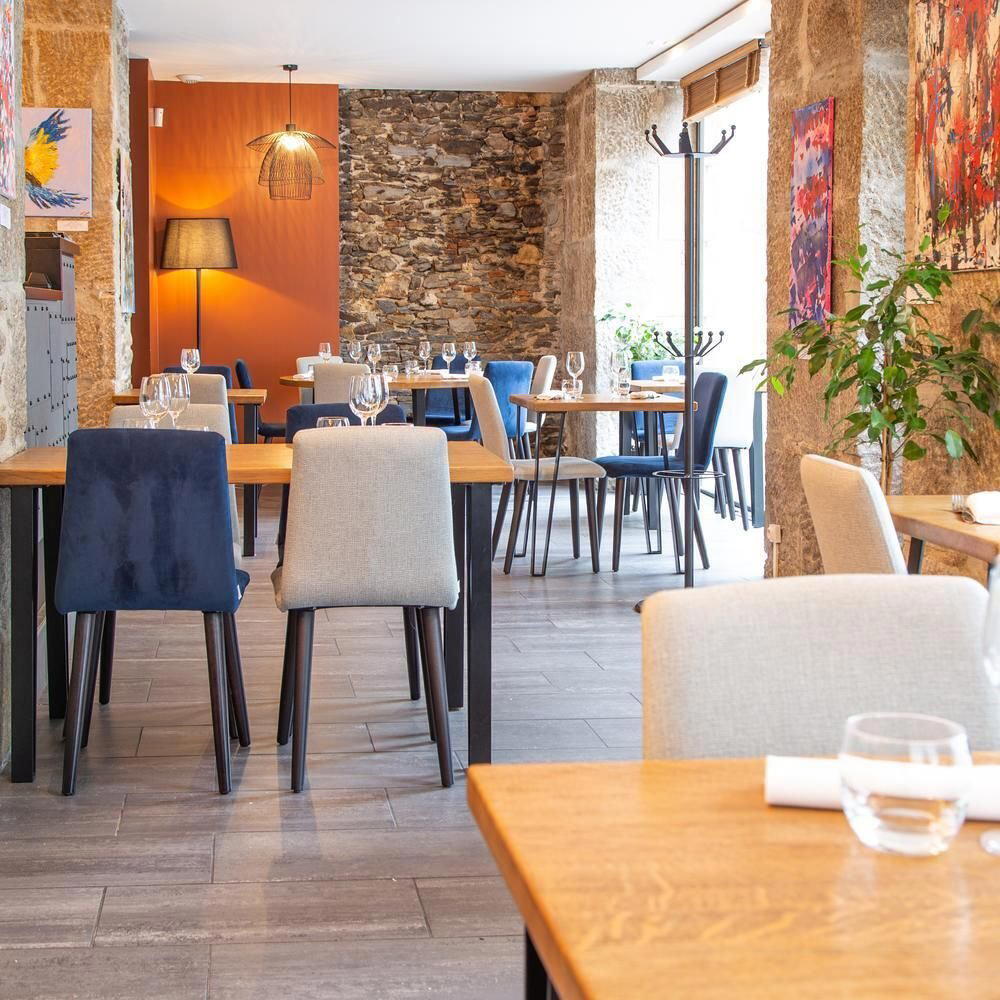
The dining room at Nantes, on Calle del Maestro Arbós in Arganzuela, is built around a central premise: the kitchen is not hidden. It overlooks the dining space, and that transparency sets the register for everything that follows. In a city where the theatrical end of the dining spectrum runs from DiverXO's surrealist spectacle to Disfrutar in Barcelona when visitors come looking for that frequency, Nantes sits at the opposite pole — an urban room with a direct relationship between the people who cook and the people who eat. There is nothing staged about the space. The urban feel is unaffected, and that restraint is itself a design choice.
This approach has precedent in Madrid's mid-market dining tradition, where the leading neighbourhood restaurants have always treated the dining room as an extension of domestic life rather than a performance venue. The open kitchen here reinforces that contract. You can see the pace, the order, the small details of preparation. For a kitchen executing seasonal, traditional cooking at a €€ price point, that visibility functions as a form of accountability.
The Arganzuela Address and What It Signals
Arganzuela sits south of the Manzanares, slightly removed from the restaurant-dense corridors of Chueca or Malasaña. The district's dining scene has historically skewed local rather than destination-driven, which shapes both the clientele and the price logic at a place like Nantes. At €€, it sits in a peer tier occupied by other seasonally focused, traditional Spanish kitchens rather than the €€€€ bracket where Alcotán and comparable addresses operate. The comparison is instructive: the investment required to eat here is modest relative to what the Michelin Plate recognition implies about kitchen discipline.
Arganzuela's connection to the old Legazpi market — the wholesale produce hub that anchored this part of the city for decades, gives the venue's origin story a geographic coherence. The chef's grandfather grew the Nantes carrot variety and transported it to that market. The restaurant's name is not a branding exercise; it locates the kitchen inside a specific local food economy and a family relationship with produce. That lineage informs a cooking style where vegetables are treated as primary subjects, not supporting cast.
Traditional Cooking, Seasonal Logic
Madrid's Michelin-recognised landscape at the €€ tier tends toward two modes: the taberna format, which leans on cured meat, braised offal, and Castilian starchy depth, and the market-driven casa de comidas, which builds around the day's produce. Nantes sits closer to the latter. The daily menu, which runs separately from the à la carte, is the clearest expression of this orientation. A changing daily menu at this price point is a logistical commitment that not every kitchen at this tier makes, and it signals a kitchen organised around sourcing rather than around a fixed repertoire.
The à la carte extends that logic with a dedicated vegetable section, which in the context of traditional Spanish cooking is a notable structural choice. The chickpea stew with cuttlefish and pig's trotters, specifically cited in Michelin's notes as a dish of particular interest, illustrates how the kitchen handles the intersection of land and sea that runs through so much of Spain's regional cooking. It is the kind of preparation that appears simple on a menu but requires careful timing across ingredients with very different textures and densities. That it appears in the vegetable section rather than under meat or fish says something about how this kitchen frames its priorities.
For context on how traditional cooking functions at higher price points across Spain, Arzak in San Sebastián and El Celler de Can Roca in Girona represent the ceiling of that tradition's ambition. Closer to Nantes' register, in spirit if not geography, are addresses like Auga in Gijón and Auberge Grand'Maison in Mûr-de-Bretagne, both of which carry Michelin recognition for traditional cooking executed with discipline rather than spectacle.
The Michelin Plate, awarded in both 2024 and 2025, is the guide's marker for restaurants where the food is consistently good, one tier below Bib Gourmand and two below a star. At the €€ price level in Madrid, that recognition places Nantes in a specific competitive position: above the purely casual, below the destination-dining tier, but tracked by Michelin's inspectors across consecutive years, which implies consistency rather than a single strong performance. Consecutive Plate recognition matters more than a single year's citation because it indicates a kitchen holding its standard through changes in seasonal supply and team.
Among Madrid addresses at a comparable price and register, Amparito Roca, Ayantar, Bambú, and Casa de Comidas represent the kind of neighbourhood-anchored, mid-market cooking that Nantes sits alongside. Nantes' vegetable-forward orientation and the open kitchen format differentiate it within that set without placing it in a separate category. It is doing the same broad thing, honest, seasonal, traditional Spanish cooking, with a particular spatial philosophy.
At the furthest end of Spain's creative spectrum, addresses like Aponiente in El Puerto de Santa María, Quique Dacosta in Dénia, and Azurmendi in Larrabetzu represent what Spanish cuisine looks like when tradition is fully deconstructed and rebuilt. Nantes is not in that conversation and does not appear to be trying to be.
Planning Your Visit
| Detail | Nantes | Typical Madrid €€€€ peer |
|---|---|---|
| Price range | €€ | €€€€ |
| Recognition | Michelin Plate (2024, 2025) | Michelin Star or higher |
| Varies; often fewer reviews | ||
| Booking lead time | Not confirmed; check directly | Often 4–12 weeks |
| Format | Daily menu + à la carte | Typically tasting menu only |
| Setting | Open kitchen, urban dining room | Often closed or theatre kitchen |
Nantes is at C. del Maestro Arbós, 15, Arganzuela, 28045 Madrid. For broader context on where this fits in the city's dining geography, see our full Madrid restaurants guide, our full Madrid hotels guide, our full Madrid bars guide, our full Madrid wineries guide, and our full Madrid experiences guide.
Frequently asked questions
What should I order at Nantes?
The daily menu is the most direct expression of the kitchen's seasonal priorities and represents strong value at the €€ price point. From the à la carte, the vegetable section is where the kitchen's identity is clearest, Michelin's own notes single out the chickpea stew with cuttlefish and pig's trotters as a dish of particular interest, and it illustrates how the kitchen works across produce, seafood, and offal within a single preparation. That combination is grounded in traditional Spanish technique rather than in creative reinvention.
How far ahead should I plan for Nantes?
For comparison, the city's €€€€ tier, addresses like Coque or Smoked Room, typically requires four to twelve weeks' notice. A same-week reservation at Nantes is plausible, though weekend evenings will fill faster. Checking directly as soon as dates are fixed remains the sensible approach.
What's Nantes leading at?
Kitchen's clearest strength, as documented by consecutive Michelin Plate recognition in 2024 and 2025, is consistent seasonal cooking at an accessible price point. The open kitchen format and the dual-format offering, daily menu alongside à la carte, give the restaurant flexibility that many comparable addresses do not have.
Booking and Cost Snapshot
A quick peer check to anchor this venue’s price and recognition.
| Venue | Cuisine | Price | Awards | Notes |
|---|---|---|---|---|
| NantesThis venue — the venue you are viewing | Traditional Spanish Market Cuisine | $30–50 | Michelin Plate | Not listed |
| DiverXO | Avant-Garde Spanish Tasting Menu | $300–500 | 3 Michelin Stars · World's 50 Best #4 | Progressive - Asian, Creative |
| Deessa | Modern Valencian Fine Dining | $150–200 | 2 Michelin Stars · La Liste Top Restaurants | Modern Spanish, Creative |
| Smoked Room | Modern Japanese Fire Omakase | $200–300 | 2 Michelin Stars · La Liste Top Restaurants | Progressive Asador, Contemporary |
| Coque | Modern Spanish Fine Dining | $300–500 | 2 Michelin Stars · La Liste Top Restaurants | Spanish, Creative |
| Paco Roncero | Avant-Garde Spanish Fine Dining | $150–200 | 2 Michelin Stars · La Liste Top Restaurants | Creative |
Recognition history
Dated appearances from independent guides and award organizations, with the underlying list record or original source where available.
Michelin Plate
Michelin
Full recognition history (3 entries)
Michelin Plate
Michelin
Michelin Plate
Michelin
Continue exploring
More in Madrid
Restaurants in Madrid
Browse all →
Bars in Madrid
Browse all →
Hotels in Madrid
Browse all →


Details
- Modern
- Cozy
- Intimate
- Casual Hangout
- Business Dinner
- Open Kitchen
- Local Sourcing
- A La Carte
- Set Menu
- Vegetarian Friendly
- Vegan Options
Warm and pleasant with an open kitchen, modern yet unpretentious atmosphere, and comfortable seating.