On Academiestraat, one of Bruges's quieter medieval streets, MÁS occupies a space within the city's tightening cluster of serious dining. Bruges has developed a fine-dining density unusual for a city of its size, and MÁS is part of that pattern, a restaurant worth understanding in the context of where Belgian gastronomy is moving, not just where it sits on a map.
Pearl is the En Primeur Club membership app — saves, bookings, and concierge access live there. Same editors, same standards.
- Address
- Academiestraat 10, 8000 Brugge, Belgium
- Website
- masbrugge.com
- Directions
- Get directions
 Saves & bookings on Pearl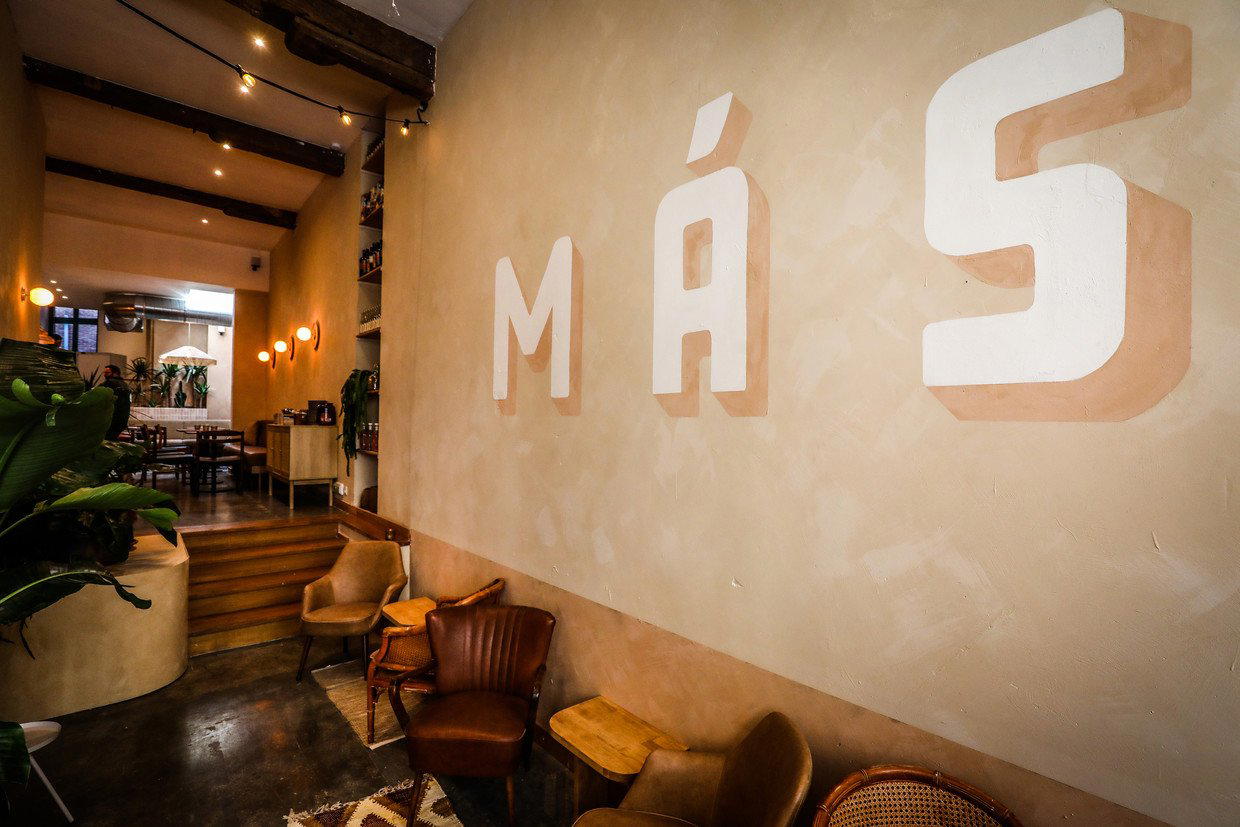
A Street Worth Finding in a City of Quiet Ambition
MÁS is a Mexican Street Food restaurant at Academiestraat 10, 8000 Brugge, Belgium. Bruges earns its culinary reputation in an understated way. The city lacks the media noise of Antwerp or Brussels, yet its concentration of serious restaurants per capita is difficult to dismiss. Academiestraat 10, the address of MÁS, sits in that quieter register of the city: a medieval street that doesn't announce itself with tourist signage, which is precisely what gives it the right conditions for a focused dining room. In Belgian cities of this scale, the restaurants that tend to matter are the ones you don't stumble into accidentally.
The broader Bruges fine-dining tier has sharpened considerably over the past decade. Established names like De Karmeliet have anchored the city's culinary identity for years, while a newer wave of addresses, Mémoire, Sans Cravate, and Zet'Joe by Geert Van Hecke, have filled in the middle ground between heritage and experiment. MÁS belongs in this conversation, representing a Bruges that is increasingly confident about what it offers the serious diner visiting Belgium for reasons beyond the canals.
How Dinner Moves Here
Pacing is deliberate, courses arrive with intervals that invite conversation, and the transition from aperitif to table is rarely rushed. The region's approach to hospitality tends toward the considered rather than the theatrical: service is present without performance, and the room's energy is calibrated to the food rather than competing with it. Bruges, in particular, has maintained that Flemish sensibility even as its restaurant scene has grown more ambitious.
At MÁS, the address on Academiestraat positions the experience within walking distance of the city's historic centre while keeping a degree of separation from the high-footfall areas around the Markt and Burg squares. That geography matters to the ritual: arriving on foot through narrower streets, away from the coach-tour circuits, sets a different register before the meal begins. Boury in Roeselare to Zilte in Antwerp.
Bruges in the Context of Belgian Gastronomy
Belgium's restaurant culture occupies an interesting position internationally. It has produced some of Europe's most technically accomplished kitchens, Hof van Cleve in Kruishoutem and L'air du temps in Liernu represent the national ceiling, yet the country rarely receives the international editorial attention proportionate to that output. The West Flanders corridor, which runs from Bruges down to the coast at addresses like Bartholomeus in Heist and Willem Hiele in Oudenburg, has quietly developed one of the more coherent regional dining identities in the country.
That identity leans on proximity to the North Sea, ingredients pulled from cold coastal waters, preparations that respect texture over elaboration, alongside a Flemish preference for product quality over conceptual showmanship. It is a different register from the more intellectual ambition you find at Bozar in Brussels or the precision tasting formats of Atomix in New York City. West Flanders cooking, at its most focused, tends to be grounded in the same kind of ingredient loyalty you find in Breton or Basque kitchens: the produce earns the technique, not the other way around.
MÁS sits within that regional current. Its location in Bruges places it among a comparable set that includes 't Apertje and the wider neighbourhood of serious Bruges addresses, all operating in a city where visitors arrive with refined expectations and locals have developed the appetite to match them.
The Practical Shape of an Evening
The city draws a European visitor mix, day-trippers from Brussels and Ghent, weekend visitors from Amsterdam, London, and Paris, which compresses reservation windows during peak season (spring weekends and the pre-Christmas period in particular). Visiting mid-week, especially in the shoulder months of October and early November, typically allows more flexibility in both booking and pace.
Bruges is compact enough that Academiestraat is reachable on foot from the main train station in under twenty minutes, or from most central hotels in under ten. That walkability is one of the practical advantages of the city's scale: pre- and post-dinner movement through the medieval streets is part of the experience, not a logistical inconvenience.
Castor in Beveren to De Jonkman in Sint-Kruis, typically run between two and a half and three hours for a full tasting format. Dress codes at Bruges fine-dining addresses tend to be smart-casual rather than formal: Belgium's dining culture has moved away from jacket requirements at most addresses, favouring an ease that doesn't compromise the seriousness of the food. The same applies at d'Eugénie à Emilie in Baudour and across much of the West Flemish fine-dining corridor.
Wine service in this tier in Bruges tends to follow Belgian purchasing patterns: the cellar leans heavily on Burgundy and northern Rhône, with growing representation from natural and low-intervention producers, reflecting a shift across the country's serious restaurants over the past several years. Belgian diners have historically been willing to spend on wine in proportion to the food, which gives kitchens at this level the commercial confidence to maintain a serious list. For comparison in international terms, the disciplined wine-to-food integration you find at Le Bernardin in New York City represents the kind of benchmark this tier aspires to match in its own regional idiom.
Where MÁS Sits in the Room
The meaningful question about any serious Bruges restaurant is not whether it deserves to exist in the city's dining scene, the competition has already answered that, but what it adds to the total offer. Bruges has enough heritage-format fine dining and enough casual Flemish cooking; what the city's more interesting recent additions have provided is a middle register that takes ingredients and technique as seriously as the trophy addresses while operating with less institutional weight. MÁS, at Academiestraat 10, fits that description: a restaurant whose value to the visitor is precisely that it doesn't require the occasion architecture of a landmark booking, yet delivers the kind of meal that justifies a special trip to the city in its own right.
Cuisine and Awards Snapshot
Comparable venues nearby, for context on price, style, and recognition.
| Venue | Cuisine | Price | Notes |
|---|---|---|---|
| MÁSThis venue — the venue you are viewing | Mexican Street Food | $$ | Not listed |
| De Verloren Hoek | Belgian Fusion Tapas | $$ | St-anna |
| WuaKmole Latin Street Food | Latin Street Food | $ | Langestraat |
| PUUR chocolat | Artisan Belgian Chocolatier | $ | Historic Center |
| Cuvee | Natural Wine Bar with Belgian Small Plates | $$ | St-anna |
| Ober | Modern Belgian-French Bistro | $$$ | Sint-Michiels |
Continue exploring
More in Bruges
Restaurants in Bruges
Browse all →
Bars in Bruges
Browse all →
Hotels in Bruges
Browse all →
Wineries in Bruges
Browse all →
At a Glance
- Lively
- Trendy
- Modern
- Casual Hangout
- Open Kitchen
- Natural Wine
Current opening hours
- Monday
- Closed
- Tuesday
- Closed
- Wednesday
- 5–10 PM
- Thursday
- 5–10 PM
- Friday
- 5–10 PM
- Saturday
- 5–10 PM
- Sunday
- Closed
Hours can change for holidays and private events. Last verified .
Fun, lively, and busy atmosphere with a metropolitan retro café feel.