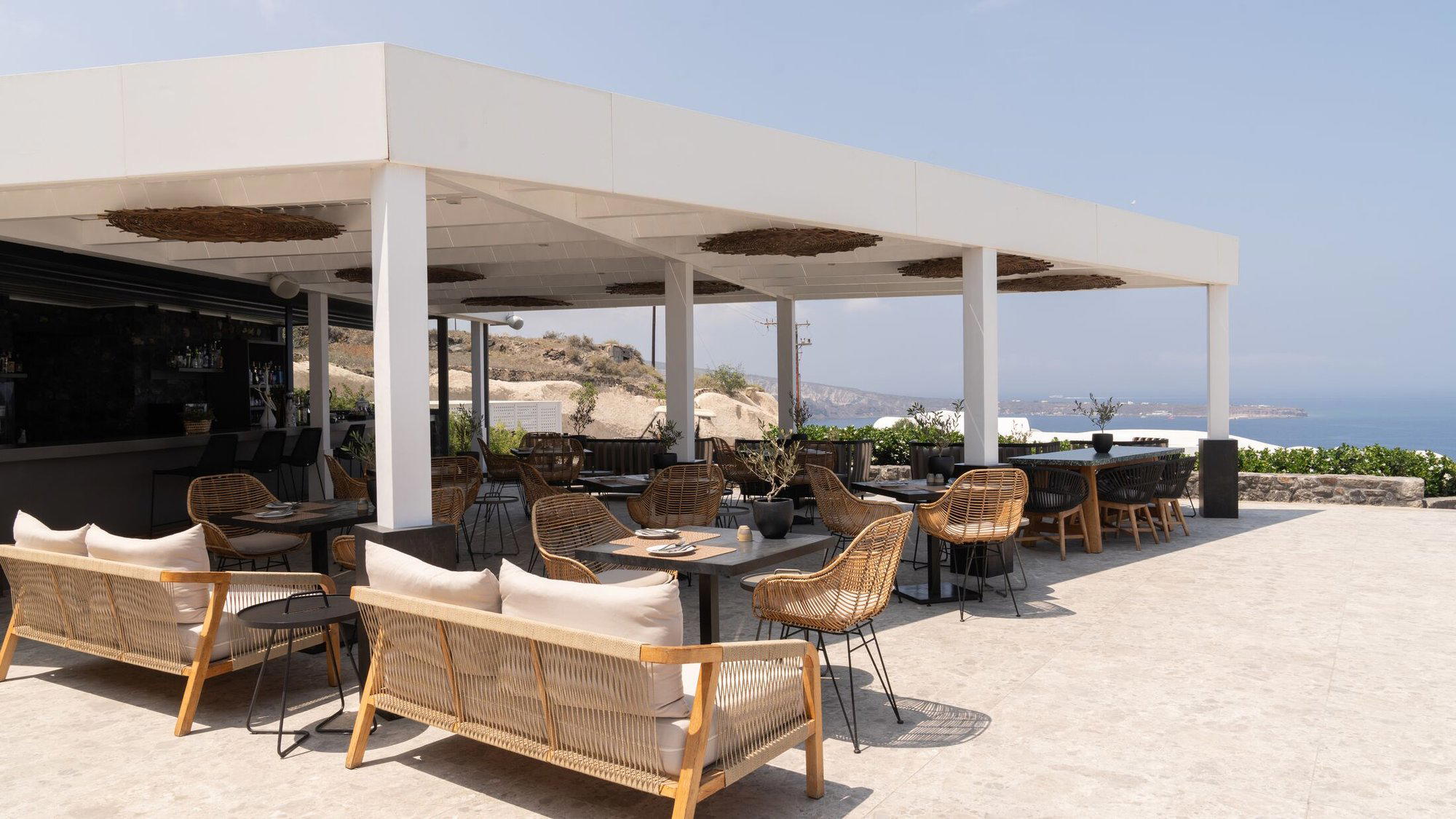
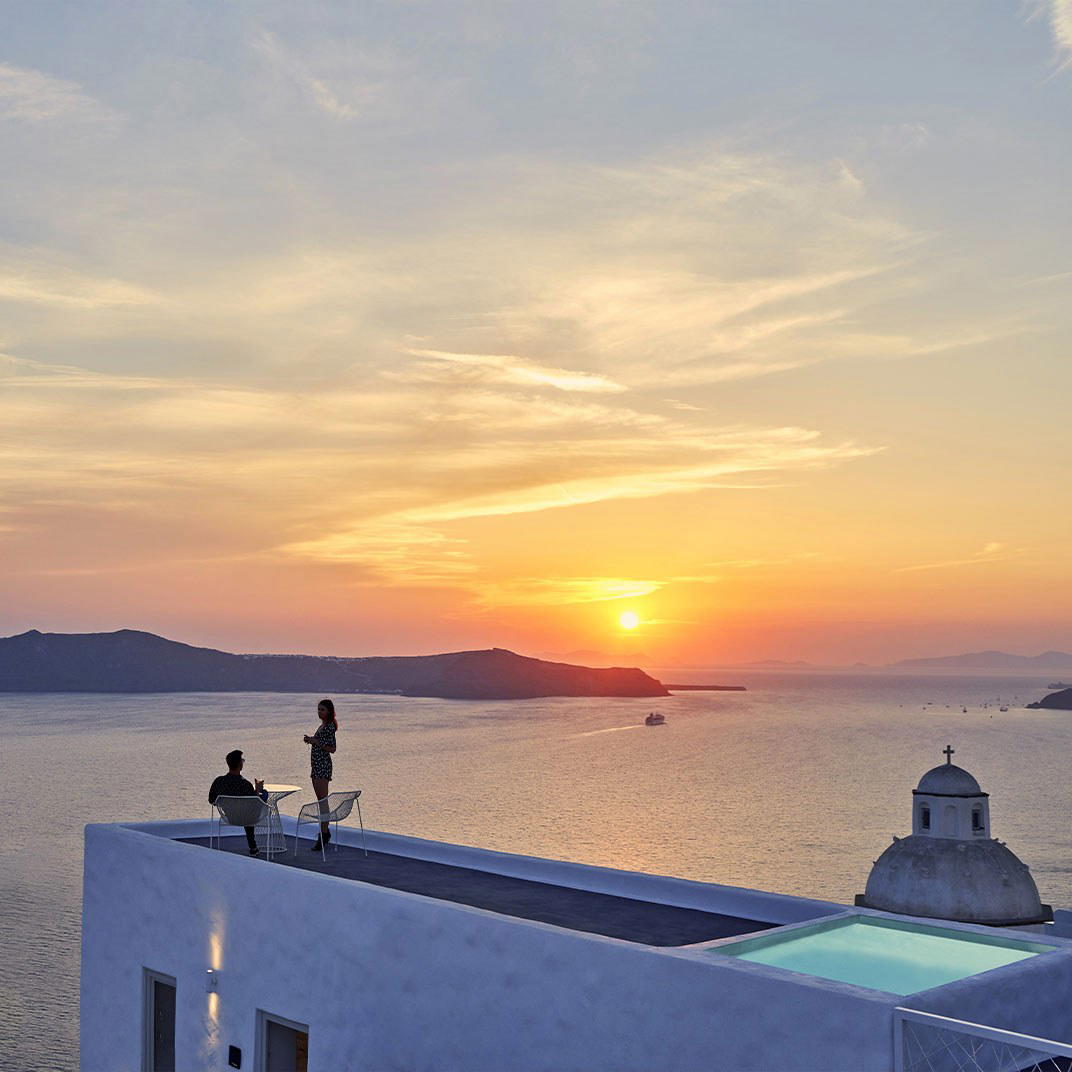
On the black-sand stretch of Perivolos Beach, Mr. E Restaurant occupies a position that few dining rooms on Santorini can claim: direct contact with the Aegean and the volcanic terrain that shapes everything grown and caught here. The menu draws from the island's distinct agricultural and maritime produce, placing it within a broader tradition of ingredient-led Greek coastal dining that has become increasingly serious in recent years.
Pearl is the En Primeur Club membership app — saves, bookings, and concierge access live there. Same editors, same standards.
- Address
- Perivolos Beach, Santorini, Greece Perivolos Beach, 847 03, Greece
- Phone
- +302286085051
- Website
- istoriahotel.gr
- Directions
- Get directions
 Saves & bookings on Pearl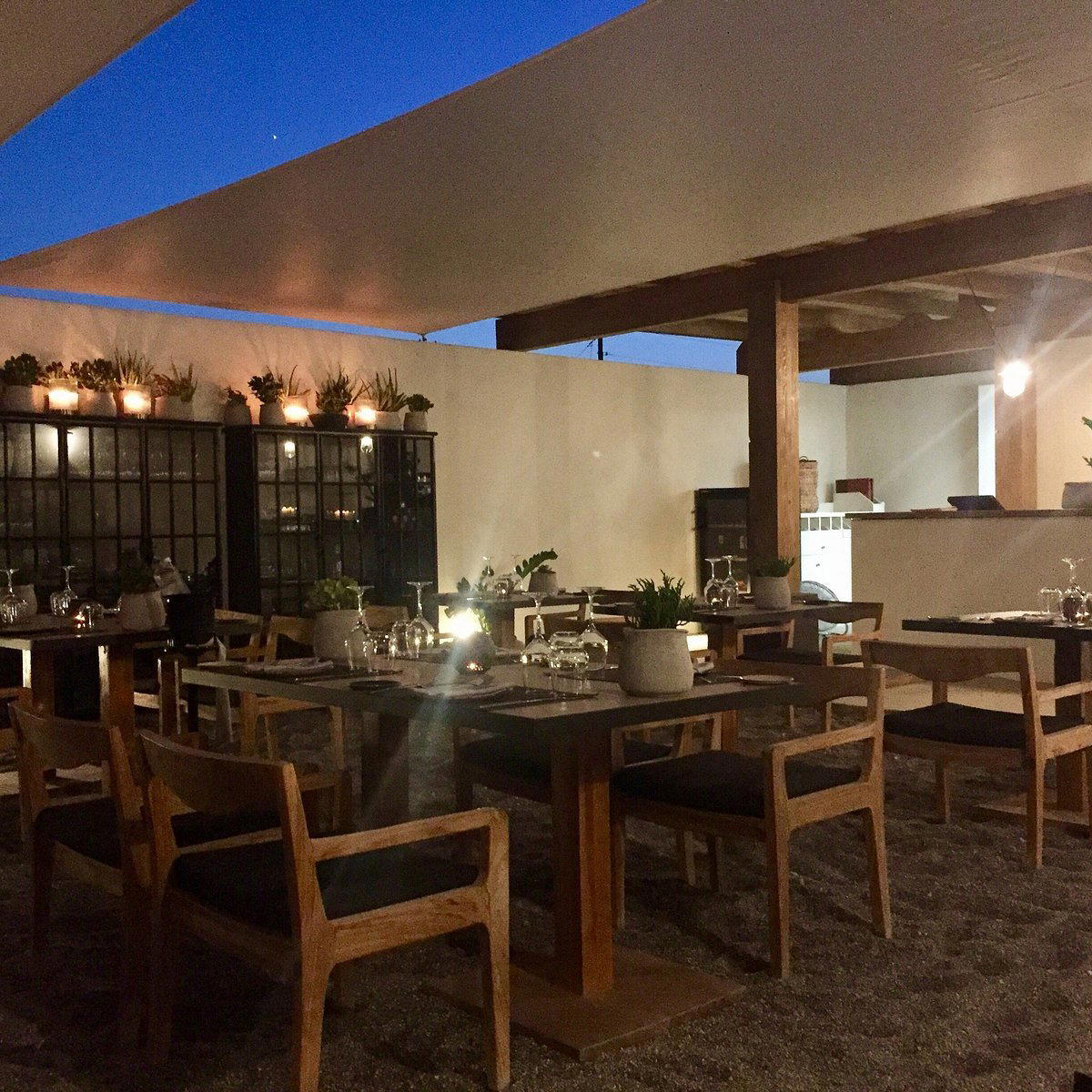
Where the Volcanic Terrain Meets the Table
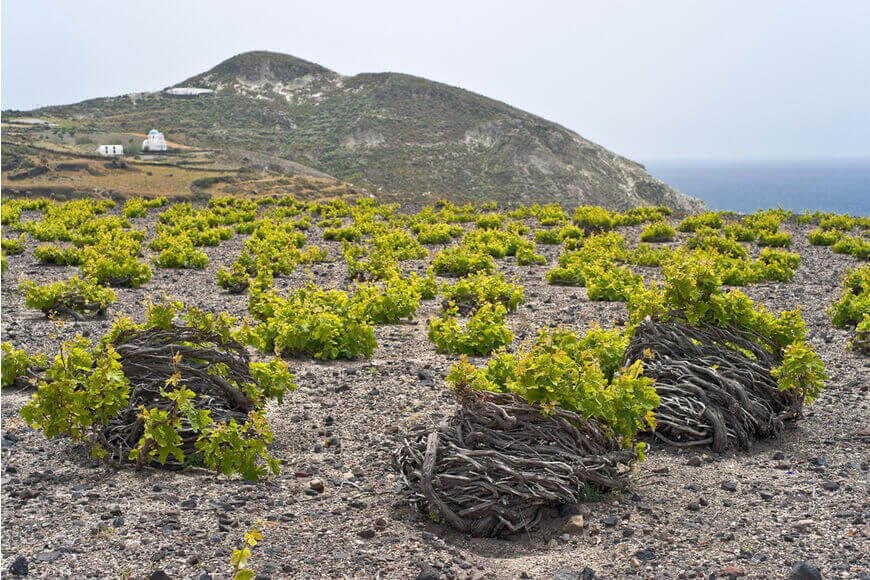
Perivolos Beach sits on Santorini's southeastern coast, away from the caldera-view circuit that dominates most visitors' itineraries. The black sand here — the product of centuries of volcanic activity — is the same geological force that gives the island's produce its character: the mineral-dense soil, the low-rain growing conditions, the concentrated flavours in everything from cherry tomatoes to capers to the island's distinctive white wines. Mr. E Restaurant occupies this stretch of coastline, and the physical environment is not incidental to what ends up on the plate. For a broader picture of what the area offers, see our full Emporeio restaurants guide.
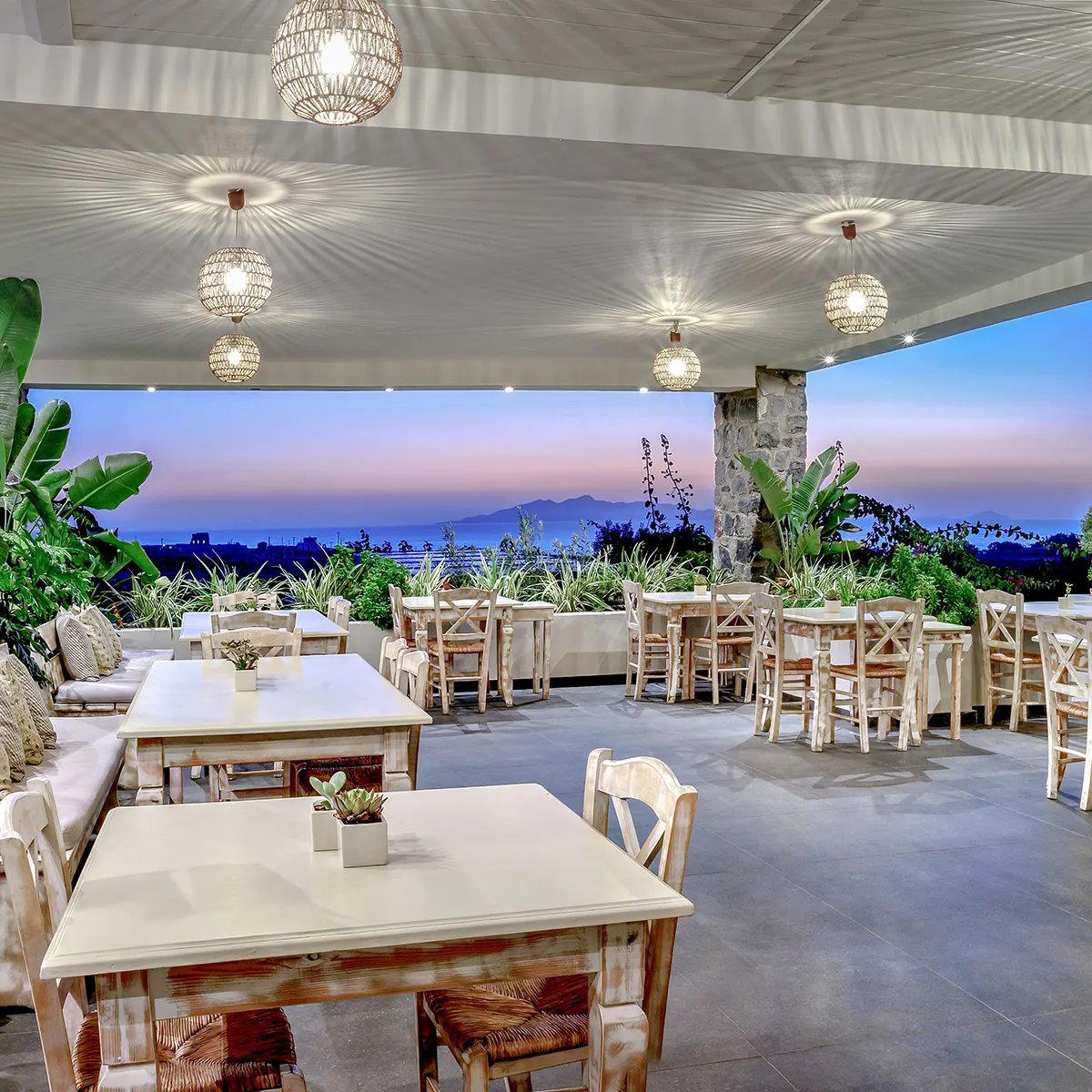
Approaching along Perivolos, the transition from beach to dining room is gradual rather than abrupt. The Aegean is present throughout, whether as backdrop, as sound, or as the source of whatever was hauled in that morning. This kind of coastal positioning is common enough in Greece, but the volcanic specificity of Santorini's ingredients gives kitchens here a distinct sourcing argument that most Aegean beachfront restaurants cannot replicate.
The Sourcing Argument: Why Santorini's Ingredients Are Different
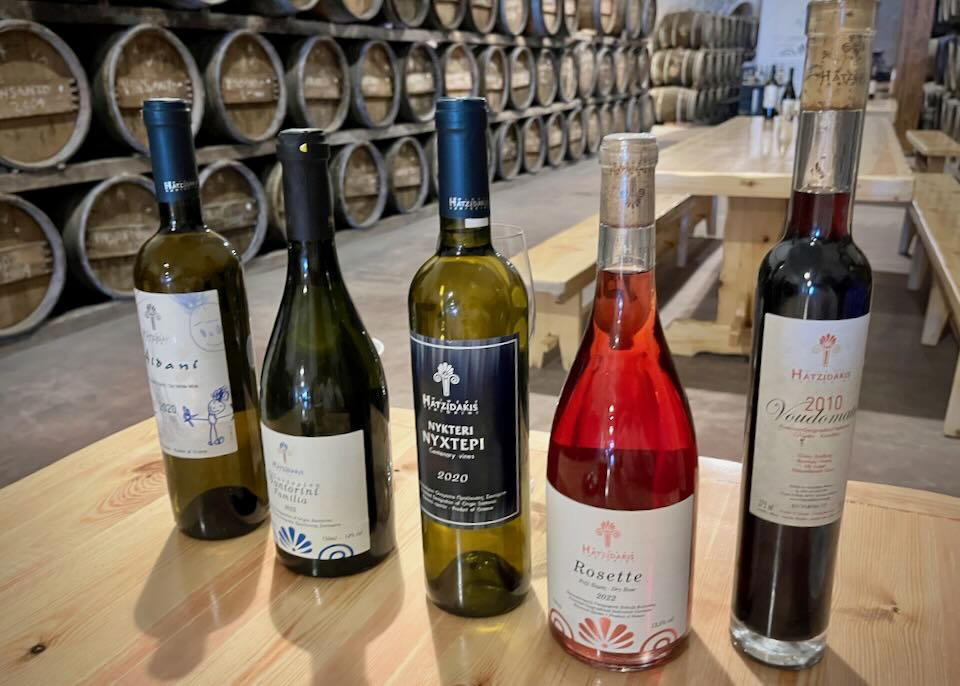
The case for ingredient-led dining on Santorini rests on geology more than any chef's intervention. The island's volcanic soil, combined with low annual rainfall and strong Meltemi winds, produces ingredients under stress conditions that concentrate flavour in ways that more fertile growing environments do not. Santorini's cherry tomatoes, used across local kitchens in their fresh, dried, and paste forms, are cultivated from heirloom varieties that have adapted to these conditions over generations. The white eggplant grown here is smaller and more tender than mainland varieties. The capers are picked wild from volcanic rock faces. The fava, made from yellow split peas grown on the island, has protected designation of origin status, placing it in the same regulatory tier as Champagne or Parmigiano-Reggiano.
This is the sourcing context in which a kitchen at Perivolos Beach operates. The leading coastal dining rooms on the island treat these designations not as marketing points but as constraints on their sourcing decisions: if Santorini fava is available, you do not import a substitute. Mr. E sits within that tradition, positioned where the beach meets the Aegean and where the island's distinct agricultural character is the baseline expectation rather than a special feature.
For comparison, consider what ingredient-led Greek cooking looks like at different price points and formats elsewhere. Delta in Athens operates in a fine-dining register with an explicit commitment to Greek produce. Lure Restaurant in Oia works the northern tip of the same island with a seafood focus. Both point to a broader Greek dining movement that has been building for over a decade, in which local ingredients are treated as the primary argument rather than an afterthought.
Seafood and the Aegean Kitchen
Beach restaurants on Santorini tend to organize around seafood, and the logic is direct: the Aegean is immediately present, and the island's fishing tradition, while smaller than those of larger Greek islands, produces octopus, sea bream, sea bass, and a range of smaller fish that are processed and served within tight supply chains. What distinguishes the better kitchens from the purely transactional ones is how they handle the gap between the day's catch and what ends up on the table, whether preparations respect the quality of the raw ingredient or obscure it.
Greek coastal cooking at its most disciplined uses minimal intervention: olive oil, lemon, herbs, and occasionally the island's own white wine as a braising liquid. The fish arrives whole or portioned from the grill rather than dressed beyond recognition. This restraint is itself a tradition, one that Jimy's Fish in Piraeus and Bony Fish Santorini in Imerovigli both operate within, across different neighbourhood contexts. At Perivolos, with the water visible from the table, the same principle applies: the sourcing is the story, and the preparation should not argue with it.
The Beach Dining Format and What It Asks of a Kitchen
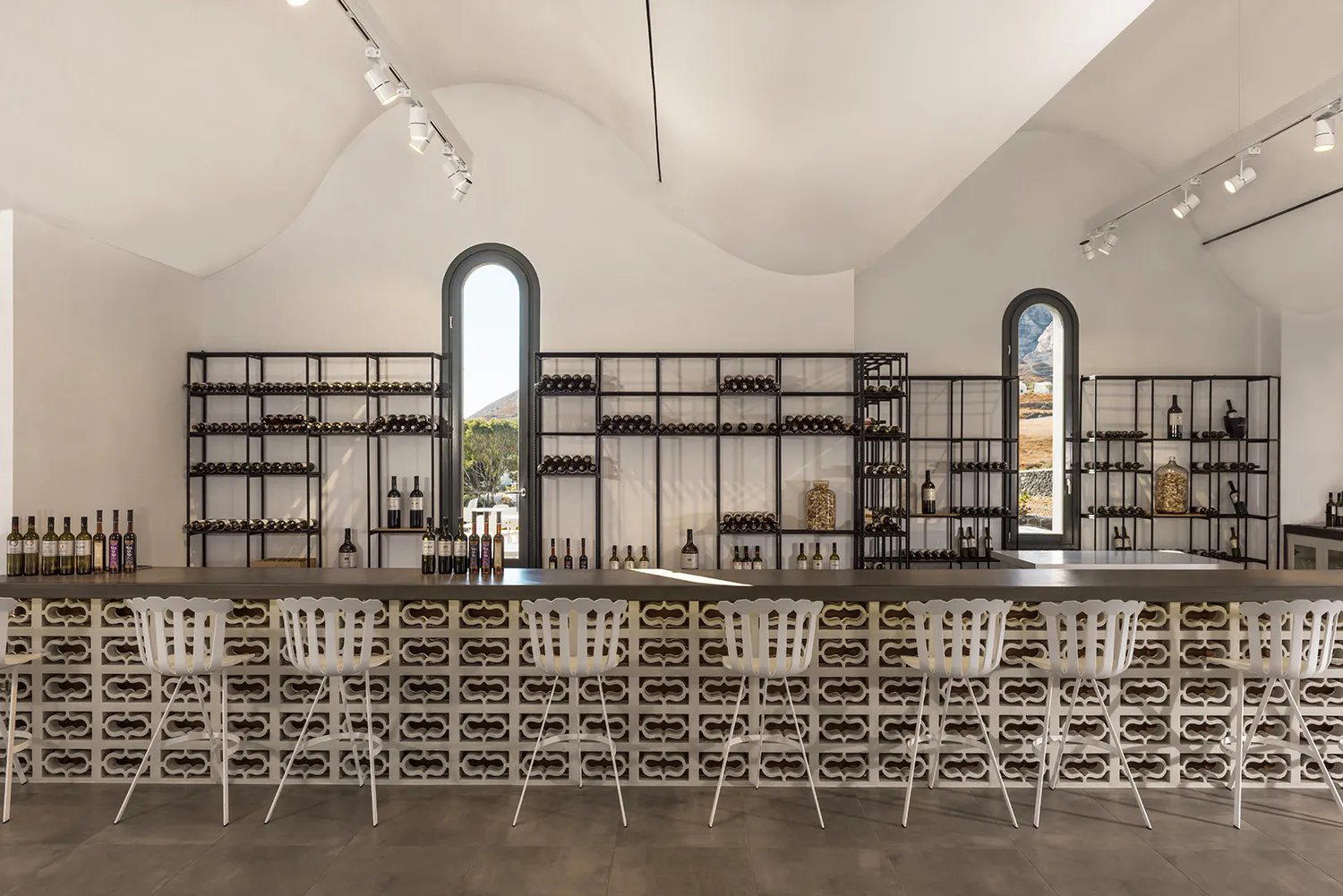
Dining directly on or beside a working beach creates specific operational conditions that inland restaurants do not face. Service timing is shaped by the rhythm of the beach rather than by the kitchen's preferred pace. Tables turn more slowly at lunch when guests are spending the day. Wind, salt air, and direct sun affect how certain dishes hold between kitchen and table. The format rewards preparations that are strong in the structural sense, dishes that arrive correctly even under those conditions, rather than technically ambitious plates that require climate-controlled service to land as intended.
This is one reason why grilled fish, cold meze, and wine-forward menus dominate the better Santorini beach restaurants. The format and the food align. It is also why credible beach dining on the island tends to be confident rather than elaborate, a character that connects it to the broader Greek taverna tradition while operating at a higher level of ingredient quality. For a sense of how that tradition plays out in other Greek coastal settings, Alykes in Palaio Faliro and Lake Vouliagmeni in Vouliagmeni offer useful reference points in the Athens coastal corridor.
Planning a Visit to Perivolos
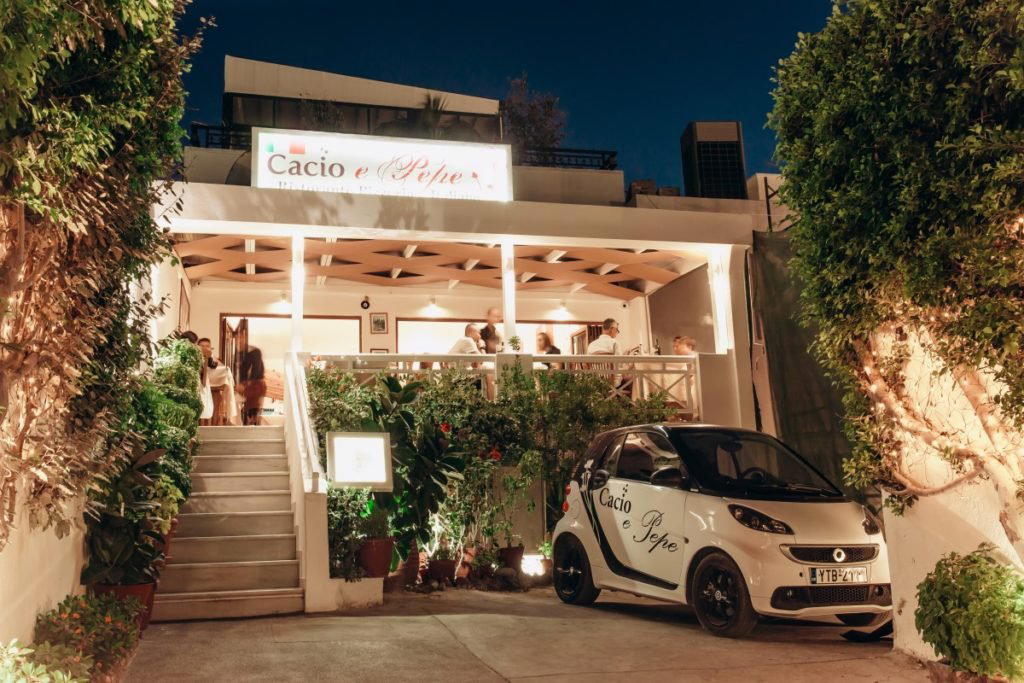
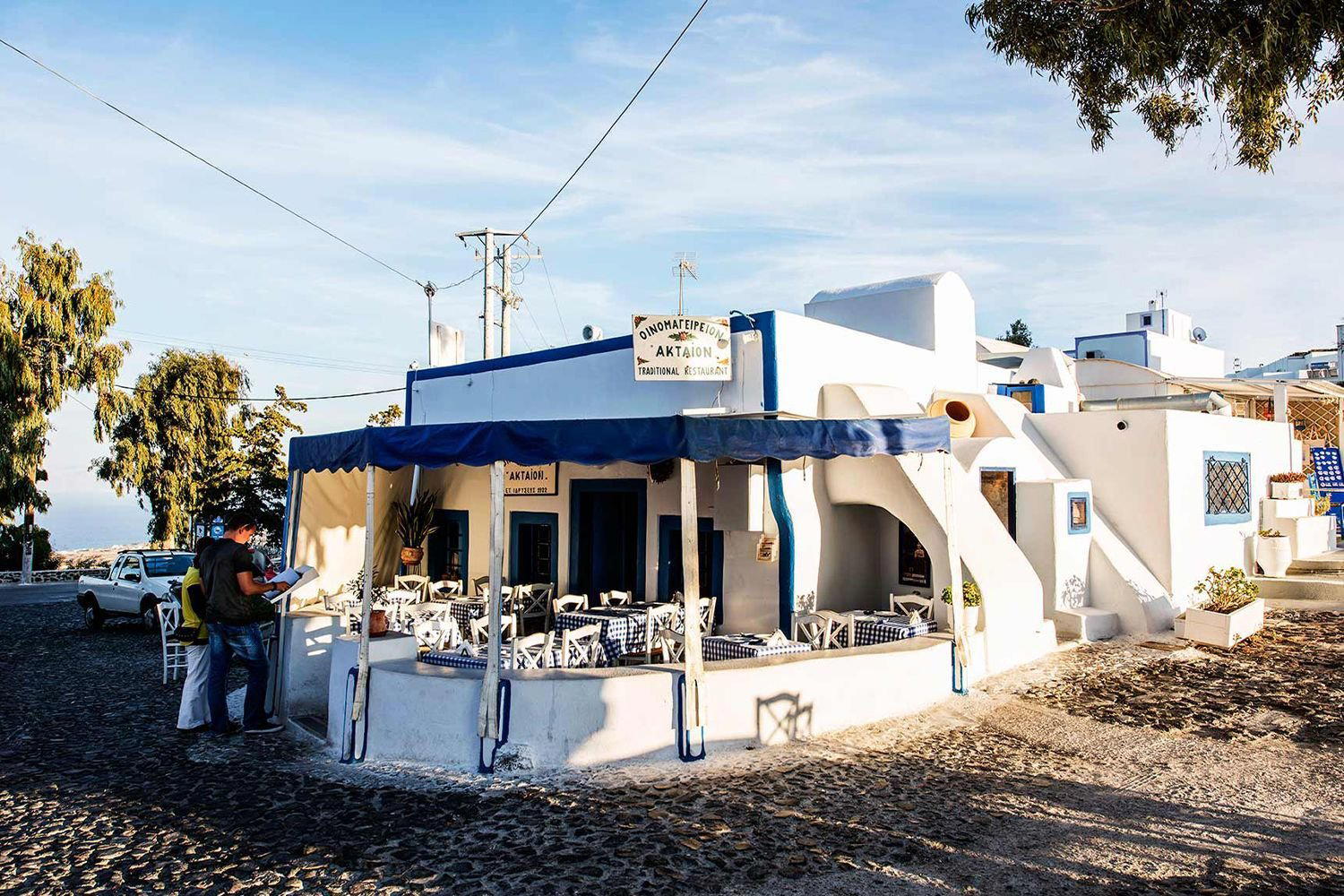
Perivolos Beach is accessible from Fira by car or taxi in roughly 20 minutes, making it a reasonable detour from the caldera towns without requiring a full change of base. The beach is busiest from late June through August, when afternoon tables fill quickly and the combination of sun, sea, and a long lunch becomes the dominant format. Shoulder season, May, early June, and September, offers the same volcanic-terrain sourcing with considerably less competition for tables and a more settled service pace. Booking ahead is advisable in peak months. For those exploring the broader dining scene around the island, Cacio e Pepe in Thira Municipality, Aktaion in Firostefani, and Feredini in Santorini each represent distinct approaches to the island's dining possibilities.
At-a-Glance Comparison
| Venue | Cuisine | Price | Awards |
|---|---|---|---|
| Mr. E RestaurantThis venue — the venue you are viewing | This venue | Not listed | Not listed |
| Botrini's | Contemporary Greek, Mediterranean Cuisine | €€€€ | Michelin 1 Star |
| Hytra | Modern Greek, Modern Cuisine | €€€ | Michelin 1 Star |
| Spondi | Contemporary Greek, French | €€€€ | Michelin 1 Star |
| Tudor Hall | Contemporary | €€€€ | Michelin 1 Star |
| Aleria | Greek | €€€ | Greek, €€€ |
Continue exploring
More in Emporeio
Restaurants in Emporeio
Browse all →
Bars in Emporeio
Browse all →
Hotels in Emporeio
Browse all →

At a Glance
- Romantic
- Elegant
- Scenic
- Intimate
- Sophisticated
- Date Night
- Special Occasion
- Waterfront
- Terrace
- Hotel Restaurant
- Local Sourcing
- Waterfront
Relaxing beachfront atmosphere with ocean views and an enchanting, mysterious vibe.