On Rue Fortia in Marseille's first arrondissement, Mouné works the intersection where Mediterranean market produce meets technique drawn from beyond the region's borders. The cooking takes local ingredients seriously enough to let them lead, while the methods applied show a wider frame of reference than the city's traditional bouillabaisse circuit.
Pearl is the En Primeur Club membership app — saves, bookings, and concierge access live there. Same editors, same standards.
- Address
- 30 Rue Fortia, 13001 Marseille, France
- Phone
- +33766523075
- Website
- mouneresto.com
- Directions
- Get directions
 Saves & bookings on Pearl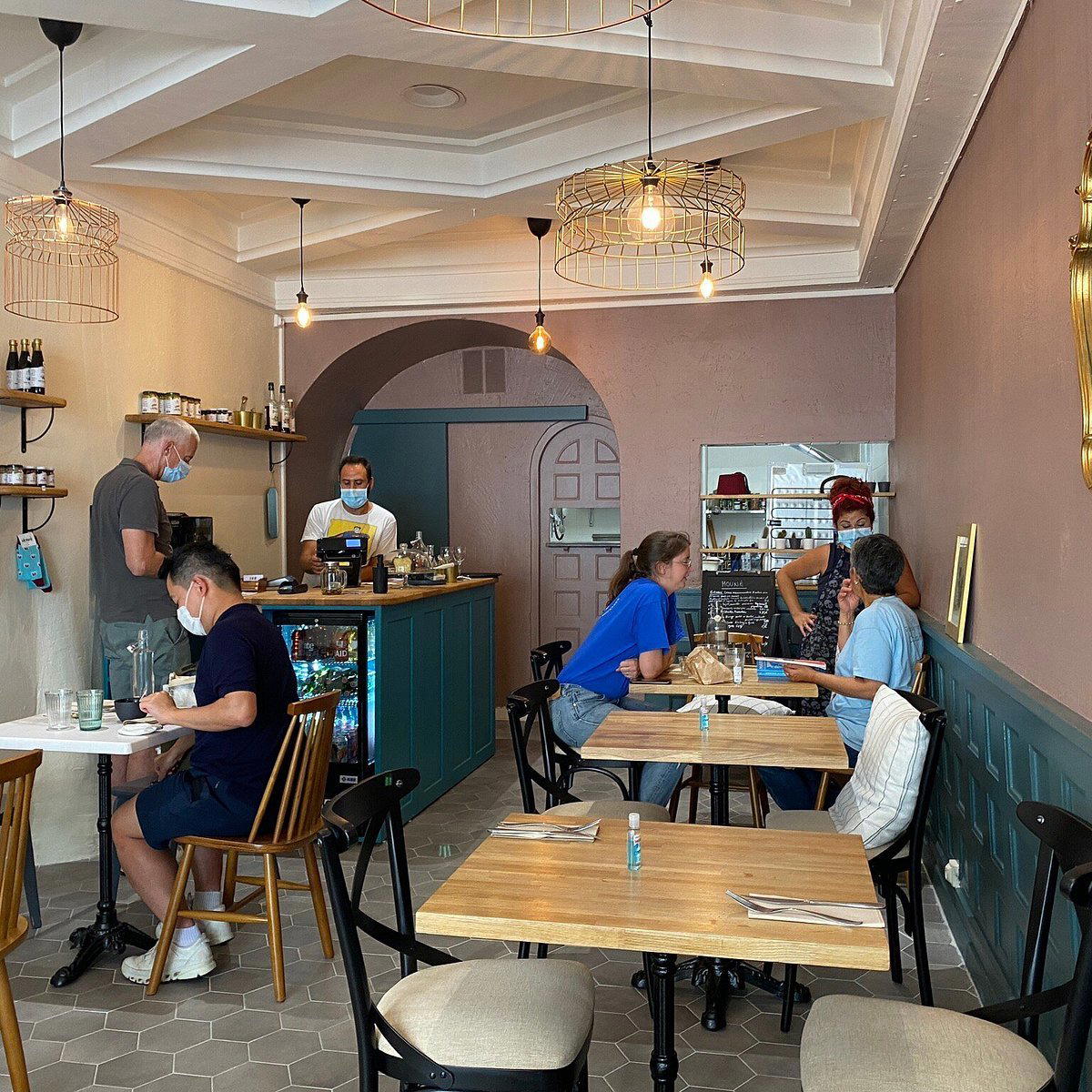
Where the Port City Meets the Plate
Rue Fortia sits close enough to the Vieux-Port that the salt air is present but the tourist current has not yet swallowed the street whole. This corner of the first arrondissement belongs to a cluster of addresses that have, over the past decade, shifted Marseille's dining conversation away from its heritage seafood institutions toward something more restless and contemporary. The physical approach to Mouné gives little away: the facade is understated in the way that addresses confident of their own footing tend to be, leaving the interior to make the argument.
Marseille occupies a particular position in French gastronomy. It is the country's second city by population and, by some measures, its most Mediterranean one, with a port history that folded North African, Levantine, and southern Italian influences into everyday cooking long before fusion became a category. That layered background creates real tension for restaurants working at a more considered register: the city's culinary identity is so strongly associated with specific dishes, above all bouillabaisse, that any kitchen moving beyond that canon has to make its case clearly. The addresses doing so most effectively tend to be those that treat local ingredients as the fixed point and allow technique to travel further afield. Mouné operates in that space.
The Intersection of Provençal Product and Imported Method
The editorial argument around restaurants like Mouné comes down to a question that French regional cooking has been working through for a generation: what happens when chefs trained in, or informed by, kitchens outside the region bring those methods back to apply against hyperlocal produce? The results, when the balance holds, produce cooking that is neither nostalgic nor performatively modern. The Mediterranean basin supplies an abundance that most other European culinary regions cannot match: fish from the Golfe du Lion, vegetables from the market gardens of the Bouche-du-Rhône, olive oils from the Alpilles, herbs whose aromatic intensity is shaped by limestone soil and summer heat. The question is what you do with that abundance once you have it.
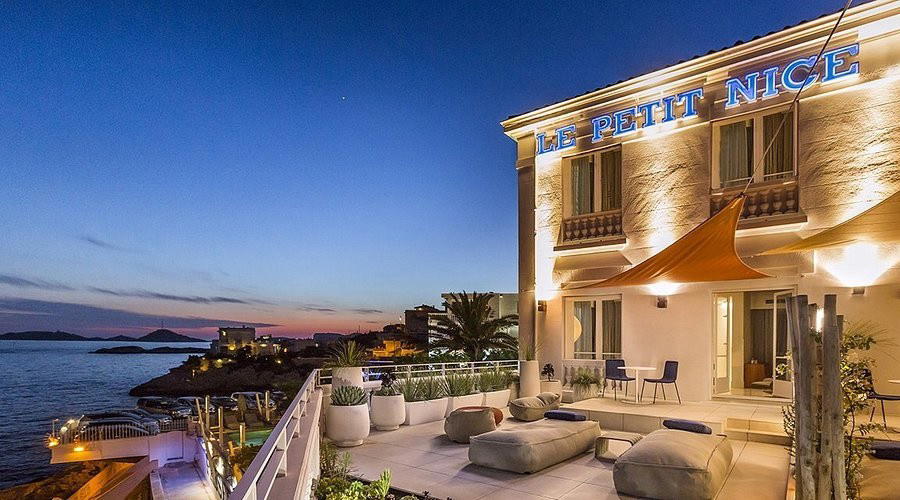
This approach places Mouné in a different competitive register from the city's established institutions. Le Petit Nice, at the three-Michelin-star level, represents the apex of Marseille's seafood tradition in its most formally codified form. AM par Alexandre Mazzia operates at the creative extreme, where Mediterranean references are often abstracted to the point of transformation. Une Table, au Sud holds Michelin recognition for its own interpretation of southern French cooking. What distinguishes the tier below those flag-bearers is a willingness to work the local-global seam without needing the structural validation of major award recognition to do it credibly.
Marseille's Wider Dining Frame
The city's restaurant culture has undergone a visible shift since around 2013, accelerating after Marseille's year as European Capital of Culture brought sustained outside attention. Neighborhoods that previously lacked the density of quality addresses began consolidating around new openings. The first and sixth arrondissements in particular developed a corridor of more ambitious cooking that exists alongside, rather than replacing, the city's deeper traditions: the pissaladière counters, the panisse stalls, the North African pastry shops that are as much a part of local food culture as anything served on linen tablecloths.
For readers plotting a serious Marseille table itinerary, that context matters. The city now supports a range of ambition levels with genuine depth. Alivetu represents the Mediterranean-focused end of the current scene. 1860 Le Palais occupies a different register. The full picture is mapped in a Marseille restaurants guide, which sets these addresses against each other with price-tier and style context. Mouné slots into this picture as an address engaged with the contemporary conversation rather than anchored to the city's canonical repertoire.
Technique Travelling South
The broader pattern of technique migrating toward strong-ingredient regions is well established in French cooking. Mirazur in Menton built one of the world's most closely watched restaurants on exactly this premise: Mauro Colagreco applying Argentine and Italian-inflected instincts to the produce of the French-Italian border. Bras in Laguiole spent decades insisting that Aubrac's rugged botanical landscape could support cooking at the highest level without reaching for classical French luxury products. Further north, Auberge du Vieux Puits in Fontjoncouse demonstrated that deep southern France, well outside the main metropolitan circuits, could sustain three-star cooking built on regional produce.
The comparison holds because it identifies a structural argument: interesting cooking in any region tends to come from kitchens that know the techniques available to them globally but choose to apply those techniques in service of what the local land and sea actually produce, rather than importing the ingredients the techniques were originally designed for. In Marseille, that means the sea is always present as context, even when a given dish is not a fish dish. The salinity, the heat, the provençal herb register are gravitational forces on any kitchen working seriously in the city.
That same sensibility has informed kitchens far removed from Marseille. Le Bernardin in New York City built a four-decade reputation around applying classical French rigour to seafood in a way that the original French context might not have demanded. Atomix in New York City demonstrates what happens when Korean technique and ingredient logic are applied with the structural discipline of fine dining. The pattern recurs because it works: strong local ingredients, serious borrowed technique, and a kitchen confident enough to let the product lead.
Planning a Visit to Mouné
Mouné is located at 30 Rue Fortia, 13001 Marseille, in the first arrondissement, within walking distance of the Vieux-Port. Given the address sits in a neighborhood with increasing dining density and limited same-day availability at comparable tables, booking ahead is advisable; the approach most common at this tier in Marseille is to contact the restaurant directly, as online booking systems vary across the independent restaurant sector here. For broader trip planning across the city's dining options, a Marseille restaurants guide provides price-tier and neighbourhood breakdowns.
Accolades, Compared
Comparable venues nearby, for context on price, style, and recognition.
| Venue | Cuisine | Price | Notes |
|---|---|---|---|
| MounéThis venue — the venue you are viewing | Contemporary Lebanese | $$ | Not listed |
| Fioupelan | Provençal Brasserie | $$ | Hotel De Ville |
| Coquetel Club | French Cocktail Bar with Boards | $$ | Castellane |
| La Pagaille | Modern Mediterranean Tapas | $$ | Hotel De Ville |
| La Baleine | Mediterranean Bistronomie | $$ | Notre Dame Du Mont |
| Emile 1933 | Classic French Brasserie | $$ | Le Rouet |
Continue exploring
More in Marseille
Restaurants in Marseille
Browse all →
Bars in Marseille
Browse all →
Hotels in Marseille
Browse all →
At a Glance
- Cozy
- Modern
- Intimate
- Date Night
- Family
- Casual Hangout
- Terrace
- Natural Wine
- Organic
- Local Sourcing
- Street Scene
Current opening hours
- Monday
- 12–2 PM, 7:30–10 PM
- Tuesday
- 12–2 PM, 7:30–10 PM
- Wednesday
- 12–2 PM
- Thursday
- 12–2 PM, 7:30–10 PM
- Friday
- 12–2 PM, 7:30–10 PM
- Saturday
- Closed
- Sunday
- Closed
Hours can change for holidays and private events. Last verified .
Uncluttered dining room with antique pink walls, light wood tables, colorful cushions, and hanging bird cages creating a warm, homey atmosphere.