

Oribe sits in Osaka's Nishi Ward at the more accessible end of the city's teppanyaki spectrum, holding a Michelin Bib Gourmand for 2024 and 2025. Chef Takahito Nishimura's menu draws on French bistro references alongside Japanese grill technique, closing with the city's signature okonomiyaki. The green-accented interior takes its cue from Oribe ware pottery, giving the room a considered visual identity that separates it from standard teppanyaki formats.
Pearl is the En Primeur Club membership app — saves, bookings, and concierge access live there. Same editors, same standards.
- Address
- Japan, 〒550-0013 Osaka, Nishi Ward, Shinmachi, 1 Chome−6−18 テラスレジデンス四ツ橋 1階
- Phone
- +81 6-6532-8266
- Website
- o-ri-be.com
- Directions
- Get directions
 Saves & bookings on Pearl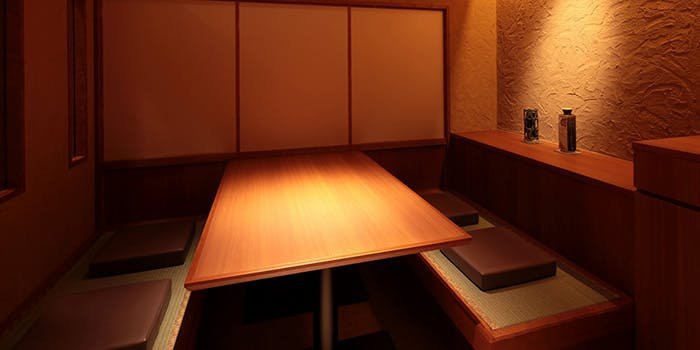
Where Shinmachi's Streets Meet the Griddle
The blocks around Yotsubashi station carry a quieter register than Dotonbori or Shinsaibashi, which sit close enough to draw foot traffic but far enough to keep rents and noise at a manageable level. Shinmachi has long supported the kind of neighbourhood restaurant that earns its audience through repetition and word of mouth rather than tourist-facing visibility. In that context, Oribe reads as exactly the kind of address the area tends to produce: a room with a clear point of view, a price point that sits well below the city's flagship French and kaiseki counters, and a format that rewards locals who return rather than visitors passing through once.
The interior signals its orientation from the start. Oribe ware, the dark green-glazed pottery tradition associated with late Sengoku-period Japan, gives the room its colour palette. The green theme running through the décor is a deliberate reference rather than a decorative accident, and it sets a tone that is more considered than a typical neighbourhood teppanyaki shop. The ceramics and their characteristic colouring provide a frame for the cooking that follows, anchoring an otherwise informal format in a specific aesthetic tradition.
The Franco-Japanese Teppanyaki Position
Teppanyaki in Japan occupies a broad range. At one end sit hotel-based iron-griddle rooms where wagyu grades and price points are the primary differentiators. At the other end sit counter restaurants where the cooking logic draws from somewhere other than the standard steak-and-seafood template. Oribe operates in that second territory. Chef Takahito Nishimura has built a menu where French bistro technique sits alongside the teppanyaki format rather than replacing it, producing a list of appetisers that reference pâté and smoked salmon as part of the same meal that ends with okonomiyaki.
That combination is less eccentric than it first sounds. Osaka has a longer history of absorbing Western cooking influences into its own frameworks than most Japanese cities. The city's yōshoku tradition, which adapted French and European techniques from the Meiji period onward, created a culinary grammar in which French and Japanese references could coexist without one needing to dominate. Oribe sits inside that tradition rather than inventing a new one, and the menu reflects a chef who understands where the crossover points are and uses them without forcing the combination.
The cabbage steak is the clearest example of this logic in practice. The dish came from thinking through the essential components of okonomiyaki and isolating the cabbage element, then developing it as a standalone preparation on the griddle. The result sits at the intersection of the two traditions the menu references without being a literal fusion dish. It also gives the meal a structural anchor that is neither the French courses at the start nor the okonomiyaki at the end, but something that only makes sense in this specific kitchen.
What the Bib Gourmand Signals in Osaka's Market
Oribe, a restaurant in Osaka's Shinmachi, has been recognised with the Michelin Bib Gourmand in 2024 and 2025. The Bib designation identifies restaurants that offer good cooking at a moderate price, which in Osaka's context places Oribe well below the three-star rooms like HAJIME (French, Innovative) or the upper-tier French addresses like La Cime (French), and also below kaiseki specialists such as Kashiwaya Osaka Senriyama (Japanese). It sits alongside rather than competing with those rooms, occupying the value tier of a recognised guide rather than the prestige tier.
For the reader deciding where Oribe fits in a trip itinerary, the practical implication is that this is a lunch or mid-week dinner option that delivers Michelin-acknowledged cooking without the booking difficulty or price commitment that the city's starred rooms require. The ¥¥ price range confirms that positioning.5 across 121 ratings add a consistent civilian signal that aligns with the Michelin assessment rather than contradicting it.
In teppanyaki terms, comparison points outside Osaka are useful for calibrating expectations. Ishigaki Yoshida in Tokyo operates at the premium wagyu end of the teppanyaki spectrum, while Hibana by Koki in Hanoi shows how the format travels regionally. Oribe represents neither the luxury wagyu tier nor the export version of teppanyaki, but a domestically rooted variant with a specific menu logic.
The Okonomiyaki Ending as Local Statement
Osaka's relationship with okonomiyaki is not neutral. The savoury pancake is one of the city's clearest expressions of local food identity, and finishing a teppanyaki meal with it is a deliberate address to a local audience. Tourists may arrive with okonomiyaki already on their agenda, but the gesture reads differently to a Shinmachi regular who treats the dish as a familiar closing note rather than a novelty. That the okonomiyaki is reportedly popular at Oribe suggests the local audience has accepted the framing rather than finding it incongruous.
That decision also distinguishes Oribe from teppanyaki formats that close with dessert courses following a Western progression. The meal's arc here runs from French-influenced appetisers through the teppanyaki middle section to an Osaka street-food tradition at the end, which is a sequence that only makes sense in this city and, more specifically, in a neighbourhood restaurant rather than a hotel dining room.
Planning Your Visit
Oribe is located in Nishi Ward's Shinmachi at 1 Chome-6-18 Terrace Residence Yotsubashi, on the ground floor. The address is walkable from Yotsubashi station and within reasonable distance of the broader Shinsaibashi area.
| Venue | Cuisine | Price | Michelin |
|---|---|---|---|
| Oribe | Teppanyaki / French-Japanese | ¥¥ | Bib Gourmand 2024, 2025 |
| HAJIME | French, Innovative | ¥¥¥¥ | Three stars |
| La Cime | French | ¥¥¥¥ | Two stars |
| Kashiwaya Senriyama | Japanese Kaiseki | ¥¥¥ | Two stars |
| tanpopo | Osaka neighbourhood | Available at link | See listing |
Reservations are advisable given the consistent review scores and consecutive Bib recognition, which reliably increases demand at this price tier.
Further Reading
For Osaka's wider dining peer group, JIBUNDOKI represents a different position in the city's restaurant spectrum. Outside Osaka, Gion Sasaki in Kyoto, Harutaka in Tokyo, akordu in Nara, Goh in Fukuoka, 1000 in Yokohama, and 6 in Okinawa map the wider Kansai and Japan restaurant conversation. For wineries in the region, our full Osaka wineries guide covers available listings.
FAQ: What Should I Eat at Oribe?
The menu at Oribe runs from French-influenced appetisers through the teppanyaki main section to okonomiyaki at the close. The cabbage steak, developed by Chef Takahito Nishimura from the core components of okonomiyaki, is the dish most specific to this kitchen and most useful for understanding the menu's logic. Appetisers draw on French bistro references including pâté and smoked salmon. The okonomiyaki that ends the meal is one of the more popular items and functions as both a local tradition reference and a structural close to the Franco-Japanese arc the menu builds across the sitting. The Michelin Bib Gourmand recognition in both 2024 and 2025 confirms that this combination has been assessed favourably at the price point.
A Lean Comparison
Comparable venues nearby, for context on price, style, and recognition.
| Venue | Cuisine | Price |
|---|---|---|
| OribeThis venue — the venue you are viewing | Teppanyaki | $$$ |
| Ayamuya | Fukushima, Michelin Yakitori | $$$ |
| Sobakiri Gaku | Chūō, Artisanal Soba | $$$ |
| Tonkatsu KATSU Hana | Chūō, Premium Regional Tonkatsu | $$$ |
| Nikomi Kimura | Chūō, Japanese Nikomi Izakaya | $$$ |
| AKA to SHIRO | Kita, Modern Edomae-Kansai Sushi Omakase | $$$ |
Recognition history
Dated appearances from independent guides and award organizations, with the underlying list record or original source where available.
Michelin Bib Gourmand
Michelin
Michelin Bib Gourmand
Michelin
Tabelog 100 #51 · No. 51
Tabelog · Tabelog 100 - Steak / Teppanyaki - WEST - 2025
Michelin Bib Gourmand
Michelin
Continue exploring
More in Osaka
Restaurants in Osaka
Browse all →




Bars in Osaka
Browse all →


Hotels in Osaka
Browse all →




Wineries in Osaka
Browse all →
At a Glance
- Cozy
- Elegant
- Intimate
- Modern
- Date Night
- Special Occasion
- Open Kitchen
- Sake Program
Current opening hours
- Monday
- Closed
- Tuesday
- 6–10 PM
- Wednesday
- 6–10 PM
- Thursday
- 6–10 PM
- Friday
- Closed
- Saturday
- 6–10 PM
- Sunday
- 6–10 PM
Hours can change for holidays and private events. Last verified .
Warm wooden interior with counter seating focused on the chef's lively cooking performance.