
Michelin Plate
Our verdict
Kasane is a Michelin Plate-recognised izakaya in Osaka's Dojima district, operating at the mid-range price tier that defines the city's most serious casual dining. The basement setting and neighbourhood address place it squarely in the tradition of Osaka's after-work drinking-and-eating culture, where precision and informality coexist across the same counter.

Pearl is the En Primeur Club membership app — saves, bookings, and concierge access live there. Same editors, same standards.
- Address
- Japan, 〒530-0003 Osaka, Kita Ward, Dojima, 1 Chome−2−14 小川 第 3 ビル 地下 1 階
- Phone
- +81 6-6456-4155
- Website
- m.facebook.com
- Directions
- Get directions
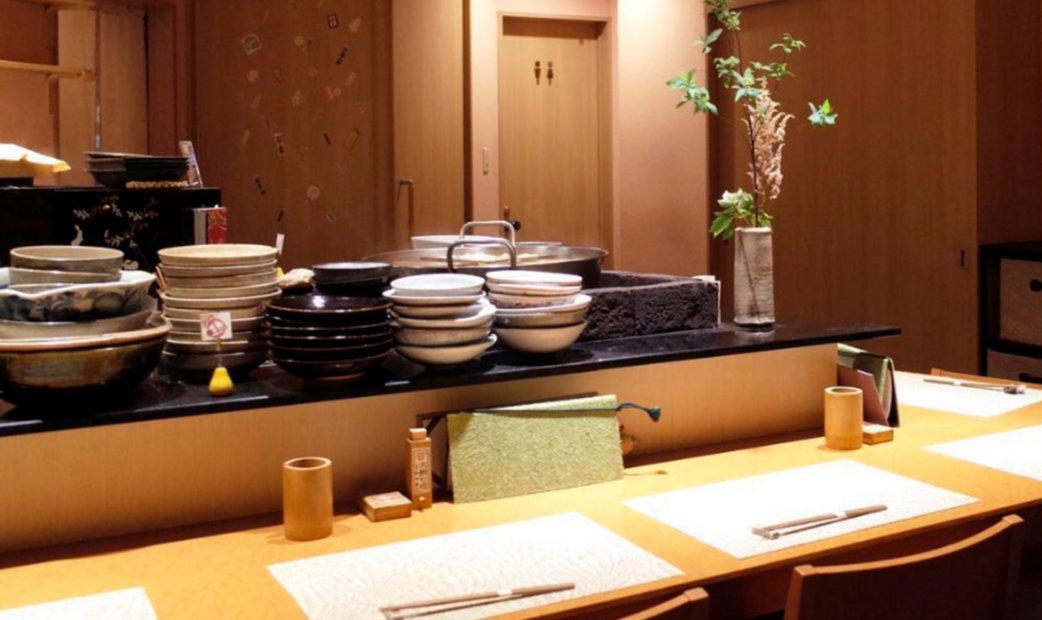
Below Street Level in Dojima
Basement izakayas in Osaka's Kita Ward follow a recognisable grammar: a flight of stairs descending from a quiet side street, a door that signals nothing of what lies behind it, and a room where the serious business of eating and drinking begins without ceremony. Kasane, on a lower floor of a low-rise building in Dojima's 1-chome, fits that pattern precisely. Dojima itself sits between the Nakanoshima cultural corridor and the retail density of Umeda, which gives the neighbourhood a character distinct from the tourist-facing dining streets further south. The restaurants and izakayas here draw largely from the area's office population and from diners who seek out mid-tier venues with real kitchen discipline rather than high-concept spectacle.
The Michelin Plate recognition Kasane received in 2024 places it in a specific category: venues the Guide considers worth knowing, where cooking meets a consistent standard without yet reaching the starred tier. In Osaka, a city where the Michelin Guide distributes stars at a higher density than almost anywhere in Western Japan, a Plate award at the izakaya price point is a meaningful signal. It indicates a kitchen working with more rigour than the format typically demands.
The Izakaya Format and What It Requires
The izakaya tradition is frequently misread outside Japan as a catch-all for casual Japanese dining. In practice, the format carries its own discipline. The meal is not structured around a single main course but built from successive small plates, which arrive in a sequence shaped partly by the kitchen's rhythm and partly by the diner's pace of drinking. The ritual here is horizontal rather than vertical: the table fills and empties incrementally, with no single moment intended as the climax. This demands a different kind of attention from both kitchen and guest than a kaiseki progression or an omakase counter.
Osaka's izakaya culture is particularly demanding on this front. The city's eating tradition, kuidaore, describes a willingness to spend freely on food across multiple stops in an evening rather than committing everything to a single destination. The leading mid-tier izakayas in the city have internalised that pressure: every plate must justify its place on a table that will also receive six or eight other dishes, often alongside sake, shochu, or highballs. Izakaya Tokitame operates within the same cultural framework, and the comparison between the two venues illustrates how differently individual kitchens respond to the same format constraints. For a wider view of what Osaka's izakaya and casual dining scene offers across price points, our full Osaka restaurants guide maps the territory in detail.
Positioning in Osaka's Dining Hierarchy
Kasane's ¥¥ price range puts it well below Osaka's starred tier, which clusters around ¥¥¥ and ¥¥¥¥. That upper bracket includes kaiseki houses such as Kashiwaya Osaka Senriyama and Taian, both three-star operations, alongside French-rooted addresses like Hajime and La Cime, which represent a different tradition entirely. The gap between those venues and a Michelin Plate izakaya is not merely financial: the format, the pace, the expectation, and the social register are all different.
Many of Osaka's izakayas operate below the radar of any formal recognition, which is not a failing but a reflection of the format's scale. When the Guide does identify a venue, it typically points to consistency of sourcing, execution, and a kitchen that applies care to dishes that other operators treat as incidental. Benikurage and Kannomiho represent further points of reference in the city's recognised casual dining tier, as does Jizakeya Iwatsuki, which approaches the evening-drinking format with its own particular focus. Daidokoro Kamiya adds another angle to the neighbourhood's mid-range character.
Intentionality at the Mid-Range
One of the defining tensions in Japanese casual dining is the expectation that informality does not mean inattention. The izakaya form is democratic in price and social posture, but the leading examples treat ingredient selection, cooking temperature, and plate timing with the same seriousness as much higher-priced formats. This is what the Michelin Plate signals when applied to an izakaya: not that the venue aspires to be something else, but that it executes its own format with precision.
Japan's regional dining scene reinforces this point through comparison. Gion Sasaki in Kyoto operates at the opposite end of the formality register, as does Harutaka in Tokyo at the omakase counter level. But the philosophical underpinning — that the meal's pacing and presentation carry meaning, not just its ingredients — runs through both the starred and the casual tier. The izakaya version of that philosophy shows up in sequence: which plates arrive together, which arrive alone, how the evening builds without a formal structure imposing itself. Berangkat in Kyoto applies a related sensibility to its own izakaya format, and the contrast with Osaka's version of the tradition is worth considering for anyone covering the Kansai region in a single trip. Further afield, akordu in Nara and Goh in Fukuoka each demonstrate how seriously Japan's secondary cities take their own dining traditions. 1000 in Yokohama and 6 in Okinawa extend the map further. For reference on how the izakaya concept travels internationally, Cube by Mika in Schwerin offers an interesting case study in format migration.
Planning a Visit
Dojima sits within walking distance of Kitashinchi Station and is a short distance from Osaka Station and the broader Umeda transport hub, making it accessible from most parts of the city. The neighbourhood's character as a business and residential district means it is less congested than Namba or Shinsaibashi in the evenings, which affects both the approach to the venue and the availability of nearby options for extending the night. For those building a broader Osaka itinerary, our full Osaka hotels guide, our full Osaka bars guide, our full Osaka wineries guide, and our full Osaka experiences guide cover the surrounding territory in detail.
Know Before You Go
- Address: 1-2-14 Dojima, Kita Ward, Osaka 530-0003 (basement level)
- Price range: ¥¥ (mid-range)
- Recognition: Michelin Plate, 2024
- Cuisine: Izakaya
- Nearest transit: Kitashinchi Station (Osaka Higashi Line); Osaka Station within walking distance
- Booking: Contact details not publicly listed, visit in person or check current reservation channels locally
- Hours: Not confirmed, verify before visiting
Frequently asked questions
Does Kasane have a Michelin star or similar recognition?
Kasane has received recognition including: Michelin Plate (2024).
What should I eat at Kasane?
Kasane holds a 2024 Michelin Plate in the izakaya category, which points to a kitchen applying consistent standards to a small-plates format. The izakaya tradition centres on shareable dishes built around seasonal produce, grilled skewers, simmered preparations, and drinking food designed to pace an evening. Order broadly across the menu rather than anchoring to a single dish.
What price level is Kasane?
Pricing at Kasane is listed as ¥¥.
Where do I go for Kasane?
Kasane is located at Japan, 〒530-0003 Osaka, Kita Ward, Dojima, 1 Chome−2−14 小川 第 3 ビル 地下 1 階, Osaka.
How far ahead should I plan for Kasane?
Kasane's ¥¥ price point and Michelin Plate recognition attract both Dojima locals and visitors tracking the Guide, which compresses availability, particularly on weekends. Booking a week to ten days ahead is a reasonable starting position; Friday and Saturday evenings at recognized mid-range venues in Kita Ward typically fill faster than that.
What's the standout thing about Kasane?
A Michelin Plate awarded in 2024 to a ¥¥ izakaya in Dojima is the clearest external signal available: the Guide's inspectors found consistent kitchen discipline at a price point well below Osaka's starred tier. That combination, formal recognition without the formal price, is relatively uncommon in Kita Ward's dining mix.
Price and Recognition
Comparable venues nearby, for context on price, style, and recognition.
| Venue | Cuisine | Price | Awards | Notes |
|---|---|---|---|---|
| KasaneThis venue — the venue you are viewing | Oden & Japanese Cuisine | $50–100 | Michelin Plate | Not listed |
| Kitashinchi Kushikatsu Bon | Michelin Kushikatsu Omakase | $150–200 | Michelin Plate | Kita, Michelin Kushikatsu Omakase |
| Washoku Iikura | Kansai Kappo | $100–150 | Michelin Plate | Kita, Kansai Kappo |
| Sumibiyakitori Ikoka | Charcoal-Grilled Yakitori Omakase | $50–100 | Michelin Bib Gourmand · Tabelog 100 #49 | Chūō, Charcoal-Grilled Yakitori Omakase |
| Tempura Sakugetsu | Modern Tempura Omakase | $150–200 | Michelin Plate | Chūō, Modern Tempura Omakase |
| Tada | Edomae Omakase Sushi | $200–300 | Tabelog Bronze #441 | Kita, Edomae Omakase Sushi |
Recognition history
Dated appearances from independent guides and award organizations, with the underlying list record or original source where available.
Michelin Plate
Michelin
Continue exploring
More in Osaka
Restaurants in Osaka
Browse all →




Bars in Osaka
Browse all →



Hotels in Osaka
Browse all →




Wineries in Osaka
Browse all →
Details
- Quiet
- Elegant
- Intimate
- Relaxed
- Business Dinner
- Special Occasion
- Private Dining
- Sake Program
- A La Carte
- Tasting Menu
- Sake
- Shochu
Hushed interior with natural woods, hand-finished plaster, gentle glow, hinoki counter, and relaxing stylish space.