
Moana Makai Sango Sho puts Kamakura’s coastal curry culture into a clearer frame: fish-led yoshoku, sea-facing leisure, and a Tabelog Curry EAST 100 selection rather than Tokyo-style counter austerity. Its appeal lies in the way Shichirigahama turns curry into a shoreline meal, with enough scale and informality for families, friends, and day-trip diners.
Pearl is the En Primeur Club membership app — saves, bookings, and concierge access live there. Same editors, same standards.
- Address
- 1 Chome-3-22 Shichirigahama, Kamakura, Kanagawa 248-0026, Japan
- Phone
- +81 467-31-5040
- Website
- sangosho.net
 Saves & bookings on Pearl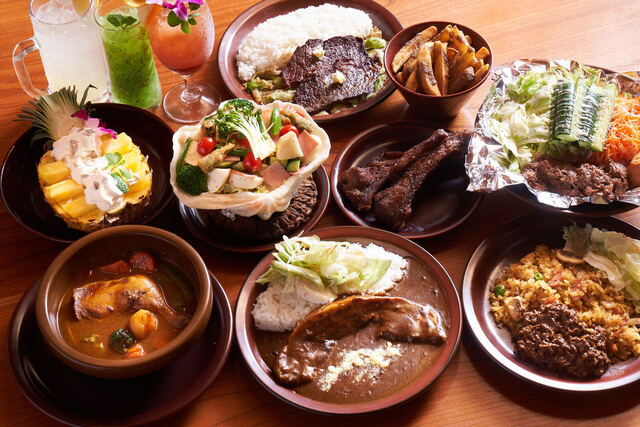
Shichirigahama changes the terms of a meal before the menu arrives. The Enoden line, the beach road, the open terrace, the ocean-view setting: this part of Kamakura makes restaurants negotiate with weather, weekend traffic, and the slow drift of day-trippers moving between sea air and lunch. Curry here is not only a quick plate over rice. In the right hands, it becomes yoshoku with a coastal accent, a Japanese Western-style format shaped by seafood, family dining, and the practical rhythm of a resort town.
That is the useful way to read Moana Makai Sango Sho. Its recognition in Tabelog’s Curry EAST 100 for 2023 and 2024 places it inside a national conversation about curry specialists, but the setting keeps it distinct from denser urban curry rooms. The category is listed as curry and yoshoku, with a noted emphasis on fish, and that matters in Kamakura. Along this coast, seafood is not a garnish to local identity; it is one of the reasons a casual curry house can carry more regional character than its price tier might suggest.
Coastal curry, not city-counter curry
Japan’s curry culture has several registers. There is the train-station plate built for speed, the spice-driven specialist shop, the retro yoshoku room, and the more elaborate regional interpretation that borrows from local produce. Kamakura’s version often sits closer to leisure dining than office-lunch utility. A sea-facing curry restaurant with wine and cocktails available belongs to that bracket: relaxed enough for groups, structured enough to be judged against dedicated curry addresses.
The fish focus gives the kitchen its clearer editorial point. In a city where temples and beaches split visitor attention, restaurants near the shore can fall into generic tourism. The stronger examples avoid that by tying format to place. A curry-and-yoshoku menu that is particular about fish reads as a coastal proposition rather than a transplanted urban formula. It also explains why a venue of this scale can appear in a Curry EAST 100 list: the distinction is not smallness or ceremony, but a recognizable point of view within a familiar national dish.
Moana Makai Sango Sho also sits in a different lane from Sango Sho Honten, which occupies a similar curry price bracket in Kamakura, and from House of Flavors, where the sweet-course association shifts the meal toward café and dessert culture. At the higher end, clarita da marittima belongs to a more expensive dining category, while The Market SE1 points toward a lighter, lower-spend rhythm. Those comparisons clarify the decision. This is not a destination for a formal tasting menu or a snack stop; it is a casual coastal meal with enough recognition to justify planning around it during a Shichirigahama day.
A 90-seat seaside room changes the mood of curry
Scale affects the experience. A 90-seat restaurant with counter seating, spacious tables, and an open terrace does not behave like a compact spice shop where the whole room turns over in a lunch rush. It allows curry to function as a group meal, especially in a city where visitors often move in pairs, families, or beach-bound clusters. The family-friendly setup, including children being welcome and a kids menu, reinforces that position. In Kamakura, that matters: many worthwhile meals sit in smaller rooms that reward solo diners or couples but complicate multi-generation travel.
The no-smoking policy, parking availability, and proximity to Shichirigahama Station give the restaurant practical range without making the meal feel detached from the coast. There is a reason ocean-view dining can be tricky for serious eaters: the view often does too much work. Here, the Tabelog Curry EAST 100 selection is the counterweight. It signals that the food has been evaluated within a defined curry category, not merely carried by location.
That category focus is useful for readers building a Kamakura day around more than one stop. A bakery-led morning at Bergfeld Kamakura honten, a coffee pause at Cafe Vivement Dimanche, or a pastry run to CALVA creates a different itinerary from a beachside curry lunch. Vegetable-forward cooking at Cabbage Batake or the sharper seasoning frame at arbre noir YAKUMI shows how varied Kamakura’s casual dining can be when viewed beyond temple-area grazing.
How to place it in a Kamakura itinerary
For a visitor, the strongest use case is a Shichirigahama meal that does not require abandoning the coast for central Kamakura. The restaurant is near Shichirigahama Station, and the beach setting makes it logical on days built around Enoden stops rather than a temple-heavy schedule. Thursday and Friday closures shape planning, while split lunch and dinner service means it can work on either side of an afternoon by the water.
Reservation availability is listed as unavailable, so the decision becomes timing rather than concierge strategy. The restaurant also notes that it may close early depending on congestion, a detail that suits the area’s weekend reality. Kamakura can feel gentle on weekdays and compressed on sunny holidays; coastal restaurants absorb that swing more visibly than inland rooms.
For a broader read on the city, use Our full Kamakura restaurants guide alongside the area guides for Our full Kamakura hotels guide, Our full Kamakura bars guide, Our full Kamakura wineries guide, and Our full Kamakura experiences guide. The wider Japan and beyond index also helps place regional casual dining against other formats, from [Curry Senmon Ten] Maruyama Kyoju. in Sapporo and [ki:] in Kyoto to (Shoku) Vietnam in Kawasaki. 鮪と炭火焼き うお炭 秋葉原店 in Tokyo.cafe in Osaka.know in Kumamoto, Jōdo Saké Bar in Los Angeles, and Onigiri Time in Pasadena.
The verdict is practical rather than theatrical: Moana Makai Sango Sho is compelling when the meal needs to belong to Shichirigahama. The award signal, fish-led curry identity, family-friendly scale, and ocean-view room make it a stronger choice for a coastal Kamakura day than for diners seeking a hushed counter or chef-led ceremony.
A Quick Peer Check
Comparable venues by cuisine and price in the same metro.
| Venue | Cuisine | Price | Notes |
|---|---|---|---|
| Moana Makai Sango ShoThis venue — the venue you are viewing | Japanese Curry | $$ | Not listed |
| OXYMORON komachi Komachi | Japanese-style spice curry & café | $$ | Kamakura |
| Cuillere | Japanese Curry | $ | Kamakura |
| Kamakura Lilian | Japanese Bakery | $ | Kamakura |
| KIBIYA Bakery Honten | Japanese Bakery | $ | Kamakura |
| Oryori Tomiyama | Traditional Japanese donburi & set meals | $$ | Kamakura |
Recognition history
Dated appearances from independent guides and award organizations, with the underlying list record or original source where available.
Tabelog 100 #50 · No. 50
Tabelog · Tabelog 100 - Curry - EAST - 2024









At a Glance
- Scenic
- Classic
- Cozy
- Well Known
- Casual Hangout
- Family
- Group Dining
- Waterfront
- Standalone
- Waterfront
Current opening hours
- Monday
- 10:30 AM–2:30 PM, 4:30–8 PM
- Tuesday
- 10:30 AM–2:30 PM, 4:30–8 PM
- Wednesday
- 10:30 AM–2:30 PM, 4:30–8 PM
- Thursday
- Closed
- Friday
- Closed
- Saturday
- 10:30 AM–2:30 PM, 4:30–8 PM
- Sunday
- 10:30 AM–2:30 PM, 4:30–8 PM
Hours can change for holidays and private events. Last verified .