
Miyake places Hakata’s everyday noodle culture in unusually sharp focus: udon, soba, regional cooking, counter seats, take-out service, and a low JPY 999-and-under spend profile. Its 2024 Tabelog 100 Udon WEST selection gives the room a credentialed place within western Japan’s udon conversation without changing the essential appeal: fast, local, practical, and rooted in the Gofukumachi side of old Hakata.
Pearl is the En Primeur Club membership app — saves, bookings, and concierge access live there. Same editors, same standards.
- Address
- 10-24 Kamigofukumachi, Hakata Ward, Fukuoka, 812-0036, Japan
- Phone
- +81 92-291-3453
- Website
- miyakeudon.machipeta.site
 Saves & bookings on Pearl
Approaching the Gofukumachi side of Hakata, the city feels older and more workday than the restaurant corridors around Tenjin or Hakata Station. Miyake fits that register: a house-style noodle room near Shōten-ji Temple, where the local story of udon and soba has unusual weight, and lunch works less as ceremony than civic infrastructure. The point is speed, price discipline, and a bowl format that has served Hakata’s appetite for quick, sustaining noodles for decades.
Fukuoka’s food reputation often travels abroad through ramen, yatai, motsunabe, and mentaiko, but udon sits deeper in the city’s older grain-and-broth habits. Hakata udon is not the tensile Sanuki model many visitors use as their national reference. It prizes softness, warmth, and immediacy, with the noodle carrying dashi and topping rather than testing chew. This is not performative noodle connoisseurship, but a local format with a clear cultural job.
Hakata udon as a fast, local, low-cost tradition
The house is listed for udon, soba, and regional cuisine, but the editorial reason to care is how it preserves a compact version of Hakata noodle dining. Tabelog’s 2024 Udon WEST 100 selection places Miyake in a western Japan field where udon is judged across regional expectations, from elastic noodle craft to neighborhood utility. A 3.64 Tabelog score and selection in that category signal local confidence without pushing the restaurant into luxury territory.
The economics are part of the argument. A JPY 999-and-under range keeps the meal closer to daily habit than special-occasion dining. In a city where Fukuoka comparisons can run from Kamoryori Marimo Honten at JPY 10,000 to JPY 14,999 to Los Pinchos at JPY 8,000 to JPY 9,999, this noodle shop operates in another economy entirely. The useful comparison is not a tasting counter or Spanish dinner room, but how much culinary identity a city can hold in a cheap, brief meal.
That is why Miyake reads differently from polished central Fukuoka dining addresses. The format is modest: 38 seats, including counter seating, tables, and raised tatami seating, with take-out available. Reservations are unavailable, keeping the experience in walk-in noodle-shop logic rather than planned itinerary anchoring. Credit cards, electronic money, and QR code payments are not accepted, so the rhythm remains cash-forward and direct. These details are clues to the category, not mere inconveniences.
The Gofukumachi setting connects the bowl to old Hakata
Location gives the meal its frame. Gofukumachi sits close to temples, older commercial streets, and festival routes that make Hakata feel distinct from Tenjin’s newer retail energy. Shōten-ji Temple’s association with the early history of udon and soba in Japan gives the neighborhood more than atmosphere; it explains why a plain noodle shop here can carry more local meaning than a richer meal elsewhere. In Hakata, noodles are not only late-night fuel or tourist shorthand. They are how the district has fed clerks, families, solo diners, and festival crowds.
The room’s usefulness is visible in its breadth. Solo dining, family use, and casual meals with friends all suit the format, and children are welcome. That range matters in Japan, where serious food rooms can be constrained by counter etiquette, reservation systems, or price. Here, cultural value sits in accessibility: a small room that can serve a lone bowl, a family stop, or a quick local lunch without changing identity.
In Fukuoka planning terms, Miyake works as a counterweight to the city’s richer restaurant map. A visitor might use our full Fukuoka restaurants guide to build around seafood, ramen, curry, tonkatsu, or izakaya formats, then place this stop in the day as older Hakata taste. Nearby and citywide alternatives show the breadth of the casual spectrum, from 106 South Indian Fukuoka tenjin ten and Afterglow to Aji Dokoro Taro Gen Sougyou ten, Aji Furai Shokudo Kaba, and Aji no Katsueda. The common thread is not sameness, but the city’s ability to treat specialized, inexpensive formats seriously.
How to place it in a Fukuoka day
The restaurant is open daytime hours from Monday through Saturday and closes on Sunday and public holidays, making it more useful for lunch or early afternoon than evening. The nearest station is Gofukumachi, with subway and bus access easy to fold into a Hakata-side walk. Parking is not attached, though paid parking exists nearby. Non-smoking status, no private rooms, and a no-frills seating mix keep expectations clear: this is a practical noodle room, not a lingering dining room.
For travelers using Fukuoka as more than a meal stop, the broader city guide layer matters. Pair the Hakata-side food plan with our full Fukuoka hotels guide for where to stay, our full Fukuoka bars guide for the evening, our full Fukuoka wineries guide for regional drinking context, and our full Fukuoka experiences guide for cultural planning beyond restaurants. Treat a bowl here as part of a district reading, not a trophy meal.
Japan’s casual dining network rewards that attention. The itinerary logic that makes room for -Grilled beef Sukiyaki- KAMAKURA TANUKIAN 鎌倉 たぬき庵 in Kamakura. 鮪と炭火焼き うお炭 秋葉原店 in Tokyo.cafe in Osaka.know in Kumamoto, (Shoku) Vietnam in Kawasaki, and [Curry Senmon Ten] Maruyama Kyoju. in Sapporo also applies in Hakata: read the format, neighborhood, and price tier before judging the meal. For overseas Japanese dining parallels, Jōdo Saké Bar in Los Angeles and Onigiri Time in Pasadena show how narrow Japanese formats travel differently once removed from local daily context.
The editorial verdict is simple: Miyake is valuable because it resists inflation, theatrics, and over-explanation. Its recognition in Tabelog’s Udon WEST 100 gives outside diners a trust signal, but the stronger reason to go is cultural proportion. In a city often reduced to ramen queues and nighttime stalls, this is Hakata’s quieter daytime grammar: soft noodles, local utility, and a room that makes sense because the neighborhood makes sense.
Budget Reality Check
Nearby venues at a similar price tier for orientation.
| Venue | Cuisine | Price | Notes |
|---|---|---|---|
| MiyakeThis venue — the venue you are viewing | Hakata, Traditional Hakata Udon | $ | Not listed |
| SACHiA Beef stroganoff | Not listed | $ | Higashi, Beef stroganoff-focused Yoshoku (Japanese-style Western) |
| Tempura Dokoro Hirao Daimyou ten | Chūō, Casual Tempura Specialist | $ | Not listed |
| Umeyama Teppei Shokudo Honten | Not listed | $ | Chūō, Casual Japanese fish set-meal canteen |
| Hagakure Udon | Hakata, Traditional Fukuoka-style Udon | $ | Not listed |
| Suzaki Yatai Kajishika | Hakata, Hakata Yatai Izakaya | $$ | Not listed |
Recognition history
Dated appearances from independent guides and award organizations, with the underlying list record or original source where available.
Tabelog 100 #74 · No. 74
Tabelog · Tabelog 100 - Udon - WEST - 2024
At a Glance
- Classic
- Cozy
- Well Known
- Solo
- Family
- Casual Hangout
- After Work
- Group Dining
- Historic Building
- Standalone
Current opening hours
- Monday
- 11 AM–5 PM
- Tuesday
- 11 AM–5 PM
- Wednesday
- 11 AM–5 PM
- Thursday
- 11 AM–5 PM
- Friday
- 11 AM–5 PM
- Saturday
- 11 AM–5 PM
- Sunday
- Closed
Hours can change for holidays and private events. Last verified .
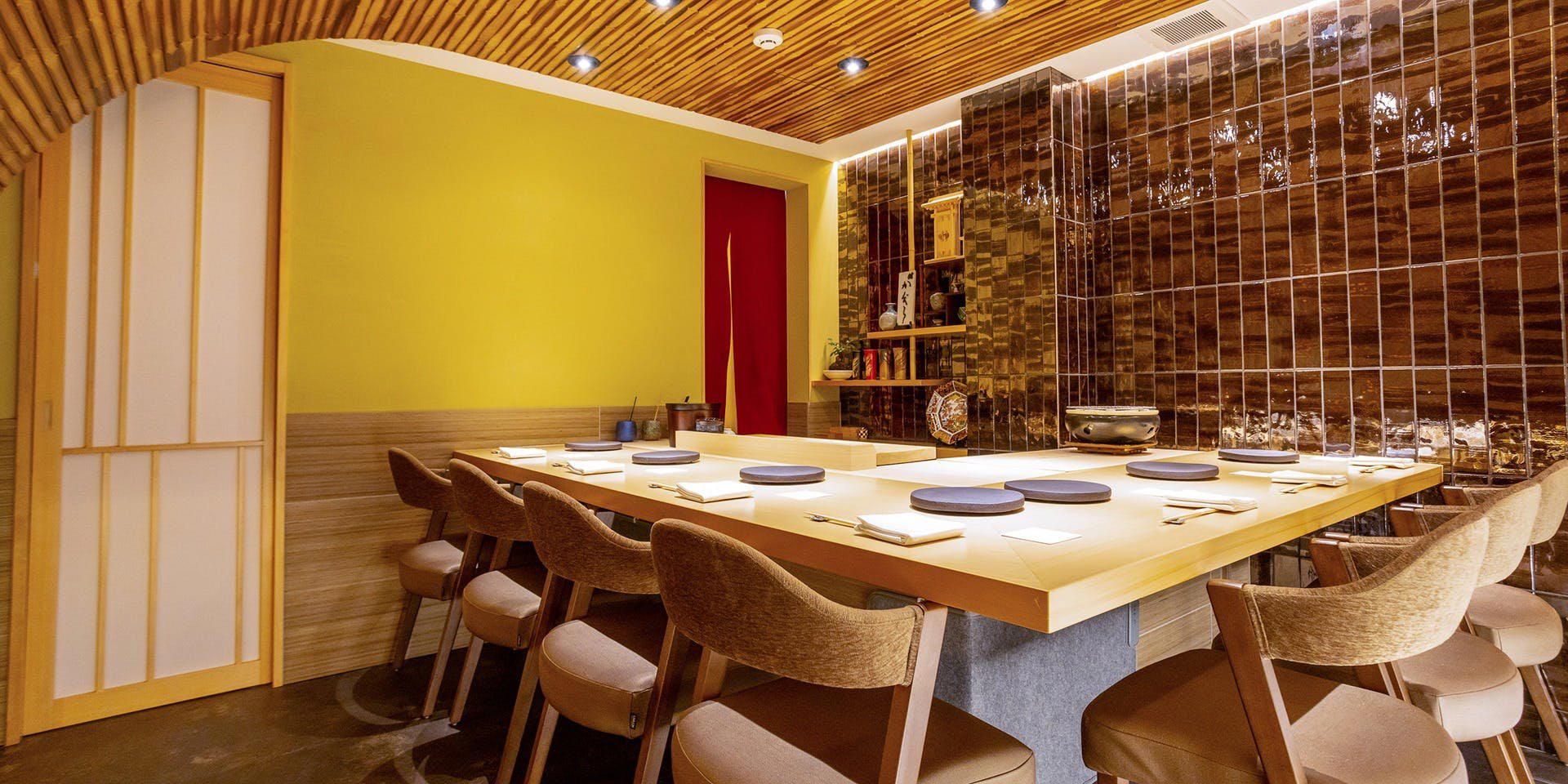
Simple, old‑school Hakata udon-ya atmosphere with counter, tatami, and table seating; a busy but relaxed, everyday local feel rather than a designed or modern interior.