
Hakata’s udon culture rewards speed, softness, and everyday repetition rather than ceremony. Hagakure Udon sits in that compact local register: a 21-seat, no-reservations noodle shop selected for Tabelog Udon WEST “Tabelog 100” 2024, with sub-¥1,000 lunch and dinner pricing that places it far from Fukuoka’s destination-dining economy.
Pearl is the En Primeur Club membership app — saves, bookings, and concierge access live there. Same editors, same standards.
- Address
- 2 Chome-3-32 Hakataekiminami, Hakata Ward, Fukuoka, 812-0016, Japan
- Phone
- +81 92-431-3889
- Website
- ja-jp.facebook.com
 Saves & bookings on Pearl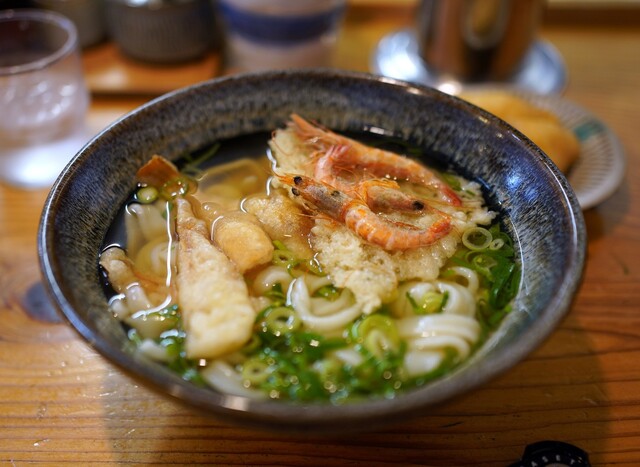
Hakata’s station-side eating has a particular rhythm: office workers moving fast, families choosing by habit, and noodle shops doing their work without the theatrical cues that define much of Japan’s high-end dining. In that setting, udon is not a luxury signal. It is a test of repetition, timing, and whether a small room can move bowls with enough consistency to become part of the city’s daily grammar.
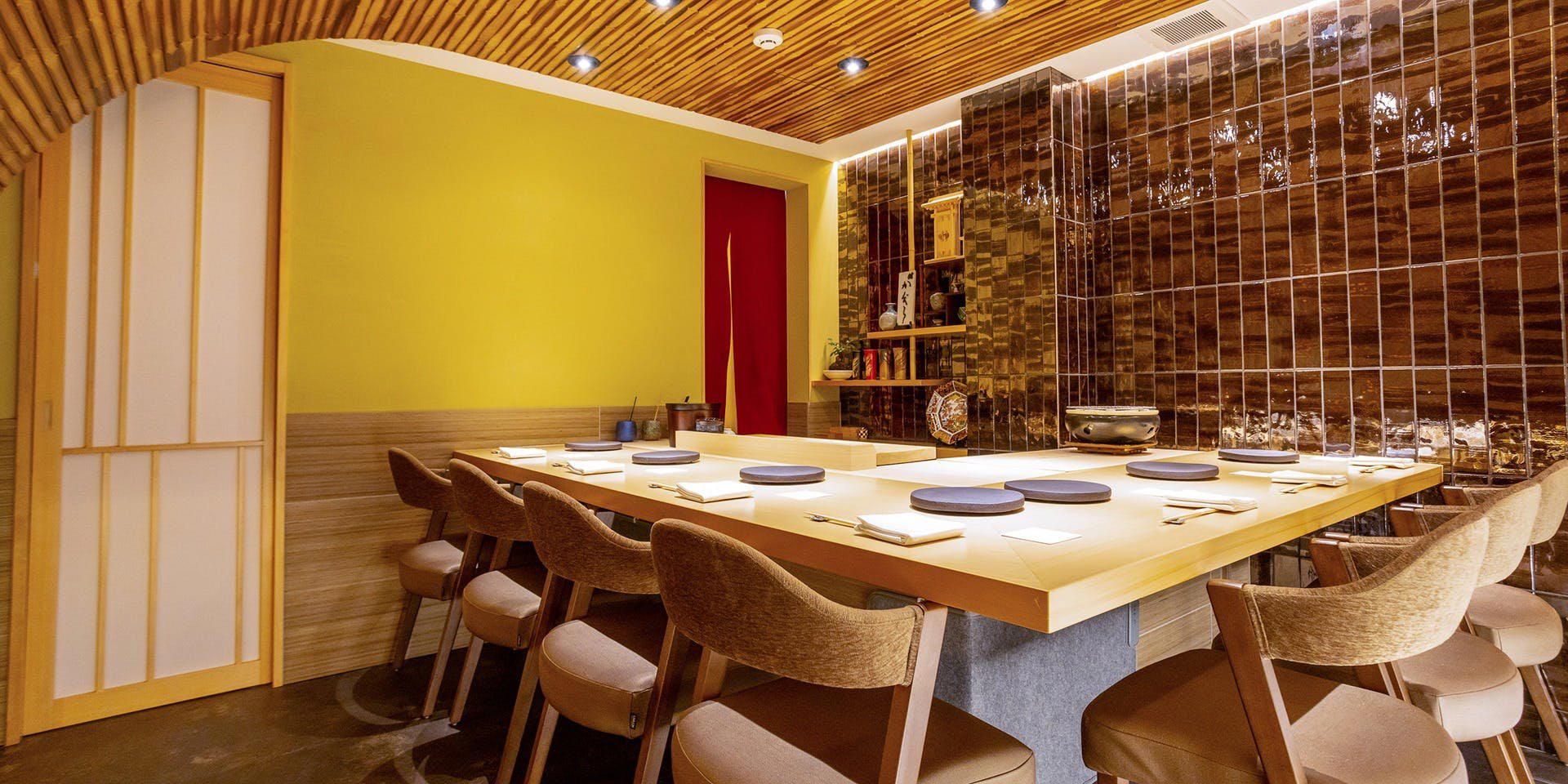
Hagakure Udon belongs to that grammar. The address in Hakataekiminami places it in a working district rather than a dining enclave, and the format is compact: 21 seats split between counter seating and a raised platform. That split matters in Fukuoka. Counter seats suit the solo diner and the quick lunch; the raised platform keeps the room usable for friends and families without turning the meal into an occasion. The service model is not built around a named chef, sommelier, or choreographed front-of-house team. Its discipline is collective and practical: kitchen timing, counter turnover, and the small acts of order that keep a noodle shop from becoming chaotic.
Hakata udon judged by repetition, not ceremony
Fukuoka is often introduced through ramen, but udon has a longer local claim and a different emotional register. Hakata-style udon tends to prize approachability over tension: wheat noodles, broth, and toppings arranged for comfort and speed rather than rigid performance. The serious shops in this category are rarely expensive, which makes recognition harder to fake. A high price can imply ambition; a low price has to survive volume, habit, and repeat customers.
That is the useful way to read Hagakure Udon’s Tabelog Udon WEST “Tabelog 100” 2024 selection and 3.75 Tabelog score. This is not fine dining recognition translated onto a humble format. It is category-specific acknowledgement inside a field where small differences in texture, pacing, and consistency carry the argument. The restaurant has also appeared in Tabelog’s udon selections in 2018, 2019, 2020, and 2022, which gives the listing more weight than a single-year spike.
The price band tells the rest of the story. Lunch and dinner sit at JPY 999 or under, putting the meal in the same economic universe as daily station-area eating rather than celebratory dining. Compare that with nearby premium formats such as Yakiniku Tagyu Ekiminami ten or Teppanyaki Rikaen, where the spend moves into several-thousand-yen territory. The decision here is not whether to stage a night out; it is whether to spend a Fukuoka meal slot on a local staple executed with enough consistency to earn specialist recognition.
A small-room format where the team is the experience
The assigned drama of many restaurants comes from visible hierarchy: chef at the pass, sommelier at the table, host controlling the room. Udon shops compress those roles. The kitchen, counter, and floor operate as one system, and the guest reads quality through pace rather than performance. At Hagakure Udon, the 13 counter seats and 8 raised-platform seats make that system legible. The counter keeps the room close to the cooking; the platform softens it for groups. Neither format asks diners to surrender an evening.
This is also where Fukuoka’s casual dining strength becomes clear. The city can support seafood counters, curry specialists, fry shops, South Indian cooking, izakaya rooms, and noodle houses without forcing them into the same luxury vocabulary. For a wider reading of that range, EP Club’s full Fukuoka restaurants guide gives useful context, from Aji Furai Shokudo Kaba to Afterglow, Aji no Katsueda, Aji Dokoro Taro Gen Sougyou ten, and 106 South Indian Fukuoka tenjin ten. The restaurant sits on the everyday end of that spectrum, but the award history keeps it from being merely convenient.
The better comparison is not with ramen shops chasing a tourist queue or with tasting-menu rooms selling provenance. It is with the Japanese tradition of specialized, low-cost houses where a narrow format carries the reputation. That tradition also explains why cash-only payment, no private rooms, no private use, and no reservations can coexist with serious recognition. Friction is part of the format, but not in the manufactured sense. The room is small, the system is direct, and the value equation is clear.
How to fit it into a Fukuoka eating day
For travelers, the editorial question is not whether the restaurant can replace Fukuoka’s better-known ramen stops. It answers a different question: what does the city eat when it is not performing for visitors? The location near Hakata Station makes it practical for an arrival-day or transit-day meal, and the no-reservations policy keeps the commitment low. Sunday and public-holiday closure, plus Obon and New Year holiday periods, make timing the main constraint.
Because the spend sits below JPY 1,000, the meal works as a calibrated counterpoint to Fukuoka’s broader dining map. It can precede a bar evening, sit between hotel check-in and a train, or balance a trip that also includes higher-spend beef or teppanyaki rooms. Visitors planning the full city circuit can cross-reference EP Club’s Fukuoka hotels guide, Fukuoka bars guide, Fukuoka wineries guide, and Fukuoka experiences guide to keep the meal in proportion.
Japan’s casual specialist culture travels well beyond Fukuoka, from regional curry and onigiri shops to sake bars and compact neighborhood kitchens. For that broader frame, see [Curry Senmon Ten] Maruyama Kyoju. in Sapporo, Onigiri Time in Pasadena, Jōdo Saké Bar in Los Angeles.know in Kumamoto.cafe in Osaka, (Shoku) Vietnam in Kawasaki. 鮪と炭火焼き うお炭 秋葉原店 in Tokyo, and -Grilled beef Sukiyaki- KAMAKURA TANUKIAN 鎌倉 たぬき庵 in Kamakura. The common thread is not scale. It is focus, repeatability, and a dining culture that lets modest formats carry serious judgment.
A Tight Comparison
Comparable venues at a glance for context.
| Venue | Cuisine | Price | Notes |
|---|---|---|---|
| Hagakure UdonThis venue — the venue you are viewing | Hakata, Traditional Fukuoka-style Udon | $ | Not listed |
| LAS VEGAS | Chūō, Japanese Izakaya | $ | Not listed |
| Hatchan Ramen | Chūō, Traditional Fukuoka Tonkotsu Ramen | $ | Not listed |
| Asahi Ken Ekimae honten | Not listed | $ | Hakata, Hakata gyoza & chicken wings izakaya |
| Tempura Dokoro Hirao Akurosu ten | Chūō, Casual Tempura Specialist | $ | Not listed |
| Tempura Dokoro Hirao Honten | Hakata, Casual Tempura Specialist | $ | Not listed |
Recognition history
Dated appearances from independent guides and award organizations, with the underlying list record or original source where available.
Tabelog 100 #19 · No. 19
Tabelog · Tabelog 100 - Udon - WEST - 2024
At a Glance
- Cozy
- Classic
- Solo
- Family
- Casual Hangout
- Group Dining
- After Work
- Standalone
Current opening hours
- Monday
- 11 AM–3 PM, 5–9 PM
- Tuesday
- 11 AM–3 PM, 5–9 PM
- Wednesday
- 11 AM–3 PM, 5–9 PM
- Thursday
- 11 AM–3 PM, 5–9 PM
- Friday
- 11 AM–3 PM, 5–9 PM
- Saturday
- 11 AM–3 PM, 5–9 PM
- Sunday
- Closed
Hours can change for holidays and private events. Last verified .